
REVIEW · LANZAROTE
Surf Lesson for Beginners in Famara: Introduction in Surfing
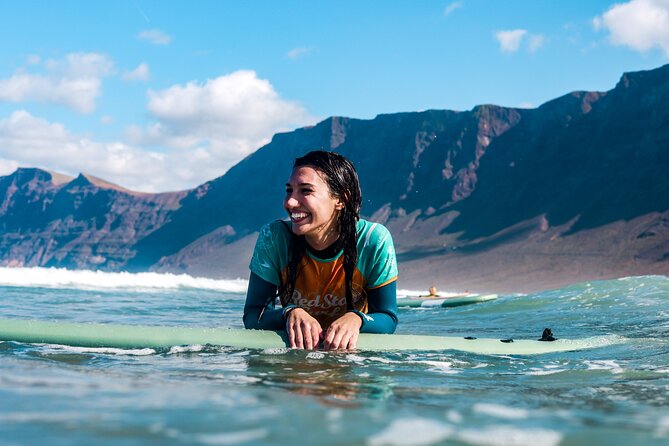
Famara makes a fine first wave. This two-hour lesson gives you a friendly introduction to surfing on one of Lanzarote’s best beginner beaches, with a wetsuit, rash vest, board, safety briefing, and coaching included. I especially like the practical focus on reading rips and finding safe places to surf, not just standing up for a quick photo. I also like that the school has more than 10 years of experience and that instructors such as Mariano, Humberto, Garo, Jerry, and Borge are praised for being patient and encouraging.
The main thing to consider is the possible group size. The class can include up to 35 people, so the amount of individual attention may vary. Two hours is enough for a first taste, and several people found it satisfying for adults over 50, but younger or more eager surfers may prefer the longer four-hour option if available.
Key points before you book
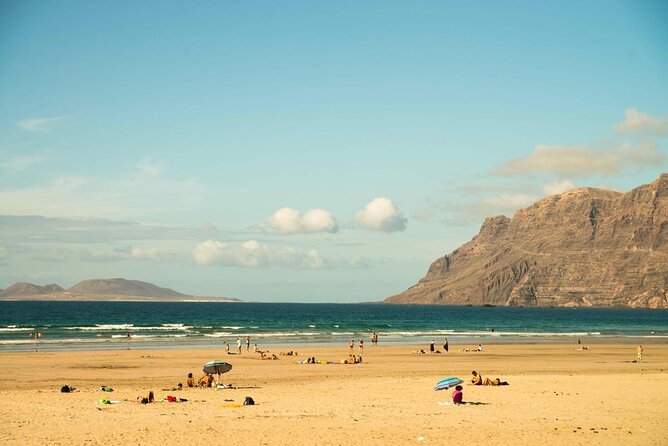
- Your first lesson starts at Playa Famara: You learn on a broad beach break suited to beginners and intermediate surfers.
- The practical kit is supplied: A surfboard, wetsuit, and rash vest are included, so you can travel light.
- Safety is part of the lesson: You learn to spot rips, choose safer surf spots, and handle the board in the water.
- The class covers the basics from scratch: Expect warm-ups, beach exercises, paddling practice, and stand-up technique.
- The school has a strong record: Red Star Surf & Kite School has operated for more than 10 years and is recommended by 99 percent of customers, with a 4.9 rating from 71 reviews.
- The two-hour format is a sampler: It suits first-timers and families, while a four-hour lesson may suit people who want more water time.
Why Famara is a smart place to learn
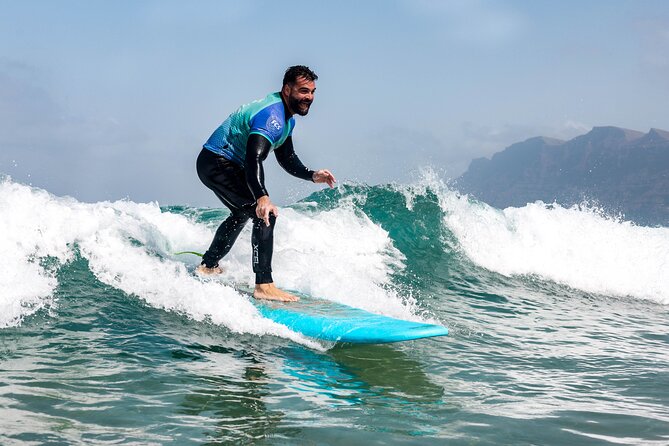
Playa Famara is the star of this experience. The beach is known as one of Europe’s best places for beginner and intermediate surfers, and the setting gives your first lesson a memorable sense of place. You are not practicing in a pool or on a tiny artificial wave. You are learning the basic rhythm of a real beach break.
That also means conditions matter. Surfing is controlled by the sea, wind, and weather, not by a timetable alone. The school requires suitable weather, so a poor-weather cancellation can lead to a new date or a full refund. This is sensible, even if it adds a little uncertainty to your plans.
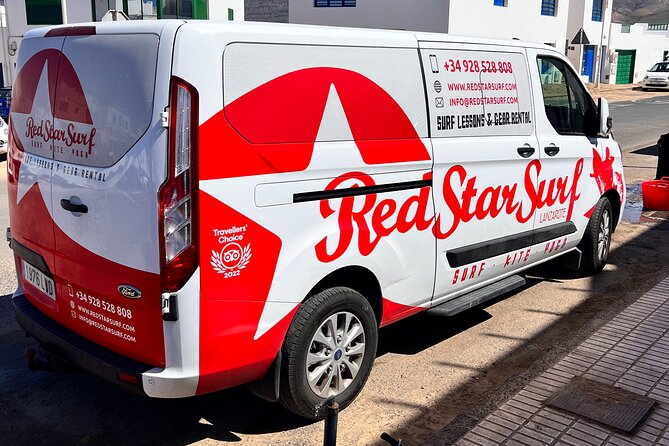
The meeting point is Red Star Surf & Yoga Camp at Av. el Marinero, 9, bajo, in Caleta de Famara. The class starts at 10:00 am and ends back at the same meeting point. The location is near public transportation, and easy parking has been noted as a useful advantage.
Famara is also a good choice if you want a lesson that feels active without taking up your entire day. At two hours, you still have time for lunch, sightseeing, or simply enjoying the beach afterward.
More Beginner Surf Lessons in Spain
- Full Day Surf Lesson for Beginners in Famara, Spain
★ 5.0 · 109 reviews - The Surftrip: A 2.5-hour morning surf session for beginners, intermediate surfers, and families.
★ 5.0 · 12 reviews - Lezioni di Surf per Beginner e Intermedi (6 persone a istruttore)
★ 5.0 · 350 reviews
What happens at the surf shop
Your lesson begins with a short briefing at the Red Star shop. This is where you get organized before heading toward the beach. The school supplies the main equipment, including a surfboard chosen for your level, a wetsuit, and a rash vest.
That equipment matters more than it may seem. A beginner board is usually selected for stability and ease of use, while the wetsuit helps you stay comfortable in the Atlantic water. The lesson also explains how to choose the right board and wetsuit, which gives you a useful foundation if you decide to continue surfing later.
Once the gear is ready, the group makes a short ride to the appropriate spot on Famara Beach. The exact point can depend on the conditions, which is part of good surf instruction. The best place for a beginner is not always the same place as the best spot for an experienced surfer.
Before entering the water, the instructor gives a safety talk and leads a warm-up. You then work through exercises on the sand. This order is helpful because it lets you learn the body movements before dealing with waves, balance, and board handling all at once.
The beach lesson: paddling, balance, and standing up
The beach work focuses on the movements you need in the water. You learn how to lie on the board, paddle, prepare for a wave, and move into the stand-up position.
The stand-up technique is usually the moment beginners anticipate most, but the lesson does not treat it as the only goal. You also need to understand where to place your hands, how to bring your feet underneath you, and how to keep your balance once you are upright.
That practical sequence is one of the strongest parts of this class. You are not simply handed a board and told to try your luck. The instructors explain the movements first, then help you apply them in the surf.
The school says many beginners catch their first wave on their first day. That is encouraging, but you should keep your expectations sensible. Conditions, fitness, balance, and confidence all affect how quickly you progress. Standing up once is a great start, but learning to catch waves consistently takes more practice.
Several instructors receive special praise for making the first attempt feel manageable. Mariano helped one teenage beginner understand and apply the basic techniques. Humberto was praised for creating a welcoming atmosphere, while Borge was described as patient, motivating, and clear while coaching a family with three teenagers.
In the water: where the real learning happens
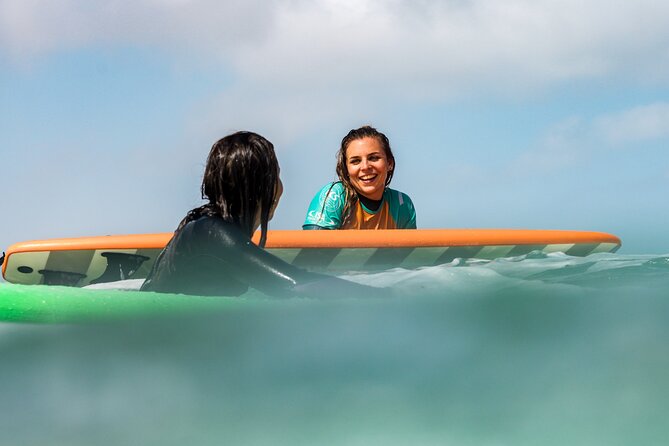
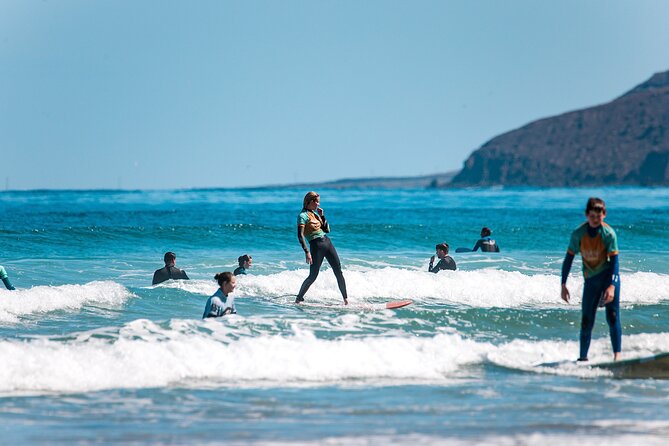
The water portion gives you a chance to put the beach exercises into practice. Your instructor remains available on the sand and in the water, offering guidance as you paddle, position the board, and attempt to catch waves.
The safety teaching is especially valuable here. You learn how to recognize rips and how to deal with them. That knowledge is more important than simply getting upright, because it helps you understand how the beach works and how to make safer choices.
You also learn how to find suitable places to surf. For a beginner, this can be hard to judge alone. Waves may look inviting from shore but behave differently once you are in the water. Having an instructor explain where to position yourself gives you a more useful understanding of surfing than a quick stand-up lesson alone.
The instructors are repeatedly praised for being supportive without making the atmosphere feel stiff. That balance matters. Beginners often worry about looking awkward, and a relaxed teacher can make it easier to keep trying after a missed wave.
If you are nervous, expect a gradual start rather than a demand to perform immediately. One first-time participant arrived apprehensive and ended up standing several times in the first class. That kind of result is possible, but the real value is gaining comfort with the board and the water.
More Beginner Surf Lessons in Lanzarote:
- Legian Beach, Bali: Beginner or Intermediate Surf Lessons
★ 4.9 · 1,019 reviews - Maui: Two Hour Beginner Group Surf Lesson in Kihei
★ 5.0 · 950 reviews - Uluwatu: Beginner & Intermediate Surf Lesson with Equipment
★ 4.9 · 832 reviews - Kuta/Bali: Private Beginner & Intermediate Surf Lessons
★ 4.9 · 563 reviews
Is two hours enough?
For a first session, two hours is a reasonable length. It includes the briefing, equipment, warm-up, beach instruction, and time in the water. You get a clear introduction without committing your entire day to an activity that may be physically tiring.
The shorter format appears especially suitable for adults who want to try surfing without overdoing it. One family found two hours plenty for adults over 50, while younger participants might prefer four hours.
I would choose the two-hour lesson if you are curious, short on time, or unsure whether surfing is for you. It is also a good fit for a mixed group where some people are keen and others are simply willing to give it a try.
The longer session makes more sense if you already know you want repeated attempts and more time to develop your technique. More water time can help you move past the initial confusion of handling the board, paddling, and timing a wave.
One useful detail is that a four-and-a-half-hour lesson includes video analysis. That feature is not included in the two-hour class, so do not book the shorter experience expecting filmed feedback.
Equipment, insurance, and what you need to bring
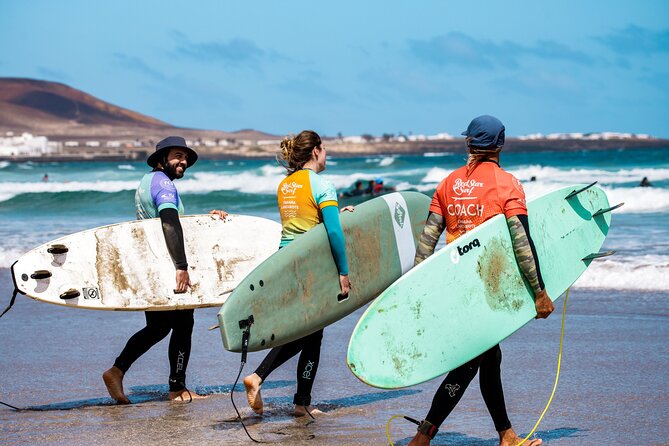
The supplied equipment keeps the experience simple. You receive:
- A surfboard suited to your level
- A wetsuit
- A rash vest
- Beach and water instruction
- Surf exercises and stretching
- Medical insurance during the lesson
You should still arrive ready for an active beach session. The supplied information does not list personal items to bring, so check directly with the provider if you want to confirm details such as towels or other clothing.
The included medical insurance is a useful part of the package. Surfing is a physical activity, and having coverage during the lesson adds reassurance. It does not remove the need to follow the safety instructions or to be realistic about your own swimming ability.
You must be able to swim at least 50 meters. The activity is not recommended if you cannot meet that requirement. Most people can participate, but surfing still requires basic water confidence and enough strength to manage a board in moving water.
What the $60.34 price really buys
At $60.34 per person, the price is fair for a two-hour beginner experience because the main equipment, instruction, stretching, and medical insurance are included. You are paying for more than board rental. The value lies in having someone explain water safety, board choice, paddling, and wave selection in a structured way.
The price also saves you from buying or transporting a wetsuit and board for a short holiday activity. That is particularly helpful if surfing is only one part of your Lanzarote plans.
The value becomes less clear if your main goal is extended practice. Two hours passes quickly once you include the briefing and warm-up. If you already expect to enjoy surfing, ask about upgrading to a longer class. An upgrade may be possible, though it is not guaranteed and should be confirmed with the school.
The group limit of 35 is worth keeping in mind. A large maximum does not mean every class reaches it, but a bigger group can affect how much one-to-one coaching you receive. I would ask about the expected group size if personal attention is your top priority.
The instructors and the feel of the school
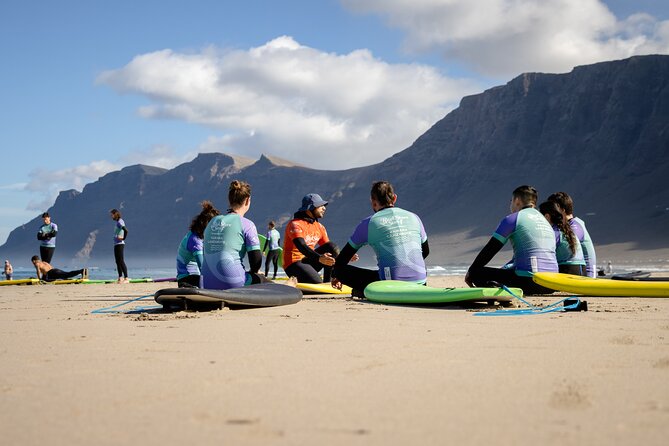
The strongest theme is the teaching style. The instructors are described as friendly, patient, funny, and encouraging. That makes a real difference for people who have never touched a surfboard.
Mariano is a good example of the school’s beginner-first approach. He helped a young student understand the basics in a way that felt easy to use. Humberto received praise for being kind and welcoming, while Garo was recognized for offering active support and advice when waves arrived.
Jerry and his team were also praised for organization and experience. Those qualities matter because a surf lesson involves several moving parts: equipment, transport to the beach, safety instructions, warm-up, group management, and water coaching.
The language listed for the experience is English. The school may work with people from different countries, but one French-speaking participant found that very little French was used, despite an indication that it was available. If detailed instruction in French is essential for you, confirm the language arrangements before booking.
Who should book this lesson?
I would recommend it to first-time surfers, couples, families with teenagers, and adults who want a manageable introduction to an active sport. The friendly instruction can help if you feel nervous about looking uncoordinated in front of other people.
It is also a good choice for a family with mixed experience. You can share the setting and the activity without needing to own equipment or organize a separate beach plan.
The lesson is less suitable if you cannot swim 50 meters, want advanced coaching, or need a guaranteed small class. It may also feel short if you are already comfortable on a board and want focused technique work.
The playful warning about surfing being highly addictive may not be far off. Several first-timers finished keen to return, and one participant immediately began thinking about a proper surf camp. That is a good sign, but it also means you should see this as an introduction, not a complete surfing course.
Booking details and practical planning
Your booking confirmation arrives at the time of booking. The meeting point is Red Star Surf & Yoga Camp, and the activity returns there after the beach session.
You can cancel for a full refund up to 24 hours before the 10:00 am start time. Cancellations or changes made less than 24 hours before the start are not refunded or accepted. Cutoff times use local time in Lanzarote, so check the clock carefully if you are arranging the lesson near the deadline.
Because the experience depends on good weather, the school may cancel if conditions are unsuitable. You will then be offered another date or a full refund.
Should you book the Famara surf lesson?
Yes, if you want a friendly, well-organized first attempt at surfing and you can swim at least 50 meters. The setting is excellent, the equipment is included, and the instruction covers useful skills rather than just chasing a stand-up moment.
I would book the two-hour session if you are testing the sport or fitting it around a busy Lanzarote itinerary. Choose a longer option if you already expect to become hooked and want more time in the water. Before booking, confirm the expected group size and language support if those details matter to you.
For a first surf lesson, the combination of Famara Beach, patient instructors, practical safety coaching, and a reasonable all-in price makes this a strong choice.
FAQ
Where does the surf lesson meet?
The meeting point is Red Star Surf & Yoga Camp, Av. el Marinero, 9, bajo, 35558 Caleta de Famara, Las Palmas, Spain.
What time does the lesson start?
The activity starts at 10:00 am.
How long does the beginner lesson last?
The lesson lasts approximately two hours.
What equipment is included?
A surfboard suited to your level, a wetsuit, and a rash vest are included.
Do I need previous surfing experience?
No. The lesson is designed for beginners and requires no prior surfing experience.
Do I need to be able to swim?
Yes. The activity is not recommended for anyone who cannot swim at least 50 meters.
What will I learn during the lesson?
You learn how to choose a suitable board and wetsuit, find safer surf areas, recognize and handle rips, paddle, stand up, and catch your first waves.
How many people can join the activity?
The maximum group size is 35 people.
What happens if the weather is poor or I need to cancel?
You can cancel at least 24 hours before the start for a full refund. If poor weather causes the school to cancel, you will be offered another date or a full refund.
Just added around Lanzarote
- The Surftrip: A 2.5-hour morning surf session for beginners, intermediate surfers, and families.★ 5.0 · 12 reviews
- Private Surfing in Lanzarote: Enjoy the waves just for you – ALL LEVELS★ 5.0 · 7 reviews
- Lanzarote: Surf Experience in Famara with MauriSurf★ 5.0 · 4 reviews
- Lanzarote: Famara Beach Surfing Lessons★ 5.0 · 3 reviews
- Group surf lessons in Lanzarote, learn with a local team★ 4.9 · 41 reviews
- Kalufa Surf school in Caleta de Famara, Lanzarote★ 5.0 · 34 reviews
- Group and private surf classes with a Certified Instructor in Lanzarote★ 5.0 · 73 reviews
- Lanzarote Surfing Session★ 5.0 · 64 reviews
Beginner Surf Lessons, compared.
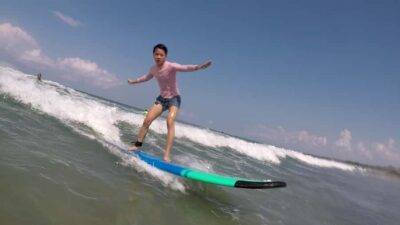
Legian Beach, Bali: Beginner or Intermediate Surf Lessons
Read our review →
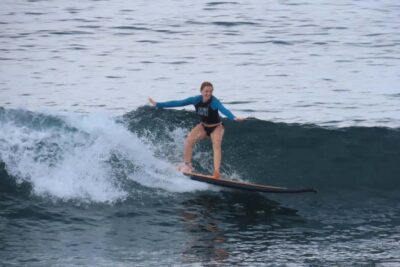
Beginner & Intermediate Surf Lesson with Equipment
Read our review →
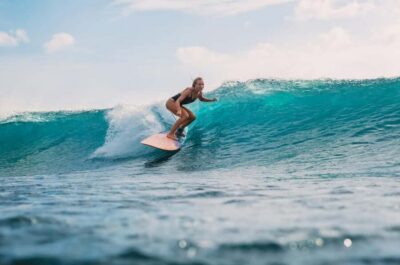
Learn to Surf in Chill Beach Vibes & Good Times
Read our review →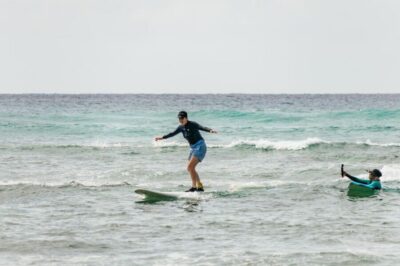
Beginner-Friendly Waikiki Beach Surfing Lesson
Read our review →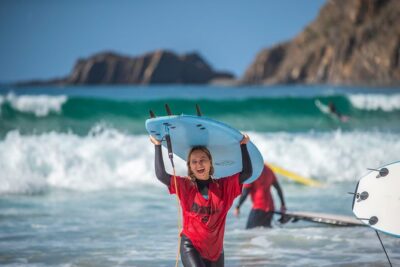
Beginner Surf Lesson at the Beautiful Algarvian West Coast
Read our review →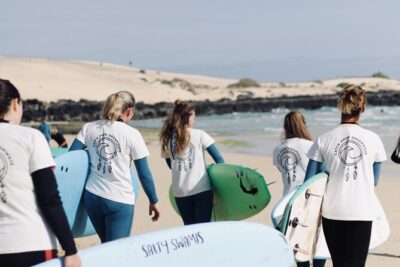
Lezioni di Surf per Beginner e Intermedi (6 persone a istruttore)
Read our review →Browse the lists this lesson appears in