REVIEW · MAUI
2 Hour Beginner Group Surf Lessons
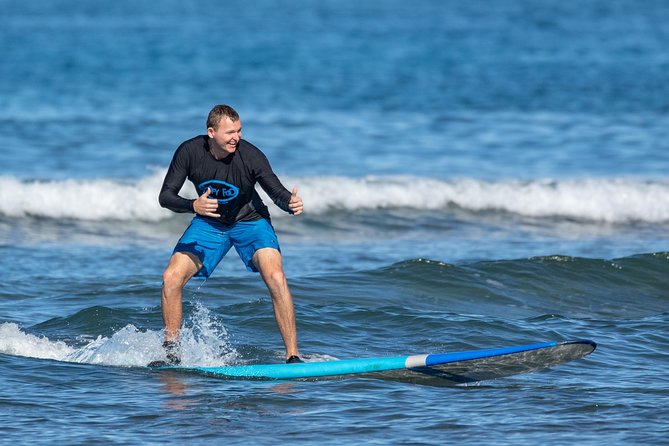
Catch your first wave in Maui. This two-hour lesson puts you in the birthplace of surfing with small groups capped at five, which means useful coaching instead of a distant instructor shouting from shore. I like the complete gear setup and the patient teaching style, with instructors such as Mario, Austin, Phillipe, and Javier praised for clear feedback and steady encouragement. The main consideration is the early arrival: you need to reach the meeting point 30 minutes before the lesson, so this takes about two and a half hours from start to finish.
I also like that the lesson works for families, couples, and first-timers who have never touched a board. Many beginners manage to stand and catch several waves, but ocean conditions still matter. No instructor can promise a perfect ride every time, and anyone aged eight or younger must book private instruction instead of joining this group class.
Key points to know before you book
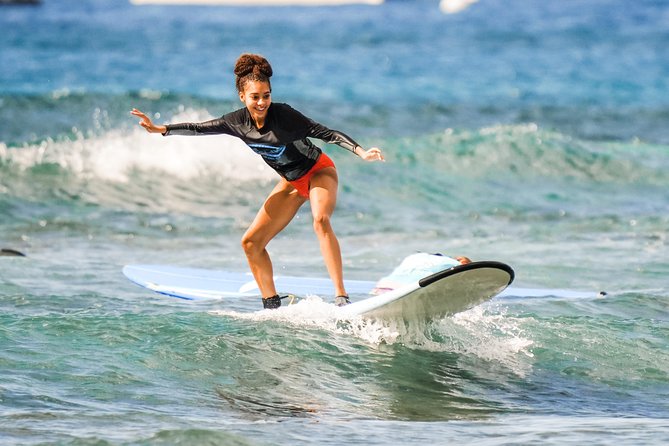
- Five-person maximum: A small class gives the instructor time to help with your stance, paddling, and timing.
- Two hours in the water: The lesson includes a land introduction followed by repeated practice on the waves.
- Gear is supplied: Boards, rash guards, and reef shoes are provided. Bring swimwear, sunscreen, a towel, and water.
- Beginner-friendly instruction: Coaches break the process into simple steps and offer encouragement after wipeouts.
- Ages nine and up: Children eight or younger need a private lesson, with no exceptions.
- Lahaina meeting point: You begin and finish at Hawaii 30HI-30 in Lahaina, near the beach and local amenities.
Why this Maui surf lesson works for beginners
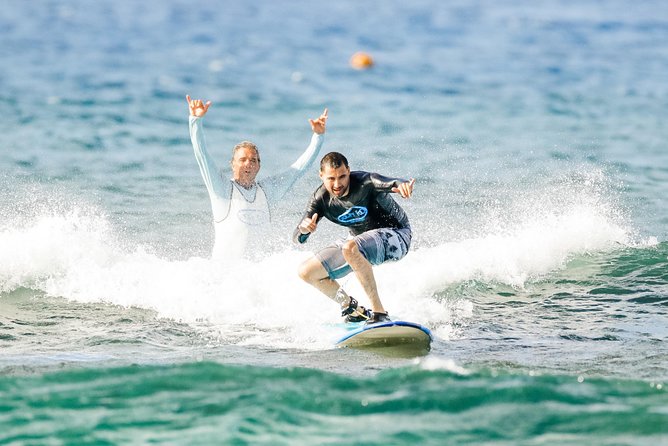
Surfing can look simple from the beach. Paddle, stand, ride. In practice, your timing, balance, foot placement, and nerves all need to cooperate at once. A good first lesson makes those pieces manageable, and this class is built around that goal.
You begin with a short explanation on land. This is where you learn how to lie on the board, position your hands, push up, and place your feet. It may feel basic, but this part saves time in the water. You get a chance to rehearse the movement without a wave pushing you around.
The instructors use a friendly, practical approach. Austin has been praised for letting beginners make mistakes while still offering clear corrections. Phillipe has a reputation for giving a useful play by play when a student misses a wave. That balance matters. You need enough freedom to feel the movement, but not so much that you repeat the same mistake all morning.
After the land lesson, you head into the water with your board. The exact wave conditions can change, but the experience is designed around manageable surf rather than a serious test of strength. Past sessions have included steady, smaller waves that gave beginners repeated chances to practice.
More Beginner Surf Lessons in Maui
- Maui: Two Hour Beginner Group Surf Lesson in Kihei
★ 5.0 · 950 reviews - Paddle, Snorkel and Learn to Surf: All in a Day on Maui
★ 4.5 · 26 reviews - Group Surf Lesson for Beginners in Kihei at Kalama Park
★ 5.0 · 11 reviews
The two-hour lesson, step by step
Arriving 30 minutes early in Lahaina
The advertised activity lasts about two hours, but plan on arriving 30 minutes before your scheduled start. That early check-in gives you time to get fitted with equipment and prepare without rushing.
Wear your swimsuit or other swim attire when you arrive. The school supplies the surfing equipment, rash guard, and reef shoes. You should bring a towel, sunscreen, and a refillable water bottle. Those items are not minor comforts. You will be outside, in salt water, and working harder than the relaxed beach setting may suggest.
The meeting point is listed at Hawaii 30HI-30, Lahaina, Hawaii 96761. The activity returns to this same point at the end. Information from past sessions places the surf shop close to the beach, with a public parking area about a three-minute walk away and the Lahaina banyan tree area roughly a minute away. That makes it easy to pair the lesson with food or a walk afterward, though you should allow time to park and check in.
Learning the basics on shore
Your instructor starts with the essentials. Expect a short explanation of board handling and the movement needed to get from lying down to standing. You will also receive basic safety guidance before heading out.
This is not a lecture-heavy class. The strength of the session is its quick move from explanation to practice. The instructors then watch what you do and adjust their advice. That approach suits beginners who learn better by trying rather than listening to a long technical talk.
A small group helps here. With no more than five people, the instructor can notice if your feet are too close together, your hands are in the wrong position, or you are looking down instead of toward the beach. Those small corrections often make the difference between falling immediately and riding a wave a few extra seconds.
More Beginner Surf Lessons in the USA
- Maui: Surf Lessons for Families, Kids, and Beginners
★ 5.0 · 3 reviews - Oahu: Beginner-Friendly Waikiki Beach Surfing Lesson
★ 4.9 · 425 reviews - Oahu: Waikiki 2-Hour Beginner Group Surf Lesson
★ 4.9 · 191 reviews - North Shore Beginner Surf Lesson, Hawaii
★ 4.5 · 114 reviews
Paddling out and taking turns
Once you reach the practice area, you take turns catching waves. The experience is active rather than passive. You will not spend the entire lesson watching someone else surf.
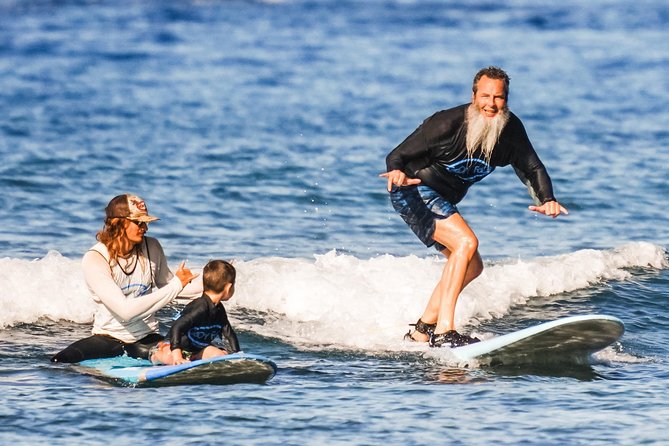
The instructors help position you for a wave, give timing advice, and offer encouragement when the board starts moving. Some students need help getting back toward shore after a ride, and instructors have assisted with that as part of the lesson. You should expect a mix of paddling, waiting briefly for the right wave, standing attempts, and resets after a fall.
That repeated practice is the real value of the two-hour format. A quick introductory session can leave you with only a vague sense of what surfing feels like. Here, you have time to try again after the first success, adjust after a mistake, and build a little confidence.
Many first-timers have stood up during the lesson, sometimes on their first attempt. That is encouraging, but it should not become your only measure of success. Ocean conditions, fitness, balance, and timing all play a part. A useful instructor will help you improve even if you do not ride every wave.
Finishing on a good wave
The lesson ends back at the original meeting point. Some sessions have run a few extra minutes so students could finish with one last wave, but you should treat that as a courtesy rather than a promise.
You may leave tired. One child was described as exhausted but happy after a session, which is a fair picture of the activity. Surfing uses your arms, legs, and core, and paddling through even gentle waves takes effort.
The teaching style: patient, upbeat, and hands-on
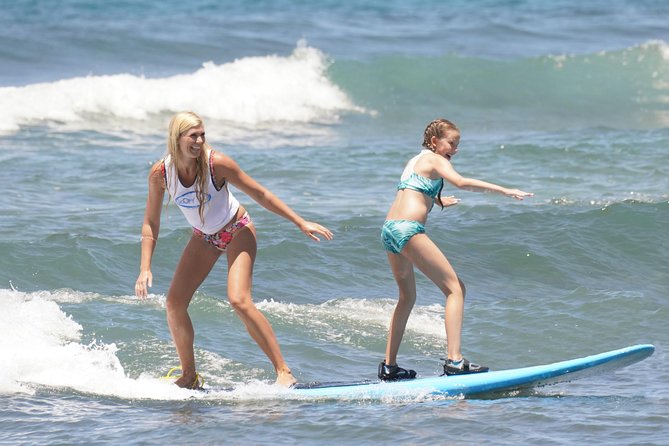
The strongest feature of this class is the instructor attention. Names praised in past sessions include Mario, Austin, Phillipe, Joe, Hugo, Shane, Keith, Curran, Kailani, and Javier. The specific instructor you receive depends on the schedule, but the teaching qualities are consistent in the feedback: patience, humor, clear directions, and active support in the water.
Mario has been especially appreciated for keeping children engaged and making the lesson fun. Curran stayed close to children until they were surfing with more confidence. Kailani worked with three siblings at different ability levels, giving the youngest extra help while still guiding the older children.
That family focus is useful. Parents can feel uneasy when a child enters the ocean for the first time. The class is designed for students aged nine and older, and the instructor support is one reason families have felt comfortable bringing children into the water.
The teaching also works for adults. One couple included a person who had surfed before and another complete beginner, and the instructor adjusted feedback for both. If you are returning to surfing after decades away, expect to need a refresher. The basics come back faster when someone watches your form and gives you one clear correction at a time.
Waves, safety, and the limits of a beginner class
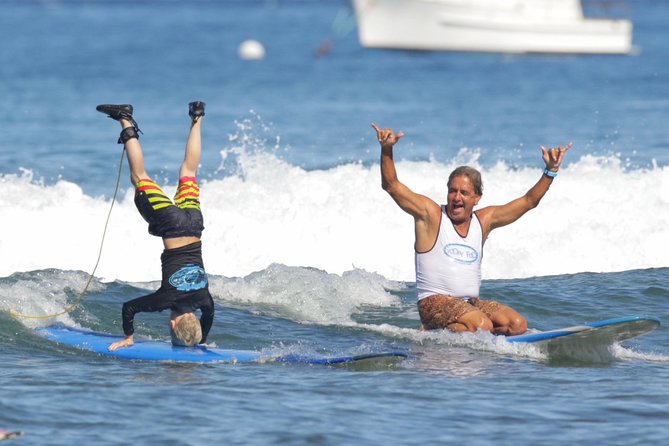
The surf location has been praised as suitable for learning, with waves that are often steady without being too large. That is exactly what you want for a first session. A wave needs enough energy to move the board, but excessive size can make the experience intimidating and tiring.
Conditions are not fixed. The school has changed lesson times or locations when a different spot offered better surf. That is a sensible choice, but it means your meeting details could change. Pay attention to any communication from the school before the lesson.
Safety is handled through the land briefing, reef shoes, instructor supervision, and the controlled group size. One student became seasick during a past lesson and was helped safely back to shore, then allowed to return when feeling better. That is a good reminder to listen to your body. You do not need to prove anything by staying in the water when you feel unwell.
You should also be realistic about the ocean. Even with a strong instructor, you may wipe out, swallow some water, or need several attempts before standing. The positive teaching style helps, but it cannot remove the physical challenge.
Families, couples, and solo beginners
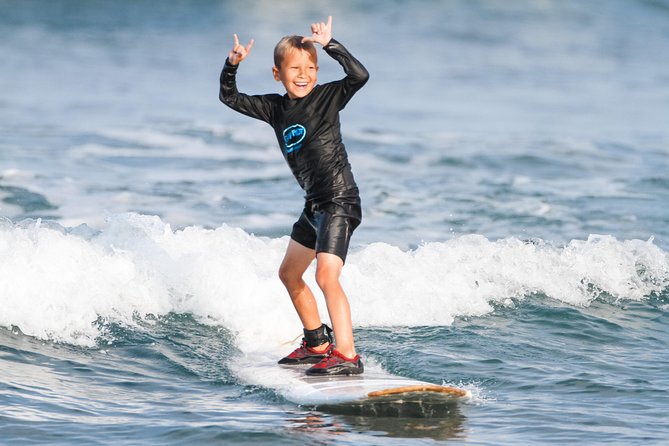
This is a particularly good fit for families with children aged nine and up. Siblings can learn together, and the small class keeps the instructor close enough to help the youngest participant without ignoring everyone else.
Couples also get a nice shared activity. One person can be more experienced while the other starts from zero, and both still have room to work at their own pace. You will have something more memorable to talk about afterward than another afternoon beside the pool.
Solo adults should fit in well too. The class is social without requiring you to arrive with a group. A maximum of five people limits the chance of feeling lost in a crowd.
This may not suit you if you want private coaching, advanced technique, or a guarantee of large waves. Children eight and younger cannot join the group lesson, and people seeking individual attention should choose the private option instead.
What the equipment and extras are worth
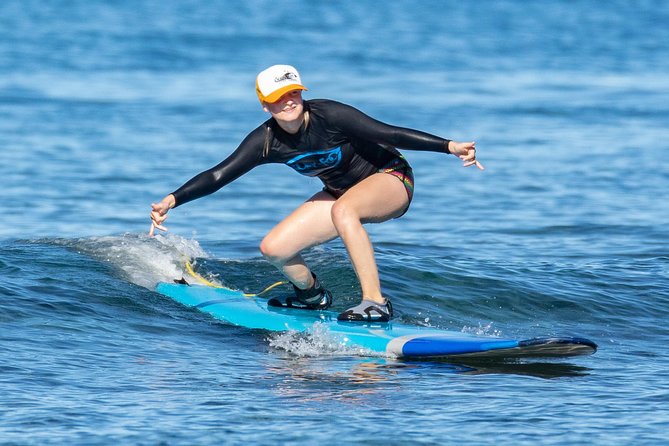
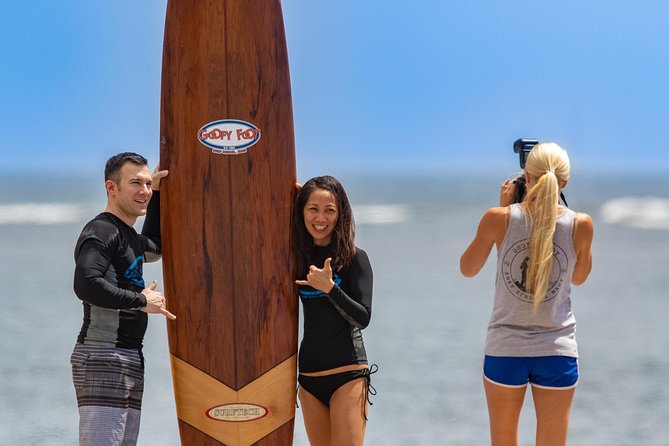
Having the board, rash guard, and reef shoes supplied makes this easier to arrange than a self-guided rental. You do not need to guess what board size works for a first-timer or buy equipment for a sport you may never repeat.
The supplied reef shoes are especially useful for comfort and footing around the entry area. You still need to bring sunscreen, a towel, swimwear, and water. I would apply sunscreen before arrival so you can spend the check-in period getting organized rather than hurriedly coating yourself at the last minute.
A photographer may also be available during the lesson. Past sessions included action photos for an additional fee, and the option appealed to families who wanted to watch their children instead of trying to photograph from shore. The photos are not part of the basic lesson, so ask about the current arrangement and cost before agreeing.
No price is provided here, so I cannot judge the exact dollar value. I can say what you are paying for: two hours of instruction, a maximum five-person group, supplied equipment, and repeated time on the water. Compared with simply renting a board, the instruction is the important difference. You are paying to learn safer habits, get immediate corrections, and improve your odds of catching a wave.
Planning your time around the lesson
The early sessions have an obvious advantage: less crowding as the morning goes on. If you are choosing among several available times, I would lean toward an earlier slot when practical. You may get calmer energy, cooler conditions, and a little more open water.
Still, choose a time you can reach without stress. Arriving late cuts into your equipment fitting and land lesson, and the school asks you to arrive 30 minutes early. The activity is offered in English, so you should be comfortable following spoken instructions in English.
Afterward, the Lahaina setting gives you simple options for extending the outing. The meeting point is near public transportation, restaurants, and the banyan tree area. You could grab food in the shade or take a relaxed walk after changing, provided you have arranged your own dry clothes and belongings.
The activity ends where it begins, which keeps the logistics simple. You do not need to arrange a second pickup location or work out where to meet your group afterward.
Cancellation and booking flexibility
Free cancellation is available if you cancel at least 24 hours before the scheduled start time. Canceling or changing the booking less than 24 hours ahead means you will not receive a refund, and late changes are not accepted.
That rule matters in Maui, where weather and ocean conditions can affect plans. If you are unsure about your schedule, book a time you can protect. If the school needs to change the time or location for better surf, watch for its communication and respond promptly.
Service animals are allowed, and the activity is near public transportation. Most people can participate, but the age rule is firm: group students must be at least nine years old.
Should you book the Goofy Foot group lesson?
I would book this if you want a friendly first taste of surfing without buying gear or committing to private coaching. The small class, patient instructors, and repeated attempts in the water give you a fair chance to stand up and catch a wave.
Families should find especially good value here. The instructors have shown care with children, and the nine-and-up rule lets older kids learn alongside parents or siblings. Couples and solo beginners also get enough individual attention to make the class feel personal.
I would skip it only if you need instruction for a child eight or younger, want advanced surf coaching, or cannot protect the full two-and-a-half-hour time block. For everyone else, this is a practical Maui activity with a clear payoff: you learn a new skill, spend real time in the ocean, and may leave with your first ride under your feet.
FAQ
How long is the surf lesson?
The surfing lesson lasts approximately two hours. You should arrive 30 minutes before the scheduled start time for check-in and equipment preparation.
Where does the activity meet?
The meeting point is Hawaii 30HI-30, Lahaina, HI 96761, USA. The activity ends back at the same meeting point.
What equipment is provided?
The school provides the necessary surfing equipment, reef shoes, and rash guards.
What should I bring?
Bring swim attire, a water bottle, sunscreen, and a towel.
What is the minimum age for a group lesson?
Students must be at least nine years old to join a group lesson. Children aged eight or younger must take a private lesson.
How many people can join the group?
The group has a maximum of five participants.
Is the lesson offered in English?
Yes. The activity is offered in English.
Are service animals allowed?
Yes, service animals are allowed.
Can I cancel for a full refund?
Yes, if you cancel at least 24 hours before the experience start time. Cancellations made less than 24 hours ahead are not refunded, and late changes are not accepted.
More Group Surf Lessons in the USA
- Group Surf Lesson at Ka’anapali Beach
★ 4.5 · 82 reviews - Maui: Group Surf Lesson
★ 5.0 · 43 reviews - Open Group Surfing Lesson in Waikiki, Hawaii
★ 4.5 · 582 reviews - Waikiki Private Group Surf Lesson
★ 5.0 · 298 reviews
More Group Surf Lessons in Maui
- Group Surf Lesson at Kalama Beach in Kihei
★ 5.0 · 264 reviews - Maui Lahaina Group Surf Lesson
★ 4.9 · 235 reviews - Group Surf Lessons from Kaanapali Beach
★ 5.0 · 143 reviews - 2 Hour Private Group Surf Lesson in Lahaina Maui
★ 5.0 · 129 reviews
Just added around Maui
- South Maui: Semi-Private Surf Lesson★ 4.9 · 17 reviews
- South Maui: Kalama Beach Park Surf Lessons★ 4.9 · 38 reviews
- Maui: Private Surf Lesson★ 5.0 · 3 reviews
- Maui: Surf Lessons for Families, Kids, and Beginners★ 5.0 · 3 reviews
- Maui: Private Surf Lessons in Lahaina★ 5.0 · 21 reviews
- Maui: Group Surf Lesson★ 5.0 · 43 reviews
- Paddle, Snorkel and Learn to Surf: All in a Day on Maui★ 4.5 · 26 reviews
- Group Surf Lesson for Beginners in Kihei at Kalama Park★ 5.0 · 11 reviews
Beginner Surf Lessons, compared.
Legian Beach, Bali: Beginner or Intermediate Surf Lessons
Read our review →
Beginner & Intermediate Surf Lesson with Equipment
Read our review →

Learn to Surf in Chill Beach Vibes & Good Times
Read our review →
Beginner-Friendly Waikiki Beach Surfing Lesson
Read our review →
Beginner Surf Lesson at the Beautiful Algarvian West Coast
Read our review →