
REVIEW · MAUI
Waves Hawaii Surf School in Kihei Maui
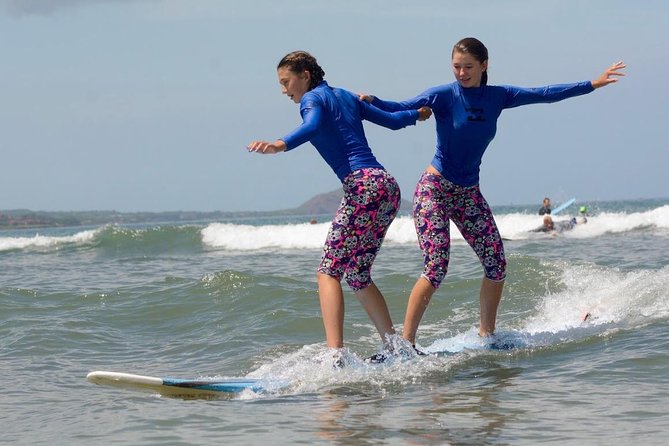
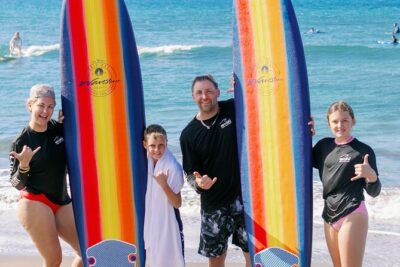
Catch your first wave in sunny Kihei. Waves Hawaii Surf School keeps the lesson simple, friendly, and focused on getting you safely standing on a board. You meet at Kalama Park, the south shore’s central surfing area, then learn the basics on land before heading into the water.
I like the patient instruction and the fact that rash guards, reef shoes, and boards are included. I also like the choice between a group lesson and private instruction, which makes this a good fit for families with mixed skill levels. The main consideration is timing: a 9:30 lesson can be crowded, so an earlier start may give you more room in the water.
The two-hour session costs $103.12 per person. That is a fair price for a lesson that includes a professional instructor and all essential surf gear, though souvenir photos cost extra. With a 4.9 rating from 118 reviews and a 98 percent recommendation rate, this is one of Kihei’s stronger choices for first-time surfers.
Key points to know before you book
- Kalama Park is the starting point: Meet at 1900 S Kihei Road and arrive a little early for check-in.
- The lesson is built for beginners: You learn board technique and safety on land before entering the water.
- All basic equipment is supplied: Your package includes a rash guard, reef shoes, and surfboard.
- Private lessons help younger children: Children under 8 are advised to book a private one-on-one session.
- Early times may be better: A 7:30 lesson can offer better waves and fewer people than a later morning slot.
- The water entry can be rocky: Reef shoes are not just a nice extra. They help protect your feet.
Starting at Kalama Park in Kihei
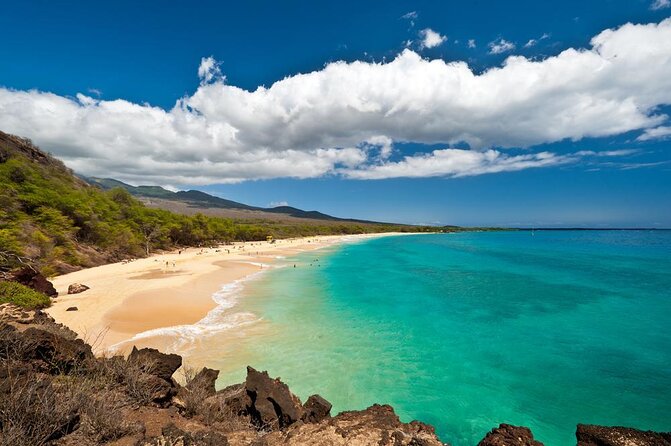
Your lesson begins at Kalama Park, at 1900 S Kihei Road in Kihei. The park sits near shops and restaurants, making it an easy place to find before or after your lesson. It is also known as a central surfing area on Maui’s south side, so you are starting in a setting that feels connected to local beach life rather than at an isolated resort desk.
Plan to arrive slightly before your scheduled time. You need to check in, meet your instructor, and get fitted with equipment before the actual water work begins. Hotel pickup and drop-off are not included, so you are responsible for reaching the meeting point.
The activity ends back at the same meeting point. That matters if you are arranging lunch, a beach visit, or another Maui activity afterward. You can keep the rest of your morning flexible, but allow a little extra time beyond the advertised two hours in case changing and check-in take longer than expected.
More Surf Lessons in Maui:
- Maui: Two Hour Beginner Group Surf Lesson in Kihei
★ 5.0 · 950 reviews - Outrageous Surf ScHool Lesson on Lahaina Side
★ 4.5 · 547 reviews - Group Surf Lesson at Kalama Beach in Kihei
★ 5.0 · 264 reviews
The land lesson comes before the waves
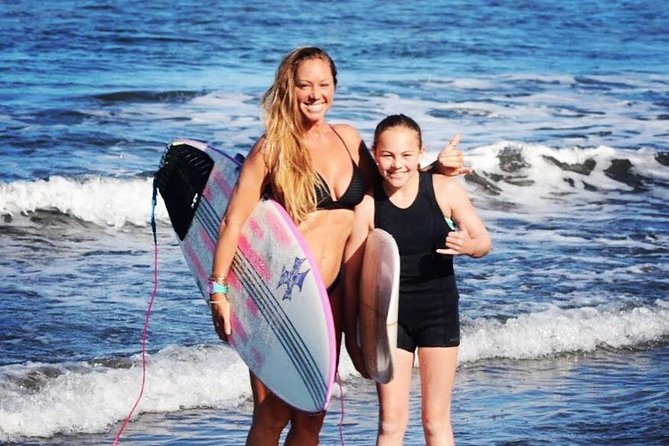
A good first surf lesson should not begin with someone pushing you into the ocean. Waves Hawaii starts on land, where your instructor explains how to lie on the board, paddle, stand, and handle the board safely.
This short practice is valuable because standing on a moving board requires quick, automatic movements. You can work through the sequence without waves, salt water, or pressure. The instructors then adjust the lesson to your level. A complete beginner gets the basic routine, while someone with previous experience can work on timing and technique.
Safety is part of this opening instruction. One particularly useful detail is learning how to get off the board safely around the rocky bottom. That may sound minor, but it can make a first session more comfortable and prevent a careless step from spoiling the morning.
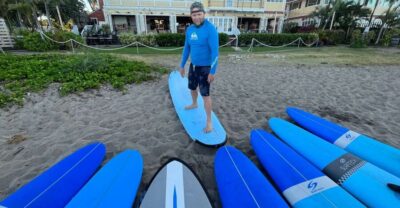
The instructors also fit you with a rash guard and reef shoes. The rash guard protects against board rubbing and gives everyone a clear lesson uniform. The reef shoes are especially useful at this location, where the bottom can be rocky. You should treat them as important equipment, not as a disposable add-on.
Moving from practice to the water
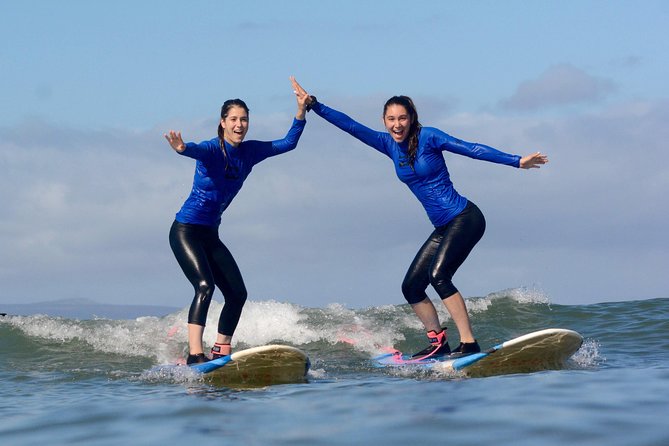
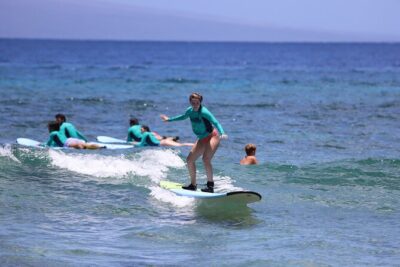
Once you are comfortable with the basic movements, the class heads into the water. Your instructor helps position the board and tells you when to paddle and when to stand. This is a smart approach for beginners because wave timing can be harder than the standing technique itself.
Several families have found that this hands-on help lets children focus on balance instead of exhausting themselves by paddling. As you improve, the instructor can give you more responsibility for reading the timing and catching the wave yourself.
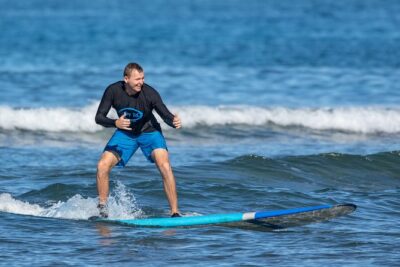
That gradual change is one of the best features of the lesson. You are not simply pushed into a wave again and again. You get help at the start, then more independence as your confidence grows. The goal is not only to stand once for a few seconds. It is to understand enough of the process to keep trying on your own.
The lesson can suit different ability levels in the same group. Families have had children and adults with varying experience in one session, with instructors giving individual attention as needed. If you want more uninterrupted coaching, a private lesson is the better choice.
Why families rate the instruction so highly
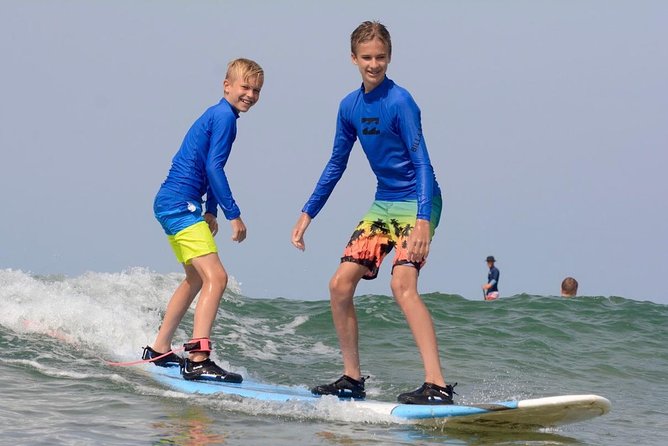
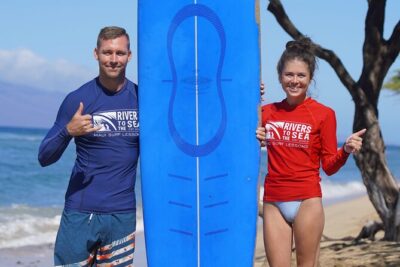
The most consistent praise goes to the instructors’ patience and encouragement. Names connected with especially positive sessions include Sophie, Jessica, Sasha, Lucas, Carlos, and Funchie. Instructor assignments can change, but the pattern is clear: the teaching style is warm, active, and aimed at helping beginners succeed.
Sophie and Jessica helped one family’s 11-year-old keep smiling through the morning while also making sure he did not wear himself out paddling back out. Sasha helped two daughters, ages 16 and 9, get up on their first attempt. Lucas made the process easy and fun for two boys.
Those details matter more than a simple claim that the staff is friendly. Surfing can feel awkward at first, especially for children who are unsure about falling in front of strangers. A calm instructor can make the difference between trying again and sitting on the beach.
The instruction also appears to work for adults. One family described both a husband and son surfing independently by the end of their session. Another group with mixed ability levels appreciated getting one-on-one help without needing separate lessons for everyone.
Still, do not expect every person to become a polished surfer in two hours. The realistic goal is an enjoyable introduction, some useful technique, and a chance to catch a few waves. Conditions, fitness, balance, and confidence all affect how much you accomplish.
Same place, a different way into the water:
- Maui Lahaina Group Surf Lesson
★ 4.9 · 235 reviews - Private Surf Lesson for Two Near Lahaina
★ 5.0 · 189 reviews - 2 Hour Beginner Group Surf Lessons
★ 5.0 · 154 reviews - Group Surf Lessons from Kaanapali Beach
★ 5.0 · 143 reviews
Choosing between group and private instruction
The group option gives you a social, lower-cost way to try surfing. It can be a good fit for families, friends, or first-timers who like learning together. The maximum group size is 30 people, although the teaching setup may be divided among instructors. The strong praise for low student-to-teacher ratios suggests that personal help is an important part of the operation.
If your group includes very young children, private instruction deserves serious thought. Children under 8 are specifically advised to book a private one-on-one lesson. Younger children may need more time, more physical help, and more encouragement than a standard group session allows.
Private instruction is also useful if one person in your party is nervous, has previous experience, or wants to work at a different pace. You pay more for individual attention, but the extra focus may be worthwhile if a standard group lesson would leave someone struggling to keep up.
You should have a moderate level of physical fitness. Surfing involves paddling, balancing, getting back on the board, and repeating the process. The instructors can help with technique, but they cannot remove the physical work.
Timing matters more than you might expect
A useful practical tip is to book as early as possible. A 7:30 lesson may have better waves and fewer people in the water than a 9:30 session. One family was offered an earlier time after booking but kept the later start, then wished they had changed it because the water was busier.
That does not mean a 9:30 lesson is a poor choice. The family still had a great time, and both children surfed on their first try. It simply means the later morning can be more crowded, which may affect how much open water you have and how relaxed the lesson feels.
When you book, ask about the available start times rather than choosing only for convenience. An early lesson also leaves more of the day open for other plans. If you are bringing children, the cooler and quieter morning may be easier for them.
Surf conditions can change, and the school requires good weather. If poor weather forces a cancellation, you can receive a different date or a full refund.
What is included, and what costs extra
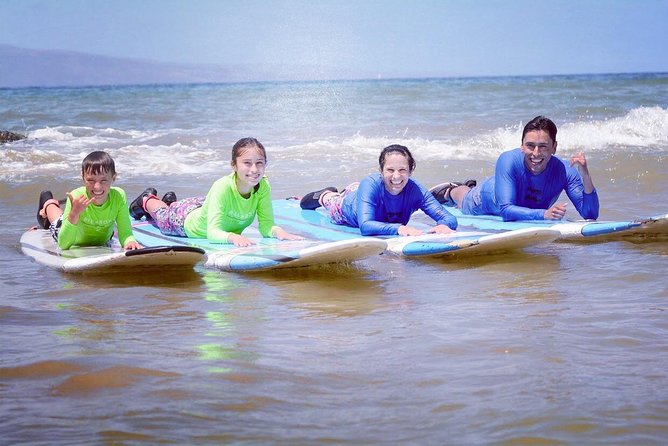
At $103.12 per person, the price covers a professional instructor plus a rash guard, reef shoes, and surfboard. That makes the cost easier to judge because you do not need to rent the basic equipment separately for this lesson.
The value is strongest for a first-time surfer. Buying or renting a board, finding suitable instruction, and working out water safety on your own would be less straightforward. You are paying for equipment, structure, supervision, and the chance to learn in a controlled setting.
Souvenir photos are not included. A photographer may be present in the water, and photos can be purchased separately. This is useful if you want proof of your first ride, but you should treat it as an optional extra rather than part of the advertised price.
Hotel transportation is also not included. Since you must reach Kalama Park on your own, this lesson works best if you are staying in or near Kihei, have a rental car, or already plan to visit south Maui.
The curious Makena State Park reference
The itinerary identifies Makena State Park as a second stop, but the detailed meeting and ending information places the activity at Kalama Park, and no separate transport or stop-by-stop visit at Makena is described.
For planning purposes, I would not assume you will have a guided visit or sightseeing time at Makena State Park. Treat the surf lesson as a Kalama Park activity unless the school confirms something different before your date. If you want to visit Makena afterward, plan it as a separate part of your day.
This is a small but important distinction. Maui schedules can become crowded quickly, and assuming an included park visit could leave you short on time.
Is this a good first surf lesson for children?
Yes, with the right booking choice. Children aged 9 and 11 have successfully stood on the board during their first lesson, and teenage beginners have also had long rides with instructor support.
The strongest child-friendly features are the patient coaching, the instructors’ help with paddling, and the gradual move from direct assistance to independent attempts. The shore location also allows family members who are not surfing to watch and take their own video.
For children under 8, choose the private one-on-one format as advised. For older children, consider their swimming comfort, physical stamina, and willingness to listen to safety instructions. The class is active, and a child who is tired or anxious may benefit from more personal attention.
The lesson is not a passive beach activity. You will work. Expect paddling, repeated attempts, and some falls. That is part of the fun, but it helps to set the right expectation before arriving.
What makes the experience feel authentic
Surfing here is not reduced to a quick photo opportunity. You learn the basic movements, get practical instruction about the board and the bottom, and spend much of the session trying to catch waves.
The setting at Kalama Park adds to that feeling. You are near local shops and restaurants in Kihei, in an area known for surfing on Maui’s south side. The experience connects a simple holiday activity with a real part of the island’s beach culture.
Some people have also spotted sea turtles while paddling out. That is not guaranteed, and it should not be the reason you book, but it can add a memorable moment to the session. Keep your attention on safety and instruction first.
The school’s high rating, 4.9 from 118 reviews, matches the practical strengths of the experience: friendly teachers, useful gear, and a clear path from land practice to water practice. The 98 percent recommendation rate is also strong, though no lesson can promise perfect waves or that every person will stand on the first try.
Cancellation and basic planning details
You receive confirmation when you book, and the ticket is mobile, so you can keep the booking on your phone. The lesson is offered in English.
Free cancellation is available up to 24 hours before the local start time for a full refund. Cancellations or changes made less than 24 hours ahead are not accepted for a refund. Weather-related cancellations are handled with either a new date or a full refund.
Wear whatever you can comfortably change out of for a water activity, though the supplied rash guard and reef shoes cover the main surf equipment needs. Bring only what you need to the meeting point, and allow time for check-in before the scheduled start.
Should you book Waves Hawaii Surf School?
Book it if you want a practical, beginner-focused surf lesson in Kihei, especially if you are traveling with children or a mixed-ability group. The instructors receive praise for patience, the equipment is included, and the two-hour format gives you enough time to learn the basics without taking over your whole day.
Choose an early start if possible. Choose private instruction for children under 8 or anyone who needs extra reassurance. Also budget separately for photos and your own transport to Kalama Park.
I would skip it only if you want a quiet, uncrowded water session at any time of day, need hotel pickup, or dislike physically demanding activities. For most first-timers, the price is reasonable, the setup is straightforward, and the chance of standing on a board makes this a worthwhile Maui morning.
FAQ
Where does the Waves Hawaii Surf School lesson begin?
The lesson begins at Kalama Park, located at 1900 S Kihei Road, Kihei, Hawaii 96753.
How long does the surf lesson last?
The lesson lasts approximately two hours.
What equipment is included?
The price includes a rash guard, reef shoes, and a surfboard, along with instruction from a professional teacher.
Is hotel pickup and drop-off included?
No. You need to make your own way to Kalama Park, and the activity ends back at the meeting point.
Can children under 8 join the lesson?
Yes, but children under 8 are advised to book a private one-on-one lesson.
Is the activity suitable for beginners?
Yes. The lesson begins with safety instruction and practice on land before you enter the water, making it suitable for first-time surfers.
What happens if bad weather cancels the lesson?
If poor weather causes a cancellation, you can choose a different date or receive a full refund.
Just added around Maui
- South Maui: Semi-Private Surf Lesson★ 4.9 · 17 reviews
- South Maui: Kalama Beach Park Surf Lessons★ 4.9 · 38 reviews
- Maui: Private Surf Lesson★ 5.0 · 3 reviews
- Maui: Surf Lessons for Families, Kids, and Beginners★ 5.0 · 3 reviews
- Maui: Private Surf Lessons in Lahaina★ 5.0 · 21 reviews
- Maui: Group Surf Lesson★ 5.0 · 43 reviews
- Group Surf Lesson for Beginners in Kihei at Kalama Park★ 5.0 · 11 reviews
- Paddle, Snorkel and Learn to Surf: All in a Day on Maui★ 4.5 · 26 reviews
Maui Surf Lessons, compared.

2 Hour Private Group Surf Lesson in Lahaina Maui
Read our review →Browse the lists this lesson appears in