
REVIEW · OAHU
Beginner Surf Lesson at North Shore Haleiwa, Oahu
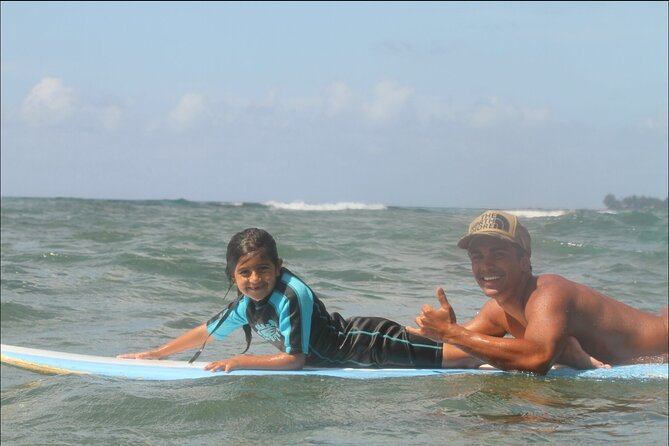
Your first wave can happen faster than you think. At Puaʻena Point Beach Park in Haleiwa, this two-hour beginner lesson gives you a board, safety instruction, patient coaching, and plenty of time in the water. The setting is especially appealing because you may surf with Hawaiian green sea turtles nearby, and the beach is described as family-friendly.
I like the small private format, since only your group takes part. I also like that the lesson moves quickly from a short beach demonstration to actual surfing, rather than spending most of the session on land. The main consideration is the price: at $150 per person, this is not a cheap beach activity, though the equipment and professional instruction are included.
The teaching has earned a perfect 5 rating from 19 published reviews, with 100 percent recommending the experience. In particular, instructors Kekai and Koa receive praise for patience, clear explanations, and helping nervous children and first-time surfers get upright. One practical warning came up, too: watch where you step near the beach, since sea urchins may be present.
Key points before you book
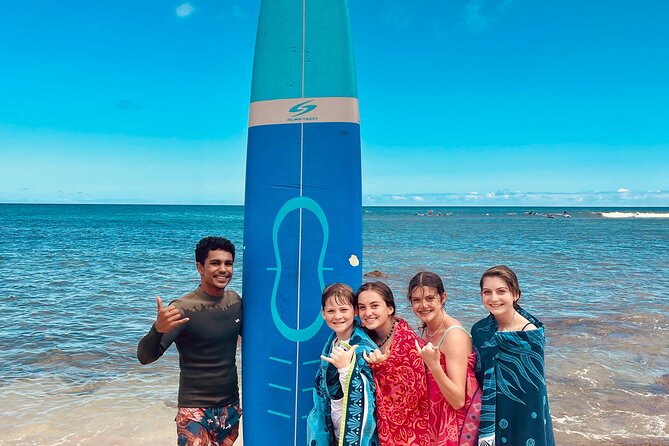
- Puaʻena Point is the full base: You meet at Puaʻena Point Beach Park in Haleiwa and return there after the lesson.
- The lesson gives you 1.5 to 2 hours in the water: A 15 to 20 minute land session covers safety, paddling, and standing up before you head into the surf.
- All essential surf gear is supplied: Your package includes a surfboard, leash, rash guard, and water.
- The class suits nervous beginners: The instructors work with children and adults, and past participants describe patient, reassuring coaching.
- Turtles are part of the appeal: Hawaiian green sea turtle sightings are guaranteed year-round as part of the experience.
- Book ahead: The activity is often reserved about 27 days in advance, so waiting until your Oahu trip may leave you without a suitable time.
Starting at Puaʻena Point Beach Park in Haleiwa
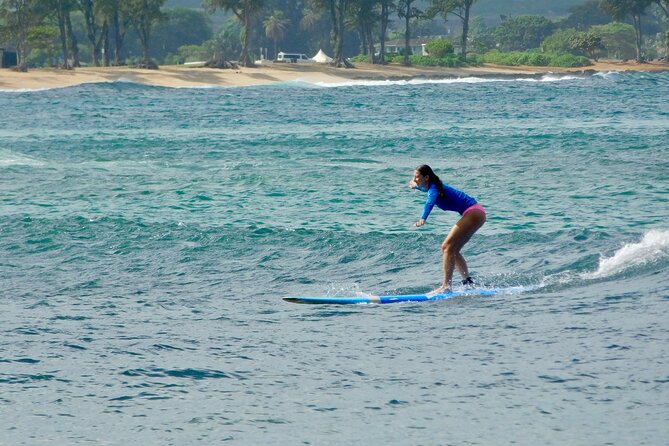
Your meeting point is Puaʻena Point Beach Park, on Kahalewai Place in Haleiwa. This is both the starting and ending point, which keeps the day simple. You do not need to coordinate a separate beach pickup or find your way to a second location after the lesson.
The beach is presented as a family-friendly spot with attractive views and frequent turtle sightings. That makes the setting a good match for a first lesson. You can focus on learning instead of dealing with a major resort beach or a complicated activity center.
The precise meeting procedure is not described, so pay close attention to your confirmation when booking. Confirmation arrives at the time of booking, and the activity is offered in English. It is also near public transportation, which may help if you are not driving around Oahu.
You should allow enough time to arrive at the park without rushing. Surf lessons depend on the ocean, the meeting time, and the group being ready to go. The operator has also helped adjust lesson times for families when a quieter period was available, so keep an eye on messages after booking.
More Beginner Surf Lessons in Oahu
- Oahu: Beginner-Friendly Waikiki Beach Surfing Lesson
★ 4.9 · 425 reviews - Oahu: Waikiki 2-Hour Beginner Group Surf Lesson
★ 4.9 · 191 reviews - North Shore Beginner Surf Lesson, Hawaii
★ 4.5 · 114 reviews
Getting fitted with a board, leash, and rash guard
Once your group is together, the instructor sets you up with the basic gear needed for the session. That includes a surfboard, leash, and rash guard, plus water. You do not need to pack a board or rent equipment elsewhere, which is one reason the $150 price may make sense for someone who wants a simple first attempt.
The gear matters more than it might seem. A beginner needs a board suited to learning, a leash to keep the board close, and a rash guard for comfort while paddling. The description specifically says the instructor makes sure you have appropriate equipment for success, so the lesson is not simply a board handoff followed by instructions to figure things out alone.
Food and drinks are not included. Water is supplied, but you should plan your meal separately. The two-hour duration is long enough to take some energy, especially if you are paddling hard and repeatedly getting back on the board.
A private activity does not necessarily mean one instructor per person. It means only your own group participates. Families have described working with two or three instructors, while solo participants may receive very direct attention. If personal coaching is your top concern, it is sensible to confirm the instructor arrangement for your party.
Learning safety and surf etiquette on the sand
Before entering the water, you receive a short lesson on surfing safety and etiquette. This is an important part of the experience, not filler. Beginners need to understand how to handle a board, where to position themselves, and how to share the surf without putting another person at risk.
The land demonstration usually takes 15 to 20 minutes. You learn how to paddle and how to move from lying on the board to standing. The instructor also explains how to read the waves in basic terms, giving you a better chance of making useful decisions once you are out there.
I appreciate the planned balance here. Some first lessons spend too long talking and not enough time surfing. This one gives you the essentials on shore, then gets you into the water for the larger part of the session.
That said, the pace may feel brisk if you are very nervous or have never handled a surfboard. The teaching style is clearly active and practical. You should expect to learn by trying, falling, adjusting, and trying again rather than sitting through a long formal class.
Catching waves during the 1.5 to 2-hour water session
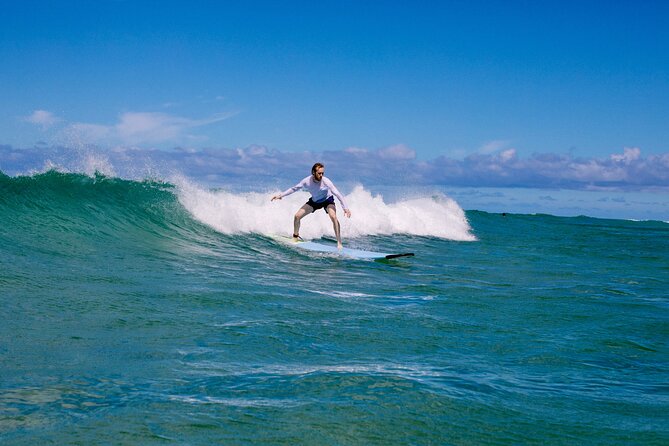
After the beach instruction, the group heads into the surf. The full experience lasts about two hours, with roughly 1.5 to 2 hours described as an ideal learning period. This is where the activity earns its value: you have enough time to make several attempts, listen to corrections, and improve during the same session.
The instructor helps with paddling, board position, standing, and understanding the waves. The goal is not just to push you onto one wave and send you home. You are meant to catch multiple waves and learn the basics of riding, even if your balance and timing are still developing.
Past participants consistently praise the instructors for getting them into the water quickly. Kekai is described as supportive, attentive, and clear, with a calm energy that helped first-timers feel comfortable. Another session with Kekai and Koa helped a nervous family settle down, and the eight and ten-year-old children were able to surf.
That makes this lesson especially appealing for families. Children may need more reassurance than adults, and parents often spend too much time worrying about safety to enjoy the activity. The instruction seems designed to keep the mood encouraging while still getting everyone involved.
Do not expect every attempt to be graceful. Surfing asks you to coordinate paddling, timing, balance, and a quick stand-up motion all at once. The advertised promise is that you will stand up and ride waves on your first day, but your number of successful rides will depend on conditions, confidence, and how quickly your body adapts.
More Beginner Surf Lessons in the USA
- Group Surf Lesson: Two Hours Of Beginners Instruction
★ 5.0 · 32 reviews - Beginner Surf Lesson in North Shore, Oahu
★ 5.0 · 26 reviews - Group Surf Lessons for beginners on the North Shore of Oahu
★ 5.0 · 18 reviews - Private Surfing Lesson: Two Hours of Beginner Instruction
★ 4.5 · 17 reviews
Surfing with turtles at Haleiwa Beach Park
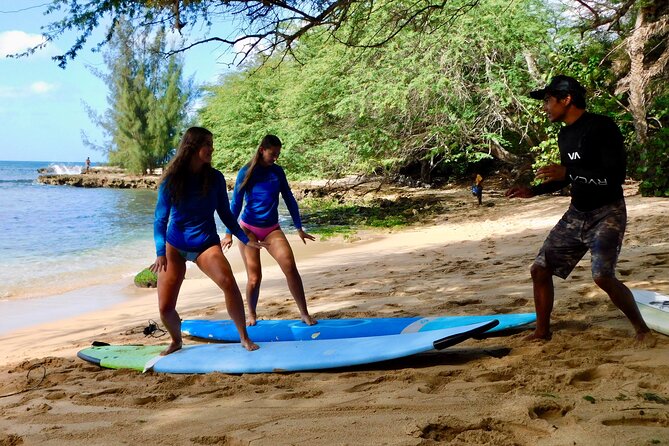
The itinerary identifies Haleiwa Beach Park as the main stop, while the meeting point is Puaʻena Point Beach Park. The experience centers on the water near Haleiwa, with views and Hawaiian green sea turtles as major attractions.
Turtle sightings are guaranteed year-round according to the activity details. You should still remember that wildlife appears on its own schedule, and a sighting is a bonus to the surf lesson rather than a substitute for it. The chance to see turtles below you gives this class a special sense of place, though the actual focus remains learning to surf.
One particularly memorable account describes a first-time surfer seeing turtles beneath the board and dolphins nearby. That kind of moment cannot be promised in full, but it shows why this is more than a standard indoor lesson or generic board rental.
Take care around the shoreline and shallow areas. One participant specifically warned about stepping on a sea urchin. Follow the instructor’s directions about where to walk and how to enter the water, and do not assume the bottom is harmless simply because the beach feels calm.
Why the private group setup matters
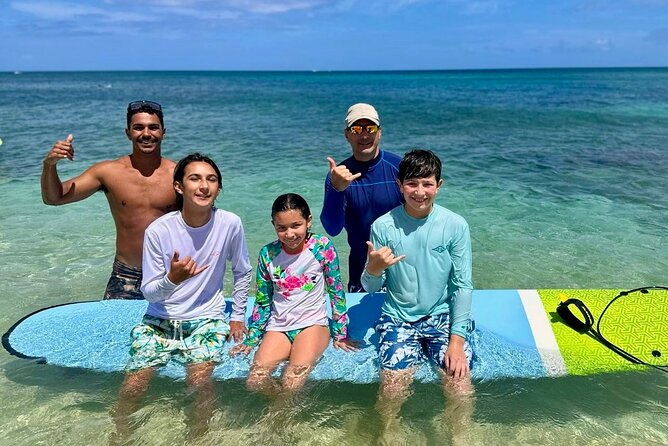
This is a private activity, so only your group participates. That can make a major difference if you are booking for a family, couple, or small party with different comfort levels.
A private group gives the instructor a better chance to notice who needs help with paddling, who is standing too early, and who needs a calmer introduction. It also avoids being placed in a large mixed class where stronger beginners may get most of the attention.
Families seem to benefit most from this arrangement. The instruction has helped children, cautious adults, and first-time surfers share one activity without everyone needing to be at the same skill level. The session can feel less intimidating when you are learning alongside people you already know.
There is one detail to keep in mind. The tour summary describes one-on-one support, but private group does not always mean a dedicated instructor for every single person. The number of instructors may vary by group size. The published experience received strong praise for direct attention, but ask ahead if you need a very specific instructor-to-participant ratio.
Is $150 per person a fair price?
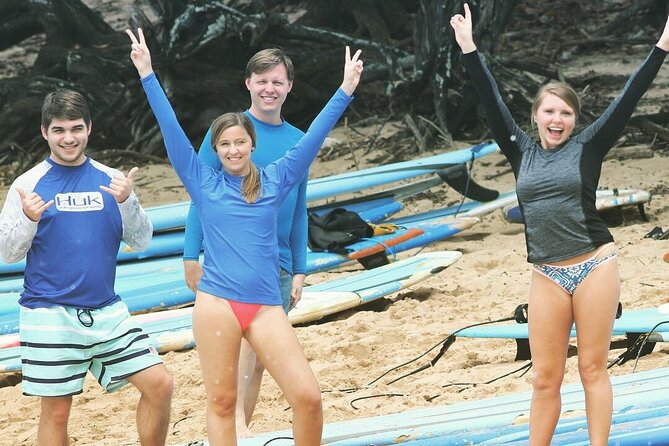
At $150 per person, this lesson costs more than simply renting a board for a couple of hours. But rental gear alone does not teach you how to paddle, choose a wave, stand safely, or avoid common mistakes.
The price includes the surfboard, leash, rash guard, water, professional instruction, safety and etiquette training, and the chance to see green sea turtles. The lesson also keeps you in the water for much of the two-hour period, rather than offering a short demonstration followed by free time.
I see the value most clearly if you are a true beginner. A first lesson with a supportive instructor can save you from spending an entire morning falling awkwardly, fighting the board, or choosing waves that are beyond your ability. It is also useful for families who want the reassurance of trained supervision.
The value is less clear if you already surf confidently. Someone with experience may prefer a board rental or a less structured session. This activity is built around learning, encouragement, and safety, not advanced coaching or extended independent riding.
Group discounts are available, which may improve the cost for a family or larger party. Since the activity often sells around 27 days in advance, compare the group price before making your final decision.
Who will enjoy this North Shore surf lesson?
I would recommend this experience to:
- First-time surfers who want a guided introduction
- Families with children who need encouragement and close attention
- Adults who feel nervous about entering the ocean
- Couples or small groups looking for a shared North Shore activity
- Visitors who want a surf lesson with a real chance of seeing turtles
- People who value supplied equipment and a simple meeting point
It may not be the right choice if you want a quiet beach outing without physical effort. Surfing means paddling, repeatedly getting back on the board, and spending much of the session in the water. You should also be comfortable with a lesson that moves from instruction to action fairly quickly.
The experience is offered in English, and most people can participate. Service animals are allowed. No separate accessibility details are provided, so anyone with mobility or medical concerns should contact the operator before booking.
Practical planning for your Haleiwa morning or afternoon
The activity is offered with a mobile ticket, so you can keep your confirmation on your phone. Free cancellation is available if you cancel at least 24 hours before the local start time. Inside that window, you do not receive a refund, and changes are not accepted.
Bring a practical attitude, even though the gear is supplied. Food and drinks are not included, so plan those around the lesson. Water is provided, but the session may leave you hungry.
The timing of your lesson can affect how crowded the water feels. The operator has suggested alternate time slots to reduce crowding, so be open to a change if you receive a message. A less crowded session may give you more room to practice and may help children feel less overwhelmed.
Because the activity begins and ends at Puaʻena Point Beach Park, it fits neatly into a day exploring Haleiwa and the North Shore. You can make the lesson the main event or combine it with other plans nearby, but leave enough time for the two-hour session and the effort of getting ready before and after the water.
Should you book the Puaʻena Point surf lesson?
Book it if you want a supportive first surf lesson with supplied equipment, a private group, and a strong chance of getting upright on a wave. The teaching earns its praise for good reason: Kekai, Koa, and the other instructors are described as patient, active, and reassuring, especially with children and nervous beginners.
The $150 price is fair for a first-timer who values instruction and a well-organized session. It is harder to justify if you already surf or only want to borrow a board. Book several weeks ahead if your schedule is fixed, and ask about instructor numbers if your group needs one-on-one attention.
For many visitors, the combination of North Shore scenery, real time in the water, and turtles nearby makes this a memorable way to begin surfing in Hawaii.
FAQ
Where does the surf lesson begin?
The lesson begins at Puaʻena Point Beach Park, Kahalewai Place, Haleiwa, Hawaii 96712.
Where does the activity end?
The lesson ends back at the meeting point at Puaʻena Point Beach Park.
How long does the beginner surf lesson last?
The activity lasts approximately two hours. The land demonstration usually takes 15 to 20 minutes, followed by about 1.5 to 2 hours in the surf.
What equipment is included?
A surfboard, leash, rash guard, and water are included.
Is this a private activity?
Yes. Only your group participates in the activity. The number of instructors may vary depending on the group.
Can I cancel for a full refund?
Yes, if you cancel at least 24 hours before the experience start time. Cancellations or changes made within 24 hours are not refunded or accepted.
Just added around Oahu
- Waikiki 2 Hours Private Guided Surf Lesson★ 3.5 · 8 reviews
- Surf Honolulu: Ala Moana Stand-up Paddleboard Lesson★ 5.0 · 3 reviews
- Semi-Private Surfing Lesson in Waikiki, Oahu★ 5.0 · 26 reviews
- Surf Activity on the Wai Kai Wave in Ewa Beach★ 5.0 · 8 reviews
- Surf Lessons on the North Shore Great for Families and all Ages★ 5.0 · 27 reviews
- Waikiki Surf Lesson (Hawaiian Boy Surf School)★ 4.0 · 8 reviews
- Learn to surf with a local big wave rider on the North Shore of Oahu★ 4.5 · 10 reviews
- Private Group Surf Lesson★ 5.0 · 47 reviews
Beginner Surf Lessons, compared.
Legian Beach, Bali: Beginner or Intermediate Surf Lessons
Read our review →
Beginner & Intermediate Surf Lesson with Equipment
Read our review →
Learn to Surf in Chill Beach Vibes & Good Times
Read our review →
Beginner-Friendly Waikiki Beach Surfing Lesson
Read our review →
Beginner Surf Lesson at the Beautiful Algarvian West Coast
Read our review →
Lezioni di Surf per Beginner e Intermedi (6 persone a istruttore)
Read our review →Browse the lists this lesson appears in