
REVIEW · OAHU
North Shore Beginner Surf Lesson, Hawaii
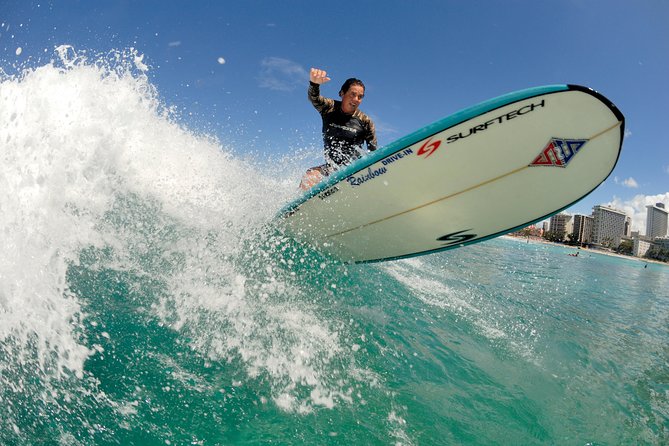
Your first wave can happen on Oahu’s North Shore. This two-hour Surf N Sea lesson gives you a friendly introduction to surfing at Waialua Bay, with a small group capped at four people. I like the careful beach briefing and the chance to learn from instructors such as Henry, Travis, Tanner, Eric, and Mark, who are praised for patience and clear coaching. The main drawback is practical: you must swim, drive yourself from the shop to the surf spot, and handle a moderate workout.
I also like that the lesson teaches more than simply standing on a board. You practice falling safely, ocean etiquette, wave timing, and the quick move from lying down to standing. Conditions can change, and the lesson may be canceled for poor weather, but that is a sensible trade for a safer first session.
Key points at a glance
- Small groups of up to four: You get more direct help than in a crowded beach class.
- A real North Shore introduction: The lesson takes place around Waialua Bay and Haleiwa, a fitting setting for learning Hawaii’s signature sport.
- Safety comes first: You learn how to fall, read basic wave behavior, and share the water properly.
- Patient, encouraging instructors: Henry receives especially strong praise, while Travis, Tanner, Eric, and Mark are also noted for calm, personal instruction.
- All surf gear is provided: You receive a beginner-appropriate board and the equipment needed for the lesson.
- Plan your own transport: Meet at Surf N Sea, 62-595 Kamehameha Highway, then drive to the actual surf location.
Why this North Shore lesson works for first-timers
Surfing looks easy from the beach. You paddle, catch a wave, stand up, and glide. In practice, the timing, balance, paddling, and quick footwork make your first session a proper workout.
That is why the land briefing matters. Before you enter the water, the instructor explains how to fall safely, how to behave around other surfers, and how to move from your stomach to your feet. You also learn which board suits a beginner and how to spot a suitable wave.
I like this approach because it gives you useful habits instead of a quick stunt. A first lesson should help you feel less awkward in the ocean, not simply push you onto a board and hope for the best.
The two-hour format gives enough time for both instruction and practice. You should expect plenty of paddling, repeated attempts, and some trial and error. Getting up once is a victory. Getting up several times, as many people do in good conditions, is a fine bonus.
More Beginner Surf Lessons in Oahu
- Oahu: Beginner-Friendly Waikiki Beach Surfing Lesson
★ 4.9 · 425 reviews - Oahu: Waikiki 2-Hour Beginner Group Surf Lesson
★ 4.9 · 191 reviews
Meeting at Surf N Sea in Haleiwa
Your day begins at Surf N Sea, located at 62-595 Kamehameha Highway in Haleiwa. This is the start and end point listed for the activity.
One detail matters here: transportation is not included. You need to reach the shop on your own, then drive from Surf N Sea to the surf spot. The actual water session is not simply a walk from the meeting point, so allow time to find the shop, check in, and follow directions to the beach.
A past family booking ran about 20 minutes late after the group got lost, though staff helped direct them to the right place. I would not count on lateness being easy to fix, but the story shows why you should build in extra driving time, especially if you are unfamiliar with Haleiwa.
The North Shore can take time to reach from other parts of Oahu. Since this lesson occupies about two hours in the water and requires driving before and after, it works best as part of a larger North Shore day. You can pair it with time in Haleiwa, but avoid scheduling a tight activity immediately afterward.
Waialua Bay and the beginner surf setting
Waialua Bay is the main surf setting named for the lesson. It offers the setting you likely picture when you think of learning to surf in Hawaii: board under your arm, sandy shoreline, and the North Shore around you.
The lesson is designed for beginners, so the goal is not to send you into the biggest waves on Oahu. The instructor helps you choose waves and explains where beginners should practice. That distinction matters. The North Shore is famous for powerful surf, but famous does not mean every part of it is suitable for a first lesson.
Conditions are never identical. One person enjoyed a session even when the waves were not ideal, while another had a day good enough to catch several waves all the way in. You should arrive ready for a lesson that changes with the ocean. Some days may deliver easy rides. Other days may offer more practice in timing, paddling, and balance.
The equipment also affects comfort. The boards are foam, and one person advised wearing a wet shirt because the board can rub against your skin. That is a useful small tip, especially if you expect to spend much of the two hours repeatedly getting on and off the board.
The land lesson: falling, standing, and ocean etiquette
Your instructor begins on land. This is where the basic mechanics become less confusing.
You practice the motion from lying flat to standing quickly. The move needs to be simple and repeatable, since you will use it every time a wave carries you forward. The instructor also explains how to fall safely, which is one of the most important parts of a first lesson.
Ocean etiquette gets equal attention. You learn how to share the water, understand basic right-of-way habits, and avoid creating trouble for other surfers. These rules may seem less exciting than catching a wave, but they help you feel more comfortable if you surf again without an instructor.
I especially value the effort to explain wave behavior and timing. One particularly strong session included instruction on how waves break, how to time them, and how to choose which ones to ride. That information gives you something to work with after the lesson, even if you are not ready to surf independently right away.
More Beginner Surf Lessons in the USA
- Maui: Two Hour Beginner Group Surf Lesson in Kihei
★ 5.0 · 950 reviews - 2 Hour Beginner Group Surf Lessons
★ 5.0 · 154 reviews - Surf Class for Beginners in Venice
★ 5.0 · 83 reviews - Learn to Surf in La Jolla
★ 5.0 · 56 reviews
What the water session feels like
Once you move into the water, your instructor helps with the practical part. You paddle, position yourself, and wait for a suitable wave. The instructor watches the break and points out opportunities, which can save a beginner from paddling after every wave in sight.
The first few attempts can feel busy. You need to paddle hard enough, keep the board straight, listen for instructions, and rise at the right moment. It is normal for the board to wobble or for the wave to pass beneath you.
The strongest part of the teaching is the direct help. Henry is repeatedly praised for giving clear instructions, encouraging beginners, and helping people catch waves. Travis is also noted for spotting waves and helping a first-timer get up each time. Tanner is praised for making the lesson personal while teaching etiquette and technique.
That kind of coaching makes a real difference in a small group. With a maximum of four people, the instructor can watch each person’s position and offer corrections. You will still share time in the water, and one family noted that group lessons mean waiting your turn, but four people is a manageable number.
Many people get up at least once. Several managed multiple rides, and some beginners rode waves all the way to shore. Do not treat that as a promise, since ocean conditions and individual fitness vary. It is a fair indication that the lesson is built around active coaching rather than a passive demonstration.
The instructors and teaching style
The names that come up most often are Henry and Travis, with Tanner, Eric, and Mark also receiving praise. The common thread is not a flashy performance. It is patience, encouragement, and attention to safety.
Henry is described as direct but kind. That combination suits surfing instruction. You need clear commands when a wave is approaching, but you also need an instructor who does not make mistakes feel embarrassing.
Eric is praised for helping a 50-year-old beginner finally try surfing, which is useful context for older first-timers who may worry that the lesson is aimed only at teenagers. Mark helped a beginner feel safe and even shared a memorable whale sighting during one session.
The staff at the shop also receive credit for being friendly and helpful during check-in. In the water, another staff member named Terrance assisted tired people who were struggling with the paddling. That points to a supportive setup, though you should still arrive with realistic expectations about the physical effort.
Fitness, age, and who should book
You must be able to swim. This is not a casual rule. You will be in the ocean, paddling and managing a board, so basic swimming ability is essential.
You also need a moderate level of physical fitness. Paddling takes work, and the repeated movement from lying down to standing can tire your arms and legs. If you have back or knee problems, the lesson is not recommended. The same applies if you have had recent surgery.
Group lessons are for children aged 13 and older. Children under 13 must take a private lesson. That requirement is tied to safety and supervision, so families should not assume younger children can simply join the regular group.
I think this lesson suits:
- Adults who have always wanted to try surfing
- Teenagers who enjoy active holiday activities
- Couples and friends who want a shared challenge
- Solo visitors who want direct coaching
- Beginners who value safety instruction before practice
It is less suitable if you cannot swim, dislike repetitive physical effort, or need door-to-door transport. It is also not a good choice for someone seeking a quiet beach outing. Surfing asks for energy and concentration.
Is $104 a fair price?
At $104 per person, this is not the cheapest way to spend two hours in Hawaii. The price makes more sense when you consider what is included: a beginner board, the required surf equipment, an instructor, land instruction, ocean practice, and a small group limited to four people.
You are paying for help with the parts that are hardest to teach yourself: selecting a board, reading a wave, positioning yourself, standing safely, and understanding ocean etiquette. Renting a board alone would not give you the same guidance or safety foundation.
The value improves if you stand up several times and leave with enough confidence to continue surfing. It is harder to justify if poor conditions shorten the useful practice time, though weather-related cancellations offer a new date or full refund under the stated policy.
Morning and afternoon lesson choices add flexibility. I would choose the time that gives you the easiest drive and the most relaxed schedule, rather than cramming the lesson between other plans.
Weather, cancellations, and realistic expectations
Surfing depends on weather and ocean conditions. If poor weather makes the session unsafe, the activity can be canceled, with a different date or full refund offered.
That policy is worth taking seriously. A canceled surf lesson may be disappointing, but a forced lesson in bad conditions would be worse, especially for a beginner. Keep some flexibility in your Oahu schedule if surfing is important to you.
The cancellation rule allows a full refund when you cancel at least 24 hours before the start time. Cancellations made within 24 hours are not refunded, and last-minute changes are not accepted. Since the experience is weather dependent, check the forecast and confirm your plans before that cutoff.
How to make the most of your two hours
Arrive early enough to find Surf N Sea and understand the drive to the beach. Getting lost is an avoidable way to cut into your lesson.
Wear something comfortable for repeated board contact. A wet shirt may help protect your skin from rubbing against the foam board.
Listen closely during the land briefing. The details about falling, standing, and etiquette are not filler. They make the water session safer and help you understand the instructor’s commands.
Expect to paddle. If you are tired, tell the instructor rather than forcing another attempt. Staff have helped tired participants before, but you remain responsible for knowing your own limits.
Finally, measure success sensibly. Standing for a few seconds is excellent. Catching one wave is excellent. Learning how to behave safely in the ocean is also a successful result, even if the waves do not cooperate.
Should you book the North Shore Beginner Surf Lesson?
I would book this lesson if you can swim, handle moderate physical effort, and want a properly guided first try rather than a board rental. The four-person maximum, safety briefing, and repeated praise for instructors such as Henry and Travis give it strong value for a beginner.
Book it as part of a flexible North Shore day, and leave room for driving. Do not choose it if you need transportation, have back or knee concerns, or expect guaranteed perfect waves.
For a first taste of surfing, this is a sensible and encouraging choice. You may leave tired, sun-warmed, and a little humbled by the ocean. You may also leave standing on a wave, which is exactly the sort of small triumph that makes a Hawaii trip memorable.
FAQ
Where does the surf lesson meet?
Meet at Surf N Sea, 62-595 Kamehameha Highway, Haleiwa, Hawaii 96712. The activity ends back at the meeting point.
Is transportation included?
No. You must drive from Surf N Sea to the surf spot location.
How long does the lesson last?
The lesson lasts approximately two hours, including the land introduction and time in the water.
What equipment is provided?
A surfboard and all the equipment needed for the lesson are provided.
Do I need to know how to swim?
Yes. You must be able to swim to take part.
Can children join the group lesson?
Children aged 13 and older can join a group lesson. Children under 13 require a private lesson.
What happens if bad weather cancels the lesson?
If poor weather causes a cancellation, you will be offered a different date or a full refund.
Just added around Oahu
- Oahu: Private Surfing Lesson in Waikiki Beach★ 4.7 · 13 reviews
- Oahu: Private Surfing Lesson with Local Big Wave Surfer★ 5.0 · 6 reviews
- Oahu: Surfing Lessons for 2 People★ 4.9 · 37 reviews
- Oahu: Waikiki 2-Hour Semi-Private Surfing Lesson★ 4.9 · 5 reviews
- Group Surf Lesson with Videos and Photos★ 5.0 · 69 reviews
- Surfing Waikiki with local Firefighters★ 5.0 · 72 reviews
- 1.5-Hour Private Surfing Lesson in Honolulu★ 5.0 · 57 reviews
- Oahu: Kids Surfing Lesson in Waikiki Beach (up to 12)★ 5.0 · 59 reviews
Beginner Surf Lessons, compared.
Legian Beach, Bali: Beginner or Intermediate Surf Lessons
Read our review →
Beginner & Intermediate Surf Lesson with Equipment
Read our review →
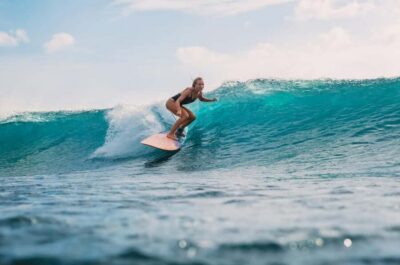
Learn to Surf in Chill Beach Vibes & Good Times
Read our review →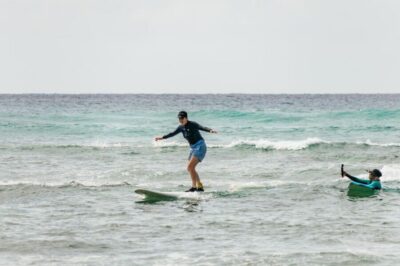
Beginner-Friendly Waikiki Beach Surfing Lesson
Read our review →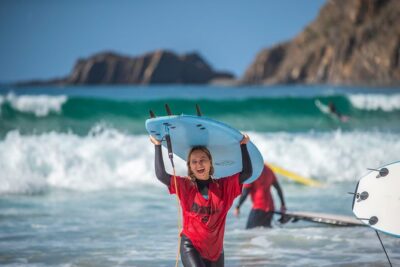
Beginner Surf Lesson at the Beautiful Algarvian West Coast
Read our review →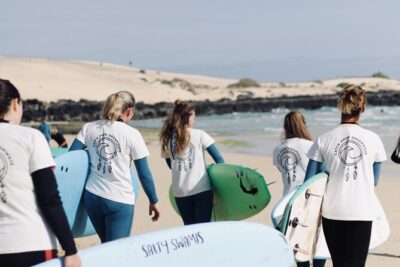
Lezioni di Surf per Beginner e Intermedi (6 persone a istruttore)
Read our review →Browse the lists this lesson appears in