
REVIEW · USA
Surf Lessons on the Outer Banks
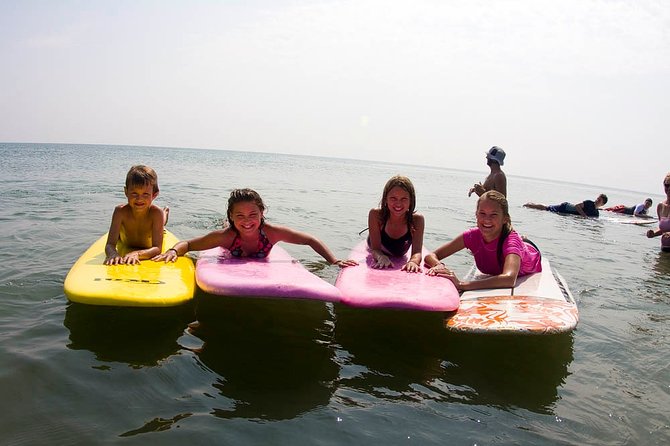
Catch your first wave here. This Outer Banks lesson turns a big ocean into a manageable first step, with small groups and instructors who stay upbeat when your feet refuse to cooperate. I like the low-tide scheduling and the fact that boards, wetsuits, and instruction are included. The main catch is that ocean conditions can change quickly, so a smooth lesson is not guaranteed.
You meet at 6150 North Croatan Highway in Kitty Hawk for a roughly 90-minute session. I also like the generous instructor ratio, capped at one instructor for four students, though the total group can reach eight. One practical wrinkle: the beach location may change with the waves, and some families found that they needed to confirm the exact beach meeting point and allow extra time for parking.
Key points before you book
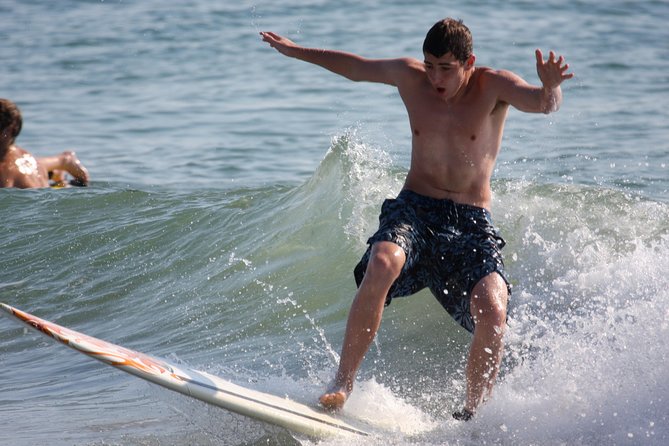
- Beginner-friendly instruction: You cover ocean safety, board parts, paddling, the pop-up, and foot placement before trying to catch waves.
- Small teaching groups: One instructor can work with no more than four students, with a maximum of eight people in the activity.
- Gear is included: A surfboard and wetsuit are provided, which keeps your beach-day packing simple.
- Low-tide timing: Lessons are offered at low tide for what the school considers the best beginner conditions.
- Strong family appeal: The activity is described as suitable from age six, while another note says kids eight and older are welcome, so confirm the age rule when booking.
- A weather-dependent outing: Poor weather can lead to a new date or a full refund, and cancellations made within 24 hours are not refundable.
Why this Kitty Hawk lesson works for first-timers
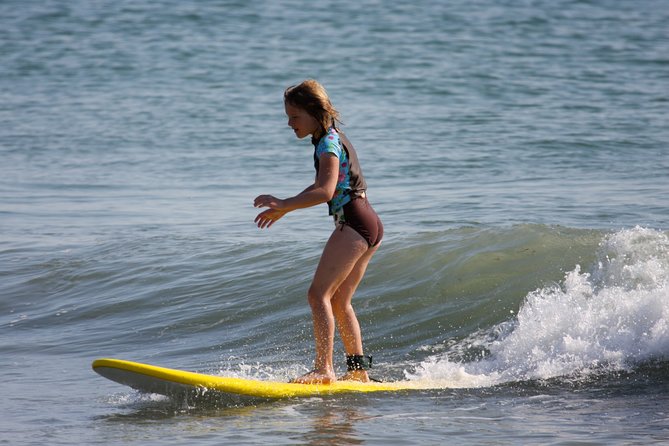
Surfing looks simple from shore. Paddle, stand, ride. In the water, each part takes timing, balance, and a little nerve. This lesson helps by breaking the process into small jobs instead of sending you toward the waves with only a board and good intentions.
The session begins with a safety briefing. That matters more than it may sound. You learn how to approach the ocean, how the equipment works, and what to do before you start chasing waves. The instruction also covers surfboard anatomy, so you understand the front and back of the board, where your body belongs, and how your position affects balance.
From there, you work on paddling technique, the proper pop-up, and foot placement. Those are the building blocks of beginner surfing. If you get your hands and feet in the right places, you have a fair shot at standing. If you do not, the board quickly reminds you who is in charge.
The school calls this process SHREDucation, but the useful part is not the slogan. It is the practical coaching. The best moments in the feedback come from instructors such as Clark, Finn, Keegan, Stone, Liam, Keaton, and Henry, who are repeatedly described as patient, friendly, encouraging, and attentive. Clark receives especially warm praise for his positive coaching, while Stone helped two adults catch waves after they had assumed standing would be out of reach.
You should still set a sensible goal. A first lesson is not a promise of long rides or polished turns. It is a chance to learn the basics, catch a few waves, and decide if you want to keep going. Several people reported standing within minutes or riding multiple waves, but that depends on your balance, fitness, the surf, and the quality of the waves that day.
More Surf Lessons in the USA:
- Maui: Two Hour Beginner Group Surf Lesson in Kihei
★ 5.0 · 950 reviews - Open Group Surfing Lesson in Waikiki, Hawaii
★ 4.5 · 582 reviews - Outrageous Surf ScHool Lesson on Lahaina Side
★ 4.5 · 547 reviews
The 90-minute lesson, from safety talk to first waves
The only listed stop is the Outer Banks, but the lesson has several clear stages. You begin at the Kitty Hawk address, where the school handles the setup and instruction. Some families also noted that waivers must be signed at the business before heading to the beach, so do not treat the listed address as proof that you will spend the whole session there.
The first stage is preparation. You receive a board and wetsuit, then learn the basic safety rules and board terminology. This part may feel less exciting than standing on a wave, but it gives you a useful framework. You want to know how to handle the board before the ocean starts moving it around.
Next comes the land-based technique. You learn how to paddle, where to place your hands, and how to bring your feet under your body in one controlled movement. The proper pop-up is the key skill. A slow, careful explanation here can save you repeated falls later.
Then you head into the water with instructor help. The stated aim is to catch as many waves as possible, and the coaching appears focused on getting you moving rather than leaving you to figure everything out alone. The one-to-four instructor ratio is important at this point. A group of eight can still be manageable, but the experience will feel more personal when four students share an instructor.
The final part is repetition. You try, fall, adjust, and try again. Several families with children and teenagers found the format successful, with kids standing and riding within minutes in good conditions. Adults also had strong results, including couples who had never surfed before and families ranging in age from eight to 42.
The session ends back at the meeting point. Since the actual beach access may depend on the waves, call ahead before your lesson so you know where to go. This is one of the most useful bits of planning you can do.
Low tide, changing waves, and the limits of the promise
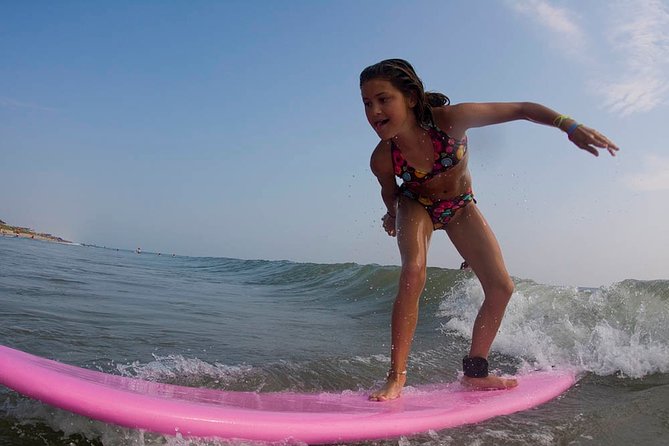
Lessons are offered at low tide for what the school describes as the best waves and a safer experience. That schedule is helpful for beginners because conditions can be less intimidating than a rougher, more powerful surf. It also gives the instructors a set part of the tide cycle in which to plan lessons.
Still, low tide is not a magic button. Ocean conditions vary, and one family described rough water that made the lesson feel less safe for a younger child. Another family said conditions were poor but appreciated the instructors’ effort to work with what they had. That is the honest picture: the staff can teach technique and manage the session, but they cannot order perfect waves from the Atlantic.
If you are booking for a young child, pay special attention to the conditions on the day. The information gives both six years and older and eight years and older as age guidance. That difference should be settled directly with the operator before you pay, particularly if your child is six or seven.
The activity also requires moderate physical fitness. You need enough energy to paddle, climb onto the board, push up, and repeat the motion several times. It is not an extreme athletic test, but you should expect to work. If you are unsure about your own fitness or a child’s ability to manage the water, ask the school about the expected conditions.
What the instructors add to the experience
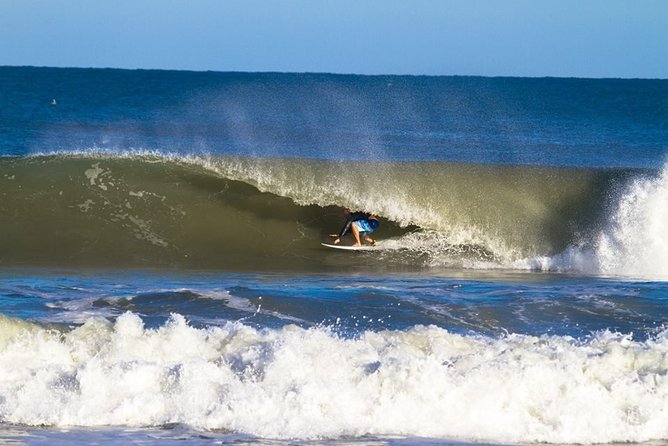
Good beginner surf instruction is as much about confidence as technique. A board can be rented almost anywhere, but a calm instructor can make the difference between one frustrating fall and a useful first lesson.
That human element is the strongest part of this experience. Clark is repeatedly praised for his encouragement and for helping beginners believe they could stand. Finn is described as friendly, clear, and supportive with families of different ages. Keegan receives credit for making paddling easier and helping a younger participant catch a first wave. Stone helped a couple catch waves despite their doubts, while Liam is remembered for patient coaching that led to quick progress.
The names matter because they show a consistent pattern rather than a single lucky pairing. The staff are presented as certified and experienced, and the teaching style seems to lean toward short explanations followed by practice. That is right for surfing. You do not need a long classroom lecture. You need a clear instruction, a chance to try it, and a quick correction before the next wave.
The coaching also works well for groups with mixed ages. One family had students from eight to 42, and everyone got into the action. Another family brought teenagers from Nags Head and found the lesson a good way to give them a focused activity beyond ordinary beach time.
Same place, a different way into the water:
- Los Angeles: Surfing Lesson in Venice Beach
★ 4.8 · 442 reviews - Oahu: Beginner-Friendly Waikiki Beach Surfing Lesson
★ 4.9 · 425 reviews - Po’ipu Surf Lesson
★ 5.0 · 361 reviews - Private Hanalei Sandy Bottom Surf Lesson on Kauai
★ 5.0 · 339 reviews
Equipment, wetsuits, and the small details that matter
The $89 price includes the surfboard, wetsuit, and instruction. That makes the cost easier to judge because you are not adding a separate board rental or wetsuit fee after booking. For a first attempt, I see real value in that setup. You can try surfing without buying gear or guessing which board suits a beginner.
Wear the wetsuit even if the air feels warm. One family found that it helped protect against cold water and prevented a rash from rubbing against the surfboard. That is a practical tip, not a fashion suggestion. Repeated contact with a board can irritate your skin, and the water may feel colder than expected.
The lesson is offered year-round, but year-round availability does not mean identical comfort in every season. The conditions, water temperature, and weather will affect how pleasant the session feels. The operator can cancel for poor weather and offer another date or a full refund, which gives you some protection when nature refuses to cooperate.
Parking needs thought as well. Beach access parking can be limited, and one family found it tricky. Give yourself extra time, especially if you need to stop first for waivers or equipment. Arriving late cuts into a short lesson, and surfing is not an activity where you want to begin in a rush.
How the group size affects your time in the water
The maximum group size is eight, with one instructor for every four students. That is a reasonable arrangement for a beginner class. You get more direct attention than in a large beach crowd, while the school can still bring together families and friends.
A group of four per instructor is particularly useful during the first attempts. The instructor can watch your pop-up, help position you for a wave, and offer a small correction. You may not receive constant one-on-one coaching, but you should not be left entirely on your own.
The one negative account points to the importance of conditions and supervision. In rough water, a younger child may need more help than one instructor can provide. If your group includes very young or nervous students, ask how the school will divide the class and what conditions are expected that day.
For families, the group format can be part of the fun. Parents, children, and teenagers can share the first-wave moment rather than splitting into separate activities. For a couple or solo participant, it also gives you a chance to learn alongside other beginners without paying for a private lesson.
Is $89 a fair price for 90 minutes?
At $89 per person, this is not a casual add-on like renting a beach chair for an afternoon. It is a structured lesson with a board, wetsuit, safety instruction, technique coaching, and water time. For someone who has never surfed, that package is reasonably priced if the goal is to learn rather than simply pose with a board.
The value is strongest when you make use of the instruction. If you arrive ready to listen, practice the pop-up, and accept a few falls, you may leave with a real foundation. Several people described catching waves and standing during their first lesson, and one family called it the favorite activity of their Outer Banks stay.
The value is weaker if you expect perfect surf or a private coach. The lesson lasts about an hour and a half, not a full day. Conditions may be rough, and a group class cannot guarantee that every participant will receive the same number of wave attempts.
The price match guarantee is another useful safeguard, though the supplied details do not explain the terms. If price is your main concern, check the current conditions of that guarantee before booking rather than assuming every competing rate qualifies.
Who should book this Outer Banks surf lesson?
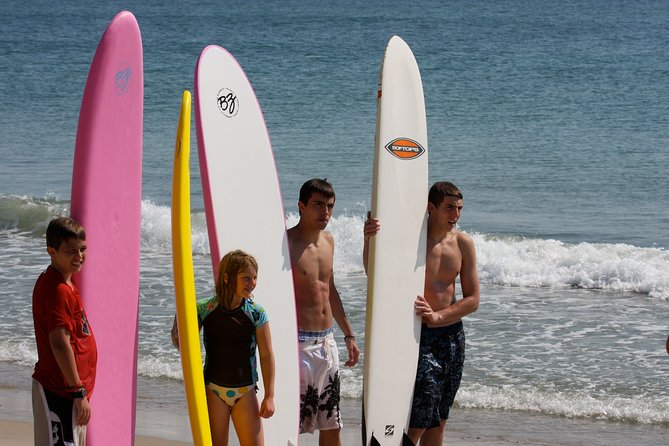
I would recommend it to first-time surfers, families with school-age children, teenagers, couples, and adults who want a structured introduction. It is especially useful if you are staying in Kitty Hawk, Nags Head, or nearby parts of the Outer Banks and want an activity that gets everyone out of the beach chair.
It also suits people who learn best through encouragement. Surfing can make a confident person feel clumsy in a hurry. Patient instruction from Clark, Finn, Keegan, Stone, Liam, Keaton, Henry, or another school instructor can help you keep trying after the first few falls.
I would be more cautious if you are booking for a child near the lower age limit, if anyone in your group has limited physical fitness, or if you need predictable conditions. Ask about the exact age requirement, the expected surf, the beach meeting point, and the instructor-to-student split before confirming.
Book at least several days ahead if your vacation dates are fixed. The experience is commonly reserved around 12 days in advance, so last-minute availability may be limited during busy beach periods.
Cancellation details and planning advice
You can cancel for a full refund up to 24 hours before the local start time. Cancellations or changes made inside that window are not refundable or accepted, so watch the clock.
Bad weather can lead to a different date or a full refund. The same applies if the minimum number of participants is not reached. Since conditions matter so much here, keeping a little flexibility in your Outer Banks schedule is wise.
Bring patience, arrive early, and confirm the beach location. Those three steps address the main practical issues: changing meeting points, tight parking, and limited water time.
FAQ
Where does the surf lesson start?
The listed starting point is 6150 N Croatan Highway, Kitty Hawk, North Carolina 27949. The activity ends back at the meeting point.
How long does the lesson last?
The lesson lasts approximately one hour and 30 minutes.
What equipment is included?
The price includes a surfboard, wetsuit, and instruction.
What will I learn during the lesson?
You will cover ocean safety, surfboard anatomy, paddling technique, the proper pop-up, and foot placement. You will also receive help in the water while trying to catch waves.
What ages can take the lesson?
The activity information says it is suitable for ages six and older, while another note says kids eight and older are welcome. If your child is six or seven, confirm the current age rule with the provider before booking.
How many people can join?
The activity has a maximum of eight participants. The instructor ratio is limited to one instructor for every four students.
What happens if the weather is poor?
If poor weather cancels the experience, you will be offered another date or a full refund. If you cancel yourself, you must do so at least 24 hours before the start time for a full refund.
Should you book it?
Yes, if you want a friendly, well-organized first try at surfing and you can accept the uncertainty of ocean conditions. The included gear, 90-minute format, low-tide scheduling, and small teaching groups make this a practical choice for families and beginners.
I would book it after confirming two details: the exact beach meeting point and the age rule for younger children. If the surf is rough, keep expectations modest and put safety before the thrill of catching a wave. On a good day, though, this can be the kind of Outer Banks activity that leaves you standing on a board, grinning at the shore, and already thinking about your next lesson.
Just added around the USA
- Epic Surf Lessons Dania Beach★ 5.0 · 3 reviews
- Surf Lessons Fort Lauderdale★ 5.0 · 41 reviews
- E-Foil Surfing for Beginners in Fort Lauderdale Beach★ 5.0 · 2 reviews
- Learn to surf Fort Lauderdale★ 5.0 · 6 reviews
- Learn to Surf – Destin★ 5.0 · 10 reviews
- 1-Hour Private Surf Lesson in Cocoa Beach★ 5.0 · 41 reviews
- 2 Hour Private Surf Lesson in Cocoa Beach★ 5.0 · 12 reviews
- Private Surf Lesson Solana Beach Ride the Waves Fletcher Cove 2hr★ 5.0 · 3 reviews
USA Surf Lessons, compared.


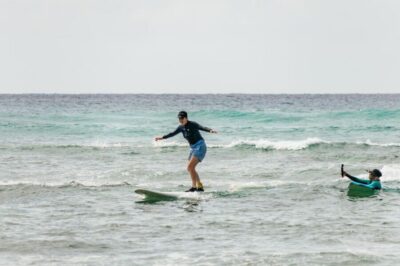
Beginner-Friendly Waikiki Beach Surfing Lesson
Read our review →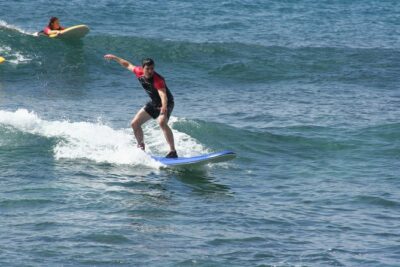

Private Hanalei Sandy Bottom Surf Lesson on Kauai
Read our review →
Browse the lists this lesson appears in