
REVIEW · USA
Surf in NYC
New York City has waves worth chasing. Sierra Surf School offers a private 90-minute surf lesson at Rockaway Beach, with warm-ups, water safety, surf etiquette, and hands-on practice catching waves. I like the clear beginner focus and the private format, which gives your group the instructor’s full attention. The main drawback is the price: $189 per person is a serious spend for a short lesson.
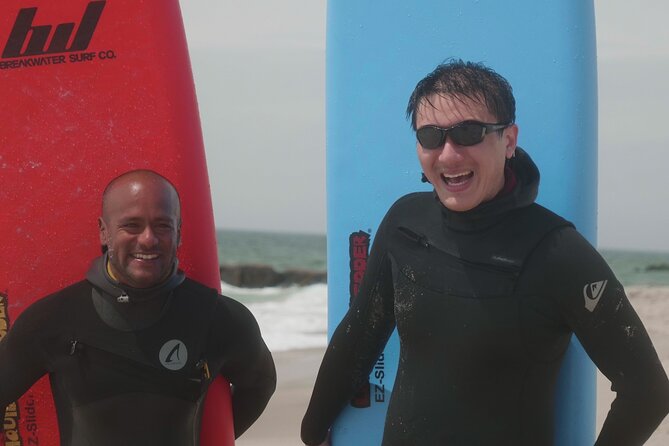
I also like that the lesson covers more than simply pushing you toward a wave. You learn the pop-up technique, how to read waves, and how to behave safely in the water. Instructor Dave earned praise for helping a very inexperienced surfer feel secure while offering useful feedback. That personal coaching is the strongest reason to consider this outing.
The trade-off is time. Ninety minutes passes quickly once you include stretching, safety instruction, and practice on the board. If you want a long beach day or several hours in the water, this is not that. It is a focused first lesson, and the cost makes the best sense if you value private instruction over a larger group class.
Key Points About Surfing With Sierra Surf School
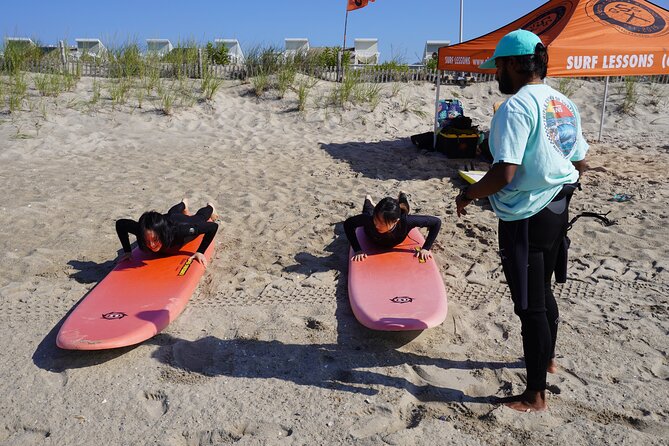
- Beginner-friendly instruction: The lesson starts with warm-ups, light yoga, stretching, and basic surf preparation.
- Private group format: Only your group participates, so the instructor can focus on your needs and offer direct corrections.
- Safety comes first: Water safety and surf etiquette are covered before you begin catching waves.
- Pop-up practice is included: You learn the basic movement for getting from lying on the board to standing.
- Rockaway Beach setting: Meet at the beach entrance near Beach 67th Street and Beach Front Road in Arverne, Queens.
- Personal feedback matters: Dave was praised for helping a novice improve beyond the basic steps.
Why This NYC Surf Lesson Is Different
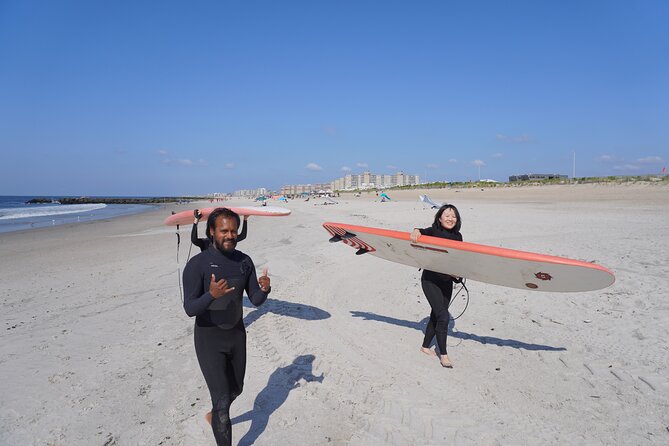
Surfing in New York sounds unusual until you look toward the Rockaways. This lesson takes place at Sierra Surf School’s beach entrance near Beach 67th Street and Beach Front Road in Arverne, Queens. You are still in New York City, but the setting shifts from streets and towers to sand, salt water, and a sport that depends on timing.
The appeal here is not a sightseeing circuit. You are coming to learn a physical skill. The experience is built around the basics, so you do not need to arrive already knowing surf terms or board technique.
I like that the lesson does not rush straight into the water. A good first surf lesson needs a clear order. You begin by getting your body ready, then learn how to stay safe, then practice the key movement on the board. Only after that do you work on reading and catching waves.
That structure helps you understand what you are doing rather than simply copying an instructor for a few minutes. It also gives you a better sense of what surfing actually asks of you: balance, timing, body position, and awareness of the water around you.
More Surf Lessons in the USA:
- Maui: Two Hour Beginner Group Surf Lesson in Kihei
★ 5.0 · 950 reviews - Open Group Surfing Lesson in Waikiki, Hawaii
★ 4.5 · 582 reviews - Outrageous Surf ScHool Lesson on Lahaina Side
★ 4.5 · 547 reviews
The First 15 Minutes: Warm-Ups, Yoga, and Stretching
Your session begins with warm-ups, light yoga, and stretching. This part may feel modest, but it has a practical purpose. Surfing asks you to move quickly from a prone position to your feet, and your body benefits from being prepared before you attempt that motion.
The warm-up also gives you time to settle in. If you are new to surfing, the first few minutes can feel awkward. You are handling an unfamiliar board, watching the water, and trying to remember new instructions. Starting slowly makes the lesson less intimidating.
The yoga and stretching component is light, not a separate fitness class. Expect it to support the surf lesson rather than take up the whole session. Since the entire activity lasts about an hour and a half, this opening section needs to be efficient.
I would pay attention during this stage. It is easy to treat stretching as something to get through before the fun begins, but the movements prepare you for the pop-up practice that follows. They also help you notice how much mobility the basic surfing position requires.
Water Safety and Surf Etiquette Before You Catch Waves
Next comes water safety and surf etiquette. This is one of the most valuable parts of the lesson, especially if you have never surfed before.
Water safety gives you a basic framework for acting responsibly in the surf. The supplied details do not spell out every rule or procedure, so I would not assume a long safety seminar or specialized rescue training. What is clear is that safety is part of the planned instruction, not an afterthought.
Surf etiquette matters for a different reason. It helps you understand how to share the water and behave around other surfers. Even a first lesson should teach more than how to get upright. You need to know that surfing has its own accepted way of moving, waiting, and taking waves.
This early instruction also shows why the private format can be useful. With only your group participating, you can ask questions without worrying about slowing down a large class. You can also receive corrections that fit your own level.
For a first-time surfer, I would treat this section as essential. It gives you context before you try to catch a wave, and it helps keep the lesson focused on controlled learning rather than frantic attempts.
The Pop-Up Technique Is the Core Beginner Skill
The lesson then covers how to stand on the surfboard, known in surfing as the pop-up technique. This is the movement that takes you from lying on the board to standing in a stable position.
It sounds simple until you try to coordinate your hands, feet, balance, and timing. That is why practicing the motion before attempting to ride a wave is useful. You can focus on the movement itself without also worrying about the wave beneath you.
The lesson description does not specify how long you practice on land or in the water, so the exact balance depends on the instructor and the conditions. Still, the order is sensible: learn the body position first, then try to apply it while moving.
This is also where direct feedback can make a real difference. Dave received praise for helping a very inexperienced surfer learn the basics and then offering advice on how to improve. That detail points to the kind of instruction you want in a first lesson. You are not simply told to stand up. You are shown what to adjust when your attempt does not work.
I would expect some trial and error. Surfing is not a skill most people master in one short session. A successful lesson may mean understanding the motion, getting a few promising attempts, and knowing what to practice next.
Same place, a different way into the water:
- Los Angeles: Surfing Lesson in Venice Beach
★ 4.8 · 442 reviews - Oahu: Beginner-Friendly Waikiki Beach Surfing Lesson
★ 4.9 · 425 reviews - Po’ipu Surf Lesson
★ 5.0 · 361 reviews - Private Hanalei Sandy Bottom Surf Lesson on Kauai
★ 5.0 · 339 reviews
Reading Waves and Catching Your First Rides

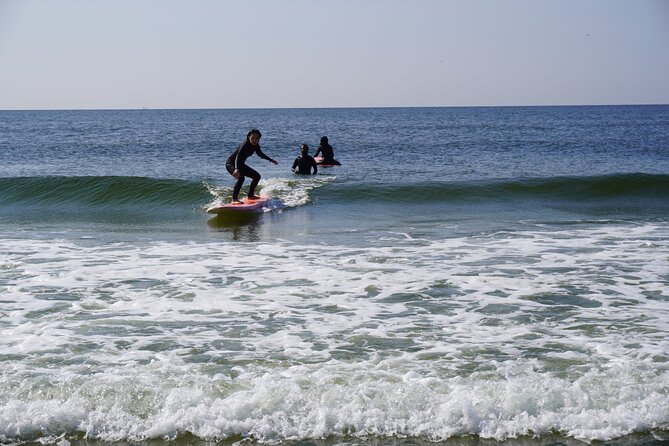
After the safety briefing and pop-up practice, you work on reading waves and catching them. This is the part most people picture when they book a surf lesson, but it depends on the earlier steps.
Reading a wave means learning to watch its shape and movement before trying to ride it. The supplied information does not promise a certain number of waves or successful rides, so keep your expectations realistic. Your result will depend on your starting ability and what the water offers during your session.
The instructor’s job is to help you recognize when and how to attempt a wave. For a beginner, that guidance can save time and reduce confusion. Instead of paddling at every bit of moving water, you can begin to understand what the instructor is looking for.
Catching a wave is also where the pop-up becomes practical. You need to coordinate the board, your paddling, and your timing, then attempt to stand while the board moves. The lesson’s progression gives you a chance to connect those pieces.
I like that the activity promises practice rather than a guaranteed performance. No honest surf school can promise that every participant will ride successfully in 90 minutes. A strong lesson should leave you with a clearer idea of why a wave works, why a pop-up fails, and how to improve your next attempt.
A Private Lesson Changes the Pace
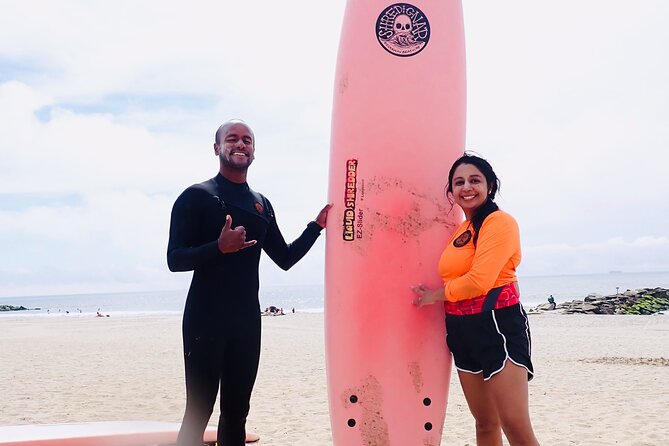
This is a private tour or activity, meaning only your group participates. That is an important feature, not just a line in the booking details.
In a large class, an instructor must divide attention among people with different abilities. Here, the pace can be more personal. If you are struggling with the pop-up, you may have more room for correction. If you progress quickly, the lesson can move toward wave reading and catching sooner.
The private format is especially useful for a couple, family, or small group that wants to learn together. It can also feel less exposed if you are nervous about making mistakes in front of strangers.
There is one practical limitation: the price is listed per person at $189. A private lesson costs more than a shared class because you are paying for focused instruction. The value depends on your priorities. If you want maximum instructor attention and a quieter learning setup, the premium may be worthwhile. If you mainly want to try surfing once at the lowest possible cost, you may find the price harder to justify.
The activity is offered in English. Keep that in mind when deciding if the instruction will be comfortable for everyone in your group.
How Much Value Do You Get for $189?
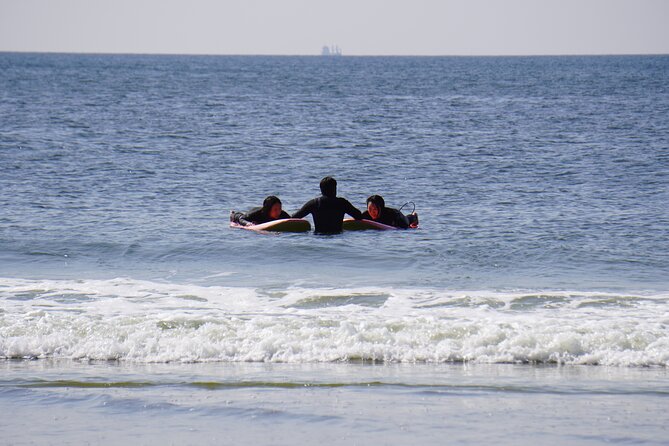
At $189 per person, this is not a casual add-on to a day at the beach. You are paying for a short, focused lesson with private participation and an instructional plan that covers preparation, safety, technique, and practice.
The strongest value comes from the coaching. Dave’s feedback to a very inexperienced surfer suggests that the lesson goes beyond a quick demonstration. You can expect an instructor who watches your attempts and helps you make useful adjustments.
The weak point is the short duration. One hour and 30 minutes is enough for an introduction, but not enough to build strong surfing ability. Part of the time goes to warm-ups, stretching, safety, etiquette, and technique practice. That is appropriate, but it means your actual time attempting waves will be limited.
I would book this if you want a structured first step and prefer private instruction. I would hesitate if you are hoping for an extended surf session or a full day of practice. The price makes more sense for someone who sees the lesson as coaching, not simply equipment time at the beach.
Meeting at Beach 67th Street in Arverne
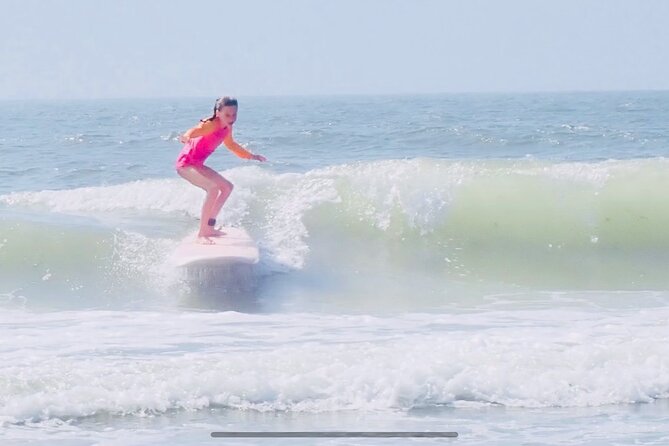
The meeting point is the Sierra Surf School beach entrance at Beach 67th Street and Beach Front Road, Arverne, New York 11692. The activity ends back at the same meeting point.
That simple start and finish can make planning easier. You do not need to arrange a separate return point for the lesson itself. Still, give yourself enough time to locate the beach entrance, especially if you are unfamiliar with Arverne.
The listed operating period runs from December 11, 2022, through December 8, 2026, with hours shown as 7:00 AM to 6:00 PM every day. Your booking time will determine the actual session, so check the selected start time carefully.
The experience is mobile-ticket friendly, and confirmation is received at booking. You can show your booking details from your phone rather than needing a printed voucher.
Who Will Get the Most From This Lesson?
This lesson suits a first-time surfer who wants guidance from the ground up. You will benefit most if you are willing to listen carefully, repeat the basic movements, and accept that surfing takes practice.
It is also a good fit for a small group that prefers a private activity rather than joining strangers. The direct instruction may be valuable if one person in your group is nervous or completely new to the sport.
The activity is not described as an advanced surf session. If you already surf confidently, the basic safety, etiquette, and pop-up instruction may feel too introductory. The lesson appears designed for beginners who need a foundation.
Most people can participate, and service animals are allowed. The available information does not provide detailed guidance about specific physical limitations, board sizes, changing facilities, or what equipment is supplied, so ask Sierra Surf School directly if any of those points matter to you.
Free cancellation is available if you cancel at least 24 hours before the start time. Cancellations made within 24 hours are not refunded, and changes in that final 24-hour period are not accepted.
Final Call: Book It for Focused Beginner Coaching
I would book Sierra Surf School if you want a private introduction to surfing in New York City and are comfortable paying $189 for 90 minutes of instruction. The clear teaching sequence, safety briefing, pop-up practice, and personal feedback make this more useful than simply renting a board and guessing what to do.
I would skip it if your main goal is a long, inexpensive beach session or if you already know the fundamentals. The lesson is short, and success is not guaranteed. But for a true beginner, the private format and instructor attention give you a sensible way to begin, with safety and technique handled before you chase your first wave.
FAQ
Where does the surf lesson meet?
The meeting point is the Sierra Surf School beach entrance at Beach 67th Street and Beach Front Road, Arverne, NY 11692.
Where does the activity end?
The activity ends back at the same meeting point where it begins.
How long does the surf lesson last?
The lesson lasts approximately 1 hour and 30 minutes.
What does the lesson include?
It includes warm-ups, light yoga, stretching, water safety, surf etiquette, pop-up practice, wave reading, and practice catching waves.
Is this a private activity?
Yes. Only your group participates in the activity.
What language is the lesson offered in?
The lesson is offered in English.
What is the cancellation policy?
You can receive a full refund if you cancel at least 24 hours before the experience start time. Cancellations or changes made within 24 hours are not accepted and are not refunded.
Just added around the USA
- Waikiki: Family, Private, and Group Surfing Lessons★ 5.0 · 4 reviews
- Waikiki: Surf Lessons Easy 60 min classes no crowds!★ 4.9 · 21 reviews
- Electric Bike Rentals in Topsail Island and Surf City★ 5.0 · 2 reviews
- 1-on-1 Private Surf Lesson in Santa Barbara★ 5.0 · 4 reviews
- Astonishing Scavenger Hunt: Surf, Sand and Sculptures!★ 3.0 · 2 reviews
- Two- Hour Group Surfing Lesson in Cocoa Wrightsville Beach, NC★ 5.0 · 13 reviews
- Surf lesson with KTO Yoga Surf★ 4.0 · 5 reviews
- Surf Lesson in Santa Barbara★ 3.0 · 2 reviews
USA Surf Lessons, compared.


Beginner-Friendly Waikiki Beach Surfing Lesson
Read our review →

Private Hanalei Sandy Bottom Surf Lesson on Kauai
Read our review →
Browse the lists this lesson appears in