
REVIEW · FUERTEVENTURA
La Pared: Classic Surf Lesson in the South of Fuerteventura
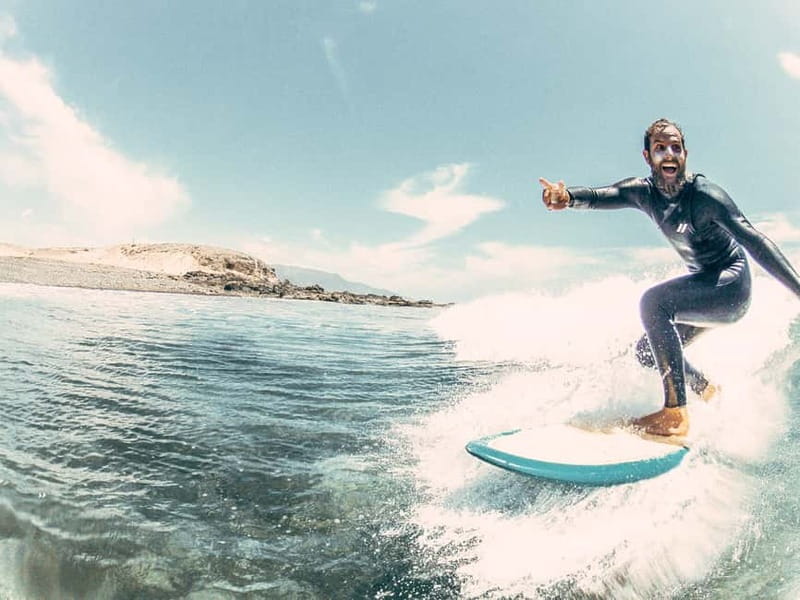
Your first wave may come sooner than you expect. This 3.5-hour lesson takes you from your accommodation to a suitable beach in southern Fuerteventura, where certified coaches teach the basics in a small group. I like the personal scale, with no more than six students, and I like that the surf spot changes according to the tide, wind, and wave forecast rather than following a rigid plan.
I also like the practical setup: hotel pickup, a wetsuit and board matched to you, accident insurance, and instruction in English, German, or Spanish. The main consideration is that pickup time and beach location are not fixed in advance. That is useful for finding better conditions, but it means you need to keep your schedule flexible.
Key points before you book
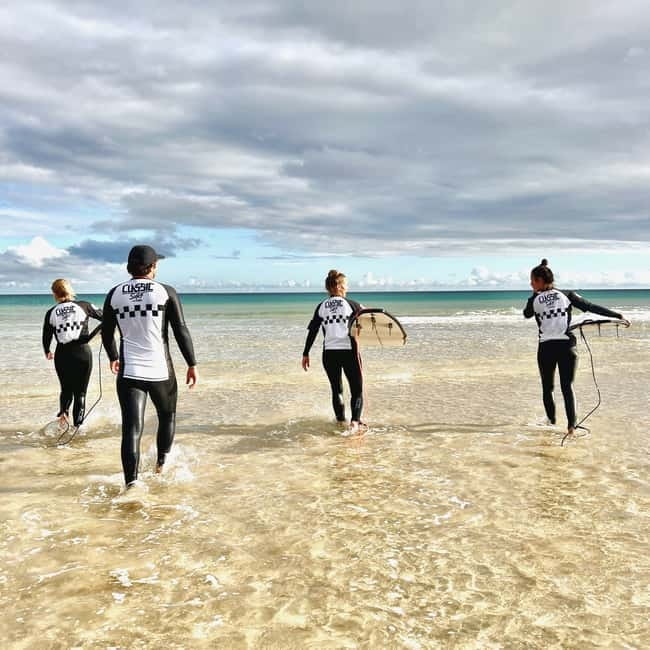
- Small classes keep you from waiting around: The group is limited to six participants, giving the instructor time to correct your position and answer questions.
- The beach changes with the conditions: The team chooses the surf spot based on the tide, wind, and wave forecast.
- Beginners stay in shallow water at first: Initial practice takes place near shore in knee-deep water, which makes the first session less intimidating.
- Pickup covers southern resort areas: Transport is available from Tarajalejo, La Lajita, Costa Calma, Esquinzo, and Morro Jable.
- The equipment is supplied and recently updated: You receive a personal wetsuit and a board suited to your height, weight, and skill level.
- The coaches focus on calm instruction: Jan, one of the instructors, is described as relaxed, precise, and experienced, a useful combination for a first lesson.
Why this surf lesson works for beginners
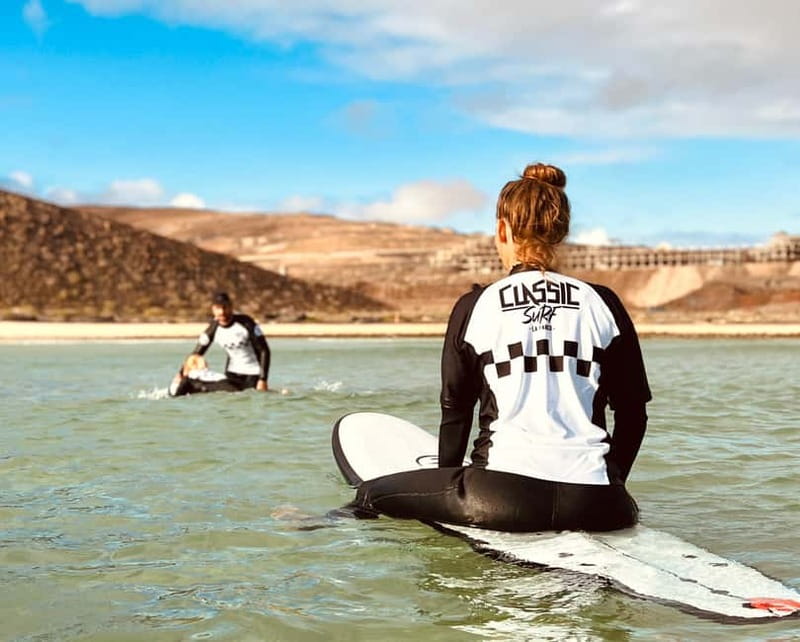
Fuerteventura is a sensible place to try surfing. The island has warm water, broad beaches, and surf conditions through much of the year. You are not signing up for a long course that assumes you already know what you are doing. This is an introductory session built around getting comfortable with the board, the water, and your first small waves.
The lesson begins on land. You learn how to carry and handle the equipment, how to behave around other surfers, and which basic safety rules matter in the water. That briefing may seem simple, but it is important. A beginner needs to know where to sit, how to avoid another board, and how to respond when a wave approaches.
The coach then demonstrates how to lie on the board, paddle, and catch a wave. You practice the movement before heading into the water, which gives you a rough plan instead of asking you to copy someone while being pushed around by surf.
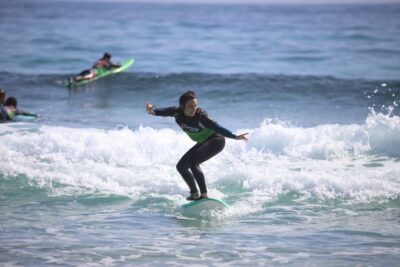
Once you are in the sea, the early work stays close to shore in shallow water. You practice paddling into waves and then learn the movement for standing up. The aim is not a polished surfing style in one morning. It is to help you stand safely, find the basic surfing position, and understand what made that wave work.
That approach suits first-timers who want a real introduction without too much theory. It also helps if you are nervous. The water can still feel busy and unpredictable, but starting in a shallow area gives you a more manageable first step.
More Surf Lessons in Fuerteventura:
- Fuerteventura: Surfing Lesson in the south of Fuerteventura
★ 4.8 · 354 reviews - Lezioni di Surf per Beginner e Intermedi (6 persone a istruttore)
★ 5.0 · 350 reviews - Fuerteventura: Surf Lesson for All Levels and Ages
★ 4.8 · 205 reviews
Pickup from Costa Calma, Morro Jable, and nearby resorts
Classic Surf provides pickup from your accommodation, or from a nearby meeting point, in several southern parts of Fuerteventura. The listed areas include Tarajalejo, La Lajita, Costa Calma, Esquinzo, and Morro Jable.
The bus ride is part of the practical value of the lesson. You do not need to rent a car, find an unfamiliar beach, or work out which break is suitable for a beginner. The instructor and team handle the move to the beach and return you afterward.
There is one catch: the pickup time depends on the beach selected, the tide, and the wind and wave forecast. You will need to provide the name of your accommodation and a mobile number so the team can contact you if needed. Do not plan a tightly timed lunch, excursion, or airport transfer immediately afterward.
This flexible timing is a good thing for the actual surfing. Waves are not a clock-in, clock-out activity. A lesson held at the right tide can offer a better learning session than one held at the same beach every day. Still, you should treat the morning or afternoon as a block of time rather than expecting a fixed departure hour.
Choosing the best surf spot in southern Fuerteventura
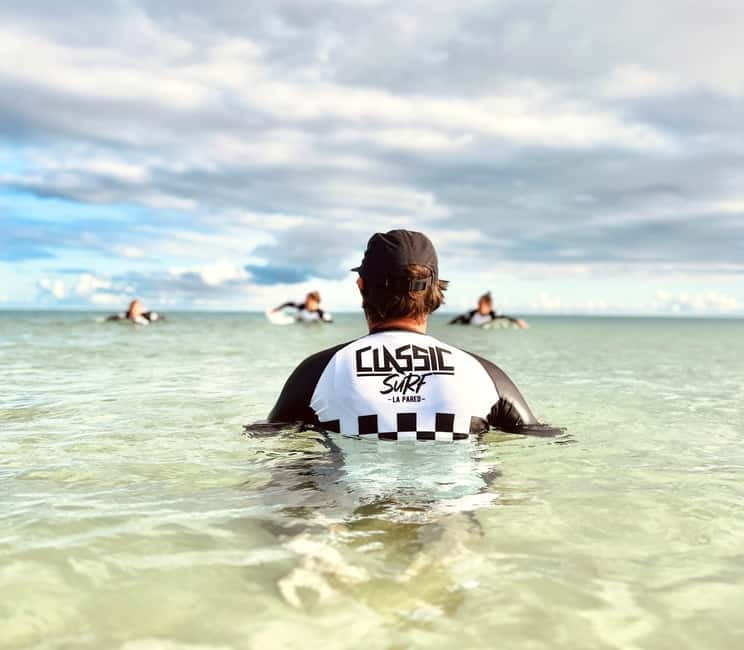
The experience takes place on one of the beaches in the south, selected according to the conditions that day. That means the scenery and exact beach can vary. You may have a different view, shoreline, or wave shape from someone who took the class on another date.
This is one of the strongest features of the setup. Beginners need waves they can catch, not simply the most famous beach or the biggest surf. A spot with manageable waves and enough room to practice is more useful than an impressive break that leaves you struggling to stay upright.
One particularly encouraging account describes a beach with waves at a good height for repeated practice. In the quieter season, the beach was also lightly used, with plenty of room in the bay. Conditions change, of course, so you should not expect a private cove every time. The useful point is that the team tries to match the location and timing to the lesson.
You should also expect a short journey before the class begins. The beach transfer is not wasted time. It allows the coach to select a more suitable place and gives you a look at the southern coast along the way.
The 3.5-hour lesson, step by step
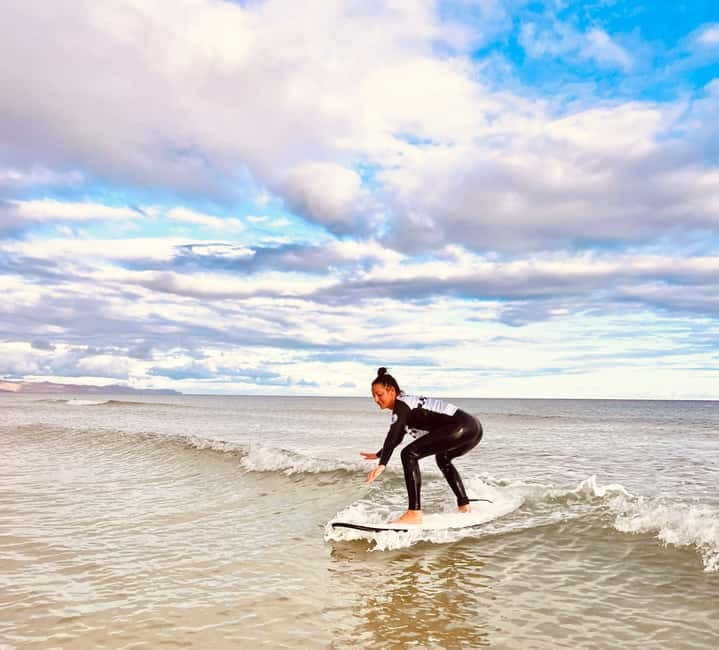
The total activity lasts about three and a half hours, including the transfer to the surf spot, preparation, instruction, and return. The exact time spent in the water may vary, since the pickup and beach choice depend on conditions.
After arrival, you receive a wetsuit and surfboard. You are asked to provide your height and weight ahead of time so the team can prepare equipment that fits. The board is selected for your ability, which matters a great deal for a beginner. A stable beginner board gives you a better chance of finding balance than a narrow board designed for an experienced surfer.
On the beach, the coach explains the main equipment points and safety rules. You learn how to carry the board, how to deal with other people in the water, and how to read the immediate surf area. The lesson also covers lying and paddling technique before you attempt to stand.
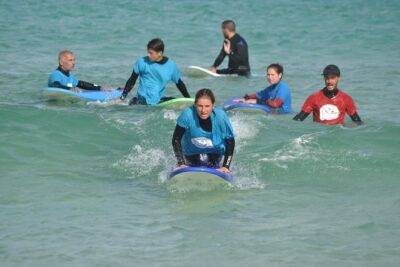
The first water exercises happen in knee-deep water close to the shoreline. You work on paddling into small waves and feeling the board move. The instructor can watch you closely here, which is where the small group becomes especially useful.
After that comes the famous stand-up attempt. You start from a lying position, push up, and place your feet in the correct surfing stance. It sounds straightforward until the board moves beneath you. Expect some wobbles and falls. That is normal, and the lesson is designed to give you enough attempts to learn from them.
The goal by the end is to catch some waves independently and stand with a safe, basic position. You may not look like a seasoned surfer, but you should understand the core movement and have a clearer idea of whether you want to continue.
Same place, a different way into the water:
- Surf Beginner Course
★ 5.0 · 196 reviews - Fuerteventura : Corralejo Surf Lesson
★ 4.7 · 186 reviews - Fuerteventura South: Learn to surf on stunning beaches!
★ 4.8 · 162 reviews - Surf Class at Corralejo
★ 4.5 · 122 reviews
Why the six-person limit matters
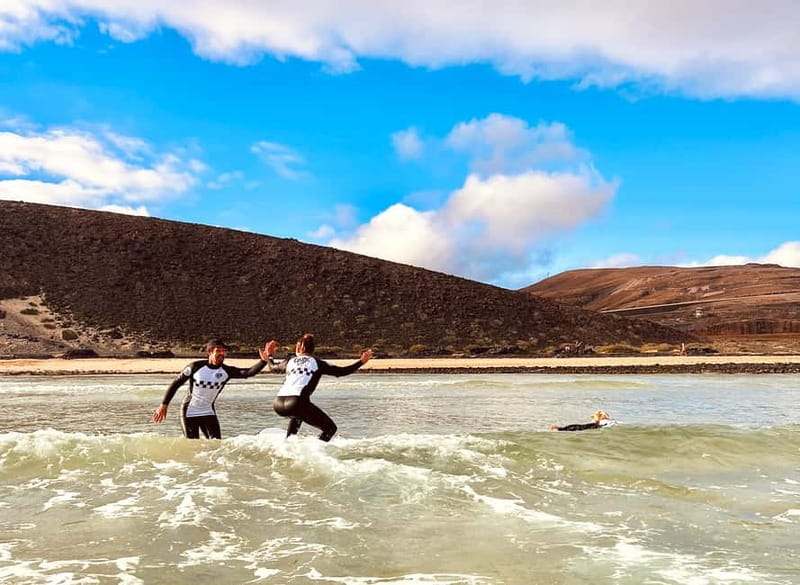
The group limit is six participants, and the small size is not just a nice marketing detail. Surf lessons involve a lot of waiting if one coach has too many people to watch. A limited group gives you more chances to receive corrections while you are on the beach and in the water.
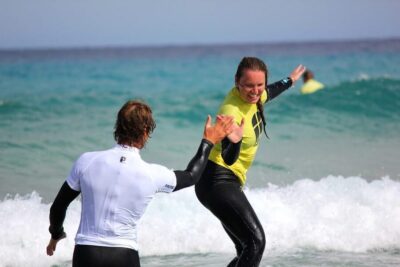
The strongest feedback about the class centers on this personal attention. Jan, the instructor named in the available information, is described as calm, friendly, and precise. That tone matters for beginners. A coach who explains the basics patiently can keep a first session from becoming a tiring scramble.
Your experience will still depend on how many people book that day. The maximum is six, not a promise that every lesson will have only two or three students. One session had just a single participant, but that was a fortunate low-season situation, not something to count on.
Even with a full group, six people is a reasonable size for an introductory lesson. You should have a chance to ask questions, hear the explanation clearly, and receive some individual guidance.
New boards, fitted wetsuits, and accident insurance
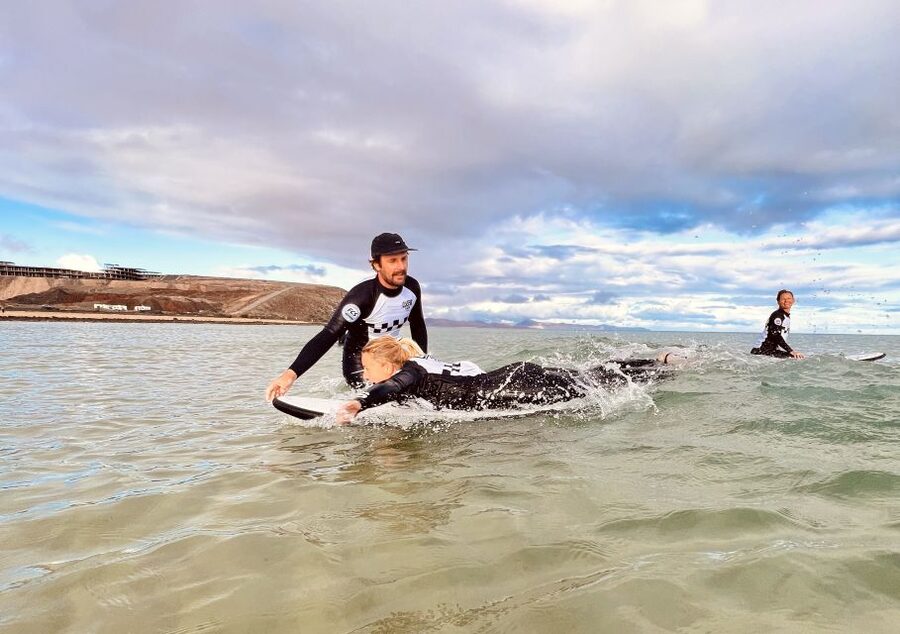
The price includes a personal neoprene wetsuit and a surfboard suited to your level. You need to send your height and weight so the team can prepare the right sizes. A proper wetsuit fit helps with comfort and warmth, while the correct board affects how stable and easy the lesson feels.
The equipment has been described as new or nearly new, including a wetsuit that fitted well and a beginner board that matched the participant’s ability. That is encouraging for anyone who does not want to learn on tired gear.
You should still remember that surfing is physical. You will paddle, push up from the board, fall into the water, and repeat the same movement many times. The included accident insurance adds a useful layer of protection, but it does not turn the activity into a risk-free outing.
Food and drinks are not included. Bring what you need for before or after the lesson, though the supplied information does not specify what storage is available on the bus or at the beach. It is sensible to ask the provider if you have special needs for valuables or refreshments.
What makes the southern Fuerteventura setting special
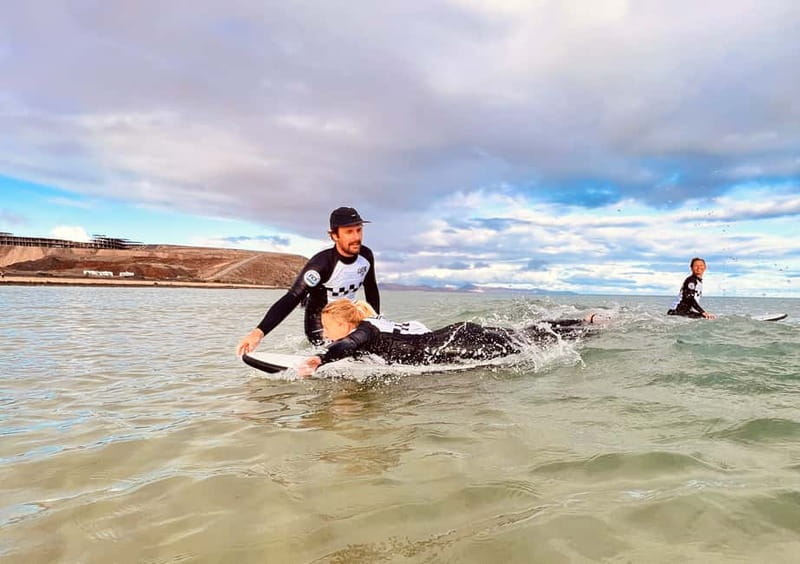
The appeal here is not only the lesson. The transfer takes you to beaches in the south, where you get open coastal views and a change from the resort area. Even if you spend much of the session concentrating on your board, the setting gives the morning a proper island feel.
Fuerteventura’s water is generally warm enough for a wetsuit-based lesson, and the combination of sun, sand, and regular waves makes the activity easy to fit into a holiday. You do not need to be a serious surfer to enjoy it. The lesson is as much about trying something active outdoors as it is about developing a new sport.
The beach can also affect your experience. A quieter stretch of coast gives you more room to focus, while a busier day may require more attention to other surfers. Since the team chooses the location based on conditions, you have less control over the exact scenery, but a better chance of receiving a suitable beginner session.
Is $71 a fair price?
At $71 per person, this is not the cheapest way to spend three and a half hours in Fuerteventura, but the price covers more than a basic beach class. You receive transport from several southern resorts, a wetsuit, a board, a certified instructor, accident insurance, and the lesson itself.
The transport has real value if you are staying in Costa Calma, Morro Jable, Esquinzo, Tarajalejo, or La Lajita and do not have a car. Buying or renting surf equipment separately would also add cost and hassle, especially for a first attempt.
The small group improves the value further. You are paying for time in the water and personal guidance, not only for access to a board. If the class is full, you will share the instructor with up to five other people, but that is still a manageable number for beginner coaching.
The price makes less sense if you already surf confidently and only need equipment. This experience is aimed at learning, with instruction and safety guidance as major parts of what you are buying.
Who should book this lesson?
I would recommend it most strongly to first-time surfers, couples, families, and solo visitors who want a structured activity without committing to a multiday course. The language choice also helps: instruction is available in English, German, or Spanish.
It suits you if you value a relaxed coach, a small class, and door-to-beach transport. It is also a good choice if you are unsure which beach is right for a beginner and would rather let the team handle the daily conditions.
You may want something else if you need a fixed start time, dislike physical activity, or expect a long session of advanced surfing. The class teaches the foundations. It does not promise advanced turns, large waves, or a full professional training program.
Families should check the provider directly about age requirements, since no minimum age is supplied here. The same applies if you have mobility concerns or need specific accessibility arrangements.
Booking details worth noting
You can cancel up to 24 hours before the activity for a full refund, and the reserve-now, pay-later option keeps your plans flexible. That is helpful when your holiday schedule may change, but you still need to check the available starting times for your chosen date.
When booking, provide three things carefully: your height and weight, your accommodation name, and a mobile number. The team uses this information to prepare equipment and coordinate pickup.
Keep your day open around the lesson. Pickup can shift with the tide, wind, and wave forecast, so the stated duration is clear while the exact start time may not be.
Should you book La Pared Classic Surf?
Book it if you want a friendly, well-organized first surf lesson in southern Fuerteventura, especially if you are staying near one of the covered resort areas. The best reasons are the six-person limit, condition-based beach selection, included equipment, and calm instruction from coaches such as Jan.
I would be comfortable recommending it to a beginner who wants a genuine first try rather than a quick photo opportunity. Just allow for a flexible pickup time, bring your own food and drinks, and remember that your first success may be standing for only a few seconds. Those few seconds can still make the $71 worthwhile.
FAQ
How long does the surf lesson last?
The activity lasts 3.5 hours, including the surf spot transfer, preparation, instruction, and return trip.
Where does pickup take place?
Pickup is available from your accommodation, or a nearby location, in Tarajalejo, La Lajita, Costa Calma, Esquinzo, and Morro Jable.
Is the exact beach decided in advance?
The surf spot is selected according to the tide, wind, and wave forecast. The exact beach may therefore vary.
How many people can join the lesson?
The group is limited to six participants.
Is equipment included?
Yes. The activity includes a personal neoprene wetsuit and a surfboard suited to your skill level.
What should I provide before the lesson?
You should provide your height and weight, the name of your accommodation, and a mobile phone number for contact if needed.
Which languages are available?
Instruction is available in English, German, and Spanish.
Is accident insurance included?
Yes, accident insurance is included in the activity price.
Can I cancel the booking?
You can cancel up to 24 hours in advance for a full refund. The reserve-now, pay-later option is also available.
Just added around Fuerteventura
- Surf Lessons | Learn to surf in Fuerteventura★ 4.9 · 19 reviews
- Corralejo: Surf Lessons for Beginners with Hotel Pickup★ 4.8 · 5 reviews
- La Pared: Surf Courses for All Levels★ 5.0 · 11 reviews
- Intermediate & Advenced Surf Course in Fuerteventura’s south★ 5.0 · 3 reviews
- Fuerteventura Surf Lesson★ 4.4 · 13 reviews
- Fuerteventura Surfing Experience★ 4.8 · 30 reviews
- Corralejo: 1-Day Surf Lesson for Beginners★ 4.4 · 48 reviews
- Fuerteventura: Kids and Family Surfing Lesson★ 4.7 · 29 reviews
Fuerteventura Surf Lessons, compared.
Lezioni di Surf per Beginner e Intermedi (6 persone a istruttore)
Read our review →
Fuerteventura South: Learn to surf on stunning beaches!
Read our review →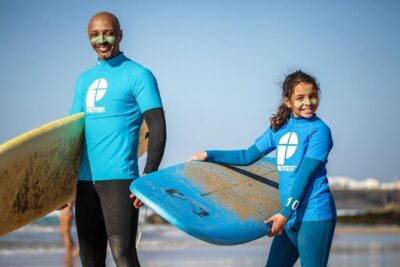
Browse the lists this lesson appears in