
REVIEW · LISBON
Lisbon Surf Guide – Surf class & Pick Up
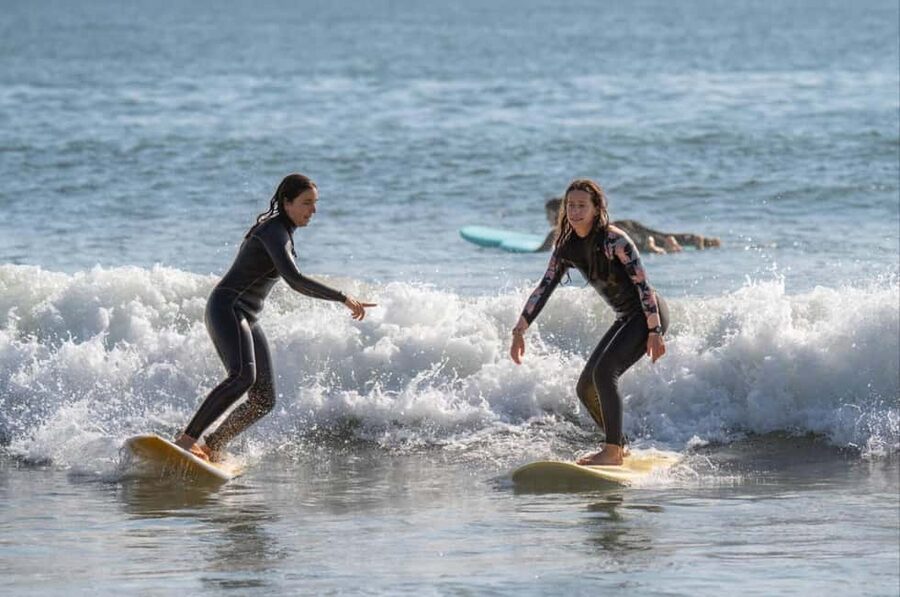
Catch your first wave near Lisbon. This three-hour Lisbon Surf Guide outing pairs city pickup with a local beach lesson, usually around Lisbon, Cascais, or Costa da Caparica. I like the small-group coaching, which gives beginners real attention instead of a quick group demonstration, and I like that the beach is chosen around the day’s waves and your ability. The main consideration is that this is a nature activity: the start time can change with sea conditions, and showers may not always be available.
You meet the van in front of Titanic Sur Mer, then trade Lisbon streets for the coast. Inês, a local surfer and qualified coach, has built a friendly lesson around safety, patience, and time in the water. The ocean can be cold even in August, so bring a towel, swimwear, sunscreen, and a little patience for the changing room situation.
Key points to know before you book
- The lesson has about 1.5 hours of surfing: Allow roughly two hours at the beach for changing, safety, warm-up, instruction, and time in the water.
- The beach is chosen for conditions: You may surf near Lisbon, Cascais, or Costa da Caparica, with driving times of about 30 to 45 minutes each way.
- Small groups make a real difference: The advertised maximum is eight participants, with one instructor for up to five students.
- Beginners are well supported: The lesson covers equipment, safe falling, standing on the board, and wave selection.
- Equipment and transport are included: You receive a board, wetsuit, instruction, insurance, pickup, and drop-off.
- The price is $58 per person: That is fair value if you want transport, gear, and coaching bundled into one short outing.
From Titanic Sur Mer to the right beach
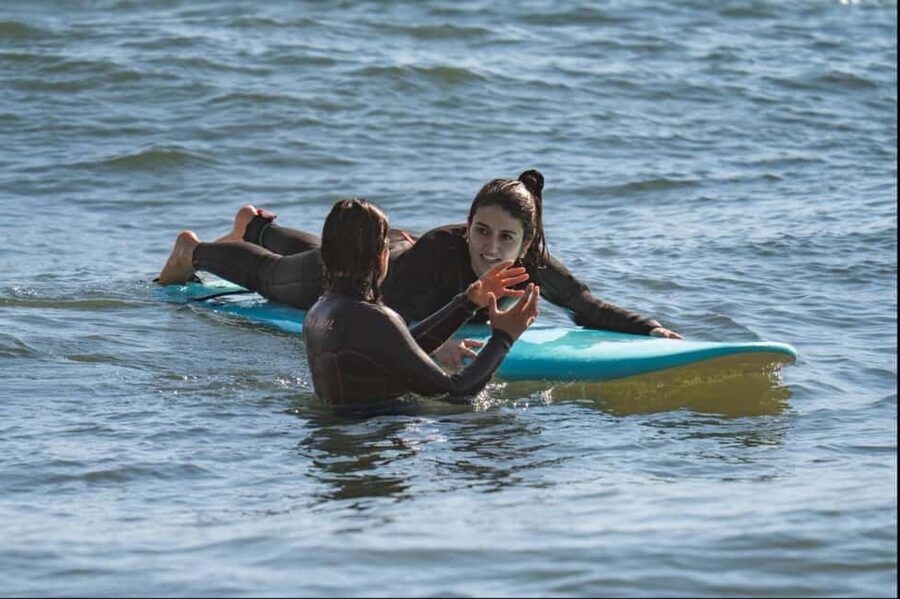
The meeting point is easy to identify: look for the van parked in front of Titanic Sur Mer. From there, the guide drives you to the beach that best fits the wind, swell, and group ability on that day.
That flexibility is one of the activity’s strongest features. You are not locked into one beach simply because it appears on a schedule. The possible areas are around Lisbon, Cascais, and Costa da Caparica, each reached in roughly 30 to 45 minutes from the city area. The exact choice depends on the sea.
The drive is part of the practical value here. Surfing independently means finding a board, locating a suitable beach, arranging transport, and working out where the safe beginner areas are. Here, that work is handled for you. Past groups have described the van ride as comfortable, clean, and easy, though drinks and food are not allowed inside.
The return trip brings you back to Lisbon after the beach session. That makes this a useful half-day addition to a city visit rather than a full-day commitment.
More Surf Lessons in Lisbon:
- Lisbon Surf Experience
★ 4.9 · 876 reviews - The Surf Instructor in Costa da Caparica
★ 5.0 · 403 reviews - Lisbon: Surf Experience at Costa da Caparica
★ 5.0 · 376 reviews
Getting fitted for a wetsuit
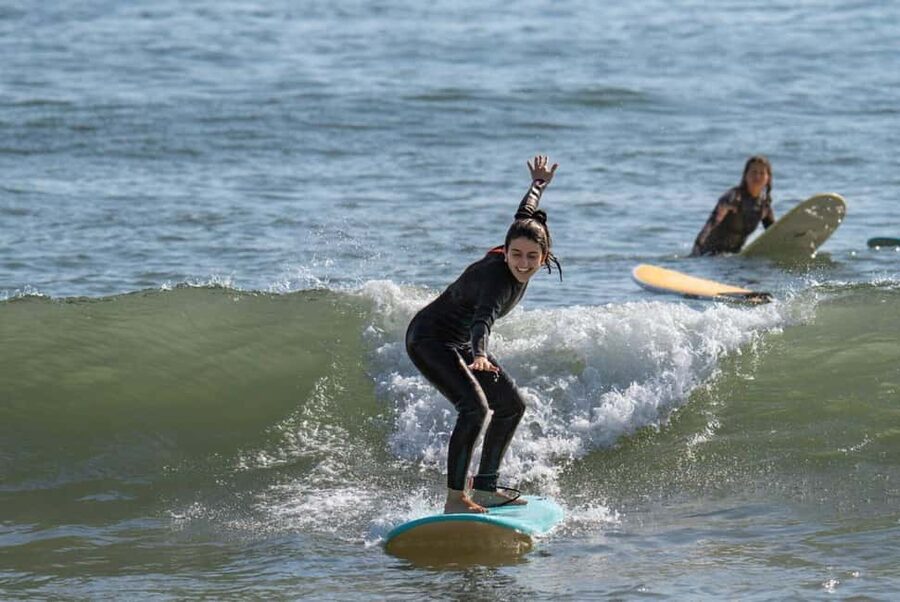
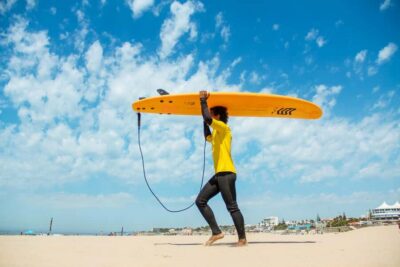
At the beach, you change into a wetsuit and get set up with your board. The provider supplies the surfboard and wetsuit, so you do not need to pack bulky equipment or spend part of your morning hiring it.
Bring swimwear under your clothes and a towel for changing afterward. Sunscreen and water are also important. The beach setup can be basic. You may have a shower, but it is not guaranteed, and changing can happen at the beach.
The cold water is worth taking seriously. One family who came with children specifically noted that the ocean felt cold even during August. The wetsuit helps, but you will still want a dry towel and warm clothes for the ride back.
The fitting stage may not feel glamorous, especially if several people are pulling on neoprene beside the beach, but it keeps the experience focused on the ocean. One useful detail is the attention given to fit. Inês has a selection of wetsuits, and one participant particularly appreciated being given a suit that fit properly. A well-fitting wetsuit is not just a comfort issue. It helps you stay warm and move more easily.
The safety briefing comes before the fun
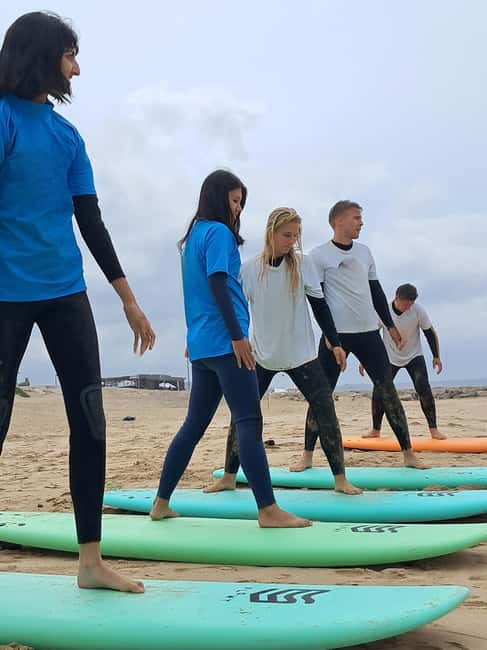
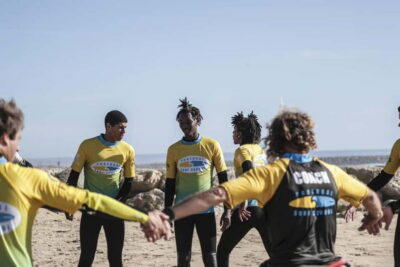
Before anyone paddles out, the instructor explains the board, basic safety, and how to fall. You also do a warm-up with stretching and practice the movement needed to stand.
This short land session is important. Surfing looks simple from shore, but the first few attempts involve timing, balance, and knowing where your feet should go. You learn how to lie on the board, where to place your feet, and how to rise without fighting the board.
The safety briefing also sets the tone for the lesson. First-time surfers are not expected to charge into powerful waves. The guide’s stated aim is to take beginners to a safe surf spot and remain close by in the water. That reassurance matters, especially if you are unsure about your fitness or nervous about falling.
The teaching style appears particularly suited to people who want encouragement without pressure. A participant who was not especially sporty was still able to take breaks and remain comfortable in the water rather than being pushed beyond their limits. That is a useful sign for couples or families with mixed interest levels.
About 90 minutes of actual surfing
Once the briefing and warm-up are done, you get about 1.5 hours of surfing. The full beach portion lasts around two hours, while the overall activity takes three hours including transport.
That amount of water time is good for a first lesson. A short tryout can leave you with barely enough time to understand the board, but this format gives you repeated attempts. You will fall, adjust, paddle back, and try again. By the later part of the session, the basic movement should feel less foreign.
The instructor works with the group from the water and gives individual tips after each attempt. Inês is praised for spotting exactly what went wrong, then offering a clear adjustment for the next wave. That might involve your foot position, the moment you stand, or how you line up with the incoming wave.
The goal is not to turn you into an advanced surfer in one morning. It is to help you catch waves safely and leave with a better sense of what to practice next. Several participants with no previous experience managed to stand up and ride at least a few waves. That is an encouraging result, but wave conditions always control how much you can achieve.
Same place, a different way into the water:
- Lisbon: 1.5-Hour Surf Lesson
★ 4.8 · 275 reviews - Lisbon Surf Experience
★ 5.0 · 152 reviews - Lisbon: The Surf Instructor – surf lessons with transfer
★ 5.0 · 120 reviews - Surf Lesson in Lisbon – The surf experience
★ 5.0 · 97 reviews
Why the small group matters
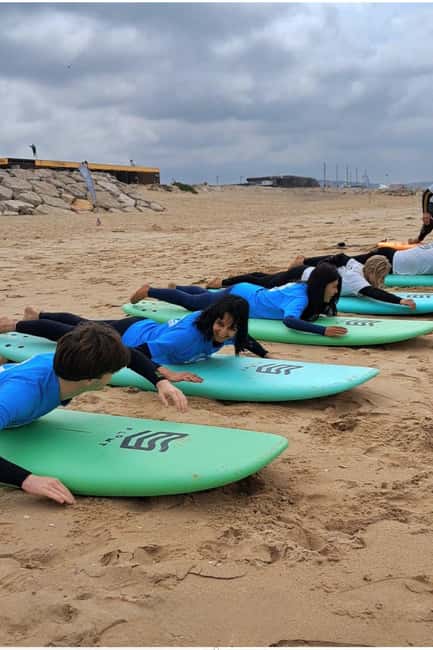
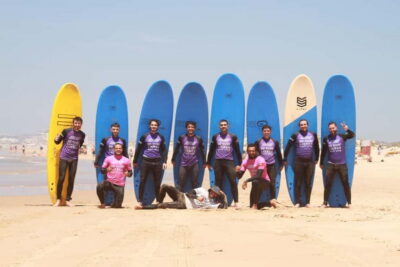
The group is limited to eight people, with one instructor for up to five students. In practice, group sizes can be smaller. Some sessions had only three or four participants, while another had several instructors helping a larger group.
You should still check the exact arrangement for your date, but the small-group approach is central to the experience. Surf instruction loses value when you spend most of your time waiting for a teacher to notice you. Here, the stated structure allows the instructor to watch individual attempts and make corrections.
This is also useful when abilities differ. A mixed group can include complete beginners, people who have tried surfing before, and stronger surfers looking for technique advice. Inês teaches from beginner through advanced levels, so the same session can work for a couple with different backgrounds.
For a beginner, the benefit is confidence. You can ask basic questions and get help with the mechanics of standing. For someone with experience, the benefit is more targeted feedback, such as catching more waves or improving technique.
There is one practical limit. A three-hour outing cannot offer the depth of a multi-day surf course. If you already surf regularly and want serious performance coaching, you may need a longer or more specialized program. For a city break, though, the lesson gives a useful amount of practice without taking over your whole day.
Inês brings a local coach’s perspective
Inês is a local surfer and professional coach who has taught since 2016. Her training includes Surf and Performance studies at Lusófona University, a Level I surf instructor certificate, and a Level II surf coach certificate from the National Surfing Federation.
That background shows in the way the lesson is described and delivered. You get more than a board and a push into the waves. The session includes technique, safety, surf etiquette, and an introduction to Portuguese surf culture.
The teaching style is patient and upbeat rather than stern. Inês has been praised for making beginners feel comfortable, giving everyone personal feedback, and explaining theory in simple terms. Her colleagues, including Tomas, Gustavo, and Nuno, have also helped on some sessions.
One participant singled out Tomas for being especially kind and supportive during a first lesson. That suggests the experience can involve more than one instructor, although the exact staffing may vary. The provider’s own format is one instructor for up to five students, so ask if you need a precise instructor arrangement.
Surf culture without leaving the Lisbon area
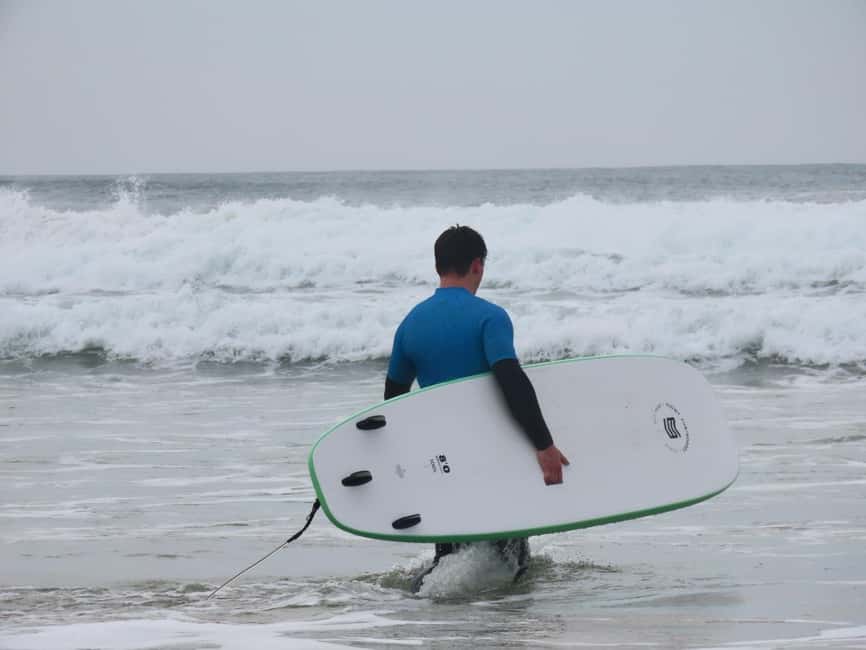
This is not only a lesson in standing on a board. The guide also talks about Portuguese surf culture and the local beach scene.
That cultural element gives the outing more purpose. You are not simply transported to a generic beach, handed equipment, and sent into the water. You get a local coach’s view of how to read the conditions and how to approach surfing in this part of Portugal.
The beaches around Lisbon offer a clear contrast with the city’s tiled streets and busy viewpoints. The short drive is enough to change the pace of your trip. You can spend the morning working with the ocean, then return to Lisbon with the rest of the day available.
The scenery is attractive, but the real draw is the water itself. You may get beautiful waves and a calm beach, or you may get a more modest session shaped by the conditions. That unpredictability is part of surfing, not a flaw in the booking.
The price and what you actually receive
At $58 per person, this is a reasonable package for a three-hour surf lesson near Lisbon.
The fee includes:
- Pickup and drop-off
- Transportation from the meeting point
- Surf instruction
- A surfboard
- A wetsuit
- Insurance
The price makes the most sense if you do not have a car and do not own surf equipment. Buying separate transport, board rental, wetsuit rental, and a lesson could easily turn a simple beach outing into a string of small decisions.
You are also paying for local judgment. Choosing the right beach for the day can make the difference between a safe, enjoyable first session and a frustrating one. That is where the guide’s role matters most.
The value is less clear if you already have your own gear, know the Lisbon surf beaches well, and only want unsupervised water time. In that case, a simple rental might cost less. For first-timers and visitors staying in central Lisbon, the bundled price is easier to justify.
Free cancellation up to 24 hours before the activity and the option to reserve now and pay later make the booking less rigid. Still, you should watch your messages because the start time may be moved earlier or later when the sea and weather require it.
Who will enjoy this most
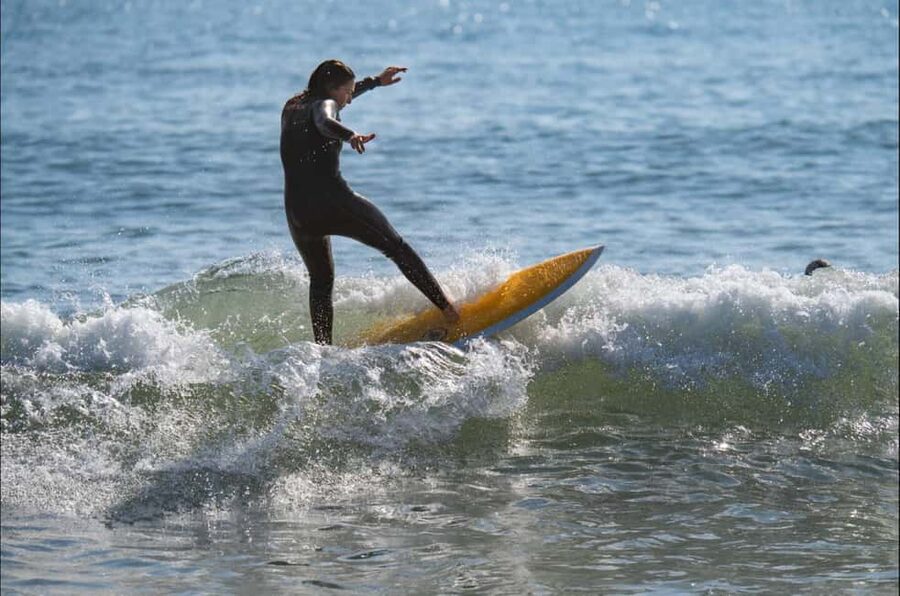
I would recommend this lesson to:
- First-time surfers who want clear instruction and close support
- Couples with different levels of surf experience
- Families with older children, subject to the provider’s arrangements
- Solo visitors who like meeting a small group
- Intermediate surfers seeking personal technique tips
- Anyone wanting a coastal break without arranging a rental car
The experience has worked for groups ranging from children aged seven and eleven to adults in their forties. That does not guarantee the same setup for every family, so confirm suitability if you are booking for young children.
You should be comfortable with a physical beach activity. Surfing involves repeated attempts, paddling, standing, falling, and getting back on the board. The instructor can encourage breaks, but the water session still requires energy.
This is not the best choice if you need a polished changing room, a guaranteed shower, or a fixed departure time. It is also not ideal if you want a full day at one beach or advanced performance training.
Small details that improve the morning
Wear swimwear beneath your clothes so changing is quicker. Bring a towel, sunscreen, and water, and pack warm clothing for the return ride.
The coach may contact you the day before with an updated pickup time. Do not treat the original time as carved in stone, since weather and sea conditions can affect the start.
Arrive at Titanic Sur Mer with enough time to find the van. Food and drinks are not allowed inside the vehicle, so plan around that rule rather than trying to bring breakfast aboard.
Keep your expectations sensible. Standing on the board is a wonderful goal, and many beginners manage it, but the ocean does not promise identical waves for every session. A successful lesson can also mean learning to fall safely, understanding how to read a wave, or getting useful advice for your next attempt.
Should you book the Lisbon Surf Guide?
Book it if you want an approachable first taste of surfing with transport, gear, insurance, and a local instructor included. The strongest reasons are the small groups, the generous water time, and Inês’s patient one-to-one coaching.
The main tradeoff is the simple beach setup and changing schedule. You may not get a shower, and the beach or start time can change with the sea. Those are fair compromises for an activity built around real ocean conditions.
At $58, this is good value for a city visitor who wants to add a genuine coastal experience to a Lisbon stay. Bring a towel, expect cold water, listen closely during the safety briefing, and give yourself permission to fall. That is how the fun usually starts.
FAQ
Where does the surf activity take place?
The lesson may take place around Lisbon, Cascais, or Costa da Caparica. The guide chooses the beach based on the waves, weather, and your ability level.
Where is the meeting point?
Meet at the van parked in front of the Titanic Sur Mer bar.
How long does the experience last?
The full activity lasts three hours. About two hours are spent at the beach, including changing, briefing, warm-up, and surfing, with around 1.5 hours dedicated to surfing.
Is equipment included?
Yes. The activity includes a surfboard, wetsuit, instructor, transportation from the meeting point, pickup and drop-off, and insurance.
Is the lesson suitable for complete beginners?
Yes. The instructor teaches beginners how to use the board, stay safe, stand up, and catch waves. The lesson also serves surfers who want to improve their technique.
What should I bring?
Bring swimwear, a towel, sunscreen, and water. Showers may not always be available, and you may change clothes at the beach.
Can the start time change?
Yes. The activity depends on weather and sea conditions. The provider informs you one day before pickup if the start time needs to be earlier or later.
Just added around Lisbon
- Lisbon: Guided Surfing Tour & Lessons★ 4.5 · 32 reviews
- Lisbon: Sunset Surf Experience★ 4.5 · 2 reviews
- Duckdive – Surf Class in Caparica★ 5.0 · 20 reviews
- Costa da Caparica: Sunset Surf Lesson★ 5.0 · 3 reviews
- Aulas de Surf/Surf Lesson – Lisboa★ 5.0 · 15 reviews
- Surfing and Yoga in Lisbon★ 5.0 · 15 reviews
- 2-Hours Private Surf Lesson in Peniche and Baleal★ 5.0 · 12 reviews
- Aulas de Surf★ 5.0 · 73 reviews
Lisbon Surf Lessons, compared.

The Surf Instructor – surf lessons with transfer
Read our review →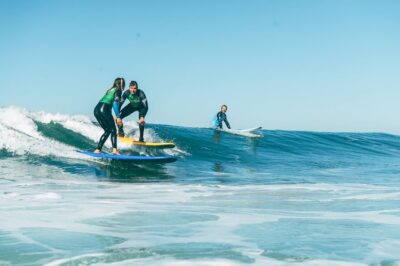

Browse the lists this lesson appears in