
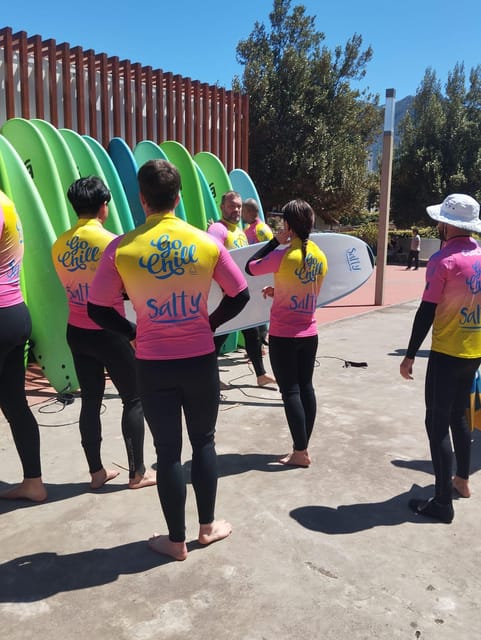
REVIEW · PORTUGAL
Madeira: Surfing Lesson on the Island’s Most Beautiful …
The ocean is your classroom. This three-hour Madeira surfing lesson gives you a practical introduction to the sport, with a professional instructor, full equipment, and a beach selected according to the day’s sea conditions. I like the small groups of up to six people and the fact that the school can choose among Madeira beaches rather than forcing every class into one fixed spot.
I also like that the lesson includes both safety instruction and water practice, not just a quick attempt at standing on a board. The main thing to consider is the changing meeting point and start time, plus the fact that transportation is not included. You need to watch for the message sent the day before and arrange your own way to the beach.
A Polish customer booked the class as a birthday present for her boyfriend in January 2025 and said he returned delighted with surfing, praising the instructors as professional and kind. That is a useful clue about the tone of the school, although the published rating is based on only two reviews, so I would treat it as encouraging rather than final proof.
Key points before you book
- The beach is chosen for the forecast: The school can change the location and start time to match the weather and wave conditions, with Machico listed as a possible meeting area.
- Three hours gives the lesson room to breathe: You get a safety briefing, warm-up, practical instruction, and time to work on catching waves instead of rushing through a short introduction.
- The group is limited to six: That keeps the class small enough for an instructor to watch your progress and offer corrections.
- All surf equipment is supplied: You only need swimwear, a towel, and sunscreen, along with the willingness to get wet and keep trying.
- You need basic swimming ability: The class is not suitable for non-swimmers, children under eight, pregnant women, or people with a low level of fitness.
Why Madeira works for a first surf lesson
Madeira is better known for steep mountains, levada walks, and dramatic coastal views than for beginner surf schools. Yet its mild climate allows beach activities throughout the year, and the island has different types of waves for different ages and ability levels.
That variety matters. A first lesson is not about finding the biggest wave. It is about finding a manageable wave, learning how the board behaves, and getting comfortable in moving water. By letting the school choose the beach, you avoid guessing which stretch of coast is suitable on a particular day.
The trade-off is less control for you. You may picture one specific beach, only to receive a message that the class has moved. That can feel inconvenient if you have planned a tightly packed day, but it is sensible for a sport shaped by wind, swell, and tide. The better beach is the one that offers a useful lesson, not necessarily the one with the most famous name.
More Surf Lessons in Portugal:
- Matosinhos: Surfing Lesson with Equipment
★ 4.8 · 926 reviews - Lisbon Surf Experience
★ 4.9 · 876 reviews - Albufeira: Surf Lesson
★ 4.7 · 699 reviews
The changing meeting point and why it matters
The meeting point is not fixed in all conditions. Machico is identified as one possible location, and the exact time and place are sent the day before the activity after the school checks the forecast.
Plan for this carefully. Do not build a museum visit, airport transfer, or long drive immediately before the class. Keep the morning or afternoon flexible until the school contacts you. Being on time matters because a surf lesson has a short working window, and late arrivals can cut into the briefing and water practice.
You also need to arrange your own transport. The price does not include a transfer service, so check the final meeting point before deciding how to reach it. If you are staying outside the area, allow extra time for the journey once the school confirms the location.
This flexibility is one of the most important practical details in the whole experience. It is not a flaw in the lesson itself, but it does mean this activity suits a relaxed itinerary better than a tightly scheduled one.
What happens during the three-hour lesson
The experience begins with a theoretical briefing covering rules and safety. This is valuable for a beginner because surfing is not simply a matter of lying on a board and waiting for a wave. You need to understand how to behave around other people, how to handle the equipment, and how to approach the water sensibly.
The briefing also gives you a chance to understand what the instructor will ask you to do. A short explanation on land can save confusion once wind, spray, and moving water enter the picture. If you are nervous, this first stage should help you get your bearings before the physical work begins.
Next comes a warm-up. Surfing uses more of your body than the relaxed beach setting might suggest, so preparing your muscles is worthwhile. The class is not presented as a fitness test, but you should expect to move, paddle, push up, balance, and repeat the same basic actions several times.
The practical lesson follows. The instructor teaches you the skills needed to make the most of the waves, then helps you choose which waves to try. The wording is important here: you are not simply handed a board and sent into the sea. The lesson focuses on reading the conditions and making better choices.
The final part takes place in the water, where you work on feeling the waves and riding the board. You may catch a wave quickly, or you may need several attempts before the movement begins to make sense. The school’s job is to give you the right foundation, while your job is to listen, keep your balance, and accept that falling is part of the bargain.
A small group of six keeps instruction useful
The maximum group size is six participants. That is a strong feature for a first lesson because the instructor has fewer people to watch than in a large commercial class.
A small class does not guarantee constant one-to-one coaching. Still, it improves the odds that you can receive a correction when you need it, especially when the group is practicing the same basic movements. It also makes it easier to ask questions during the briefing and warm-up.
The experience is offered in Portuguese, Spanish, and English. That gives many visitors a practical way to follow safety rules and receive coaching without relying on gestures alone. If you are booking for a mixed-language group, check that everyone is comfortable with one of those languages.
The instructor is described as fully experienced and certified by the Portuguese Surfing Federation, known by its Portuguese initials, FPS. That certification and the included insurance add useful reassurance, particularly if this is your first time taking a board into the ocean.
Same place, a different way into the water:
- Porto: Small Group Surf Lesson with Transportation
★ 4.9 · 594 reviews - Albufeira: 2-Hour Falesia Beach Surf Lesson
★ 4.8 · 464 reviews - Albufeira: Learn to Surf in Chill Beach Vibes & Good Times
★ 4.7 · 439 reviews - Surf Experience in Cascais
★ 5.0 · 423 reviews
The equipment is included, but bring the basics
The school supplies all equipment needed for the lesson. That saves you from packing or renting a board and other surf gear separately, and it makes this activity easy to add to a Madeira holiday.
Your own packing list is short:
- Swimwear
- Towel
- Sunscreen
Wear swimwear that stays secure during active movement. You will be paddling and standing, not just sitting near the water. Sunscreen is especially important because water reflection can make a beach session feel less intense than it is.
A towel may sound obvious, but it is easy to forget when you are focused on finding the meeting point. Keep it accessible rather than buried deep in your luggage. The school supplies the technical equipment, but it does not supply your personal beach items.
The real value of the $88 price
At $88 per person, this is not the cheapest way to spend three hours in Madeira. The price makes more sense when you count what is included: an experienced certified instructor, safety teaching, a warm-up, practical coaching, equipment, insurance, and a small group capped at six.
You are also paying for the school’s ability to choose a suitable beach based on the forecast. That decision can make a major difference to a beginner’s comfort and progress. A fixed beach may be convenient, but it is not always the best place to learn on the day you happen to visit.
The value is strongest for someone who would otherwise need to rent equipment, find a suitable beach, and learn basic safety alone. It is weaker for an experienced surfer who already owns equipment and only wants independent time in the water. This is an instructional experience first, not an open-ended board rental.
The price does not include transport. Add that cost, plus the time needed to reach a possible meeting point such as Machico, when comparing this lesson with other activities.
Who should book this Madeira surfing experience
This class is aimed at beginners and people who want a guided introduction to surfing. The description allows for different levels, but the included briefing and practical teaching make it especially suitable if you have never surfed or have only tried it a few times.
It can also work as a memorable birthday activity. One January booking was made as a present for a boyfriend, who returned very pleased with the experience. The instructors were praised as professional and friendly, and the customer said she would use the same school again on a future Madeira visit.
That is a pleasant sign for couples, friends, and families with older children. The minimum age is eight, though age alone is not enough. Participants also need to be swimmers and have a reasonable level of fitness.
You should skip this activity if you do not swim, are pregnant, or have low fitness that makes paddling and repeated standing difficult. The lesson takes place in the sea, so you need to be comfortable with physical effort and changing water conditions.
Weather changes are part of the plan
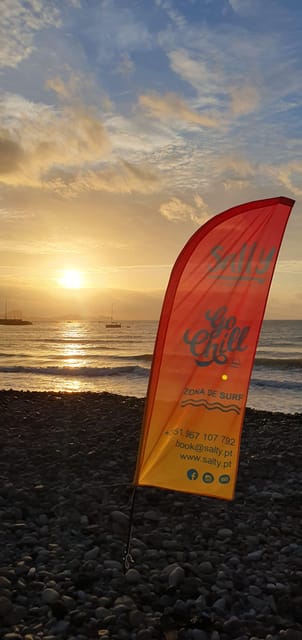
The school checks the weather and wave forecast before confirming the details. The class is not treated as a simple fair-weather appointment with one permanent departure time. Instead, the school may adjust the start time or meeting point to suit the conditions.
The important distinction is that weather conditions do not automatically mean the class is canceled. The school uses the forecast to decide when and where the lesson should take place. You receive the exact information on the day before your activity.
That system is good for the quality of the lesson, but it requires flexibility from you. Check your phone and email, keep your schedule open, and do not assume the map point you first saw will remain final. If you fail to read the update, you could arrive at the wrong place or miss a changed start time.
Free cancellation is available up to 24 hours in advance for a full refund. You can also reserve now and pay later, which helps if your Madeira plans are still taking shape. Those policies reduce some of the risk, but they do not remove the need to monitor the final instructions.
What I like most about the teaching approach
The strongest feature is the balance between instruction and action. The class begins with safety rules and a warm-up, then moves toward actual wave practice. That order gives the session purpose and keeps it from becoming either a dry classroom talk or an uncontrolled splash in the sea.
I also like the focus on selecting waves. Beginners often think success means standing up on any wave, but choosing the right wave is part of learning. A professional instructor can help you recognize when to try, when to wait, and how to use the available conditions.
The small group adds to that value. Six is still a group, but it is far more manageable than a crowded lesson where you spend most of the time waiting for attention. If you want a little more personal guidance without paying for a private class, this format is a fair middle ground.
Finally, the friendly and professional impression from the January booking matters. A good instructor can make the difference between feeling embarrassed after a fall and wanting to try again. Surfing rewards patience, and a supportive teacher helps you keep that patience.
Drawbacks to keep in mind
The changing beach and start time may frustrate anyone who wants firm plans. You cannot count on one permanent meeting point, and the lack of included transport adds another task.
The class also depends on your physical readiness. It is not suitable for non-swimmers or people with low fitness, and the three-hour duration may feel demanding if you are not used to active beach sports. The school supplies equipment, but it cannot supply confidence or stamina.
There are only two published ratings, both very positive in the available information. That is encouraging, especially alongside the detailed praise for professional and kind instructors, but it is not a large enough record to support sweeping claims. I would book it for the clear structure, small group, and included equipment rather than relying on the rating alone.
Should you book the Madeira surf lesson?
Book it if you want a structured first step into surfing, can swim, and are happy to let the school choose the best beach for the day. The $88 cost is reasonable when you include the instructor, equipment, insurance, safety briefing, and three hours of practical coaching.
I would be more cautious if your schedule is tight, you need hotel pickup, or you want to surf independently. Confirm your transport, keep the day flexible, and watch for the final message about time and place.
For a couple seeking an active birthday gift, a small group of friends, or a fit beginner who wants more than a quick beach photo, this is a sensible Madeira activity. Bring sunscreen, arrive on time, and accept that the ocean gets the final word.
FAQ
How long does the Madeira surfing lesson last?
The lesson lasts three hours, including the safety briefing, warm-up, and practical surf instruction.
What does the surfing lesson include?
It includes a theoretical briefing on rules and safety, a warm-up, practical instruction, an experienced instructor certified by the FPS, all equipment needed for the lesson, and insurance.
Is transportation included?
No. Transfer service is not included, so you must arrange your own transport to the confirmed meeting point.
Where does the lesson meet?
The meeting point can change according to conditions. Machico is listed as a possible meeting area, and the school sends the exact time and location the day before the activity.
What should I bring?
Bring swimwear, a towel, and sunscreen.
Can children take this surfing lesson?
Children under eight cannot take part. Participants aged eight or older also need to be swimmers and have a suitable level of fitness.
Is the lesson available in English?
Yes. Instruction is available in Portuguese, Spanish, and English.
Can I cancel for a full refund?
Yes. You can cancel up to 24 hours in advance for a full refund. The activity also offers a reserve now and pay later option.
Just added around Portugal
- Surf & Sup★ 5.0 · 11 reviews
- Surf Lesson on the Lisbon Coast★ 4.5 · 10 reviews
- Surf Lessons in Cascais★ 5.0 · 3 reviews
- Surf Coaching at the World Surfing Reserve★ 5.0 · 2 reviews
- Private Surf Lesson in Sintra★ 5.0 · 3 reviews
- Surf Experience in Cascais, Lisbon★ 5.0 · 11 reviews
- Surf Lesson with transfer★ 5.0 · 17 reviews
- Lisbon Premium Surf Experience – Fun & Excitement Guaranteed★ 5.0 · 2 reviews
Portugal Surf Lessons, compared.
Learn to Surf in Chill Beach Vibes & Good Times
Read our review →

Browse the lists this lesson appears in