
REVIEW · AUSTRALIA
Noosa Heads: 2 Hour Surf Experience on the Sunshine Coast
Your first wave may come sooner than expected. This beginner surf lesson at Noosa Heads combines warm water, a forgiving beach, and plenty of hands-on help from qualified instructors. I like the simple setup: boards, rash shirts or wetsuits, sunscreen, and secure storage are provided. I also like that instructors such as George, Reece, Felipe, and Cici focus on calm, clear coaching rather than rushing you through the basics.
The main thing to consider is that surfing still depends on the sea. A good lesson can help you catch waves, but it cannot guarantee perfect conditions every day. Parking and traffic around Noosa can also be difficult during busy weekends, so arrive early and allow extra time beyond the requested 15 minutes.
Key points before you book
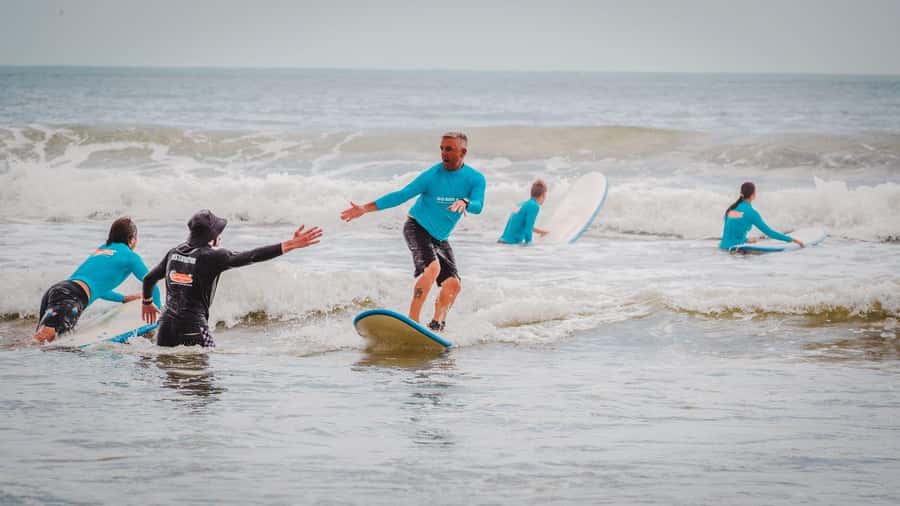
- Warm, waist-deep practice: You begin in shallow water, where you can learn board control without immediately facing larger waves.
- Real help catching waves: Instructors may push you onto suitable waves, which gives beginners a much better chance of standing up.
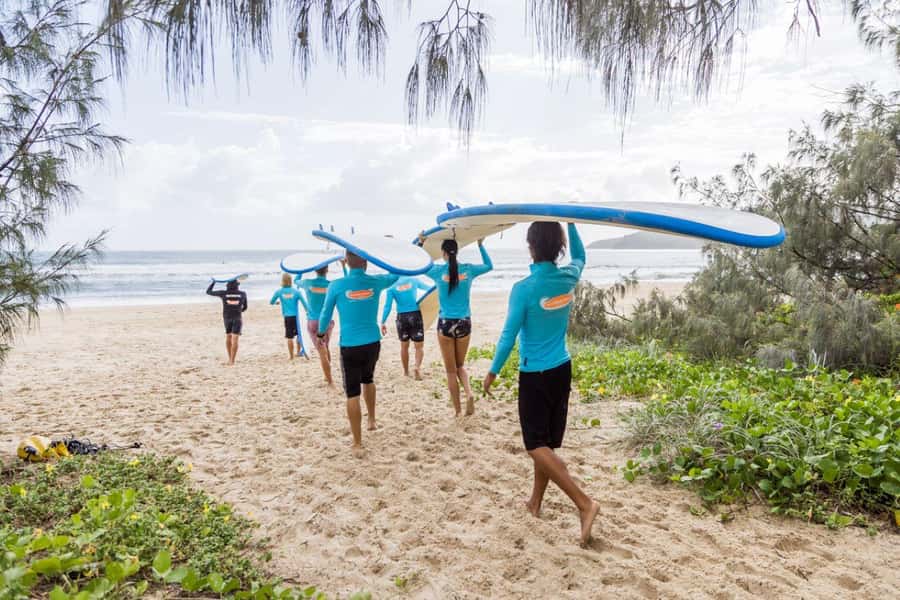
- Equipment is supplied: A soft-top surfboard, long-sleeved rash shirt or wetsuit, sunscreen, and lock-up trailer are included.
- Clear beginner instruction: The lesson covers ocean safety, positioning, paddling, standing up, and board control.
- Good for families and first-timers: Children aged 9 and older can take part, while younger children need a parent in the water to assist.
- Strong value at $59: Two hours of tuition and equipment hire makes this a practical first taste of surfing in Noosa.
Why Noosa is a smart place to learn surfing
Noosa Heads is a famous surfing town, but you do not need to arrive with surfing experience. The lesson is designed for people who are still working out which way to place their feet, how to lie on a board, and how to avoid falling awkwardly.
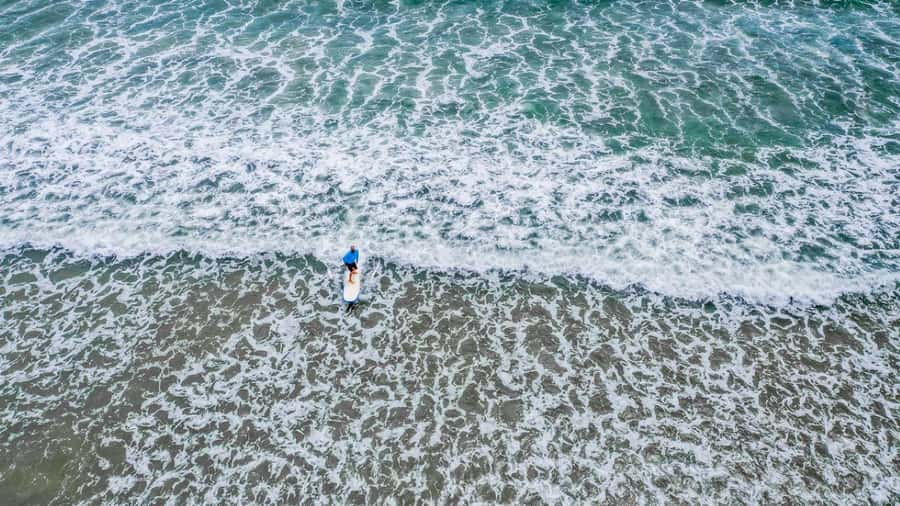
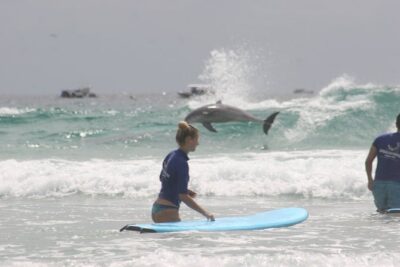
The setting helps. Warm water makes the first session more comfortable, especially if you are visiting from a cooler climate. The beach is described as safe and suitable for learning, with beginners starting in waist-deep water before moving on to catching small waves.
That progression matters. Surfing can feel confusing when you are trying to think about the wave, the board, your arms, your feet, and your balance all at once. Starting close to shore gives you a manageable place to learn one skill at a time.
You should still keep your expectations sensible. Standing up once is a great first goal. Riding a wave for several seconds is even better. But two hours will not turn you into an independent surfer. It gives you a solid first lesson and a chance to decide if you want to keep going.
More 2-Hour Sessions in Australia:
- Bondi Beach: 2-Hour Surf Lesson Experience for Any Level
★ 4.9 · 935 reviews - Byron Bay: 2-Hour Small Group Surf Lesson
★ 4.8 · 657 reviews - 2 Hour Ultimate Learn to Surf Adventure
★ 5.0 · 235 reviews
The first 15 minutes: arrive ready for the beach
You are asked to arrive 15 minutes before class. Take that seriously, especially if you need to find parking, change clothes, or locate the correct meeting point. The meeting point can vary depending on the option booked, so check your booking details carefully before setting out.
Bring swimwear and a towel. Food and drink are not included, so have water and a snack before or after the session if you need them. Sunscreen is provided, but you may prefer to apply your own before leaving your accommodation, particularly if you have sensitive skin.
The provider supplies a long-sleeved rash shirt or wetsuit, depending on conditions and the option you book. A soft-top board is also included. These boards are a good fit for first-timers because they are designed for stability and are more forgiving than the narrow hard boards used by experienced surfers.
Personal items can be placed in a lock-up trailer. That is useful because you do not want to carry a phone, wallet, or car keys into the water. Still, bring only what you need for the lesson.
Safety instruction comes before the first wave
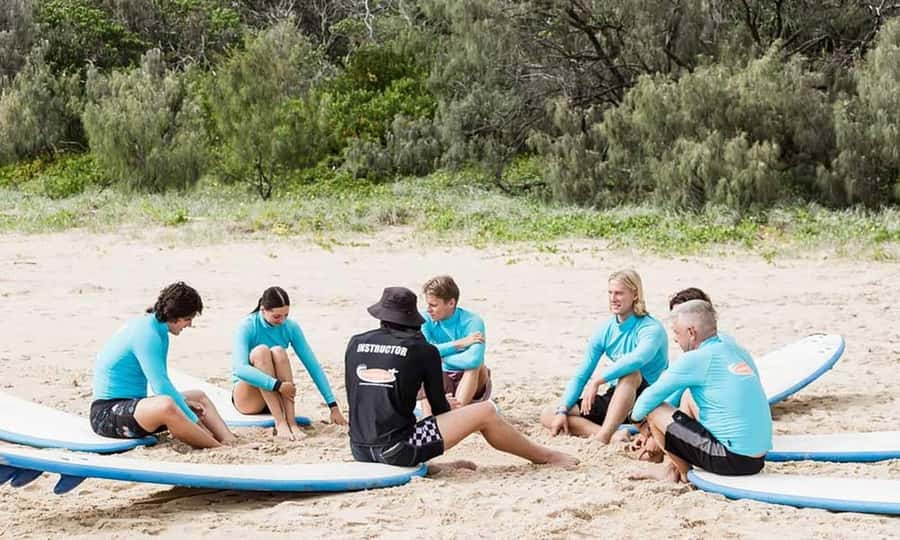
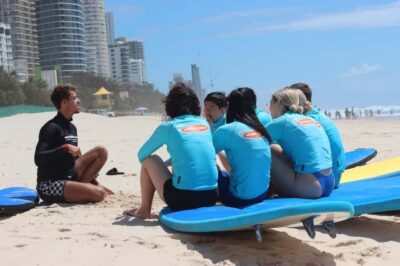
The lesson begins on the beach with a safety briefing and basic surfing instruction. This is not filler. It gives you the rules that help keep a group of beginners moving in the same direction.
You learn about safety, positioning, and board control before entering the water. You also receive instruction on how to lie on the board and prepare to stand. Expect the coach to explain the movement in stages rather than simply telling you to stand up and hope for the best.
The order is helpful. First, you learn how to position yourself. Then you work on paddling and timing. Only after that do you try to rise to your feet. Instructors also give individual tips as the class continues, which is important because one person may be struggling with balance while another needs help judging the wave.
The instructors have Level 1 qualifications. The people who received the most praise by name included George, Reece, Felipe, Valentino, Cici, Matt, Suzy, Ellie, and Reesy. The spelling of some names varies in customer comments, but the repeated pattern is clear: friendly coaching, simple instructions, encouragement, and patience.
That personal support is one of the strongest reasons to choose this lesson. A board can be hired in many places. Having an instructor watch your position and tell you what to change on the next attempt is far more useful.
Waist-deep practice makes the first attempts less intimidating
After the beach briefing, you head into the water for some initial practice. The first waves are caught in waist-deep water, which lets you focus on timing and balance without having to paddle far from shore.
This is where the class becomes active. You are not just listening to a lesson about surfing. You are holding the board, feeling how it moves, and learning how a small wave pushes it forward.
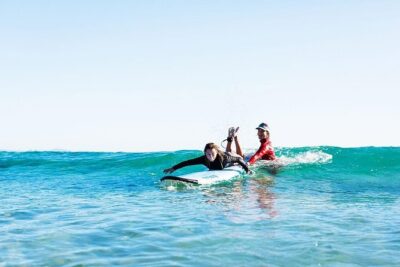
Your instructor can help by pushing you onto suitable waves. That assistance is especially valuable on a first lesson because beginners often waste energy paddling too early or missing the wave entirely. A small push at the right moment lets you feel what a successful takeoff should be like.
You may stand up on your first few tries, or it may take longer. Several people have managed to stand within the first few waves, while others describe standing as the main challenge. Both outcomes are normal. The important point is that the instruction gives you repeated attempts rather than one quick demonstration followed by free time.
If the waves are choppy or difficult, catching them may take more effort. One useful piece of advice is to check the surf report when choosing your day, looking for conditions that are not too rough for a beginner. You cannot control the ocean, but you can improve your chances by choosing a suitable time.
More Surf Lessons in Australia:
- Learn to Surf at Noosa on the Sunshine Coast
★ 5.0 · 277 reviews - Surfing Lessons on Sydney’s Bondi Beach
★ 5.0 · 267 reviews - Half Day Surf Lesson
★ 4.5 · 234 reviews - Broadbeach: 2 Hour Surf Experience on the Gold Coast
★ 4.9 · 225 reviews
Learning to stand is the big moment
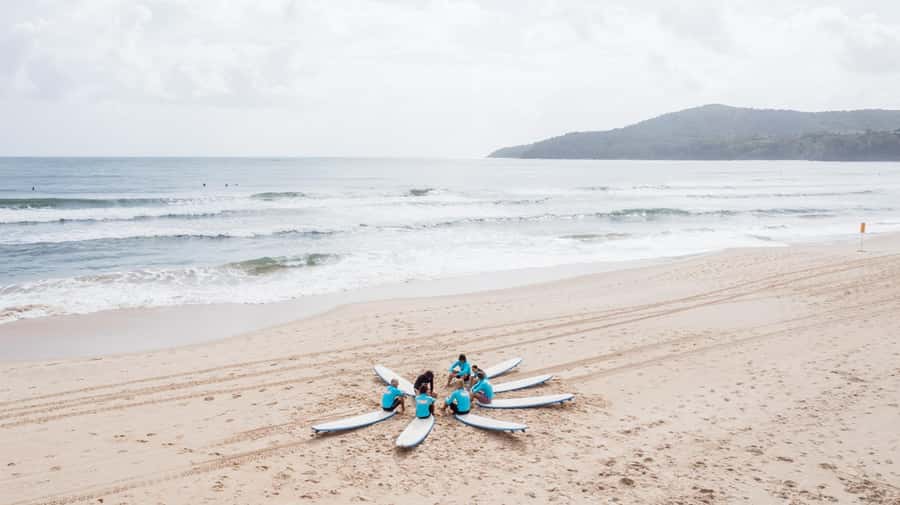
Back on the beach, the instructor gives more detailed guidance about standing on the board. This second explanation is useful because you have already felt the board move under you. The instructions now have a real purpose rather than being abstract steps.
You work on placing your hands, bringing your feet underneath you, and finding a stable stance. The exact movement can feel awkward at first. The soft-top board helps, but balance still takes practice.
The instructors keep offering corrections during the rest of the lesson. Customers have repeatedly praised George for explaining things in a relaxed way, while Reece and Reesy have been singled out for encouragement and helpful advice. Felipe and Valentino have also received praise for getting beginners upright quickly.
The best part is the mix of support and independence. An instructor may push you onto a wave, but you still have to control your body and board. That means each successful ride teaches you something you can try again on the next wave.
Some beginners have reported catching many waves in one session, including around 20 to 25 attempts in especially good conditions. You should treat that as a happy possibility, not a promise. Wave count depends on the sea, the class, your fitness, and how quickly you pick up the timing.
What the two-hour format really gives you
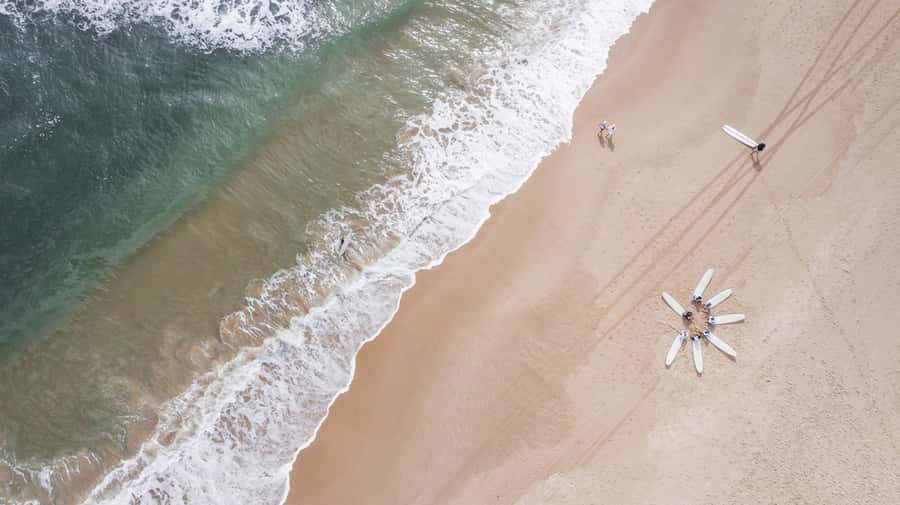
Two hours is long enough to move beyond a quick tourist photo with a surfboard. You receive a beach briefing, water practice, standing instruction, and repeated attempts to catch waves.
It is also short enough to fit into a busy Noosa schedule. You can plan the lesson around a beach afternoon, a meal, or another activity. Surfing uses more effort than it looks, so the two-hour length is sensible for a first try. You get enough time to learn and improve without committing to a full-day course.
The listed price is $59 per person. I consider that good value for a first lesson because the price includes instruction, a board, a rash shirt or wetsuit, sunscreen, secure storage, and access to shower facilities afterward. Hiring a board alone would not give you the safety briefing or the coaching that helps you make progress.
The value is best if you are genuinely new to surfing. If you already surf confidently, a group beginner class may cover material you know. In that case, a 1.5-hour private lesson could be a better fit. If you want a longer learning path, the three-lesson progressive course gives you more time to build skills over several sessions.
Families can join, with one important age rule
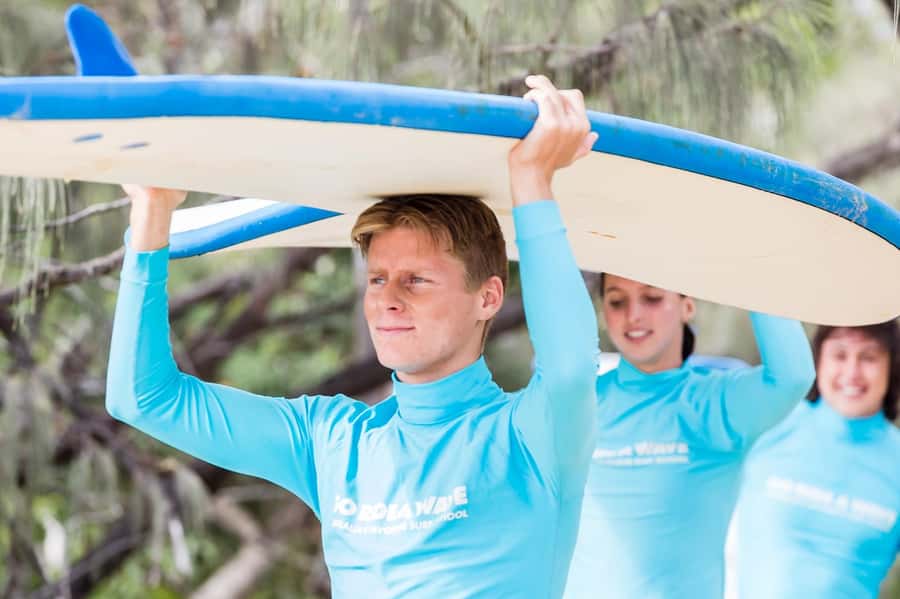
This is a good family activity for children who are comfortable in the ocean and able to follow instructions. Several families have enjoyed the lesson with children aged 8, 11, 12, and 15, with instructors giving extra tips and encouragement.
There is an important rule for children under 9. They must be accompanied by a parent who is not taking the lesson and who can enter the water to assist. That means a family with a child under 9 should plan for one adult to supervise rather than surf.
Older children can take part in the lesson, but you should still consider their swimming ability, confidence, and comfort in moving water. The instructors can help with technique and safety, but they cannot remove the normal demands of an ocean activity.
The lesson also suits couples, solo visitors, and mixed-ability groups. One group included people taking their first lesson alongside others who had surfed several times, and the instructors helped each person work at a suitable level.
What can make the day harder
The biggest variable is the ocean. The lesson is aimed at beginners, but conditions can change. Small, clean waves make learning easier. Choppy or stronger waves can make it harder to catch the board and stand, especially if you have never surfed before.
Parking is another practical concern. Traffic and parking around Noosa can be difficult during busy periods, including holiday weekends. Arriving 15 minutes early is the minimum. If you are unfamiliar with the area, allow additional time so you do not begin the lesson flustered.
You also need to bring your own swimwear and towel. Showers are available at the end, but food and drinks are not included. The rash shirt or wetsuit helps with comfort and sun protection, yet you should still think about sun exposure before and after the session.
Finally, do not judge the entire experience by whether you stand up immediately. Falling is part of the lesson. The useful measure is whether you understand more about wave timing, board position, and balance by the end.
The instructors are the main reason to book
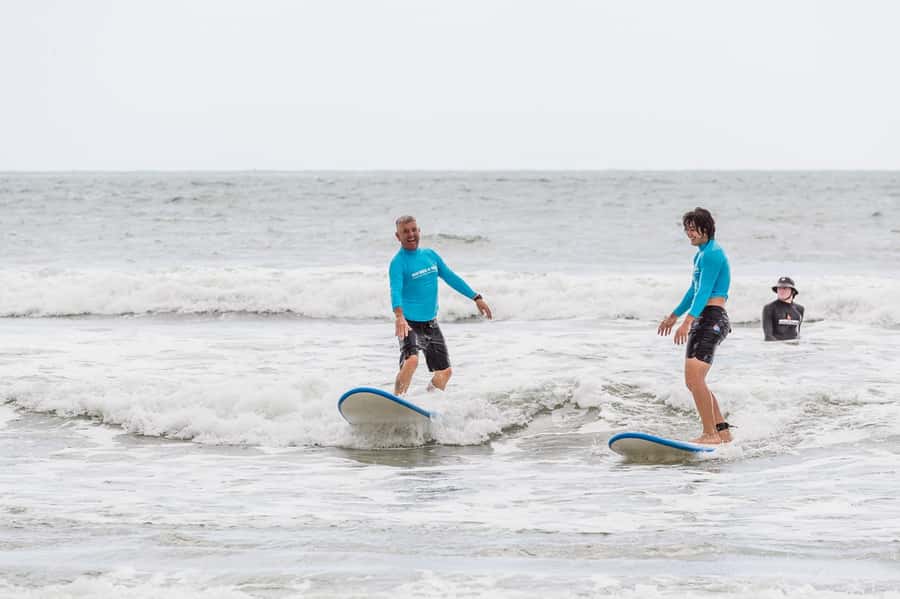
Equipment gets you into the water, but the instructor shapes the experience. The strongest feedback has focused on guides who are patient, upbeat, and willing to give individual advice.
George has been praised for clear explanations and a relaxed manner. Reece and Reesy have been noted for encouragement. Felipe, Valentino, Cici, Suzy, Ellie, and Matt have also been praised for making the lesson fun while still helping people improve.
That combination matters. A coach who only jokes around may create a pleasant morning but teach very little. A coach who gives technical advice without encouragement can make beginners tense. Here, the best sessions appear to balance both sides: simple tips, plenty of support, and enough energy to keep trying after a fall.
The English-language instruction should suit most visitors who can follow basic spoken English. If you are booking for a mixed-language group, remember that the teaching language is English.
Should you book the Noosa surf lesson?
Book it if you want a friendly, well-supported first try at surfing and like the idea of learning at one of Queensland’s best-known beach towns. The $59 price is fair because it covers two hours of instruction and the main equipment you need.
It is particularly suitable for couples, families with children aged 9 and older, and people who want a single active experience rather than a full surfing course. I would also recommend it if you want a chance to stand on a board during your holiday, but do not want to buy equipment or work out ocean safety alone.
Choose a private lesson if you want more personal attention, or select the three-session course if you already suspect surfing will become a regular hobby. Before booking, check the meeting point, look at the surf report, and leave extra time for Noosa traffic.
For a first taste, this lesson offers the right mix: warm water, soft boards, practical instruction, and instructors who keep beginners moving forward. You may not leave as a surfer yet, but you should leave knowing whether you want to become one.
FAQ
How long is the Noosa surf experience?
The lesson itself provides two hours of surf instruction. The activity listing also shows durations from 2 to 6 hours depending on the option selected, so check the available choice before booking.
What equipment is included?
You receive a soft-top surfboard and either a long-sleeved rash shirt or wetsuit. Sunscreen and a lock-up trailer for personal items are also included.
What should I bring?
Bring swimwear and a towel. Food and drinks are not included.
Do beginners receive help catching waves?
Yes. The lesson covers safety, positioning, paddling, standing, and board control. Instructors may push you onto waves and provide advice throughout the session.
Can children take part?
Children under 9 must be accompanied by a parent who is not participating in the lesson and who can enter the water to assist. Families with older children have taken part together.
Can I cancel or pay later?
You can cancel up to 24 hours in advance for a full refund. A reserve-now, pay-later option is also available.
Just added around Australia
- Surfing Lessons at Byron Bay Surf School★ 5.0 · 3 reviews
- Experience The Thrill Half Day Surf School in Byron Bay★ 5.0 · 37 reviews
- Master the White Wash 2-Day Surf School in Byron Bay★ 4.5 · 2 reviews
- Half Day Learn to Surf Tour From Byron★ 5.0 · 31 reviews
- Private Surf Lesson★ 5.0 · 17 reviews
- 2-Day Progressive Surf Lessons★ 4.5 · 30 reviews
- Gold Coast Surfer’s Paradise Private Tour from Brisbane★ 5.0 · 3 reviews
- Sydney: Full Day Learn to Surf Adventure – Incl BBQ Lunch★ 5.0 · 4 reviews
Australia Surf Lessons, compared.
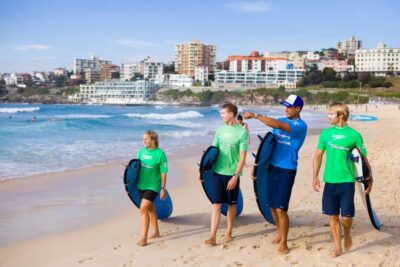
Bondi Beach: 2-Hour Surf Lesson Experience for Any Level
Read our review →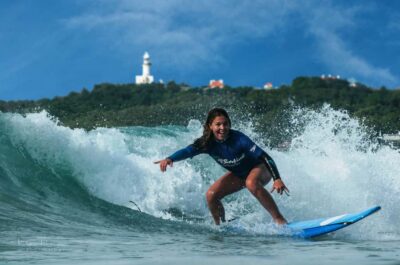
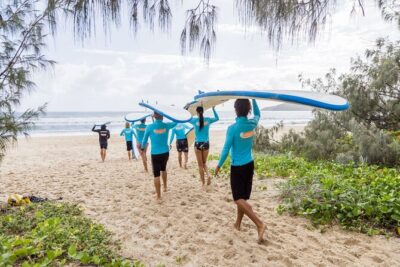
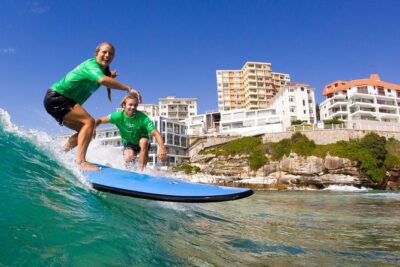
Broadbeach: 2 Hour Surf Experience on the Gold Coast
Read our review →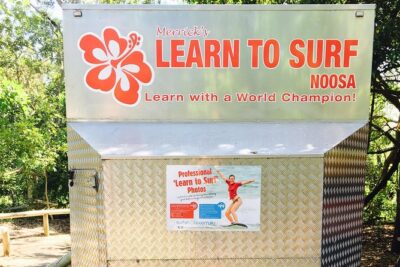
Merrick’s Noosa Learn to Surf: 2 Hour group surfing lesson
Read our review →Browse the lists this lesson appears in