
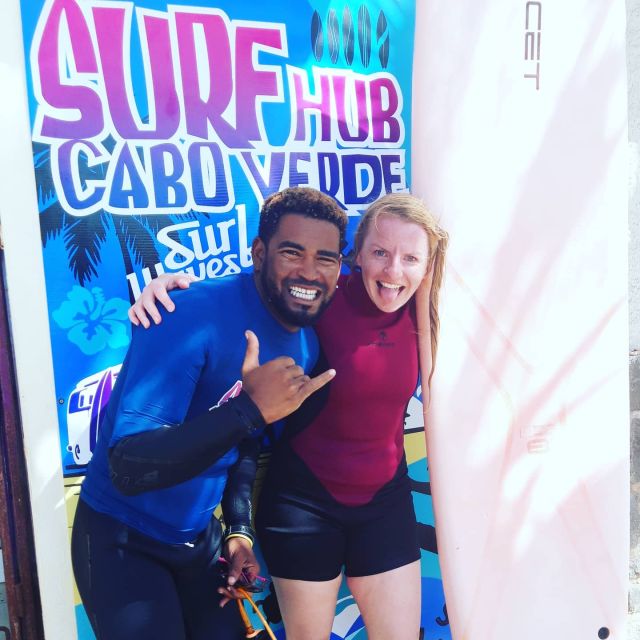
REVIEW · SAL, CAPE VERDE
Sal: Surf Lesson
Catch your first wave in Cape Verde. This Sal surf lesson combines clear sea, patient instruction, and hands-on practice at Santa Maria Beach, making it a friendly way to try surfing without committing to a full course. I especially like the skill-based teaching, which suits complete beginners as well as people who already know the basics. I also like that the lesson includes the board and other equipment for $40 per person. The main consideration is that your start time changes with the tide, and the activity only runs when the weather and waves suit your level.
You meet the team at the surf school in Santa Maria, then walk to the beach with your board, wetsuit, and surf shoes. The lesson begins on dry land before you spend an hour in the water. Instructors such as Ruben have earned strong praise for being patient, friendly, and encouraging. One practical warning: the supplied rock shoes may be worn, so you might prefer to ask about their condition or bring your own if that is possible.
Key points to know before booking
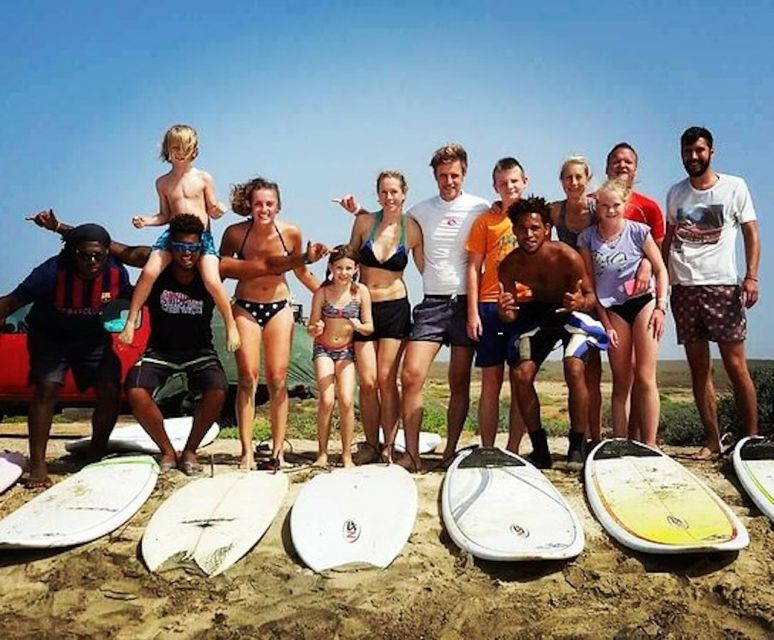
- The lesson is scheduled around high tide, so you must contact the provider on WhatsApp after booking to agree on the exact start time.
- Santa Maria Beach is chosen for beginners and intermediates, with the lesson adjusted to your confidence and ability.
- You practice the pop-up on the sand first, then take that technique into the water for about one hour.
- Ruben is a particularly well-liked instructor, praised for patient, professional, and encouraging one-to-one teaching.
- The $40 price includes the instructor, surfboard, wetsuit, and surf shoes, but not food or drinks.
- You must be able to swim, and the activity is not suitable for children under eight, people with mobility impairments, people with low fitness, or anyone over 130 kilograms or 70 years old.
Meeting the surf school in Santa Maria
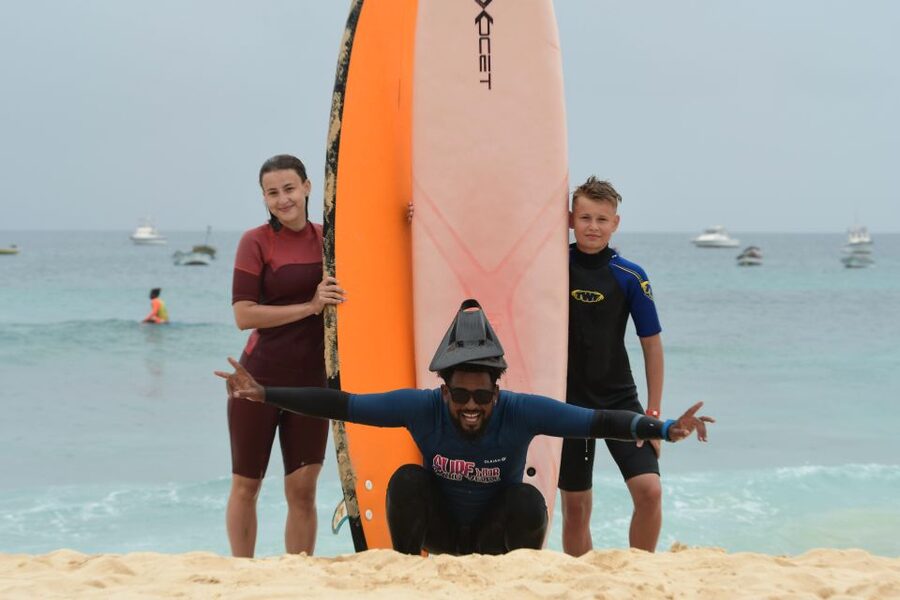
The meeting point is easy to find if you are already in central Santa Maria. Look for the surf school on the ocean road, across from Fabrica de Grelhados, close to the Main Square and Ocean Cafe.
You should contact the provider through WhatsApp after booking. The phone number is on your voucher, and this step matters because the start time is not fixed. The instructor schedules lessons around high tide for safety and to find waves that suit the group.
That flexible timing is useful, but it means you should not treat this as an activity with a set departure time. Keep your schedule open for the day, and check your messages before heading out. If you are arranging other tours, meals, or airport plans, leave a generous gap around the surf lesson.
There is no hotel transfer listed. You go to the surf school yourself, then walk with the group to Santa Maria Beach. Since the beach is close to the school, the walk is part of the simple local setup rather than a long transport ride.
More Surf Lessons in the world:
- Tenerife: Surfing Lesson for All Levels, Photos included
★ 4.9 · 1,314 reviews - Group Surfing Lesson at Playa de las Américas, Tenerife
★ 5.0 · 1,072 reviews - Canggu: 2-Hour Surf Course
★ 4.8 · 1,053 reviews
Getting ready with a board and wetsuit
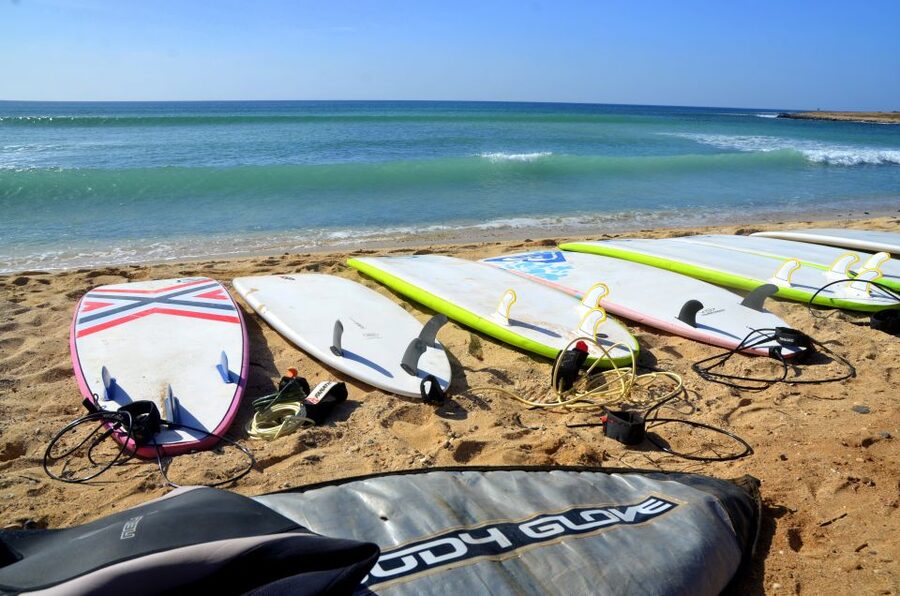
At the school, you collect the equipment needed for the lesson. The price includes a surfboard and equipment for the duration of the activity, including a wetsuit and surf shoes.
You do not need to arrive as an experienced surfer. The lesson works for a first attempt, and it also suits someone who has tried surfing before but wants help with balance, timing, or standing up more reliably.
The equipment setup keeps the experience straightforward. You do not have to rent a board separately or work out which size is right before meeting the instructor. The instructor can guide you toward the equipment used for the lesson.
The supplied rock shoes are worth checking. One participant found the shoes fairly worn and suggested asking about them or bringing a personal pair. That is not a reason to reject the activity, but it is a useful detail if you care about foot comfort or have your own water shoes.
Food and drinks are not included. Plan to eat before or after the lesson, especially if you are not used to physical activity in the sea.
Starting on dry land at Santa Maria Beach
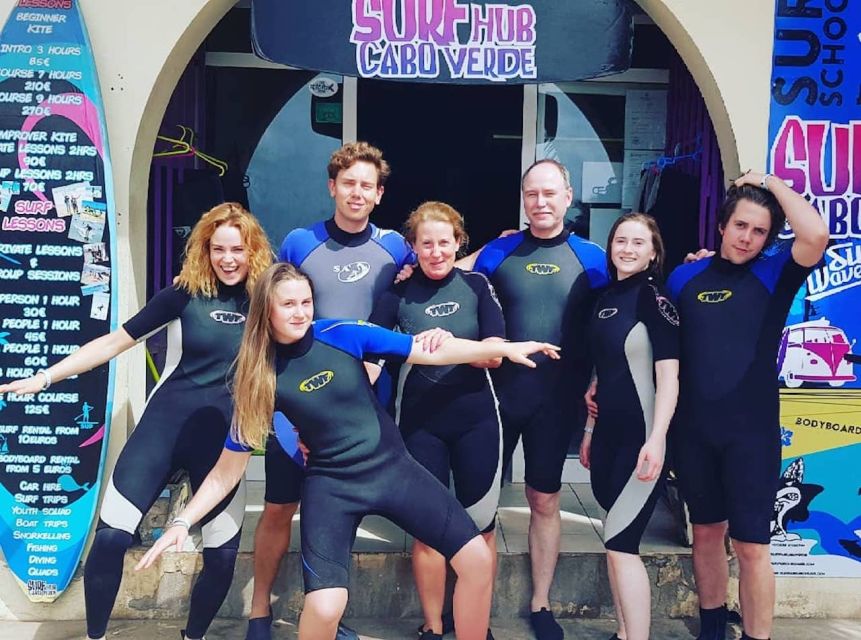
Once you reach the beach, the instructor gives a short introduction on the sand. Beginners learn the basic steps from the start, while more experienced participants get a quick recap and advice aimed at their current level.
This dry-land practice is one of the most useful parts of the lesson. You work on the movement needed to get from lying on the board to standing, commonly called the pop-up. You also learn how to place your hands, move your feet, and keep your body steady.
That preparation matters because the water is not the best place to hear a long explanation. On the beach, you can repeat the movement without waves pushing the board around. The instructor can also spot a small mistake early and explain why it affects your balance.
One young participant had trouble with the technique at first. The instructor explained what was wrong and why, then helped him correct it before going into the sea. That kind of clear correction is more useful than simply being told to try again.
You should expect a practical lesson rather than a long classroom session. The goal is to learn enough to handle the board safely, paddle into a suitable wave, and attempt the pop-up with guidance.
One hour of catching waves
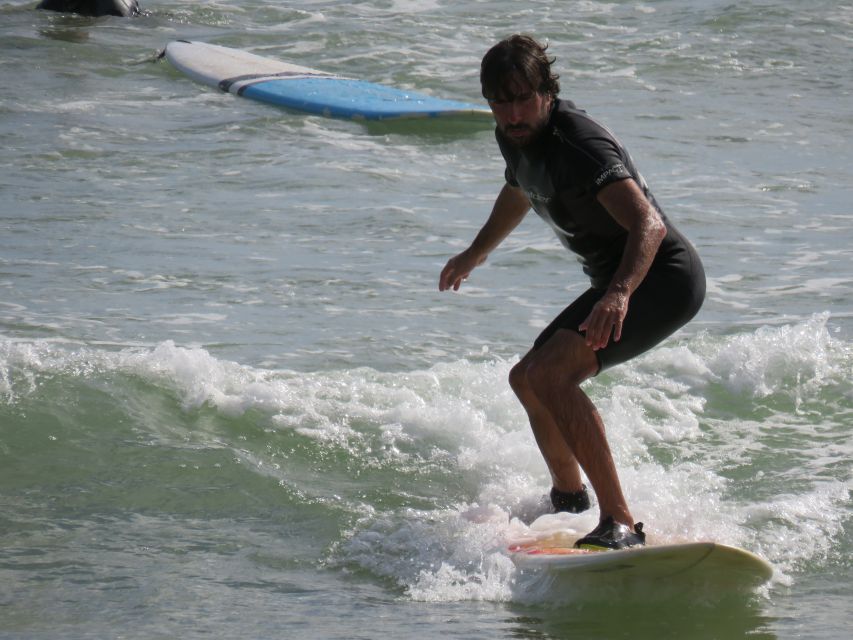
After the beach briefing, you head into the water for about an hour. The instructor chooses the depth and conditions based on your level, then helps you work on catching waves and staying steady.
A beginner should expect repeated attempts. You may lie on the board, paddle, feel the wave push you forward, and then try to stand. Some attempts will end with a fall or a board pointing the wrong way. That is normal for this kind of lesson, and the short beach practice gives you a better chance of understanding what went wrong.
The instructor stays involved in the water. In one particularly positive account, the guide took a young surfer out to the right depth and remained with him while he practiced. The student soon began surfing near local surfers, helped by close supervision and clear instruction.
That detail is important for first-timers. You are not simply handed a board and sent toward the waves. The value of the lesson comes from having someone watch your technique, choose an appropriate position, and help you make adjustments while the movement is still fresh.
If you already surf, the lesson can focus on useful corrections rather than basic balance. The information provided does not promise advanced coaching or a particular type of break, so I would see this as an introductory or intermediate session, not a specialist performance clinic.
Same place, a different way into the water:
- Legian Beach, Bali: Beginner or Intermediate Surf Lessons
★ 4.9 · 1,019 reviews - Playa de las Américas: Private or Small-Group Surf Lesson
★ 4.8 · 980 reviews - Maui: Two Hour Beginner Group Surf Lesson in Kihei
★ 5.0 · 950 reviews - Bondi Beach: 2-Hour Surf Lesson Experience for Any Level
★ 4.9 · 935 reviews
Why instructor quality matters here
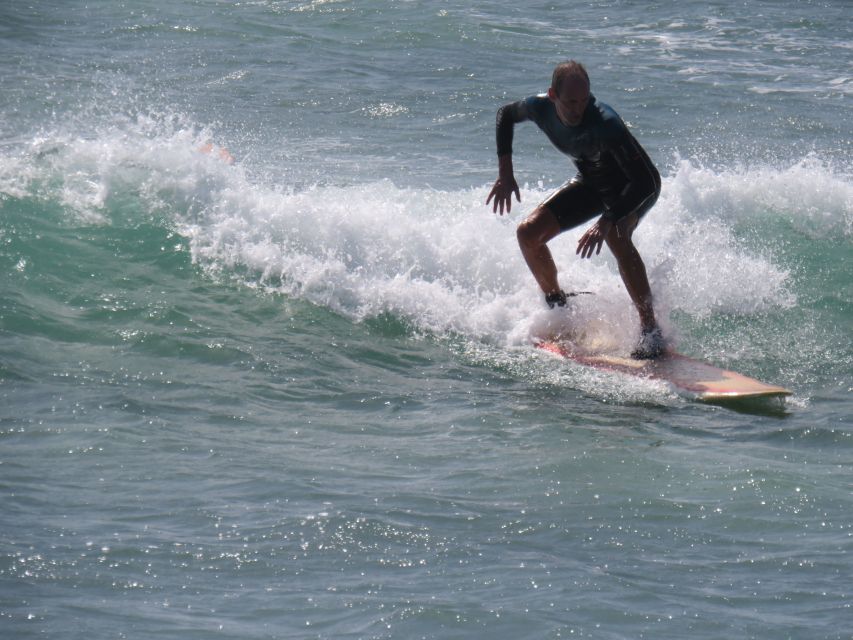
The instructor is the main reason to choose this experience over renting a board alone. The strongest praise centers on patience, friendliness, professionalism, and encouragement, especially in private lessons.
Ruben is singled out as a great teacher who explains clearly and stays patient. That is exactly what you want when a small change in foot placement or body position can decide whether you stand or fall.
One-to-one tuition costs more in many surf settings, but this activity offers private or group lessons. If you are nervous, traveling with a child who meets the age requirement, or want direct corrections, a private lesson may offer better value than a larger group.
A group lesson can make sense if you want a lower-pressure introduction or are sharing the experience with friends. The exact group size is not provided, so you should ask the operator if that detail affects your decision.
Language should not be a major barrier. Instruction is available in English, Portuguese, Spanish, Italian, and French. The provider’s communication has also been praised as very good, which is helpful because the tide-based start time requires direct contact.
Matching the lesson to your ability
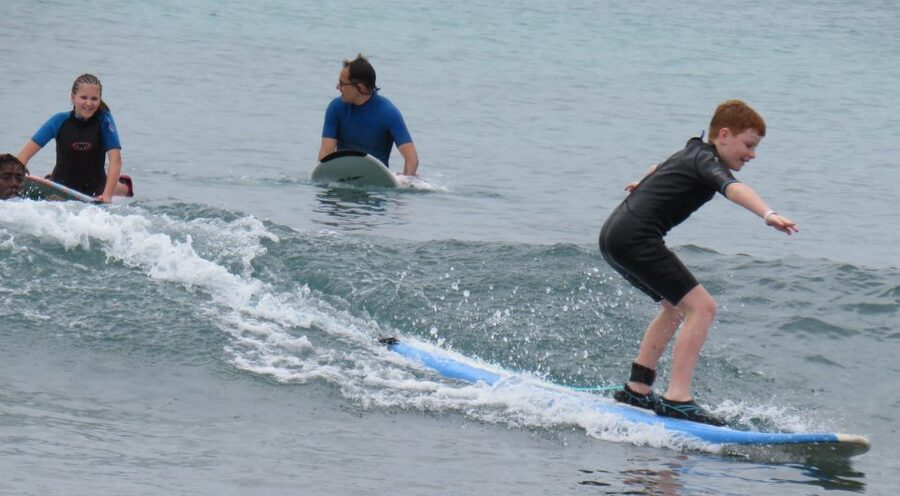
The lesson is adjusted according to your skill level. Complete beginners get an introduction to the basic movements, while intermediates can receive tips aimed at improving technique.
You should tell the instructor honestly how much experience you have. If you have never stood on a board, say so. If you can already pop up but struggle to catch waves, explain that instead. The more accurate your starting point, the more useful the hour in the water will be.
The activity requires swimming ability. This is not a casual beach lesson where you can remain in shallow water throughout. You need to be comfortable enough in the sea to follow instructions and manage yourself in the water.
You also need a reasonable level of fitness. Surfing involves paddling, pushing up from the board, standing quickly, and getting back on after a fall. It can feel demanding even when the lesson lasts only an hour in the water.
The stated restrictions exclude children under eight, people with mobility impairments, non-swimmers, people over 130 kilograms, people with low fitness, and people over 70. These limits are important, not minor booking notes. If anyone in your group falls into one of these categories, contact the provider before paying.
Tide and weather shape the whole experience
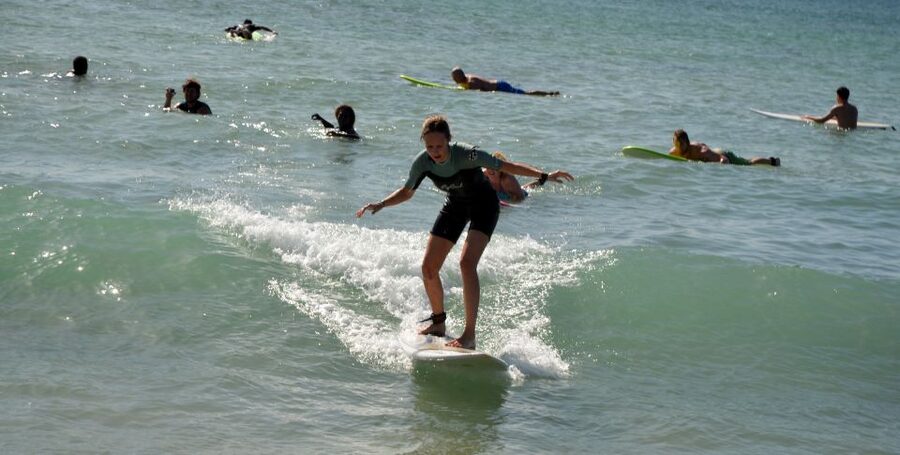
Surfing depends on conditions, and this lesson does not promise waves at any cost. The provider runs the activity when the weather is suitable and when there are waves appropriate for the customer’s level.
The high-tide schedule can be a little inconvenient. You may not know the exact start time until you contact the provider, and your lesson could fit awkwardly around lunch or another booking. The benefit is that the timing is chosen for safety and surf quality rather than convenience alone.
This also means conditions may change. A day that looks perfect from shore may not suit a beginner in the water, while a smaller set of waves may be exactly right for learning. If the provider needs to adjust the time because of the sea, that is part of responsible surf instruction.
For this reason, keep your expectations sensible. You might stand on your first wave, but you might also spend the hour learning to paddle, balance, and time your attempt. A successful lesson is not measured only by how long you remain upright.
Is $40 a fair price?
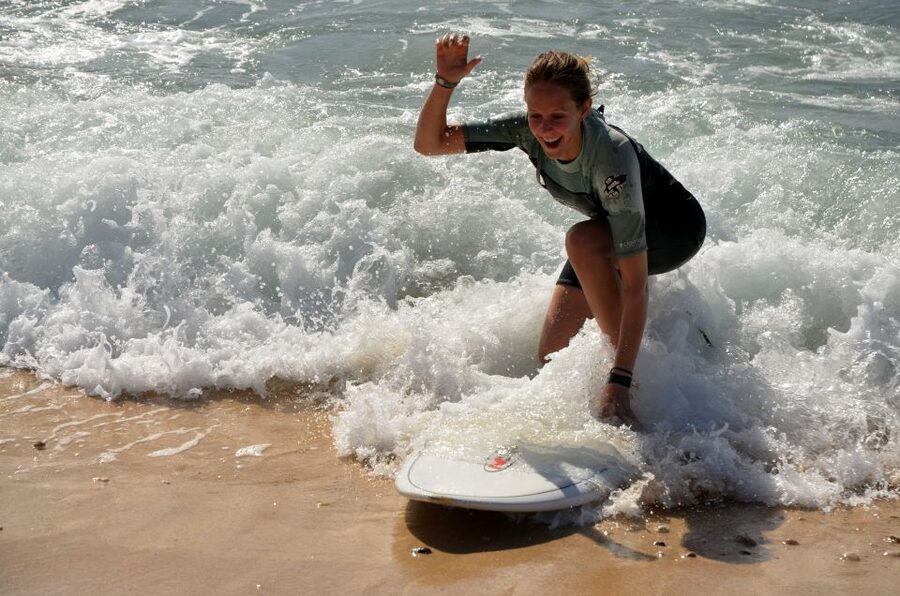
At $40 per person, the activity offers solid value for a first lesson. Your fee covers a qualified instructor and the surf equipment for the session, so you are paying for both guidance and the practical kit needed to get started.
The value is strongest if you want an organized introduction rather than a simple equipment rental. A board alone cannot tell you why your pop-up fails, where to place your hands, or when to try for a wave. The instructor supplies that missing part.
Private tuition can make the price feel more worthwhile if you want direct attention. A group lesson may be the better budget choice if you are mainly looking for a fun first taste of surfing and do not need constant correction.
The lesson does not include food or drinks, and no transport is listed. Those are small extra costs only if you need them, but you should know that the $40 price is for the surf session itself.
The rating of 4.7 from 48 ratings fits the experience described here: a well-organized lesson with strong teaching and a few practical imperfections, mainly around equipment condition and tide-based scheduling.
Who will get the most from this lesson?
I would recommend this experience to a first-time surfer who can swim and wants a short, supported introduction. It also suits an intermediate surfer who wants a few technique tips while on holiday in Sal.
It is particularly good for someone who prefers personal guidance over figuring things out alone. The instructor’s patience and willingness to explain mistakes are valuable when you are still learning the basic movement.
Families should check the age and swimming rules carefully. Children under eight cannot take part, and every participant must meet the fitness and safety requirements. A private lesson may be worth considering for an older child who is nervous or needs more direct attention.
I would be more cautious if your schedule is tightly packed. The tide-based timing requires flexibility, and poor conditions can affect when the lesson takes place. I would also reconsider if you dislike physical exercise or are uncomfortable in open water.
Booking advice for a smoother morning or afternoon
Contact the provider on WhatsApp as soon as you book. Confirm the start time, meeting point, expected conditions, and whether the session will be private or shared.
Wear something suitable for changing into a wetsuit, and bring only what you need for the beach. Since food and drinks are not supplied, plan a meal or snack separately.
Check the surf shoes when you collect the equipment. If they look worn, ask about another pair or ask whether you can use your own. This is a small step, but it can make the lesson more comfortable.
Keep the rest of your day flexible. The provider can schedule lessons for safe, suitable tide conditions, but that means the clock may not work exactly as you first imagined.
Cancellation is flexible up to 24 hours before the activity for a full refund. You can also reserve now and pay later, which helps if you are still organizing your Sal plans.
Should you book the Sal surf lesson?
Book it if you want a friendly, practical introduction to surfing with equipment included and an instructor beside you in the water. The patient teaching, especially from Ruben, is the strongest reason to choose it, and the $40 price is reasonable for a one-hour water session plus instruction and gear.
Skip it if you cannot swim, have limited fitness, need a fixed start time, or want advanced surf coaching. Also think twice if worn equipment would bother you and you do not have an alternative pair of surf shoes.
For most eligible beginners and intermediates, this is a good way to spend part of a day in Santa Maria. You may not become a polished surfer in one hour, but you can learn the pop-up, understand how to handle a wave, and leave with a much clearer sense of what surfing requires.
FAQ
Where does the surf lesson meet?
The meeting point is at the surf school on the ocean road in Santa Maria, across from Fabrica de Grelhados, near the Main Square and Ocean Cafe.
How do I confirm the start time?
After booking, contact the provider through WhatsApp using the number on your voucher. The start time changes each day because lessons are scheduled around high tide.
How long do I spend surfing in the water?
The water portion of the lesson lasts about one hour. You also receive an introduction or recap on the beach before entering the water.
Is the lesson suitable for complete beginners?
Yes. Beginners receive an introduction on dry land and learn the basic technique before practicing in the sea.
Is the lesson suitable for intermediate surfers?
Yes. The instructor adjusts the lesson to your skill level, so intermediates can receive advice to improve their surfing.
Is equipment included?
Yes. A qualified instructor, surfboard, and equipment for the lesson are included.
Are food and drinks included?
No. Food and drinks are not included in the price.
Do I need to know how to swim?
Yes. Participants must be able to swim, and the activity is not suitable for non-swimmers.
Can children take part?
Children under eight are not permitted to take part.
What languages are available?
The lesson is available in English, Portuguese, Spanish, Italian, and French.
Just added around the world
- Surf Lesson with Qualified Instructor in Florianópolis★ 5.0 · 31 reviews
- Epic Surf Lessons Dania Beach★ 5.0 · 3 reviews
- Surf Lessons Fort Lauderdale★ 5.0 · 41 reviews
- 3 Hours of Surf and Electric Bike Exploration in Lacanau★ 5.0 · 8 reviews
- Surf & Sup★ 5.0 · 11 reviews
- E-Foil Surfing for Beginners in Fort Lauderdale Beach★ 5.0 · 2 reviews
- Learn to surf Fort Lauderdale★ 5.0 · 6 reviews
- Essaouira Surf Lesson: Energize Your Ride★ 5.0 · 11 reviews