
REVIEW · USA
Beginner Surf Lessons At Stinson Beach
Catch your first wave near San Francisco. This two-hour lesson at Stinson Beach gives beginners a clear introduction to ocean safety, paddling, board control, pop-ups, wave selection, and basic surfing etiquette. The beach is less than an hour from San Francisco and other Bay Area cities, so you can pair the lesson with one of Northern California’s most scenic coastal outings.
I like the lesson’s hands-on format and its focus on safety before you enter the water. I also like that the coach helps you choose waves and pushes you into them when appropriate, rather than leaving you to figure out the first steps alone. The main drawback is that equipment rental costs extra, adding $15 to $50 to the $100 lesson price.
This is a small group activity, limited to 10 people, with a 10:00 a.m. start at Stinson Beach Surf & Kayak, at 3605 California 1. The minimum group size is three, so your booking can be canceled with 24 hours’ notice if that number is not reached. Keep that possibility in mind before building a tight day around it.
Key Points Before You Book
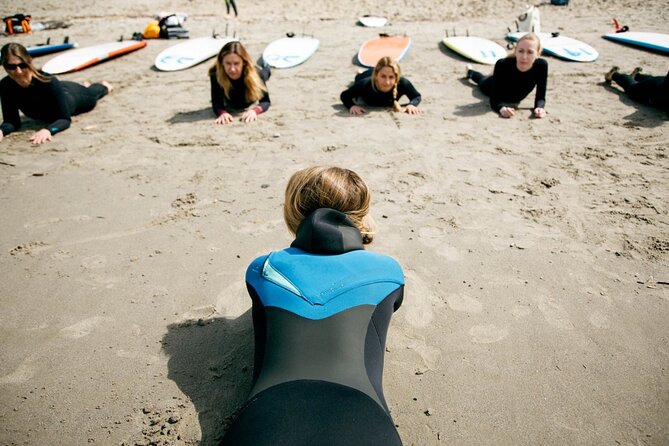
- Two hours in and beside the water: You begin with land-based instruction, then spend the rest of the lesson practicing in the ocean.
- Safety comes first: The coach covers ocean safety, wave behavior, board position, wave selection, and surfing etiquette.
- A scenic Bay Area outing: Stinson Beach is within about an hour of San Francisco, making the drive part of the experience.
- Hands-on coaching: The instructor may help push you into waves and adjusts guidance to your ability.
- Bring extra money for gear: Surfboard and wetsuit rental are not included and cost about $15 to $50.
- Small group, with a condition: The maximum is 10 people, but at least three participants are required for the class to run.
Why Stinson Beach Works for a First Surf Lesson
A beginner lesson needs more than a board and a stretch of sand. You need a setting where an instructor can explain the basics, help you read the water, and give you a reasonable chance of standing up. Stinson Beach is presented as a suitable place for new surfers, and its easy reach from San Francisco makes it practical for a first attempt.
The location also gives the outing some value beyond the lesson itself. You get the coastal drive along California 1, then time at one of Northern California’s popular beaches. A person who is unsure about surfing can still enjoy the setting, even if standing on the board takes longer than expected.
I would treat Stinson Beach as part of the day’s appeal, not just the address of the meeting point. The scenic drive was one of the strongest points in the available feedback, and the beach setting gives this experience a more memorable feel than a basic lesson in an indoor or heavily built-up area.
Still, the beach setting does not guarantee perfect conditions. The lesson requires good weather, and the provider may offer another date or a full refund if poor weather causes a cancellation. Surfing depends on the ocean, so some flexibility is sensible.
More Beginner Surf Lessons in the USA
- Maui: Two Hour Beginner Group Surf Lesson in Kihei
★ 5.0 · 950 reviews - Oahu: Beginner-Friendly Waikiki Beach Surfing Lesson
★ 4.9 · 425 reviews - Oahu: Waikiki 2-Hour Beginner Group Surf Lesson
★ 4.9 · 191 reviews
The 10:00 a.m. Start at Surf & Kayak
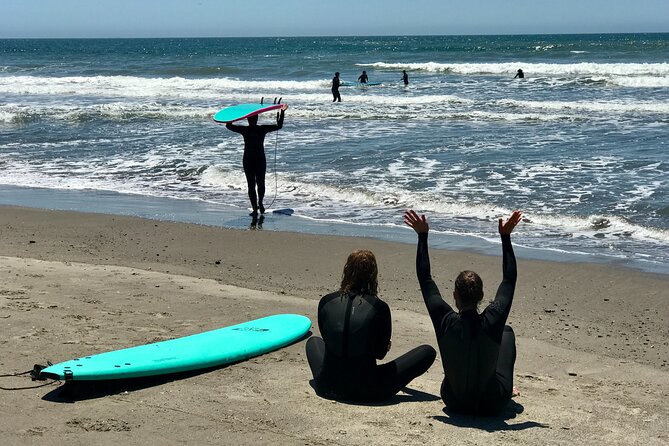
You meet at Stinson Beach Surf & Kayak, located at 3605 California 1, Stinson Beach, California 94970. The activity starts at 10:00 a.m. and ends back at the same meeting point, which keeps the arrangement simple.
The fixed meeting point matters because this is not a lesson that picks you up around San Francisco. You need to make your own way to Stinson Beach, and the drive can take up to about an hour from San Francisco and other Bay Area cities. Allow enough time for the coastal journey and for finding the meeting location without arriving rushed.
Because the class begins in the morning, you should plan the rest of your day around it rather than treating it as a casual late-afternoon add-on. You can spend more time at Stinson Beach afterward, or use the lesson as the main reason for a coastal day trip.
The mobile ticket makes access convenient once you arrive. Confirmation is provided at booking, and the activity returns to its starting point. Those are small details, but they reduce the usual confusion around where a lesson begins and where it finishes.
The First Half Hour on the Sand
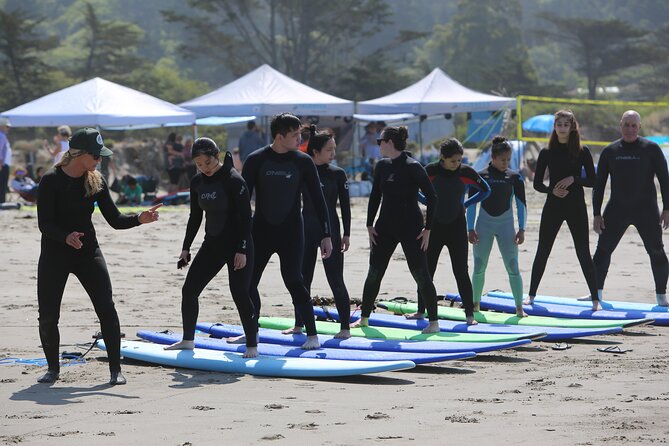
The lesson begins on the beach, not in the water. This is where the coach explains ocean safety, introduces board positioning, and helps you practice different ways to pop up from lying down to standing.
That land practice is important. Surfing looks simple when you watch someone else do it, but the timing and body movement can feel awkward at first. Rehearsing the pop-up on the sand lets you focus on foot placement and balance before a moving wave adds another problem.
You also learn how to position yourself on the board. A beginner who lies too far forward can nose-dive, while someone too far back may struggle to catch a wave. The lesson covers these basic ideas before you are asked to manage them in the water.
This opening section may feel less exciting than catching a wave, but it is useful. A good first lesson should give you a basic plan before you paddle out. It also gives the coach a chance to see how you handle the movements and adjust the instruction to your needs.
The beach session includes water safety, wave dynamics, paddling skills, board position, standing technique, riding technique, and etiquette. That is a lot for two hours, so you should expect an introduction rather than mastery. The goal is to give you a safe starting point and a few practical skills to build on.
The Water Session and First Attempts
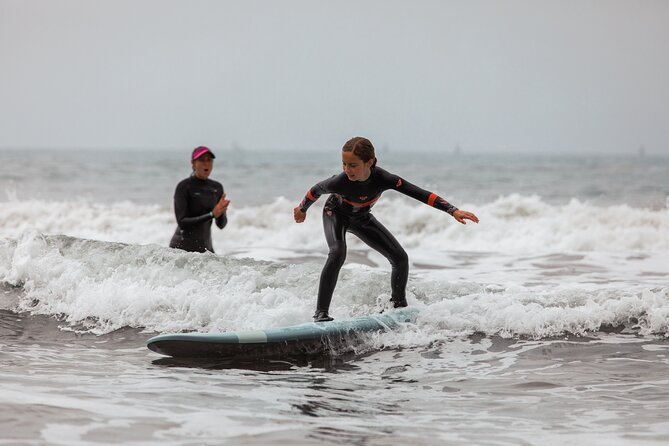
After the beach instruction, you head into the water for the remainder of the lesson. The coaches stay active, helping you select waves, offering advice based on your ability, and pushing you into waves when the timing is right.
That hands-on help is one of the strongest reasons to choose an organized lesson instead of trying to teach yourself. A beginner often has trouble deciding which wave to take, when to paddle, and how hard to paddle. Having a coach nearby can shorten the frustrating part of the learning curve.
The lesson also covers wave selection, which is more useful than simply being pushed toward anything that moves. You begin to understand that not every wave is a good choice and that timing matters. The exact amount of water time you get will depend on the group and conditions, but the stated format puts the water portion at the center of the lesson.
Your coach also continues to cover ocean safety while you are in the water. This matters because safety rules make more sense when you can connect them to real conditions. You are not just memorizing information on the sand. You are learning to apply it while handling a board and watching the waves.
A review of the class praised Cecelia for being extremely helpful and hands-on, assisting at every step. That detail gives you a useful picture of the teaching style to expect: direct coaching, close attention, and practical help rather than a distant demonstration followed by free time.
Same place, a different way into the water:
- Open Group Surfing Lesson in Waikiki, Hawaii
★ 4.5 · 582 reviews - Outrageous Surf ScHool Lesson on Lahaina Side
★ 4.5 · 547 reviews - Los Angeles: Surfing Lesson in Venice Beach
★ 4.8 · 442 reviews - Po’ipu Surf Lesson
★ 5.0 · 361 reviews
What You Learn in Two Hours
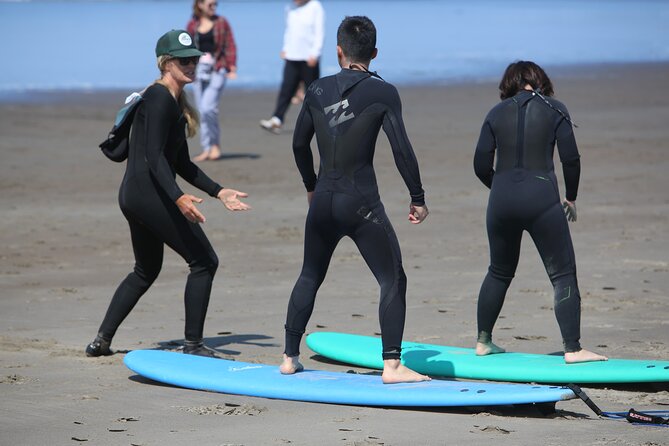
The lesson covers the main building blocks of beginner surfing:
- Ocean safety and basic awareness
- Wave dynamics and wave selection
- Paddling technique
- Surfboard positioning
- Several pop-up styles
- Standing and riding techniques
- Surfing etiquette
The range is a strength, but it also sets realistic limits. Two hours is enough to introduce these skills and let you practice them. It is not enough to make you independent in every type of surf.
I like that etiquette is included. Surfing is not only about balance. You also need to understand how to share the water and avoid creating problems for other people. The lesson gives you a foundation for acting responsibly as you continue learning.
The water safety section is equally important. Surfing takes place in an active ocean environment, and a new surfer needs to know more than how to stand on a board. The lesson’s sequence, safety and positioning on the beach followed by coached practice in the water, is sensible for a first session.
Group Size and the Value of Personal Coaching
The activity accepts a maximum of 10 participants. That is still a group lesson, but it is small enough to offer a better chance of direct contact with the coach than a very large class.
You should not expect uninterrupted one-to-one attention. The instructor needs to divide time among the people in the group. Still, the promise of active coaching and help catching waves gives this lesson a more personal feel than a simple equipment rental.
The class requires at least three participants. If fewer than three people are booked, you will receive notice 24 hours in advance and a full refund. That policy protects you from arriving for a lesson that cannot run, but it also means the class is not guaranteed simply because you booked it.
If your schedule is tight, wait for confirmation before arranging other nonrefundable plans around the lesson. If the minimum is met, the group size can be as large as 10, so people who want a private experience should ask about other options rather than assume this class will be private.
Is $100 a Fair Price?
The lesson costs $100 per person, with surfboard and wetsuit rental adding about $15 to $50. That puts your likely total between $115 and $150 before any other personal spending.
At that price, you are paying for instruction, safety guidance, use of the coach’s experience, and organized time in the water. The value is strongest for a first-time surfer who wants direct help and does not already know how to judge waves or position a board.
The price is less attractive if you already surf comfortably or only want to rent equipment. Instruction is the main product here, and the lesson spends time covering beginner fundamentals. Experienced surfers may get more value from a rental-only arrangement, if available.
The extra equipment cost is worth planning for. You need a surfboard and wetsuit, and those are not included in the listed price. Since the rental range is fairly wide, confirm the exact charge when arranging gear so the final cost does not surprise you.
For a visitor staying in San Francisco, the scenic drive and beach time add to the day’s value. For a local who already has access to a board and wetsuit, the separate rental cost may be easier to avoid, but the instruction remains the main reason to book.
Who Will Get the Most From This Lesson?
This experience suits a first-time surfer who wants a structured introduction rather than a solo experiment. It is also a good fit for someone who likes active instruction and wants a coach to help with wave timing, positioning, and the first attempts at standing.
I would also recommend it to visitors looking for an activity outside central San Francisco. The drive to Stinson Beach takes up to about an hour, but that is part of the coastal outing. If you want an activity with scenery and a clear two-hour schedule, the location works well.
It may be less suitable if you need a guaranteed departure. The group requires three participants, and the activity can also be canceled for poor weather. Those conditions are normal for outdoor surfing, but they matter if your itinerary has no spare time.
Most people can participate, and service animals are allowed. The activity is a group experience, so you should be comfortable learning alongside other people rather than expecting private coaching throughout.
Planning Around Weather and Cancellation
You can cancel for a full refund if you do so at least 24 hours before the 10:00 a.m. start time. Cancellations made less than 24 hours before the activity are not refunded, and changes inside that window are not accepted.
The weather rule is especially important for surfing. If poor weather forces a cancellation, you can choose another date or receive a full refund. If the minimum number of participants is not reached, you can also choose another date or experience, or take a full refund.
All cut-off times use local time. I would keep the day before the lesson reasonably flexible, check your messages, and avoid assuming the class will proceed until the provider has confirmed it.
Should You Book Beginner Surf Lessons at Stinson Beach?
Book this lesson if you want a beginner-friendly first step, direct coaching, and a scenic beach outing within reach of San Francisco. The strongest features are the safety instruction, active help in the water, and the chance to practice several core skills in one session.
The best reason to book is the teaching style. Cecelia was praised for being helpful and hands-on, and that kind of support can make a big difference when you are trying to catch your first wave. The scenic drive and Stinson Beach setting make the experience feel like more than a basic class.
Think twice if you need a guaranteed schedule, dislike group activities, or want a private lesson. Also budget for the $15 to $50 equipment rental and remember that weather and the three-person minimum can affect the booking.
For a first attempt at surfing near San Francisco, this is a practical choice with a strong setting and a sensible lesson structure. Just bring realistic expectations: in two hours, you can learn the basics and perhaps stand up, but the ocean will still have the final word.
FAQ
Where does the surf lesson begin?
The lesson begins at Stinson Beach Surf & Kayak, 3605 California 1, Stinson Beach, California 94970.
What time does the lesson start?
The activity starts at 10:00 a.m.
How long does the lesson last?
The lesson lasts approximately two hours.
What does the instruction include?
Instruction includes ocean safety, wave dynamics, paddling, surfboard positioning, pop-up practice, standing and riding techniques, wave selection, and surfing etiquette.
Is equipment included in the price?
No. Surfboard and wetsuit rental are separate and cost approximately $15 to $50.
How much does the lesson cost?
The listed price is $100 per person, not including equipment rental.
How many people can join the group?
The activity has a maximum of 10 participants.
Is there a minimum number of participants?
Yes. At least three participants are required for the group lesson to run.
What happens if the minimum number is not reached?
You will be notified 24 hours in advance and offered a full refund.
Can I cancel for a full refund?
Yes. You can receive a full refund if you cancel at least 24 hours before the experience start time. Less timely cancellations are not refunded.
Just added around the USA
- Waikiki: Family, Private, and Group Surfing Lessons★ 5.0 · 4 reviews
- Waikiki: Surf Lessons Easy 60 min classes no crowds!★ 4.9 · 21 reviews
- Electric Bike Rentals in Topsail Island and Surf City★ 5.0 · 2 reviews
- 1-on-1 Private Surf Lesson in Santa Barbara★ 5.0 · 4 reviews
- Astonishing Scavenger Hunt: Surf, Sand and Sculptures!★ 3.0 · 2 reviews
- Two- Hour Group Surfing Lesson in Cocoa Wrightsville Beach, NC★ 5.0 · 13 reviews
- Surf Lesson in Santa Barbara★ 3.0 · 2 reviews
- Surf lesson with KTO Yoga Surf★ 4.0 · 5 reviews
Beginner Surf Lessons, compared.
Legian Beach, Bali: Beginner or Intermediate Surf Lessons
Read our review →
Beginner & Intermediate Surf Lesson with Equipment
Read our review →

Learn to Surf in Chill Beach Vibes & Good Times
Read our review →
Beginner-Friendly Waikiki Beach Surfing Lesson
Read our review →
Beginner Surf Lesson at the Beautiful Algarvian West Coast
Read our review →
Lezioni di Surf per Beginner e Intermedi (6 persone a istruttore)
Read our review →Browse the lists this lesson appears in