
REVIEW · USA
Beginner Surfing in San Francisco at Pacifica Beach
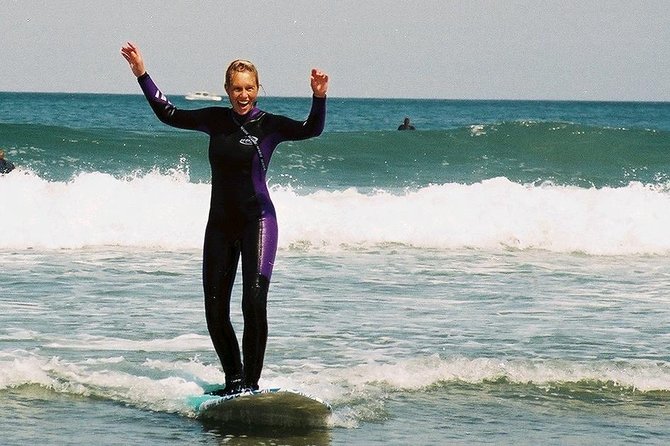
Stand up, even if only for a second. This Pacifica Beach lesson makes surfing approachable with a careful beach briefing, patient coaching, and equipment included. I like the small maximum group of eight, which gives the instructors room to help each person, and I also like the gradual move from shallow whitewater to larger waves. The main drawback is the cold Pacific water and the built-in setup time, so you should not expect two and a half hours of nonstop surfing.
The lesson costs $139 per person, a fair price for a first attempt when you consider the wetsuit, surfboard, professional guide, and roughly 90 minutes to two hours in the water. It is best for anyone age 12 or older who wants a safe, structured introduction rather than a casual board rental. Parking is not included, and Pacifica conditions can change, so keep your plans flexible.
Key points to know before you book
- Pacifica Beach is used as a beginner-friendly training area, with shallow whitewater practice before you move farther out.
- The class starts on the sand, covering ocean awareness, wave breaks, safety, etiquette, paddling, push-ups, and the pop-up.
- You receive the main gear at no extra charge, including a wetsuit and surfboard.
- Water time is roughly 1.5 to 2 hours, after about 30 minutes of preparation and instruction on land.
- The group is capped at eight people, which matters when you need individual help with timing and balance.
- Instructors are CPR, first-aid, and lifeguard certified, with a teaching style built around safety and encouragement.
What the Pacifica surfing lesson is really like
This is not a quick board rental with a few shouted tips from shore. It is a proper beginner clinic, designed to teach you how to read the immediate conditions, handle yourself in the water, and make a first attempt at standing on a moving board.
The meeting point is at 5000 CA-1 in Pacifica, south of San Francisco. The activity begins and ends at the same location. The area is near public transportation, though the information provided does not specify a particular bus or train route, so check your route before leaving.
You can choose a morning or mid-day class. That choice may help you fit surfing around other San Francisco plans, but the ocean still has the final say. The lesson requires suitable weather, and poor conditions can lead to a new date or a full refund.
The advertised experience is often described as a three-hour beginner lesson, while the practical duration is about two and a half hours. That difference reflects the time needed to get suited up, organize the group, walk down to the beach, and complete the shore briefing. Plan for the full period rather than counting only the minutes spent standing on a board.
More Beginner Surf Lessons in the USA
- Maui: Two Hour Beginner Group Surf Lesson in Kihei
★ 5.0 · 950 reviews - Oahu: Beginner-Friendly Waikiki Beach Surfing Lesson
★ 4.9 · 425 reviews - Oahu: Waikiki 2-Hour Beginner Group Surf Lesson
★ 4.9 · 191 reviews
The beach briefing comes before the first wave
The lesson begins with a land-based session of about 30 minutes. This is more useful than it may sound. A first-time surfer has plenty to think about: where the waves break, how to hold the board, how to paddle, how to get out of the way of another surfer, and what to do if the board gets away.
Your instructor covers:
- Ocean awareness and changing conditions
- Wave breaks and basic wave selection
- Safety in and out of the water
- Surf etiquette
- Paddling technique
- Push-up and pop-up movements
- Balance and body position
- The basic mechanics of riding a wave
The pop-up is the key movement. You begin lying on the board, push your chest up, bring your feet underneath you, and rise into a balanced stance. It looks easy when a skilled surfer does it. On a moving board, with cold water and a wave approaching, it takes practice.
This shore lesson also gives you a chance to ask questions before you are wet and distracted. Pay close attention to the explanation of wave breaks and safety. You will get more from the water time if you understand what the instructor is asking you to do.
Wetsuit and board rental are included
Adventure Out provides the wetsuit and surfboard, along with the other rental gear needed for the class. That makes this easier to plan than a lesson that requires you to find separate equipment.
The wetsuit is especially important at Pacifica. The Pacific Ocean is cold, and even a sunny day on the beach does not mean comfortable water. Some people worry about feeling chilled, but the supplied equipment is designed for the activity, and staying active in the water helps. You should still arrive ready for a cool-weather outing, not a warm beach swim.
The included board is part of the instruction, not just transport to the waves. A beginner board gives you a more stable platform while you learn the pop-up and balance. You are paying for the teaching as well as the use of the equipment, which improves the value for a first lesson.
Parking fees are not included. If you drive, allow time to deal with parking before the start. The meeting point is on Highway 1, and arriving rushed can make the changing and preparation period more stressful.
Shallow whitewater is the right place to begin
Once the beach lesson is finished, the group enters the water. The first practice takes place in shallow areas, where you ride the whitewater rather than trying to catch clean, unbroken waves right away.
This is a sensible progression. Whitewater gives you a small push after the wave has broken. You can focus on lying correctly, paddling, pushing up, and finding your feet without also trying to read a wave that is still forming.
Your instructor works with you one at a time as much as possible. The most helpful coaching comes at the moment you need it: a reminder to paddle harder, a correction to your foot position, or encouragement to stand instead of hesitating. Several class experiences have specifically praised instructors for staying close, spotting mistakes, and helping people get upright.
After you become more comfortable, you may move farther out and attempt smaller waves. The wording here matters: the goal is an introduction, not a promise that every person will ride a long wave. Ocean timing is unpredictable, and some people will stand quickly while others will spend the class learning how to control the board.
That is not failure. Your first useful achievement may be a clean pop-up in the whitewater or a better understanding of how the board responds. One class included people who were able to surf small waves after one lesson, while others simply enjoyed making progress under close guidance.
Same place, a different way into the water:
- Open Group Surfing Lesson in Waikiki, Hawaii
★ 4.5 · 582 reviews - Outrageous Surf ScHool Lesson on Lahaina Side
★ 4.5 · 547 reviews - Los Angeles: Surfing Lesson in Venice Beach
★ 4.8 · 442 reviews - Po’ipu Surf Lesson
★ 5.0 · 361 reviews
Safety and etiquette are treated as part of surfing
The instructors are CPR, first-aid, and lifeguard certified. That does not remove the normal risks of an ocean activity, but it means safety is part of the teaching rather than an afterthought.
You learn how to pay attention to conditions, where waves are breaking, and how to behave around other people in the water. The class is intended to be welcoming, with no aggressive local attitude toward beginners. That point matters because a first surfing lesson can feel intimidating when you are surrounded by stronger surfers.
The group size also helps. A maximum of eight people is small enough for an instructor to observe each student, though the experience will still include some waiting while others take their turns. If you want private, uninterrupted coaching, this is not a private lesson. If you want a supportive introduction without being lost in a large crowd, the group limit is a strong feature.
Safety also means respecting your own limits. You should listen when the instructor asks you to remain in a particular area. The move into deeper water is based on comfort and control, not on forcing everyone to the same point in the lesson.
The instructors are the strongest part of the experience
The quality of a beginner surf class depends heavily on the people teaching it. Surfing has many moving parts, and a calm explanation can make the difference between frustration and a first successful ride.
The teaching team has been praised for patience, clear demonstrations, and a caring attitude. Specific instructors mentioned by name include Alan, David, Joao, and Al. Alan is associated with Adventure Out Surfing Clinic and has been described as helpful. David was praised for keeping the class safe while helping beginners stand. Joao was singled out for explaining the basics clearly, while Al was described as thorough and genuinely interested in helping a first-time surfer.
Those details give you a useful picture of the teaching style. You should expect encouragement rather than pressure. Instructors may offer quick corrections as you paddle or prepare to stand, then help you try again.
The best part of this approach is that it makes the lesson feel possible. Beginners often assume surfing requires natural athletic ability. The instructors break it into small tasks: hold the board, paddle, push up, place your feet, and balance. You may not master every step in one session, but you will know what to practice next.
Is $139 good value for two and a half hours?
At $139, this is not a cheap way to spend an hour at the beach. It is a reasonable first-surf lesson because the fee includes the wetsuit, surfboard, rental gear, professional instruction, taxes, fees, and handling charges.
The useful comparison is not a board rental alone. A rental gives you equipment, but not a safety briefing, wave instruction, or someone watching your pop-up. Here, you pay for a guided introduction and the chance to use equipment suited to beginners.
The value is strongest if you have never surfed before and do not already own a wetsuit or board. It is also good for a family with teenagers, a solo visitor looking for an active outing, or friends who want to try something together.
The value is weaker if you already surf confidently or only want to paddle around for a short time. In that case, a lesson may repeat material you know. The class is aimed at beginners, and its pace reflects that.
If you enjoy it, taking a second lesson could make sense. The first class is often spent learning the movement and getting comfortable in the water. A follow-up gives you more time to work on wave timing and consistency.
Who should book this Pacifica lesson?
This experience suits you if:
- You are at least 12 years old.
- You have little or no surf experience.
- You want instruction rather than an equipment-only rental.
- You are comfortable spending part of the class in cold ocean water.
- You appreciate a safety-focused, encouraging teaching style.
- You want a small group rather than a large class.
- You can fit a morning or mid-day appointment into your plans.
It is also a good choice for someone who has always thought surfing was out of reach. The instructors start with basic movements and use shallow whitewater practice, so you do not need to arrive already athletic or experienced.
You should think twice if you dislike cold water, need a private instructor, or have a strict schedule that cannot allow for weather changes. The class needs suitable conditions, and ocean activities rarely run with the same certainty as a museum visit.
Most people can participate, but the supplied information does not provide a detailed list of medical or physical restrictions. If you have a concern about your ability to take part, contact the provider before booking.
Booking, timing, and cancellation details
Confirmation is provided at booking, and the ticket is mobile, so you do not need to print anything. The activity is offered in English.
The tour is commonly booked about 25 days ahead. That is a useful planning clue, especially if you need a particular morning or mid-day time. Booking early is sensible for a small class with a maximum of eight people.
Free cancellation is available if you cancel at least 24 hours before the start time. Cancellations or changes made less than 24 hours before the activity are not refundable. If bad weather cancels the lesson, you can choose another date or receive a full refund. The same applies if the minimum number of participants is not reached.
Should you book the Pacifica beginner surf lesson?
Book it if you want a carefully managed first taste of surfing, with all the main equipment supplied and instructors who focus on safety and encouragement. The small group, gradual whitewater practice, and detailed shore lesson make this a better choice than simply renting a board and guessing what to do.
Go in with realistic expectations. You may stand on a wave during your first class, and you may spend much of the session learning the movements before that happens. Either way, you will get a useful introduction to ocean awareness, surf etiquette, and the basic mechanics of getting from the board to your feet.
For $139, the lesson offers solid value for a beginner who wants guidance, not just gear. Bring patience, allow the full two and a half hours, plan for parking, and let the instructor set the pace.
FAQ
Where does the surfing lesson begin?
The meeting point is 5000 CA-1, Pacifica, California 94044. The activity ends back at the same meeting point.
How long does the lesson last?
The experience lasts approximately two and a half hours. It is also described as a three-hour beginner lesson, with setup time included. Expect about 30 minutes on land and roughly 1.5 to 2 hours in the water.
What equipment is provided?
A wetsuit, surfboard, and all rental gear needed for the lesson are provided at no extra charge.
Is parking included?
No. Parking fees are not included in the listed price.
What age do you need to be?
The minimum age is 12 years.
How many people can join the class?
The maximum group size is eight participants.
Is the lesson suitable for complete beginners?
Yes. The class teaches basic ocean awareness, safety, paddling, the push-up, the pop-up, balance, and riding waves. Practice starts in shallow whitewater.
Are the instructors trained in safety?
Yes. The instructors are CPR, first-aid, and lifeguard certified.
Is the activity offered in English?
Yes. The experience is offered in English.
What happens if the weather is poor?
If poor weather causes cancellation, you can choose a different date or receive a full refund.
Just added around the USA
- Waikiki: Surf Lessons Easy 60 min classes no crowds!★ 4.9 · 21 reviews
- Waikiki: Family, Private, and Group Surfing Lessons★ 5.0 · 4 reviews
- Electric Bike Rentals in Topsail Island and Surf City★ 5.0 · 2 reviews
- 1-on-1 Private Surf Lesson in Santa Barbara★ 5.0 · 4 reviews
- Astonishing Scavenger Hunt: Surf, Sand and Sculptures!★ 3.0 · 2 reviews
- Two- Hour Group Surfing Lesson in Cocoa Wrightsville Beach, NC★ 5.0 · 13 reviews
- Surf lesson with KTO Yoga Surf★ 4.0 · 5 reviews
- Surf Lesson in Santa Barbara★ 3.0 · 2 reviews
Beginner Surf Lessons, compared.
Legian Beach, Bali: Beginner or Intermediate Surf Lessons
Read our review →
Beginner & Intermediate Surf Lesson with Equipment
Read our review →
Learn to Surf in Chill Beach Vibes & Good Times
Read our review →
Beginner-Friendly Waikiki Beach Surfing Lesson
Read our review →
Beginner Surf Lesson at the Beautiful Algarvian West Coast
Read our review →
Lezioni di Surf per Beginner e Intermedi (6 persone a istruttore)
Read our review →Browse the lists this lesson appears in