
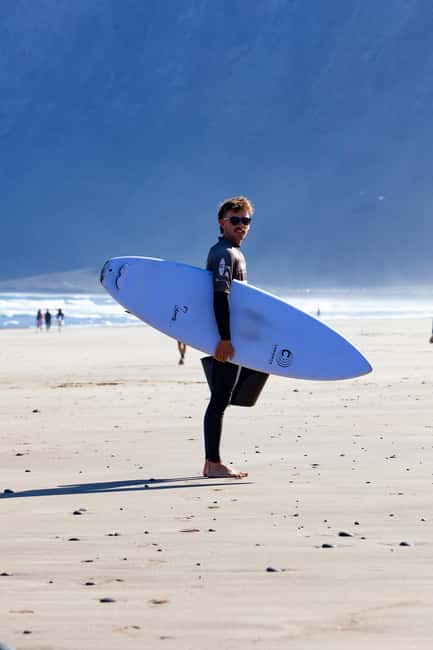
REVIEW · SPAIN
Full-Day Surf Class in Lanzarote: Take Your Skills to the Next Level
Catch more than one wave. Lanzarote’s four-hour surf class gives you two long water sessions, a useful rest period, and coaching that changes with your ability. I like the 1-hour-45-minute blocks, which give you enough time to settle into the water and make real corrections. I also like that boards, wetsuits, lycra, insurance, and instruction are included.
The main consideration is simple: four hours of surf training can be tiring, especially if you are new to the sport. The class costs $74 per person, a fair price if you want serious practice rather than a quick tryout, but less appealing if you only want a short introduction to surfing.
- Two extended water sessions: Each practical block lasts about 1 hour and 45 minutes.
- A proper recovery break: The 30-minute pause includes rest, hydration, and personal feedback.
- Coaching for every level: Beginners work on paddling and standing, while stronger surfers practice turns, speed, and board control.
- Caleta de Famara setting: The surfing takes place at one of Lanzarote’s best-known beach areas, with waves described as suitable for all levels.
- Everything important is supplied: Your board, wetsuit, lycra, insurance, warm-up, stretching, and safety guidance are included.
- Three teaching languages: You can take the class in Spanish, French, or English.
Why Four Hours Makes a Difference
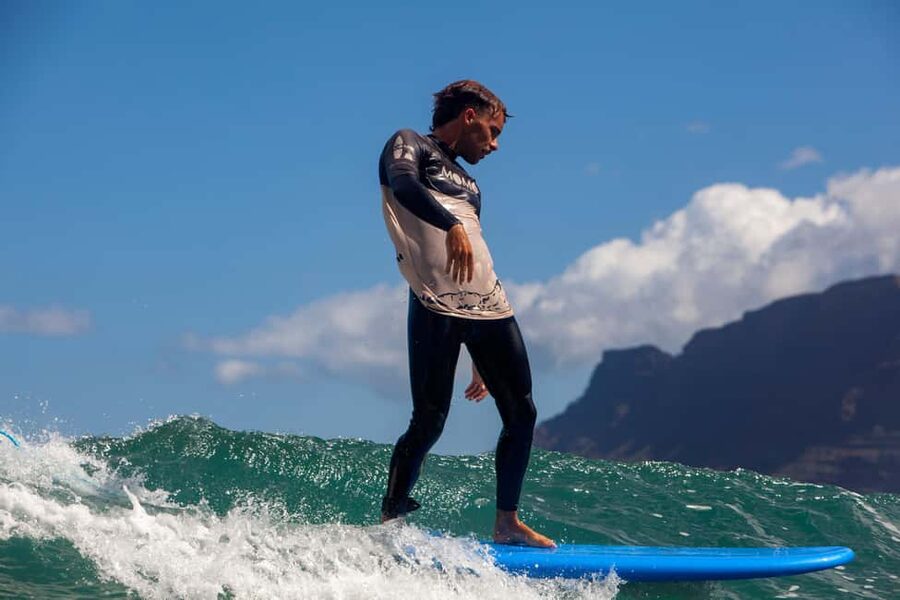
Many beginner surf lessons spend a fair amount of time getting everyone organized, explaining the basics, and helping students catch a first wave. That can be useful, but it may leave you with little time to repeat the movements. This class is built differently. It gives you two substantial sessions in the water, with a planned break between them.
I like this format because surfing depends on repetition. You paddle, try to stand, lose your balance, watch another attempt, then try again. One short session can feel like a rush of new information. Two long blocks give you time to remember the steps and work on the parts that keep going wrong.
The break is not filler. After roughly 105 minutes in the water, you need time to rest, drink, and think. The instructors use the 30 minutes to give personal feedback, so you return to the second session with something specific to work on instead of simply repeating the same mistake.
The tradeoff is physical effort. Surfing uses your arms, shoulders, legs, and core, and the class asks you to stay active for much of the day. If you want an easy beach activity, this may feel demanding. If you want to make clear progress in one day, the schedule is well judged.
Meeting at Momo Surf School
The day begins at the Momo Surf School meeting point. From there, the class heads to Caleta de Famara for the surfing portion and returns to the same meeting point afterward.
The starting routine is useful for first timers. You receive a surfboard suited to your level, a wetsuit, and a lycra top. The instructors then explain the local sea conditions, safety rules, goals for the class, and the basic ideas behind good technique.
That early briefing matters. A surf lesson should not begin with everyone charging into the water. You need to understand how to move safely, what to watch for, and how the class will work. This introduction helps you get your bearings before the practical work begins.
The exact meeting arrangements and starting time depend on availability, so check the schedule when you book. The supplied details do not list hotel transport, so plan to reach the Momo Surf School meeting point on your own unless the provider gives you different instructions.
More Full-Day Sessions in Spain:
- Full Day Surf Lesson for Beginners in Famara, Spain
★ 5.0 · 109 reviews - Sagres: Full Day Surfing Lessons
★ 5.0 · 31 reviews - Scheveningen Full-day Surfing lessons with Lunch
★ 4.3 · 8 reviews
Caleta de Famara and the First Water Block
The main setting is Caleta de Famara, where the class runs for four hours in total. The information provided describes the waves as suitable for all levels, which is important for a mixed group. Beginners need manageable conditions, while stronger surfers need enough movement in the water to keep improving.
Before the first session, the group completes a guided warm-up. This is a small but worthwhile feature. Cold muscles and stiff joints do not help with paddling or standing, and a short warm-up prepares you for the repeated movement ahead.
The first practical block lasts about 1 hour and 45 minutes. The work changes according to your experience.
If you are starting from scratch, expect to work on:
- How to lie on the board and paddle
- How to position your hands and feet
- How to perform the take-off
- How to keep your balance
- How to identify and catch your first waves
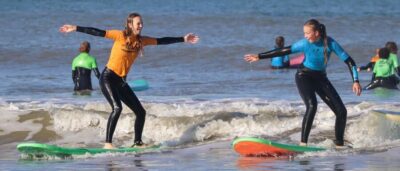
The key here is not simply standing up once. You are learning a sequence. Paddle at the right moment, place your hands correctly, bring your feet underneath you, and rise without throwing your balance forward or backward. The instructors can watch those steps and make corrections as you practice.
Intermediate surfers receive a different set of tasks. You may work on posture, reading the sea, catching waves without constant help, and beginning your first maneuvers. This is a useful point in your development because you are moving from following instructions toward making your own decisions in the water.
More advanced surfers focus on fluid movement, turns, speed, and board control. That gives experienced participants something to work on beyond simply catching a wave. The coaching is not one-size-fits-all, which is one of the strongest features of the class.
The 30-Minute Break for Rest and Feedback
After the first water session, the group takes a 30-minute break. You can use this time to recover energy and hydrate, but the most valuable part may be the feedback.
A good lesson should tell you what to change next. Perhaps your take-off needs to be quicker. Perhaps your posture is too stiff. Perhaps you are choosing waves poorly or turning the board too late. Personal advice gives you a clear target for the second block.
The break also creates room for the group to share the experience. Surf classes can feel awkward at first, especially when several people are learning in public. A friendly group atmosphere helps reduce that pressure. The supplied feedback from Andrea of Italy praised the instructors as fun and professional, which fits the class’s emphasis on motivation as well as technical correction.
Still, you should not treat the pause as a long lunch stop. It is only 30 minutes, and the focus remains on getting ready for the next session. Bring beachwear and be prepared to return to the water promptly.
The Second 1-Hour-45-Minute Session
The second block is where the structure begins to pay off. You have already tested the equipment, felt the water, and received advice. Now you can apply those lessons instead of starting cold.
The instructors continue correcting mistakes and give more specific exercises. Beginners can repeat the take-off with a better sense of timing. Intermediate surfers can work toward catching waves independently. Advanced participants can concentrate on smoother turns, speed, and control.
I like that the instructors remain available throughout the class. Constant guidance does not mean they do every step for you. The goal is to help you understand the movement, then let you try it yourself. That balance is important. Too little help leaves beginners frustrated, while too much help prevents you from learning how to read the water.
The group format has both strengths and limits. You get encouragement from other people and a lively atmosphere, and the price is lower than a private lesson would usually be. At the same time, the instructor’s attention is shared. If you want every minute to focus only on your technique, a private class may suit you better, though no private option is provided in the details here.
More Surf Lessons in Spain:
- Tenerife: Surfing Lesson for All Levels, Photos included
★ 4.9 · 1,314 reviews - Group Surfing Lesson at Playa de las Américas, Tenerife
★ 5.0 · 1,072 reviews - Playa de las Américas: Private or Small-Group Surf Lesson
★ 4.8 · 980 reviews - From Nerja: Guided Paddle Surf Cliffs and Maro Waterfall
★ 4.5 · 400 reviews
Stretching, Advice, and the Return to Momo Surf School
The class ends with gentle stretching on the beach and a final talk. This is a sensible way to close a physically active lesson. It gives your muscles a chance to settle and gives you one last opportunity to ask how to continue improving.
The final recommendations focus on safe and enjoyable progress. You should leave with a better idea of what to practice, not just a memory of getting wet and standing on a board once.
The group then returns to the Momo Surf School meeting point. Since the supplied information does not include a separate sightseeing stop or another beach, this is a focused surf session rather than a general Lanzarote excursion. That is good news if surfing is your priority. It also means you should not book it expecting a broader island tour.
Equipment, Safety, and Teaching Languages
The $74 price includes the main items you need for the activity:
- A surfboard adapted to your level
- A wetsuit
- A lycra top
- A guided warm-up
- Basic theory on safety and technique
- Two practical water blocks
- Personal feedback
- Guided stretching
- Accident insurance
Having the equipment included makes planning easier. You do not need to guess which board is right for your ability or arrange a separate wetsuit rental. The board choice is especially useful because beginners and experienced surfers need different levels of stability and control.
Safety is addressed before entering the water, and the instructors stay available during both practical sessions. The class includes accident insurance, but you should still listen carefully to the safety briefing and follow the instructor’s directions.
Teaching is available in Spanish, French, and English. That gives many visitors a practical choice of language for technical instructions, where small misunderstandings can make a big difference.
Is $74 Good Value for a Four-Hour Class?
At $74 per person, this is not the cheapest way to spend time on the beach. It is also more than a short introductory lesson. The real question is how much water time you receive and how closely the instruction matches your goals.
You get roughly 3 hours and 30 minutes of practical training, split into two blocks, plus a 30-minute feedback break. You also receive equipment, insurance, safety instruction, and coaching from certified instructors. For someone who wants to build confidence or improve technique in one day, that package offers solid value.
The price makes less sense if you are unsure about surfing and only want to test it briefly. Four hours is a commitment, and fatigue can reduce the fun for someone who is not ready for repeated paddling and take-offs.
I would choose this class for a visitor who has set aside a good part of the day for surfing. It is especially useful if you have already tried surfing and want more than a basic introduction, or if you are a beginner who learns best through repeated practice.
Who Will Get the Most from This Class?
This experience suits beginners, intermediate surfers, and advanced participants because the exercises change by level. That does not mean the class will feel identical for everyone. Your progress depends on the sea conditions, your fitness, and how quickly the basic movements begin to feel natural.
You are likely to enjoy it most if you:
- Want a serious introduction rather than a short photo opportunity
- Like learning in a group
- Want equipment provided
- Appreciate direct correction from instructors
- Can handle several hours of physical activity
- Prefer a structured lesson with a clear beginning and end
Families and mixed-ability groups may also find the level-based approach helpful, though the supplied information does not give an age range or specific family policy. If you need those details, ask Momo Surf School before booking.
This is less suitable if you dislike group instruction, want a private coach, or prefer a relaxed beach day with little physical effort. It is also not designed as an island sightseeing tour.
Booking Flexibility and Practical Preparation
You can cancel up to 24 hours in advance for a full refund. The reserve-now-and-pay-later option lets you hold a place without paying at the time of booking, which is useful when your Lanzarote plans are still shifting.
Check availability for the starting time because the schedule is not fixed in the supplied details. Bring beachwear. Your board, wetsuit, and lycra are included, so the main preparation is arriving ready to spend a long session in the water.
The activity has a 5 out of 5 rating from two verified bookings. That is encouraging, though the sample is small. Andrea from Italy specifically praised the instructors for being fun and professional, which highlights the human side of the lesson. Good technique matters, but a patient and upbeat coach can make the hard parts much easier to face.
Should You Book Momo Surf School?
Book this class if you want to spend a serious half-day improving your surfing at Caleta de Famara. The two long sessions, rest and feedback period, adaptable coaching, included equipment, and accident insurance give you more substance than a quick beach lesson.
Think twice if you only want a gentle activity or if four hours of repeated paddling sounds exhausting. For most people choosing between a short introduction and a focused training session, this is the better pick for progress. At $74, it offers good value when you use the full schedule and take the instructor feedback seriously.
FAQ
How long does the surf class last?
The class lasts four hours in total. It includes two practical sessions of about 1 hour and 45 minutes each, with a 30-minute break between them.
Where does the surfing take place?
The surfing takes place at Caleta de Famara in Lanzarote. You meet at the Momo Surf School meeting point and return there after the class.
Is the class suitable for beginners?
Yes. Beginners learn paddling, the take-off, balance, and how to read their first waves. The class also includes basic theory about technique and safety.
Can intermediate and advanced surfers join?
Yes. Intermediate surfers work on posture, reading the sea, catching waves independently, and beginning maneuvers. Advanced surfers focus on fluidity, turns, speed, and board control.
Is surf equipment included?
Yes. The class includes a surfboard adapted to your level, a wetsuit, and a lycra top.
What languages are available?
The class is offered in Spanish, French, and English.
What should I bring?
You should bring beachwear. The surfboard, wetsuit, and lycra are included.
Can I cancel for a refund?
You can cancel up to 24 hours in advance for a full refund. You can also reserve now and pay later, subject to availability and booking conditions.
Just added around Spain
- Hire of Kayak and Paddle Surf in La llosa del cavall★ 5.0 · 2 reviews
- SURF course in Cantabria★ 5.0 · 3 reviews
- Surf course 7 days★ 3.5 · 5 reviews
- Sunset Sunrise or Full Moon Paddle Surf Experience★ 4.5 · 9 reviews
- Small Group Paddle Surf Experience in Benidorm★ 4.0 · 7 reviews
- Paddle surf guided session★ 5.0 · 4 reviews
- San Sebastián Surf House Accommodation with Meals Included★ 4.5 · 27 reviews
- Paddle Surfing in Barcelona★ 5.0 · 35 reviews
Full-Day, compared.
Full Day Surf Lesson for Beginners in Famara, Spain
Read our review →

Taghazout Full-Day Surf Lesson with Lunch & Transfer
Read our review →
Full Day Learn to Surf Adventure – Incl BBQ Lunch
Read our review →Browse the lists this lesson appears in