
REVIEW · SPAIN
Gran Canaria: Kids & Teens Surf Lesson (8–16 yrs)
First waves make the best family stories. This four-hour Gran Canaria lesson gives children ages 8 to 16 a careful introduction to surfing, with soft boards, shallow water, and certified instructors guiding each step. I like the small groups of up to six and the useful progress summary at the end, which gives parents more than a few beach photos to remember the day by.
I also like that the lesson begins with safety work on the sand, rather than rushing children straight into the sea. The main consideration is simple: surfing depends on ocean conditions, so the time or beach spot can change. Children also need basic swimming ability, and this is not the right activity for a child who feels uneasy in the water.
Key points at a glance
- Made for ages 8 to 16: The teaching is aimed at children and teens, not adults squeezed into a general class.
- Small groups matter: With no more than six participants, instructors can give each child direct feedback.
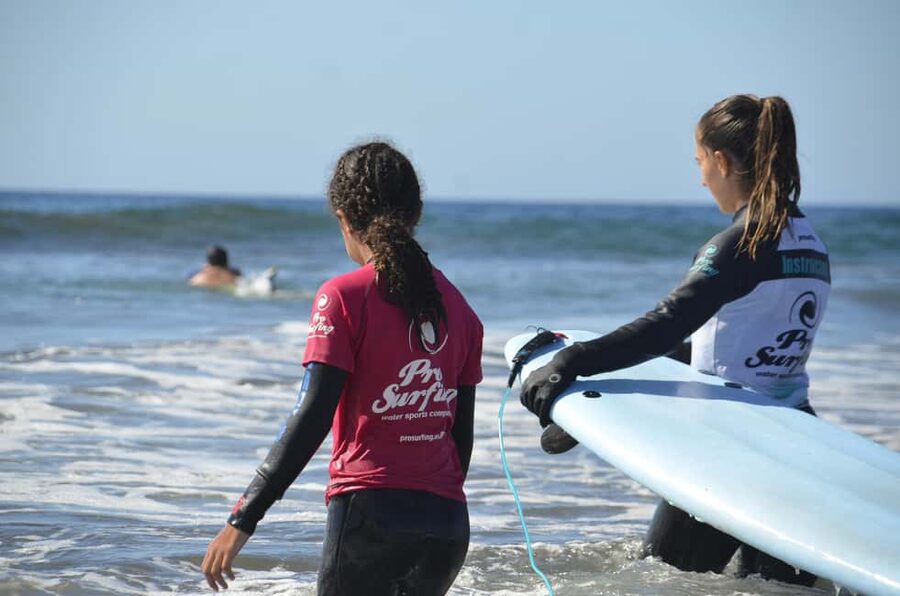
- Gentle first-wave setting: The lesson uses a sandy beach and shallow waves suited to beginners.
- Qualified instruction: Teachers are certified by the Spanish Surfing Federation and speak English, Spanish, and Hungarian.
- Four hours from warm-up to recap: The long session allows time for safety, beach practice, water work, and a progress summary.
- Practical family value: Equipment, insurance, mineral water, and seasonal wetsuits are included in the $77 price.
A first surf lesson built around confidence
The best part of a child’s first surf lesson is not the number of waves caught. It is the moment the child understands how to handle the board, enter the water, and try again after falling.
This program is designed around that steady build-up. It starts at Pro Surfing School Maspalomas, then moves through a warm-up, a safety briefing, practice on the sand, and supervised time in the water. That order matters. Children get to learn the basic movements before they have to think about waves, balance, and other people around them.
I especially like the age range. An eight-year-old and a sixteen-year-old may have very different levels of strength and confidence, but both are old enough to follow instructions and work on the basic take-off. The teaching is intended for this stage of learning, rather than assuming children already understand surf etiquette or board handling.
The surf school has taught families since 2004 and describes itself as the first surf school in Gran Canaria. That long presence gives the program a useful sense of continuity, especially for parents choosing an activity where safety and patience matter more than showmanship.
More Family and Kids Surf Lessons in Spain:
- Fuerteventura: Kids and Family Surfing Lesson
★ 4.7 · 29 reviews - The Surftrip: A 2.5-hour morning surf session for beginners, intermediate surfers, and families.
★ 5.0 · 12 reviews - Tenerife: Surfing Lesson for Kids in Las Americas
★ 5.0 · 3 reviews
Meeting at Pro Surfing School Maspalomas
You meet at Pro Surfing School Maspalomas in the Eurocenter Shopping Center. The school is in front of the Policía Nacional office, at the side entrance beside the parking area and Lidl supermarket.
The location should be fairly easy to identify. Look for the large flags, the big Pro Surfing sign, and company vehicles with the school logo outside. Free parking is available at Lidl, about 50 meters away, and there may also be parking directly in front of the shop.
This meeting point is useful for families because you can arrive, park, and get organized before the lesson begins. Do not leave arrival until the last minute. The school asks participants to be on time, and children generally do better when they are not starting a four-hour activity in a rush.
Hotel pickup is not included, though it can be requested as an optional extra. If you are staying elsewhere in Gran Canaria, check the pickup cost before booking if transport is important to your plans.
The beach warm-up and safety briefing
The first part of the lesson takes place on the beach. Children begin with a dynamic warm-up, then receive a safety briefing in clear, practical terms.
This is where the activity earns its family-friendly reputation. A good beginner lesson does not treat safety as a quick speech before the fun starts. Children need to know how to carry a soft board, how to position themselves, what to do when they fall, and how to pay attention to changing water conditions.
The briefing also gives instructors a chance to gauge confidence and ability. Since the class is limited to six participants, children should have more opportunity to ask questions and receive corrections than they would in a large group.
Parents can watch from the beach during the lesson. That is a real advantage for families. You are close enough to see the first attempts without needing to enter the water yourself, and you can offer encouragement without taking over the instructor’s job.
Practicing the take-off on dry sand
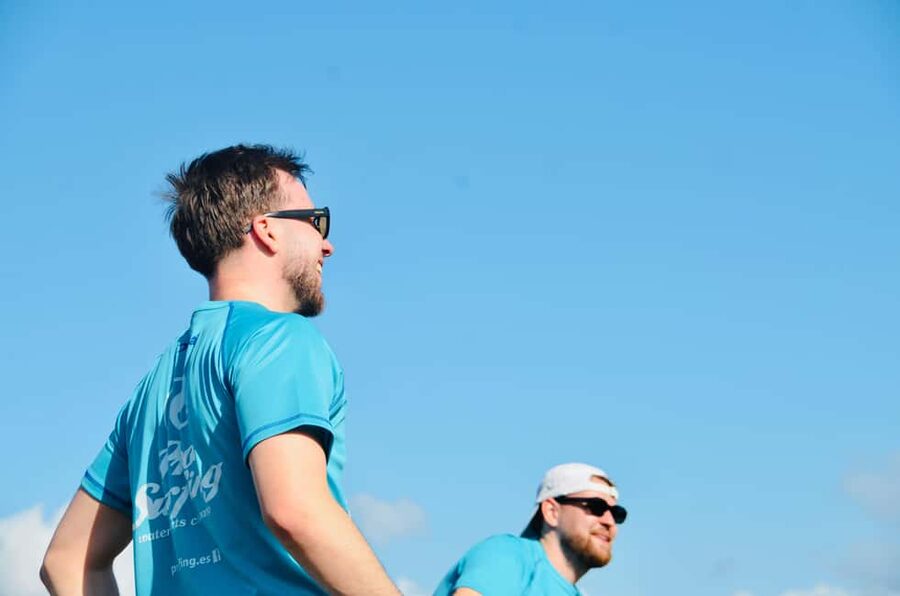
Before entering the water, children practice the surfing take-off on the sand. This is the central movement that takes a child from lying on the board to standing on it.
Sand practice can look simple, but it removes several distractions. Children can focus on hand placement, foot position, balance, and timing without also dealing with moving water. The instructor can correct small mistakes early, before they become frustrating in the sea.
This is likely to be one of the most useful parts for a nervous beginner. A child who is unsure about the ocean gets a clear sequence to repeat. A more confident teen can work on body position and speed. The soft boards supplied for the class are suited to beginners and provide a forgiving platform for practice.
Do not judge the lesson by how quickly your child stands up on the beach. The point is to build a movement they can repeat once a small wave carries the board forward.
More Surf Lessons in Spain:
- Tenerife: Surfing Lesson for All Levels, Photos included
★ 4.9 · 1,314 reviews - Group Surfing Lesson at Playa de las Américas, Tenerife
★ 5.0 · 1,072 reviews - Playa de las Américas: Private or Small-Group Surf Lesson
★ 4.8 · 980 reviews - From Nerja: Guided Paddle Surf Cliffs and Maro Waterfall
★ 4.5 · 400 reviews
Moving into gentle, shallow waves
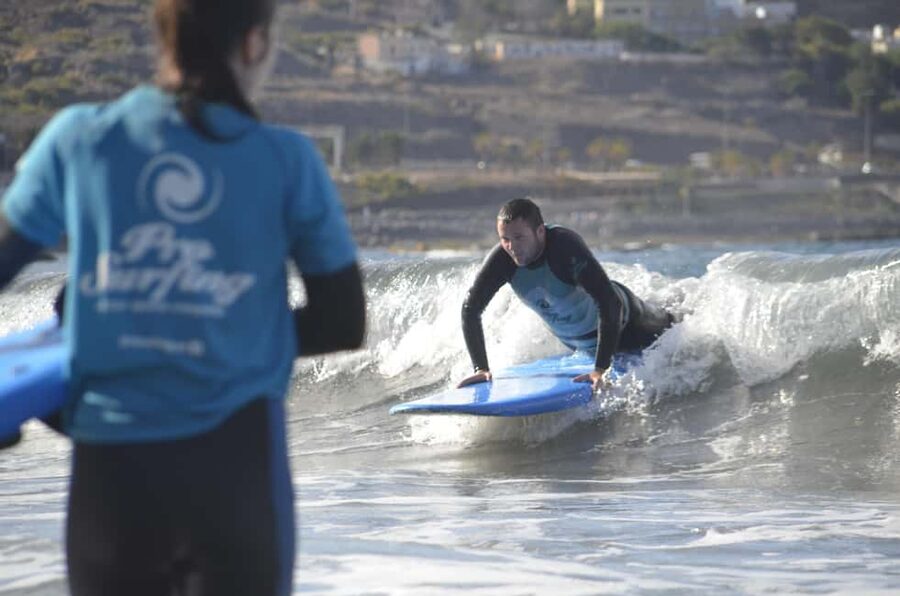
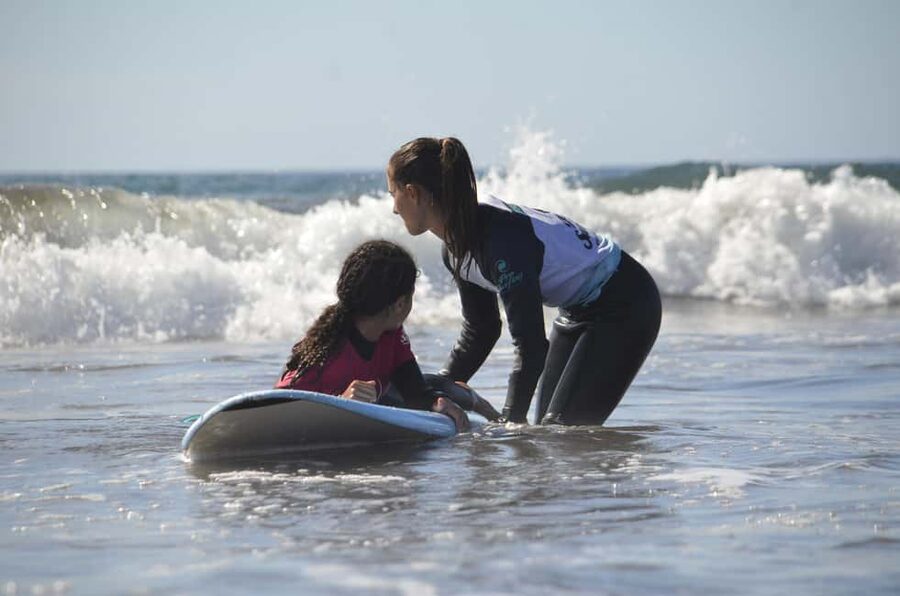
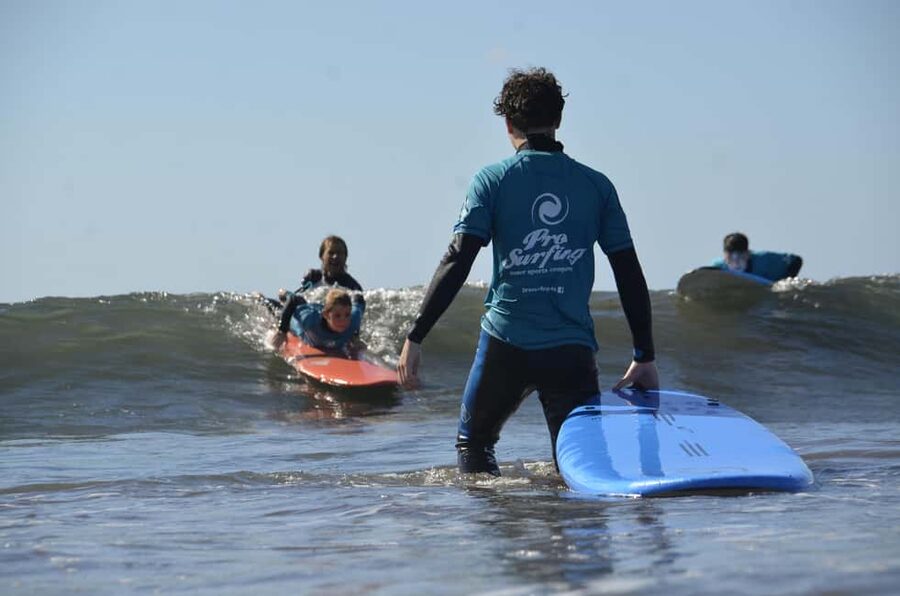
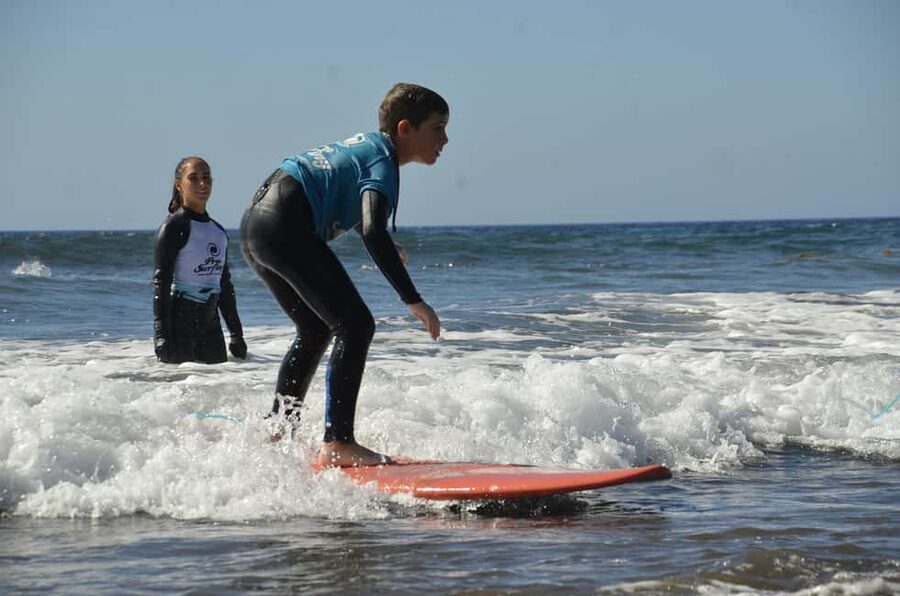
After the beach work, the class heads into the water. The lesson uses gentle, shallow waves, giving children a manageable setting for their first rides.
This is not presented as a high-level surfing session, and that is a good thing. Beginners need waves that let them feel the board move without being overwhelmed. The first goal is to catch the wave, keep the board straight, and attempt the take-off. Standing for even a short moment can feel like a major win to a child.
Ocean conditions can change. For safety, the school may adjust the surf spot or the lesson time. That flexibility is worth accepting because the sea, not the booking calendar, decides when conditions are suitable for children.
The water section is also where the small-group promise has the greatest value. In a group of six or fewer, an instructor can give real-time feedback after each attempt. A child may need help with board position, while another needs a reminder to look ahead or keep a lower stance. Personal guidance keeps the class from becoming a one-size-fits-all drill.
Basic swimming ability is required. The lesson provides supervision and equipment, but it is not a substitute for swimming skills. If your child cannot swim comfortably, choose another activity.
What the instructors add to the experience
The instructors are certified by the Spanish Surfing Federation, and lessons are available in English, Spanish, and Hungarian. That language choice can make a difference for children who understand instructions best in their first language.
Certification does not guarantee that every child will love surfing, but it gives parents a reasonable standard to look for. The instructors are expected to combine technical teaching with water safety, and the program includes liability and accident insurance for all participants.
I like the promise of real-time feedback. Children often improve fastest when an adult tells them one clear thing to change, rather than giving them a long list of corrections. The individual guidance is especially helpful when children in the same class have different levels of coordination and confidence.
The lesson also aims to finish with a progress summary. This gives you a simple record of what your child worked on and how the session went. It is not described as a formal qualification, so think of it as a useful end-of-class recap rather than a certificate.
Equipment, clothing, and what you need to bring
The $77 price includes the surf equipment needed for the lesson:
- Soft boards adapted for children and teens
- Rash vests
- Wetsuits when appropriate for the season
- Mineral water
- Liability and accident insurance
You need to bring swimwear, a towel, sunscreen, and water. Towels and sunscreen are not provided. Pack these items in an easy-to-carry beach bag, since children may want to dry off and reapply sunscreen after the water session.
The supplied soft boards are an important detail. They are more forgiving for new surfers and reduce some of the worry that comes with learning on a harder board. Seasonal wetsuits also help with comfort, though the exact need will depend on the time of year and conditions.
Photos and videos are not included. If recording your child’s first standing wave matters to you, check what is permitted before the lesson and do not assume the school will provide professional images. Drones are not allowed.
Is $77 a fair price?
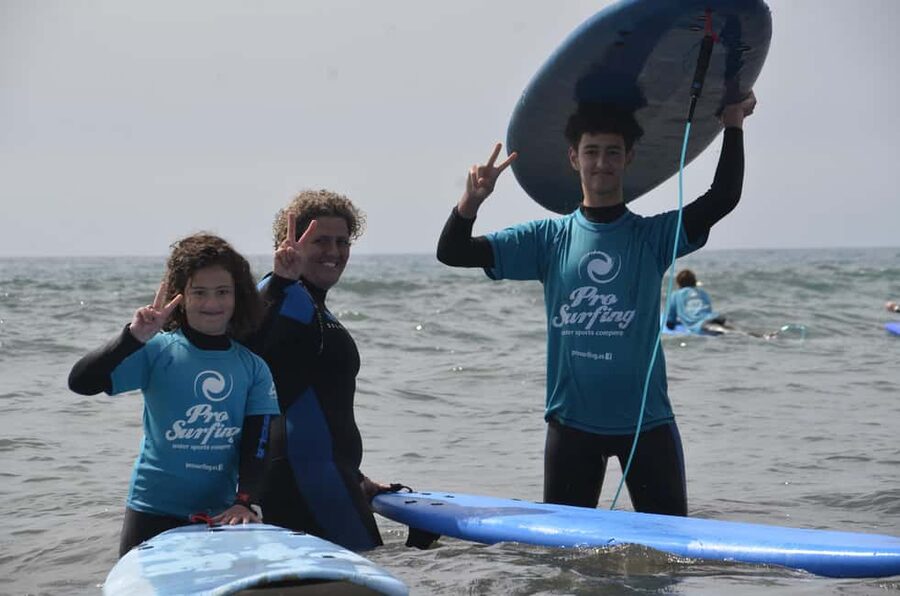
At $77 per person, this is not the cheapest way to spend a morning in Gran Canaria. It is also more than a casual board rental, but that comparison misses the point.
You are paying for four hours of organized instruction, certified teaching, equipment, water, insurance, and a small group capped at six. For a first lesson, the instructor attention may be more valuable than the board itself. A cheap rental can put a child on the beach with no clear plan, while this program provides a progression from warm-up to safety briefing to take-off practice and supervised waves.
The value is strongest if your child is genuinely interested in trying surfing. It is weaker if your family only wants a quick novelty activity or if your child may refuse to enter the water. The four-hour duration is generous, but it can feel long for a child who becomes tired or frustrated.
Parents should also budget for any transport to the meeting point, since hotel pickup is not part of the standard price. Photos, videos, towels, and sunscreen also cost extra if you need them.
Who will enjoy this most?
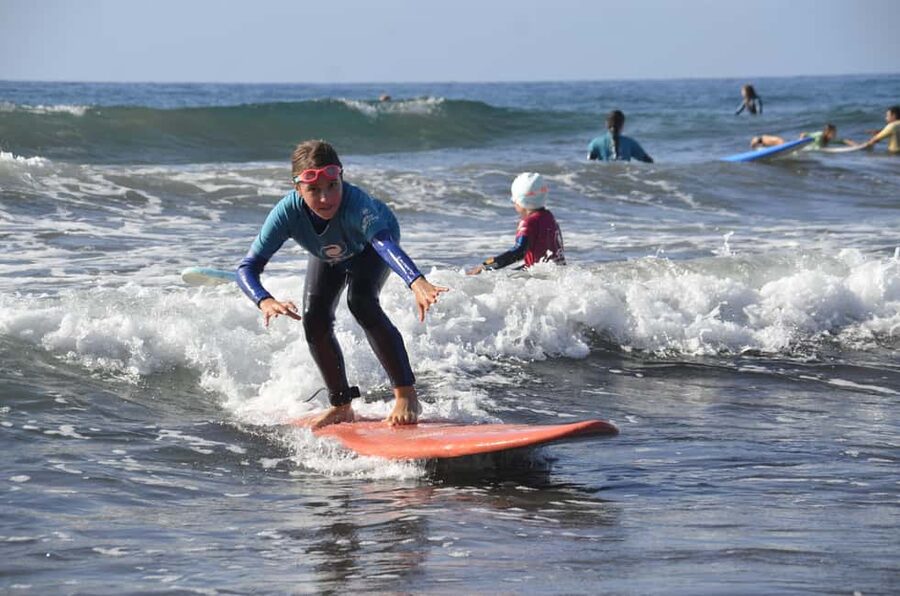
This lesson suits children and teens who can swim, follow instructions, and are willing to try something physical in the sea. It is a particularly good choice for a family that wants an activity parents can watch from the beach while children take the lead.
It also fits families who value instruction over a quick photo opportunity. The progress summary and personal corrections make the class feel like a real introduction to surfing, not just a board-and-wave experience.
It may not suit a child under eight, someone shorter than 100 centimeters, anyone over 115 kilograms, or participants over 70. Children who are uncomfortable around water may also find the session demanding, even with careful supervision.
The activity does not accept pets except certified service animals. Bachelor and bachelorette groups are not allowed, and alcohol, drugs, and alcoholic drinks in vehicles are prohibited. These rules keep the setting focused on children and water safety.
Booking flexibility and changing sea conditions
You can cancel up to 24 hours before the activity for a full refund. The reserve-now-and-pay-later option also helps if your family schedule is still moving around during a Gran Canaria holiday.
Check available start times before booking because the activity lasts four hours and the exact schedule can vary. Plan the rest of your day with some breathing room, especially if the surf time or location changes for safety.
The sea may require the school to adjust the plan. That is not a flaw in the activity. It is a normal part of teaching beginners outdoors, and a sensible reason to avoid booking an important, fixed appointment immediately afterward.
Should you book the Kids and Teens Surf Lesson?
Book it if your child is at least eight, has basic swimming ability, and wants a real first try at surfing. The strongest reasons are the small six-person limit, certified instructors, child-sized soft boards, shallow beginner waves, and the steady teaching sequence from beach practice to water time.
Skip it if your child is not comfortable in the sea, if you need hotel pickup included, or if you want photos and videos supplied as part of the price. Also keep your plans flexible enough to handle a change in surf spot or start time.
For most families, $77 is a fair price for a structured four-hour lesson with equipment and insurance included. The best souvenir may not be a video. It may be the progress summary, plus the look on your child’s face after the first successful ride.
FAQ
What ages can take the surf lesson?
The program is for children and teens ages 8 to 16. Children under eight cannot participate.
Does my child need to know how to swim?
Yes. Basic swimming ability is required.
How many people are in each group?
The group is limited to six participants.
Where is the meeting point?
Meet at Pro Surfing School Maspalomas in the Eurocenter Shopping Center, in front of the Policía Nacional office. The school is by the side entrance next to the parking area and Lidl supermarket.
Is parking available?
Yes. Free parking is available directly at Lidl, about 50 meters from the surf school. Parking may also be available in front of the shop.
What equipment is included?
The lesson includes soft surfboards adapted for children and teens, rash vests, seasonal wetsuits, mineral water, and the surfing instruction.
What should I bring?
Bring swimwear, a towel, sunscreen, and water. Towels and sunscreen are not included.
Can I cancel the booking?
Yes. You can cancel up to 24 hours in advance for a full refund. You can also reserve now and pay later.
Just added around Spain
- Hire of Kayak and Paddle Surf in La llosa del cavall★ 5.0 · 2 reviews
- SURF course in Cantabria★ 5.0 · 3 reviews
- Surf course 7 days★ 3.5 · 5 reviews
- Sunset Sunrise or Full Moon Paddle Surf Experience★ 4.5 · 9 reviews
- Small Group Paddle Surf Experience in Benidorm★ 4.0 · 7 reviews
- Paddle surf guided session★ 5.0 · 4 reviews
- San Sebastián Surf House Accommodation with Meals Included★ 4.5 · 27 reviews
- Paddle Surfing in Barcelona★ 5.0 · 35 reviews
Family and Kids Surf Lessons, compared.
Family, Private & Group Surfing Lessons, Waikiki Courtesy Shuttle
Read our review →
Family, Private & Group Standup Paddle Lessons in Waikiki
Read our review →
Family, Private & Group Bodyboard Lessons in Waikiki
Read our review →Family, Private & Group Bodyboard Lessons in Waikiki
Read our review →
Kids Surfing Lesson in Waikiki Beach (up to 12)
Read our review →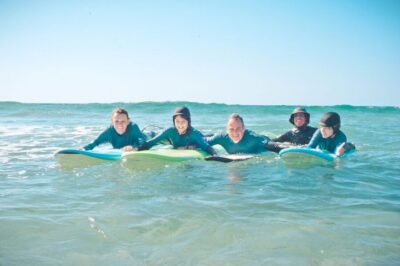
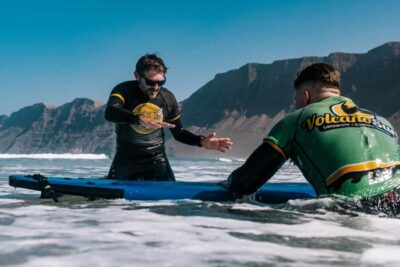
The Surftrip: A 2.5-hour morning surf session for beginners, intermediate surfers, and families.
Read our review →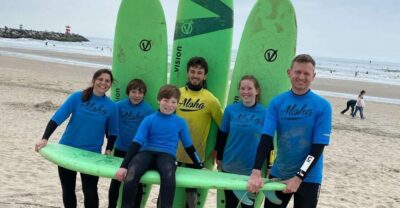
Scheveningen Beach: 1,5 hour Surf experience for families
Read our review →Browse the lists this lesson appears in