
REVIEW · PAPEETE, FRENCH POLYNESIA
Group Guided Surfing Lesson in Tahiti
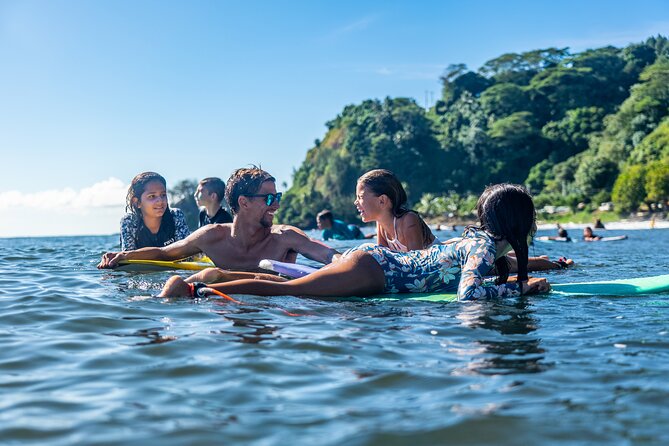
Tahiti gets you on a board fast. This two-hour group lesson heads to the island’s east coast, where black sand beaches, warm water, and manageable waves create a friendly setting for first-timers and improving surfers. I like the small group limit of eight and the fact that transport, equipment, supervision, and insurance are included. I also like the long-running school, operating since 1995.
The main caution is the beach access and surf conditions. One lesson was tough for beginners, and a first-time surfer found it hard to get through the waves while attached to the board. Seniors or anyone with limited fitness should take that seriously. Still, the flexible coach, easy pickup, and strong instruction make this a good-value way to try surfing in Tahiti.
Key points at a glance
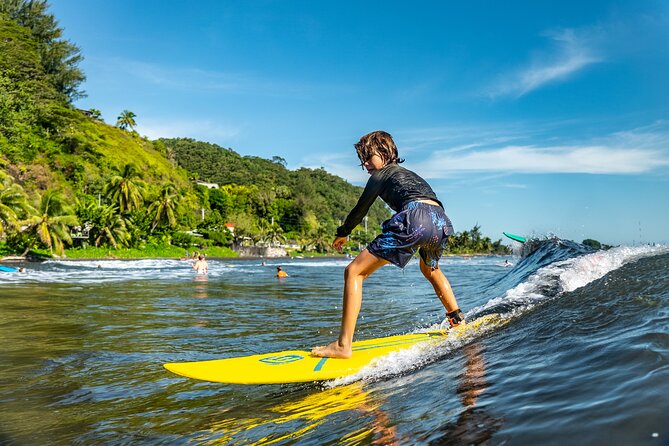
- East-coast setting: Surf at Tahiti’s black sand beaches, away from the usual resort routine.
- Small class size: The group is capped at eight people, allowing some one-to-one advice in the water.
- All-in pricing: The $54.66 cost includes transport, equipment, instruction, and insurance.
- Two ways to get moving: You receive an introduction to surfing and bodyboarding techniques.
- Flexible coaching: The school has rearranged lessons after a delayed boat arrival.
- Warm-water workout: Expect plenty of fun, but also a real physical effort, especially when paddling out.
Why this Tahiti surf lesson works
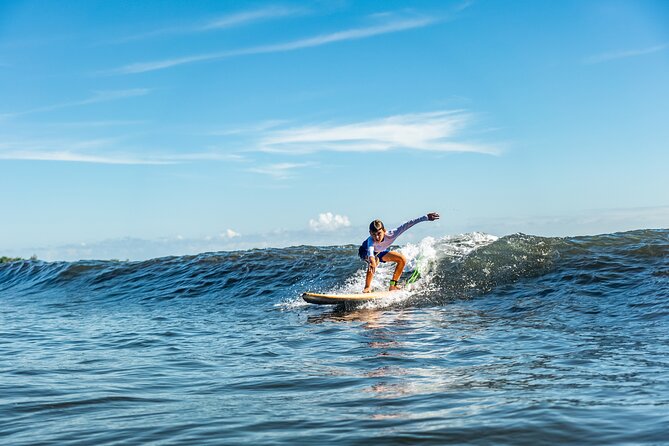
Surfing in Tahiti can sound like an activity for experts, but this lesson is built around learning the basics. You start with an introduction to surfing and bodyboarding techniques, then take those skills into the water under supervision. That makes the session more useful than simply renting a board and hoping for the best.
I like the balance here. You get the excitement of a real surf spot, but you are not left to figure out the board alone. The instructor demonstrates how to stand, how to balance, and what to do once you are on the board. After that, you practice in the water, with the coach checking in and offering individual tips.
The school, Ecole de surf TURA’I MATAARE, has been operating since 1995. That matters because a long-running local operation is more likely to understand how to introduce beginners to Tahiti’s changing surf conditions. It also gives the experience a local feel rather than making it seem like a hotel activity with a board attached.
The overall rating is 4.8 from nine ratings, with repeated praise for the instructors, transportation, and easygoing atmosphere. That is a small sample, so I would not treat the number as a guarantee. But the pattern is consistent: the lesson works best when you want friendly instruction and a simple way to reach the beach.
More Surf Lessons in the world:
- Tenerife: Surfing Lesson for All Levels, Photos included
★ 4.9 · 1,314 reviews - Group Surfing Lesson at Playa de las Américas, Tenerife
★ 5.0 · 1,072 reviews - Canggu: 2-Hour Surf Course
★ 4.8 · 1,053 reviews
Heading east to Tahiti’s black sand beaches
The outing takes you to the east coast of Tahiti. The black sand is one of the most distinctive parts of the setting, and it gives the lesson a stronger sense of place than a generic poolside surf class. You are not just practicing on a board. You are learning in a part of the island known for its dark volcanic shoreline and open surf.
Pickup is offered, and several participants found transport to and from their resort easy to arrange. That is a real benefit in Papeete, where organizing a beach trip on your own can add time and hassle. The tour provider handles the transfer as part of the service, so you can focus on the lesson instead of finding your own way to the coast.
The trip is approximately two hours in total. That is enough time for a basic land introduction and water practice, but not enough for a long surf camp or a full day of coaching. You should arrive ready to use the time well. The quicker you pay attention during the demonstration, the more time you will have to work on your own balance.
The east-coast location also means conditions can matter. Waves that feel friendly to an intermediate surfer may feel demanding to someone who has never surfed. One coach noted that conditions had been difficult for beginners during one session, and one first-time surfer found it challenging to get out through the waves. That is not a flaw unique to this lesson. It is simply the honest reality of learning in the ocean.
The first lesson: standing, balance, and board control
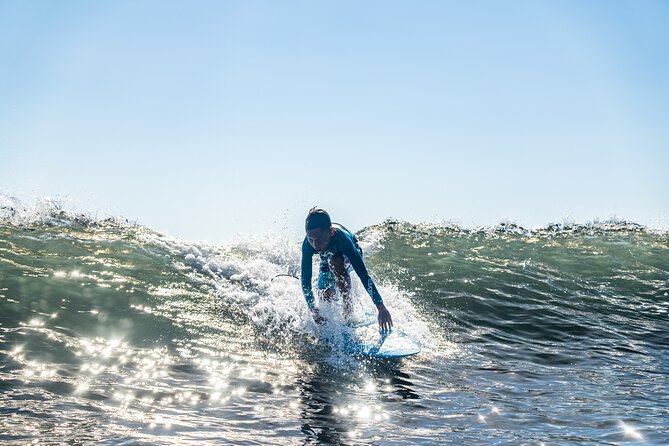
The beginning is focused on basic technique. Your coach demonstrates how to stand up on the surfboard and maintain balance. This is the moment to watch closely, since small details in foot placement and timing make a big difference once the board starts moving.
The instruction is practical rather than overly formal. You learn the movement, then try it for yourself. The coach does not appear to hold the entire class on the beach for a long lecture. Instead, the lesson moves fairly quickly toward actual practice.
That suits most beginners. Surfing is difficult to understand from words alone. You need to feel the board shift beneath you and learn how your body responds. A short explanation followed by practice gives you that chance without making the lesson feel like a classroom.
The school also introduces bodyboarding techniques. This adds a helpful second option. If standing on the board is not working right away, bodyboarding lets you experience the forward motion and wave energy in a simpler position. It can also help you build comfort in the water before attempting repeated stand-ups.
You should not expect to master surfing in two hours. A better goal is to understand the basic movement, catch a few manageable waves if conditions allow, and leave with a clearer sense of what further practice would require. That is a satisfying result for a first lesson.
In the water with a small group
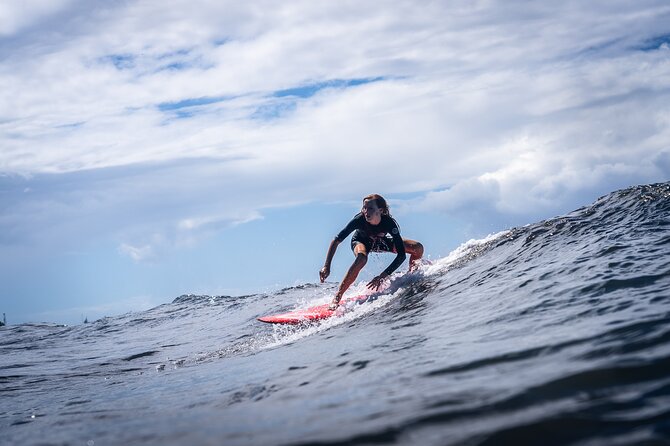
The maximum group size is eight. That is not a private class, but it is small enough to avoid the feeling of being lost in a crowd. After the main demonstration, the instructor can watch what each person is doing and offer corrections.
One account describes the coach approaching people individually and giving advice during the water session. That is exactly the kind of help you want. A general explanation may tell you what should happen, but a quick personal correction can show you why your own attempt did not work.
The group format also gives the lesson a social side. Friends can learn together, encourage one another, and share the comic moments that come with falling off a board. The atmosphere is described as friendly and convivial, which fits an activity where nobody gets everything right on the first try.
Still, group lessons involve compromise. The coach has to divide attention among several people, so you will not receive nonstop personal instruction. If you need constant support or have a specific surfing goal, a private session might suit you better, but no private option is described here. For a casual introduction, the group size is a fair trade for the lower price.
The coach’s flexibility is another plus. When a boat arrival was delayed, the instructor arranged an additional afternoon class for a group. That does not mean every schedule problem can be solved, but it suggests a practical approach when timing goes wrong.
Same place, a different way into the water:
- Legian Beach, Bali: Beginner or Intermediate Surf Lessons
★ 4.9 · 1,019 reviews - Playa de las Américas: Private or Small-Group Surf Lesson
★ 4.8 · 980 reviews - Maui: Two Hour Beginner Group Surf Lesson in Kihei
★ 5.0 · 950 reviews - Bondi Beach: 2-Hour Surf Lesson Experience for Any Level
★ 4.9 · 935 reviews
Warm water does not mean easy work
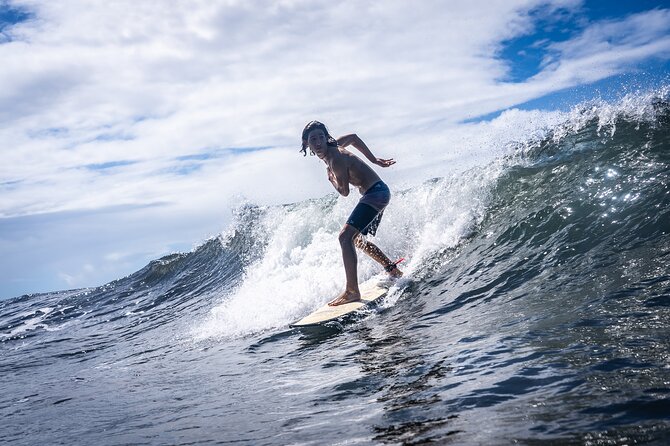
The water is warm, which makes falls and repeated attempts much more pleasant than they would be in cold conditions. You will still need to paddle, push up, balance, and get back on the board. One participant described the session as a workout, and that is useful advice for anyone expecting a gentle beach activity.
You should have a moderate level of physical fitness. The lesson may ask more of your arms, legs, and core than the short duration suggests. The effort comes not only from standing on the board, but also from moving through the water and recovering after each attempt.
The hardest part for some beginners is getting out to the waves. A smaller person may be pushed around by the surf while holding onto the board. This is especially important for seniors, people with limited strength, or anyone uneasy in moving water.
I would not read that as a reason to avoid the lesson entirely. It is a reason to be realistic. Ask yourself if you can comfortably swim and handle repeated physical effort before booking. The school provides supervision and insurance, but those services do not remove the need for basic fitness.
The water setting is also why bodyboarding instruction helps. You have another way to enjoy the waves if standing up proves frustrating. Conditions are never fully under your control, so flexibility is part of the experience.
The instructors make the difference
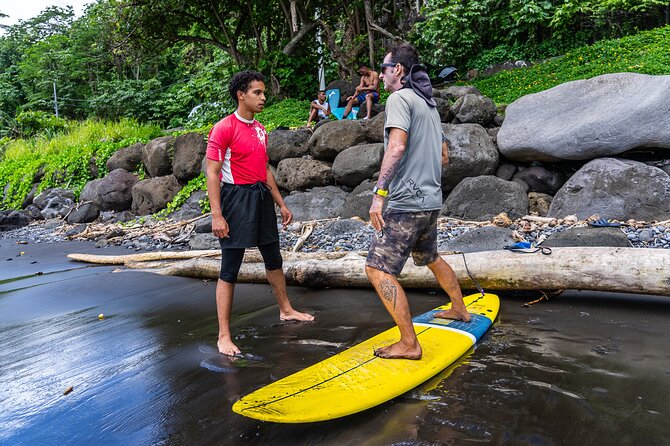
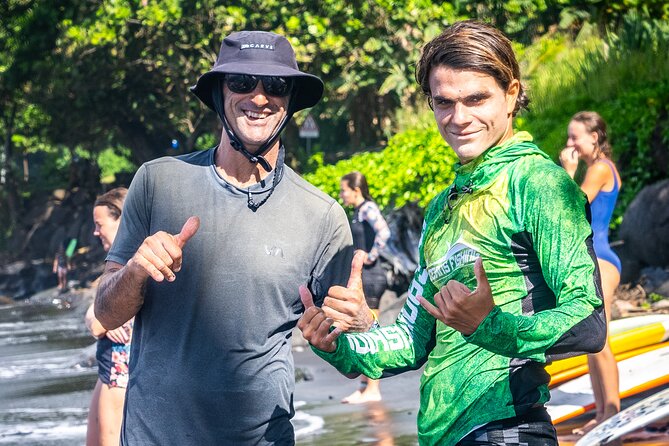
Several instructors receive warm praise. Ariihei is singled out for bringing both skill and enthusiasm to a beginner class. Nina receives special thanks for helping with the group’s comfort on the board. Oliver responded directly to concerns about difficult conditions and encouraged two older participants after their first session.
Those details point to the strongest feature of the experience: the human side. A surf lesson can be technically correct and still feel cold or rushed. Here, the coaching seems more personal. The instructor demonstrates the basics, watches people in the water, and gives advice as needed.
That style is especially useful for first-timers. You may not know why your board keeps turning or why you lose balance just before standing. A coach who can spot the problem and explain it simply can save you a lot of frustration.
I also like that the response to difficult conditions was not defensive. The coach acknowledged that the spot had been challenging for beginners. That is the right attitude. Ocean conditions cannot be promised, and honest guidance is better than pretending every session will be effortless.
What $54.66 really covers
At $54.66 per person, the price is reasonable for a two-hour lesson because the cost includes more than instruction. You receive transportation, equipment, supervision, and insurance. If you had to arrange each part separately, the total cost and planning time could rise quickly.
The value is strongest for people staying in Papeete without their own rental vehicle. Pickup removes one of the basic obstacles to reaching the east coast. Equipment is also important for first-timers, since buying or renting a suitable board on your own would add another decision to the day.
The cost is less compelling if you already own surf equipment and only want open water time. In that case, you are paying mainly for access, instruction, transport, and safety coverage. For a complete beginner, though, those are the parts that make the experience worthwhile.
The two-hour format keeps the price and time commitment manageable. You can fit it into a larger Tahiti itinerary without giving up a full day. At the same time, you should not expect a long lesson with many rounds of personal coaching. The value comes from a focused introduction, not extensive training.
Who should book this experience
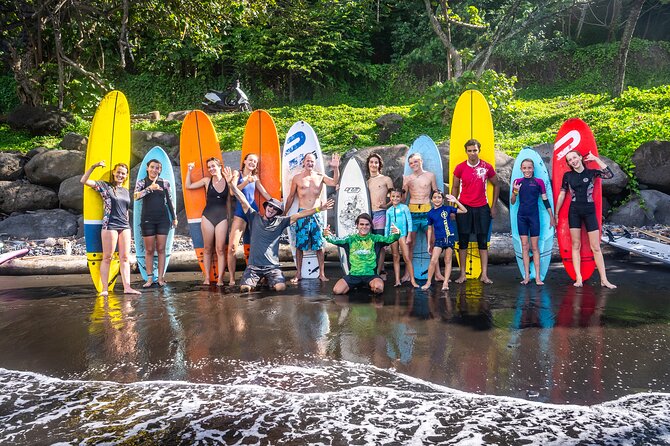
This lesson suits first-time surfers, casual beginners, and people who have tried surfing before but want a guided refresher. It also works well for friends who want to do an active outing together without arranging boards, transport, and instruction separately.
You may particularly like it if you want:
- A small group instead of a large beach class
- Warm-water practice in a real Tahitian setting
- A school with many years of operation
- Pickup from your resort
- An introduction to both surfing and bodyboarding
- A reasonably priced activity lasting about two hours
You should think twice if you have limited mobility, low fitness, or difficulty handling waves while holding a board. The beach access and surf conditions were challenging for some older participants, and the lesson is not described as suitable for every physical ability.
Intermediate surfers may also find the class basic. The focus is on standing, balance, and beginner techniques, not advanced turns or performance coaching. Still, someone with past experience could enjoy the relaxed practice and local setting.
Practical advice before you go
Wear what you normally use for a water activity and be ready for physical work. The key preparation is mental: expect to fall, adjust, and try again. The first successful stand may come quickly, or it may take most of the lesson.
Pay attention to the beach briefing and ask questions before entering the water. If the waves look larger than expected, tell the instructor about your experience level. A good coach can help you choose a more realistic goal for the session.
If you are traveling by boat, allow room for schedule changes. One group had a delayed boat arrival and was able to arrange an afternoon class, but you should not assume every late arrival can be accommodated. Confirm your timing as soon as possible.
The experience has free cancellation if you cancel at least 24 hours before the start time. Changes or cancellations made inside that window are not accepted for a refund, and the local start time controls the cutoff.
Should you book the Tahiti group surf lesson?
I would book it if you want an affordable, active introduction to surfing and value having transport and equipment handled for you. The warm water, black sand beach, small group, and friendly coaching give the lesson plenty of appeal.
I would skip it if you are looking for a relaxed beach activity with almost no physical effort, or if getting through surf is likely to be difficult for you. Conditions can challenge beginners, and a two-hour class cannot remove that part of ocean surfing.
For most reasonably fit beginners, this is a sensible Tahiti add-on. Go with modest goals: learn the stance, catch what waves you can, try bodyboarding if needed, and enjoy the fact that your first surf lesson takes place beside a black sand beach in French Polynesia.
FAQ
Where does the surf lesson take place?
The lesson takes place on the east coast of Tahiti, at black sand beaches.
How long does the experience last?
The lesson lasts approximately two hours.
How much does the lesson cost?
The listed price is $54.66 per person.
Is pickup available?
Yes. Pickup is offered, and transportation to and from the resort is included in the service.
Is surfing equipment provided?
Yes. The service includes equipment.
How many people can join the group?
The maximum group size is eight people.
What does the lesson teach?
The lesson introduces surfing and bodyboarding techniques, including how to stand on the surfboard and maintain balance.
What fitness level is needed?
A moderate level of physical fitness is recommended.
Can I cancel for a full refund?
Yes, if you cancel at least 24 hours before the experience start time. Cancellations made less than 24 hours before the start time are not refunded.
Just added around the world
- Valencia: Excursión en Moto de Agua + Paddle Surf★ 4.9 · 9 reviews
- Waikiki: Family, Private, and Group Surfing Lessons★ 5.0 · 4 reviews
- Waikiki: Surf Lessons Easy 60 min classes no crowds!★ 4.9 · 21 reviews
- Tricana Surf Experience★ 5.0 · 3 reviews
- Uluwatu: Surf Lessons Beginner★ 5.0 · 3 reviews
- Electric Bike Rentals in Topsail Island and Surf City★ 5.0 · 2 reviews
- 1-on-1 Private Surf Lesson in Santa Barbara★ 5.0 · 4 reviews
- Astonishing Scavenger Hunt: Surf, Sand and Sculptures!★ 3.0 · 2 reviews