
REVIEW · KAUAI
Kalapaki Beach: Surfing Lesson with Kauai Beach Boys
Catch your first Kauai wave. This 90-minute lesson at Kalapaki Bay gives beginners a friendly introduction to surfing, with expert instruction, a small group capped at six people, and gear included. I especially like the protected bay setting and the chance to learn from instructors familiar with Kauai’s surfing heritage. The main drawback is that water time can involve plenty of waiting, with each person receiving only a few guided attempts.
I also like the relaxed teaching style. Christian is praised for calm, clear instruction, while Nelson is noted for patient tips on the basics. At $103 per person, the lesson is not cheap, but the price includes the board, leash, rash guard, and instruction, which makes it a reasonable choice if you want a proper first lesson rather than simply renting a board.
The format is best for beginners who want personal help without paying for a private class. You should also know that a small group does not mean constant surfing. The instructor may work with one person at a time to find the right wave, leaving others sitting on their boards between turns.
Key points before you paddle out
- Kalapaki Bay offers a protected beginner setting: Gentle trade winds and the bay’s protection help create a more manageable place to learn.
- The group is limited to six people: That is small enough for individual tips, though you may still wait between attempts.
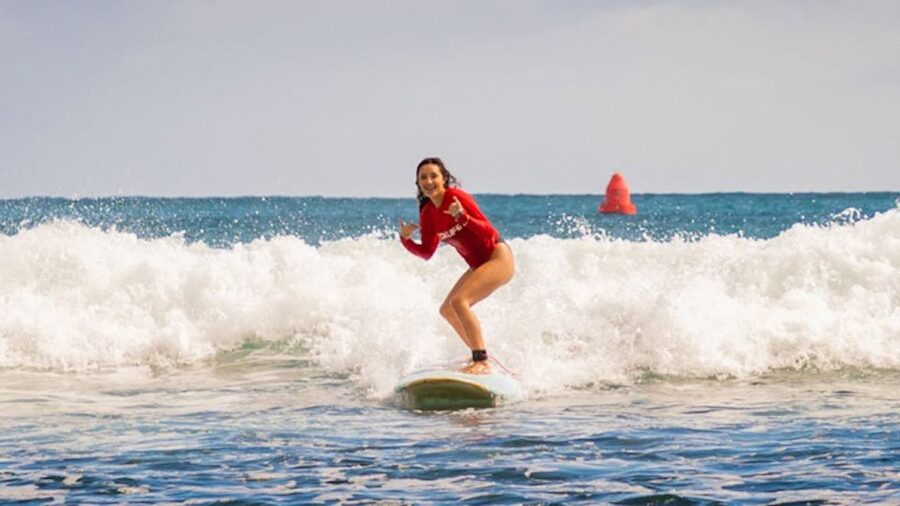
- The 90-minute lesson covers core skills: You work on paddling, balance, board control, and the basics of catching a wave.
- Board and rash guard are included: The listed equipment also includes a leash, so you do not need to arrange the main surfing gear separately.
- Christian and Nelson receive special praise: Christian is described as calm and clear, while Nelson focuses on useful basic tips and tricks.
- There are important participant limits: The lesson is not suitable for children under 10 or people over 250 pounds, or 113 kilograms.
Why Kalapaki Bay works for a first surfing lesson
Surfing can look easy from shore. Once you are on a board, even simple actions such as paddling straight, keeping your weight centered, and standing at the right moment take practice. Kalapaki Bay gives the lesson a useful advantage because the bay is protected and the trade winds are described as gentle.
That does not mean the ocean will feel completely calm. Waves are still moving water, and conditions can change. But for a beginner, a protected bay is more forgiving than an exposed stretch of coast. You can focus on the instructor’s directions instead of fighting every bit of wind and chop.
The setting also adds a sense of place. You are not learning in a pool or on a dry-land simulator. You are learning a sport closely tied to Hawaiian culture and Kauai’s coastal life, while working with the actual movement of the ocean. The lesson includes an introduction to the heritage of surfing in Kauai, giving the physical activity a little cultural context.
More Surf Lessons in the USA:
- Maui: Two Hour Beginner Group Surf Lesson in Kihei
★ 5.0 · 950 reviews - Open Group Surfing Lesson in Waikiki, Hawaii
★ 4.5 · 582 reviews - Outrageous Surf ScHool Lesson on Lahaina Side
★ 4.5 · 547 reviews
The first part of the lesson: basic skills on land
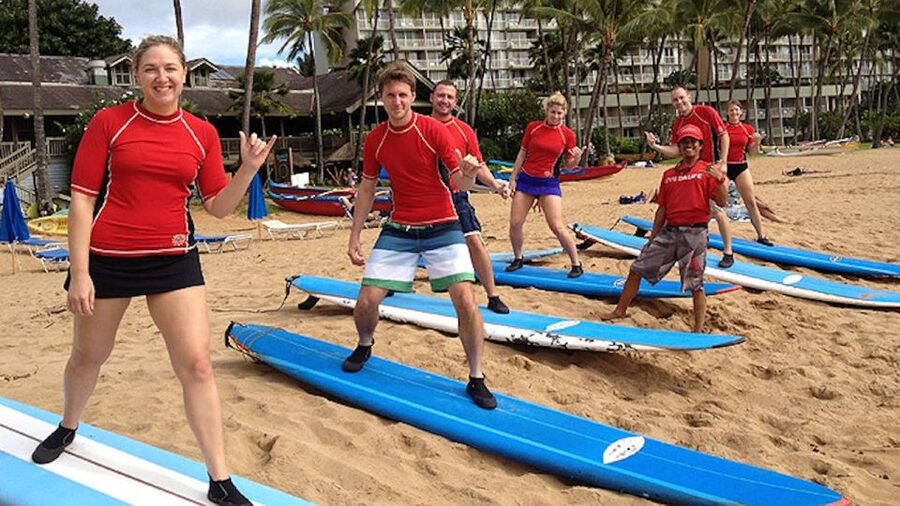
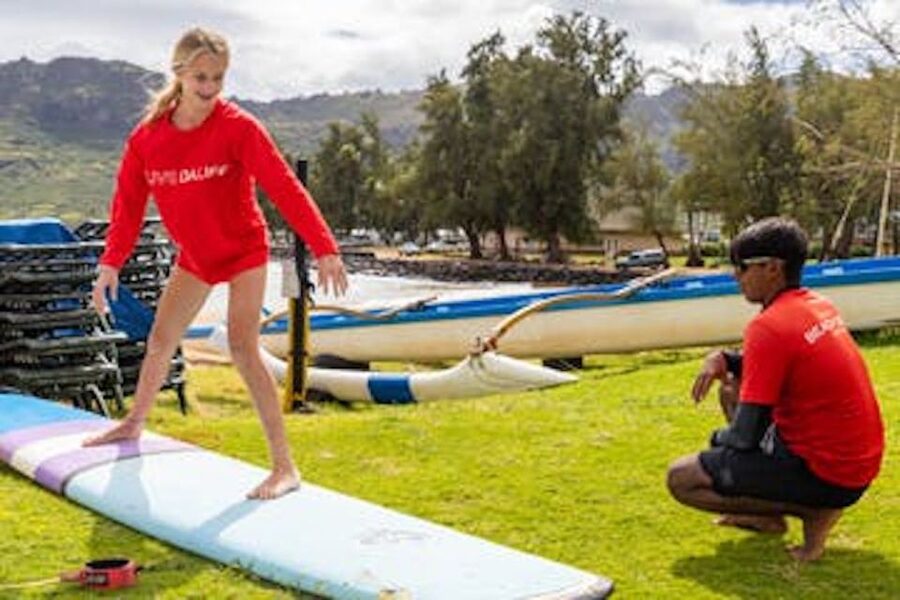
Expect the lesson to begin with an explanation on shore. The group learns how to paddle, balance on the board, and handle the basic movements needed to stand and ride. This is important preparation, especially if you have never handled a surfboard before.
A good land briefing can save time in the water. You get a chance to understand where your hands go, how to position your body, and what the instructor wants you to do before waves and other participants add pressure. Christian’s calm, clear style would be particularly useful here, since beginners often need instructions repeated in simple steps.
The group size matters at this stage. With no more than six participants, the instructor can watch each person and offer corrections without managing a large crowd. That is not the same as one-on-one coaching, but it should feel more personal than a big beach class.
You will also receive the main gear for the activity. A surfboard, leash, and rash guard are included. The rash guard is useful for comfort during a session spent repeatedly getting on and off the board, while the leash keeps the board connected to you after a fall.
Paddling, balance, and the first attempt
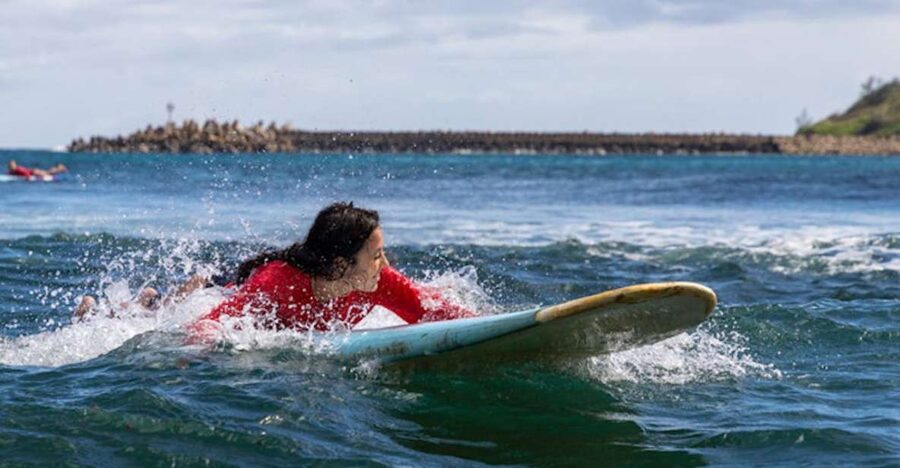
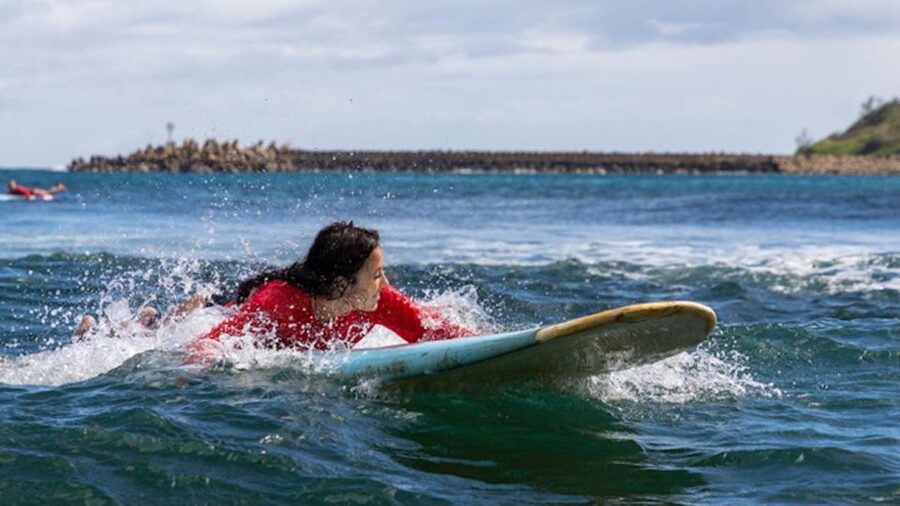
Once the land instruction is finished, the class moves into the water. The early challenge is often not standing. It is getting the board pointed in the right direction, paddling with enough control, and timing your movement with an approaching wave.
The instructor guides participants through these basics. You may spend part of the session sitting on the board and waiting while the instructor helps another person find a suitable wave. That can feel slow when you are eager to try, but wave selection is a major part of beginner surfing. A poorly timed wave can leave you stuck, pushed sideways, or knocked off before you have a chance to stand.
The lesson format described for one group involved the instructor accompanying each person to help find the right wave, then offering individual pointers. Each person had three surfing attempts. That approach has a clear benefit: when it is your turn, you get direct help at the moment it matters most.
The tradeoff is equally clear. You may not have many chances to practice independently during the 90 minutes. If you expect nonstop riding, you could leave disappointed. If you see the lesson as guided coaching, the one-at-a-time system makes more sense.
What three attempts can realistically teach you
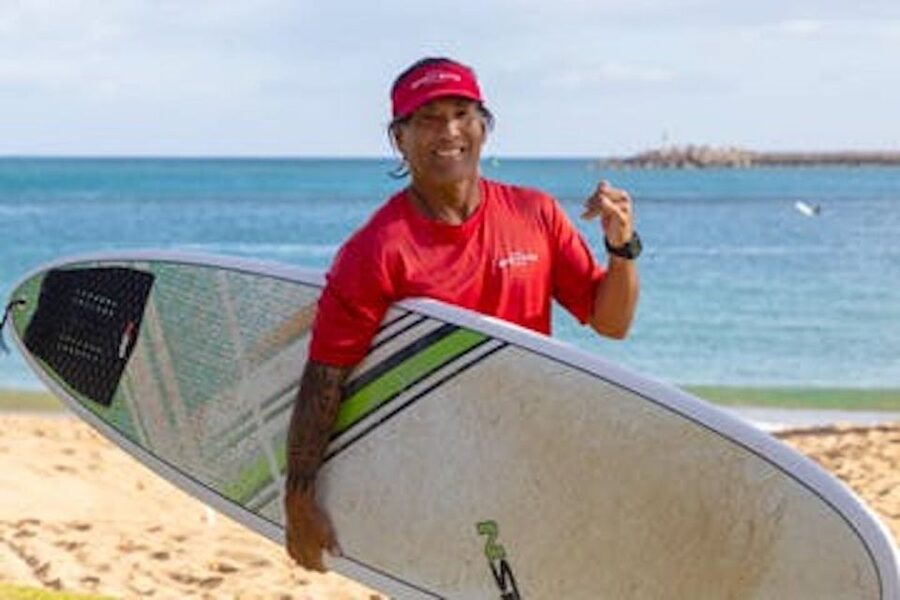
Three attempts may not turn you into a surfer. They can, however, help you understand the timing and body position needed to continue practicing later. The instructor can point out whether you are paddling too early, placing your weight too far forward, or trying to stand before the board has enough speed.
This is where useful, specific feedback matters. Nelson is praised for teaching the basics with practical tips and tricks. For a first session, that kind of advice is more valuable than a long speech about surfing theory. You want to know what to change on your next attempt.
You may stand successfully. You may also spend much of the lesson kneeling, losing balance, or getting pushed off the board. All of those outcomes are normal for a beginner, though the exact result depends on conditions and your coordination.
The strongest value here is not the number of waves you ride. It is having an instructor help you understand why a wave worked or failed. That gives you a better starting point for future surfing sessions.
Same place, a different way into the water:
- Los Angeles: Surfing Lesson in Venice Beach
★ 4.8 · 442 reviews - Oahu: Beginner-Friendly Waikiki Beach Surfing Lesson
★ 4.9 · 425 reviews - Po’ipu Surf Lesson
★ 5.0 · 361 reviews - Private Hanalei Sandy Bottom Surf Lesson on Kauai
★ 5.0 · 339 reviews
Teaching style: calm, direct, and personal
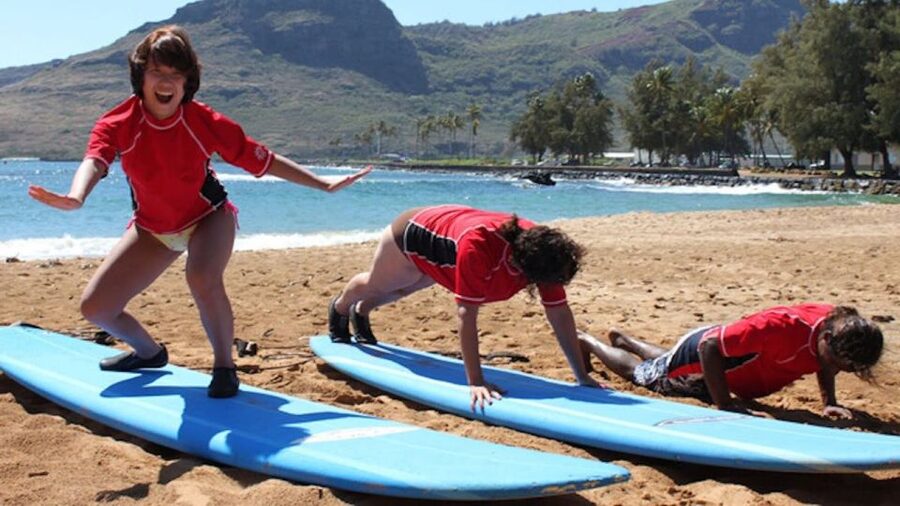
The teaching feedback is consistently strong, especially for instructors who keep things relaxed and clear. Christian is described as calm and easy to understand, with excellent advice. That matters because nervous beginners do better with short directions and patient correction.
The English-language format is straightforward. Instruction is provided in English, so you should be comfortable following spoken directions in that language. Nelson’s approach is also described as focused on making the basic skills as clear as possible.
The small group allows the instructors to adjust their help. Someone who has stood on a board before may need different advice from someone who has never surfed. Still, you should not mistake a six-person maximum for a private lesson. The instructor’s attention is shared, especially once everyone is in the water.
One point deserves careful attention: an account of the lesson described a participant falling awkwardly into a larger wave and being carried by additional waves. The instructor did not notice immediately, and the participant needed help from a partner. That does not mean the lesson is unsafe, but it is a reminder to listen closely, stay aware of your position, and be honest about your comfort level in the water.
The value of $103 per person
At $103, this is a moderate-to-high price for a 90-minute activity. The cost makes more sense if you want instruction rather than a simple equipment rental. You receive an expert-led lesson, a board, a leash, and a rash guard, so several practical costs are bundled into one booking.
The small group also adds value. A large class might lower the price, but you could receive less direct attention. Here, the maximum of six gives you a better chance of receiving personal corrections, even though you may wait while the instructor works with others.
The price is less attractive if your main goal is constant time standing on the board. The format may give you only a few serious attempts, and the rest of the session can include paddling, waiting, and listening. For a first lesson, that can still be worthwhile. For someone who already surfs, the amount of active coaching may not justify the cost.
I would judge the value by your goal. If you want to learn the basics correctly and understand how to catch a wave, $103 is defensible. If you only want to play on a board for a short time, look at what you actually want from the experience before booking.
Who will enjoy this lesson most
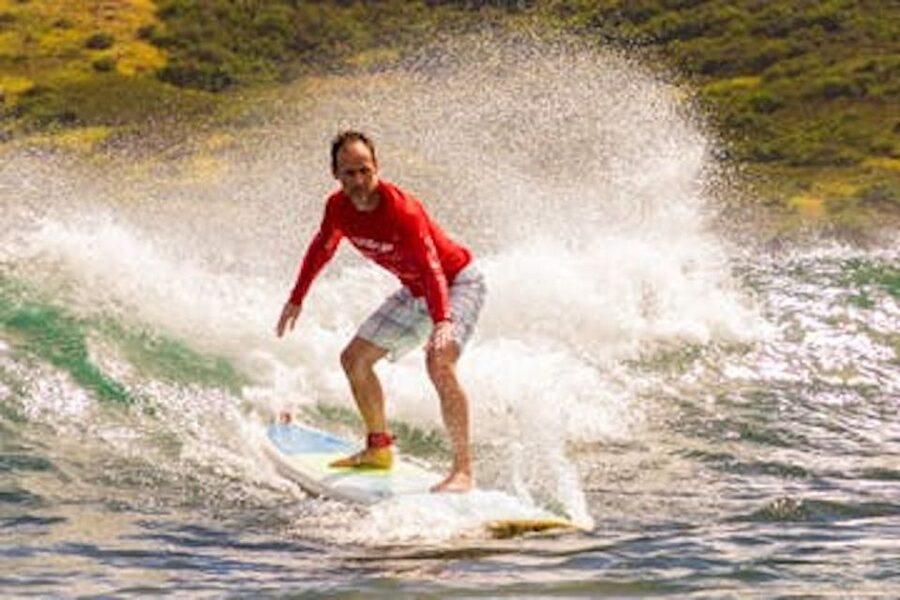
This activity is aimed at beginners. You do not need to organize your own board or rash guard, and the instructors cover the basic skills from the start. The protected bay and small class make it a sensible first step for adults and older children who meet the age requirement.
It can work well for a pair of friends or family members who want to learn together. A 19-year-old and a 21-year-old, for example, can take the same class and share the experience while still receiving individual guidance.
The lesson is not suitable for children under 10. It also has a maximum participant weight of 250 pounds, or 113 kilograms. Those limits are important practical filters, not minor footnotes.
I would be cautious about booking if you dislike waiting your turn, feel uneasy in moving water, or expect a full 90 minutes of repeated rides. You may prefer this lesson if you value patient instruction and want a clear introduction to the mechanics of surfing.
Booking flexibility and useful planning details
You can cancel up to 24 hours before the activity for a full refund. The reserve-now, pay-later option also gives you flexibility if your Kauai plans are still shifting.
Starting times depend on availability, so check the schedule before making other plans. The activity lasts 90 minutes, which is long enough for an introduction but short enough to fit into a busy day on Kauai.
Instruction is in English. The group is limited to six participants, and the listed provider is True Blue Inc. doing business as Da Life Outdoors.
I would leave enough breathing room around the lesson rather than scheduling another activity immediately afterward. The class itself has a clear time length, but first-time surfing can be tiring and may take more mental focus than expected.
Should you book the Kalapaki Beach lesson?
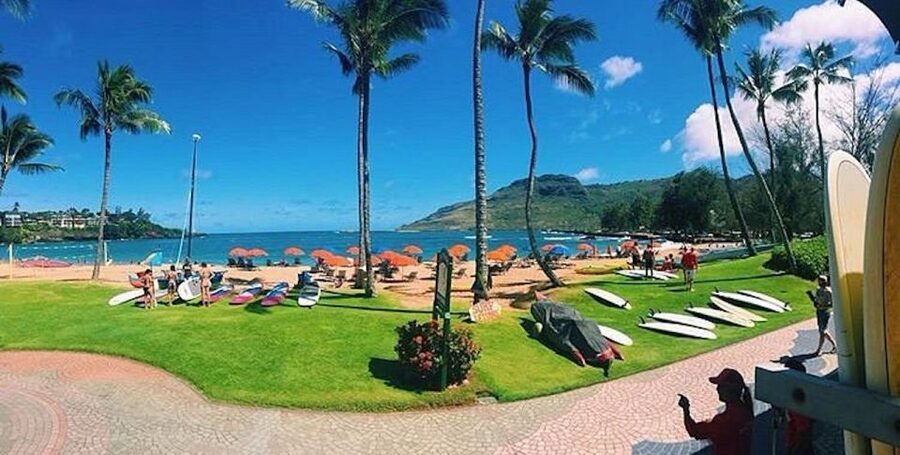
Book it if you are new to surfing, want included equipment, and prefer a small class with direct coaching. The protected Kalapaki Bay setting, clear beginner focus, and strong praise for instructors such as Christian and Nelson make this a good way to try surfing without arranging the details yourself.
Think twice if you want lots of independent practice or a private lesson. You may spend much of the session waiting while the instructor helps others, and the reported format can produce only about three guided attempts per person.
For a first taste of surfing in Kauai, I would consider it a solid choice at $103, provided you arrive with realistic expectations. The goal is not to become an expert in 90 minutes. It is to learn the basic movements, catch a few waves if conditions cooperate, and leave with a better idea of whether surfing deserves more time.
FAQ
Where does the surfing lesson take place?
The lesson takes place at Kalapaki Bay on Kalapaki Beach in Kauai, Hawaii.
How long is the activity?
The surfing lesson lasts 90 minutes.
How much does the lesson cost?
The listed price is $103 per person.
What equipment is included?
The activity includes a surfboard, leash, and rash guard.
Is an instructor included?
Yes. The activity is led by an expert surf instructor.
How many people are in each group?
The group is limited to six participants.
What language is the lesson taught in?
Instruction is provided in English.
Can children take this lesson?
Children under 10 years old are not suitable for this activity.
Is there a weight limit?
Yes. The activity is not suitable for people over 250 pounds, or 113 kilograms.
Can I cancel for a refund?
You can cancel up to 24 hours in advance for a full refund.
Do I have to pay when I book?
No. The reserve-now, pay-later option lets you book without paying immediately.
Just added around the USA
- Private Surf Lesson Solana Beach Ride the Waves Fletcher Cove 2hr★ 5.0 · 3 reviews
- 2-Hour Private Surf Lesson in Carlsbad★ 5.0 · 3 reviews
- Port Canaveral and Cocoa Beach Surf Lessons and Board Rental★ 4.0 · 9 reviews
- Two Hour Private Surfing Lesson★ 5.0 · 10 reviews
- Cape Canaveral Private Surf Lesson with Experienced Instructor★ 5.0 · 23 reviews
- Premium group surf lessons- Kona’s Best Surf Lessons★ 5.0 · 45 reviews
- Big Island Surf Lesson from Hilo★ 4.0 · 13 reviews
- Wakesurf Trip on Lake Austin – BYOB Captained (up to 12 guests)★ 5.0 · 18 reviews
Kauai Surf Lessons, compared.
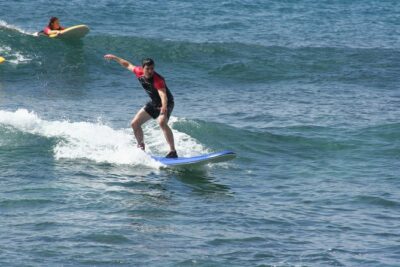

Private Hanalei Sandy Bottom Surf Lesson on Kauai
Read our review →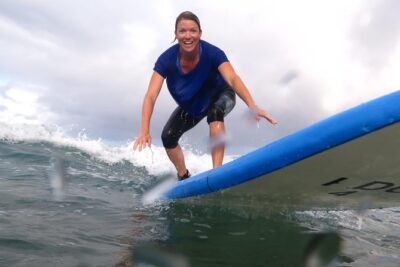
Browse the lists this lesson appears in