
REVIEW · USA
Learn to Surf – Destin
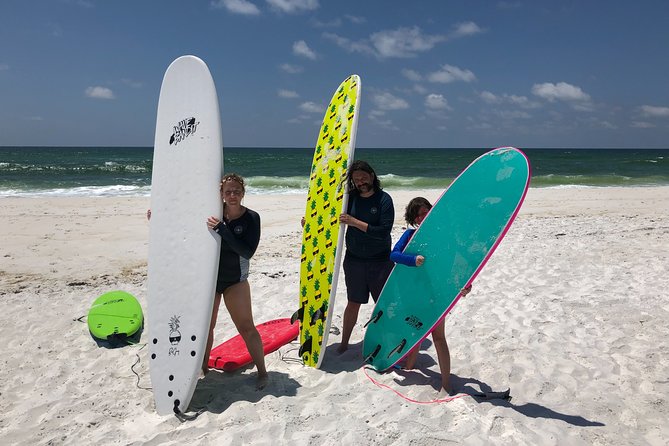
Catch your first wave in Destin. This two-hour lesson on Okaloosa Island gives beginners a clear, friendly introduction to surfing, with about 1.5 hours of instruction, board rental, and hands-on help from a professional. I like the small group size of up to 10 people, which gives you a better chance to get personal coaching instead of being lost in a crowd. I also like that the class covers more than simply standing on a board: you learn water safety, surf etiquette, paddling, the pop-up, and how to position yourself for a wave.
The main drawback is that surfing depends heavily on the weather and sea conditions. A calm day may be comfortable but less exciting for catching waves, while rougher conditions can affect the lesson or lead to a cancellation. You also need to bring your own sunscreen and rash guard or wetsuit, and you should be ready for a moderate physical workout.
Key Points Before You Paddle Out
- About 1.5 hours of instruction: Expect a full lesson within the roughly two-hour experience, including a land class and time in the water.
- Start at Okaloosa Island Pier: The pier is both the meeting point and the place where the activity ends.
- Small groups matter: With no more than 10 people, the instructor can help with positioning and push you into waves when needed.
- AC earns special praise: AC is described as cool, informative, helpful, and good at setting beginners up for that first successful ride.
- Equipment is partly provided: Your surfboard and bottled water are included, but sunscreen and cold-weather or sun-protection gear are not.
- Weather can change the plan: Poor conditions may lead to a new date or a full refund, so keep your schedule flexible.
Starting at Okaloosa Island Pier
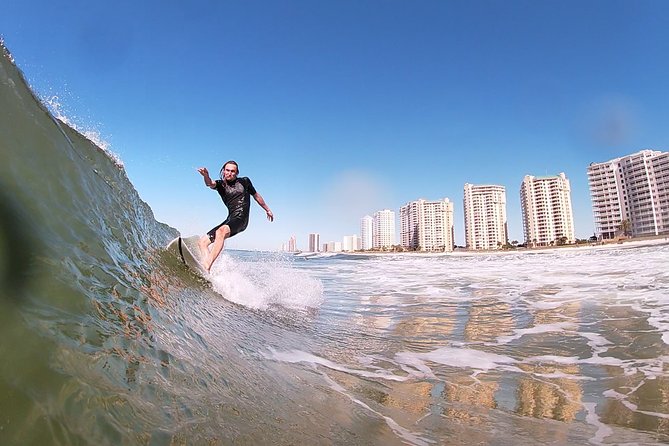
Your lesson begins at Okaloosa Island Pier in Fort Walton Beach, with the listed address in the 32548 ZIP code. The meeting point is also where the activity finishes, which keeps the day simple. You will not need to arrange a separate pickup from the beach or figure out how to return to a distant parking area.
The pier gives the lesson a clear landmark. If you are new to the area, that matters. You can plan around one fixed location and use nearby public transportation, since the meeting point is listed as being near public transit. The experience operates daily from 9:00 a.m. to 5:00 p.m., though your booking time will determine when you actually meet the instructor.
The first stop is the island pier itself. This is not a sightseeing stop with a long formal talk. It is the practical starting point for introductions, checking the conditions, and getting organized before you move into the main lesson on Okaloosa Island.
Arrive ready to get wet. You should have swimwear, sunscreen, and any personal sun protection you prefer. A rash guard or wetsuit is not included, so you need to supply those items if you want them.
More Beginner Surf Lessons in the USA
- Maui: Two Hour Beginner Group Surf Lesson in Kihei
★ 5.0 · 950 reviews - Oahu: Beginner-Friendly Waikiki Beach Surfing Lesson
★ 4.9 · 425 reviews - Oahu: Waikiki 2-Hour Beginner Group Surf Lesson
★ 4.9 · 191 reviews
The Opening Briefing: Conditions, Safety, and Stretching
The lesson begins with a group introduction and a report on current conditions and marine life. That opening is useful because the Gulf is not just a flat training surface. Water conditions can change, and beginners need to know what they are entering before they start trying to stand.
The instructor also explains water safety and surf etiquette. This part may feel less thrilling than catching a wave, but it is one of the most valuable pieces of the class. You learn how to behave around other surfers and how to make better decisions in the water. A beginner who knows where to sit, when to move, and how to share waves is safer and less likely to get in someone else’s way.
Stretching comes next. Surfing uses more than your arms. Paddling calls on your shoulders and upper body, while popping up requires balance, flexibility, and quick movement. A short stretch helps prepare you for the physical work ahead.
The course is open to beginners of all ages. That does not mean it is effortless. You should have a moderate level of physical fitness and be comfortable with a lesson that includes paddling, getting up from a prone position, and repeated attempts at standing.
The Land Class: Learning the Pop-Up Before the Water
Before you chase a wave, you learn the basic movements on land. The instructor covers the proper prone position, paddling technique, the pop-up, and stance. This preparation is especially useful for first-timers, because the water is a poor place to hear each instruction for the first time.
The prone position is the foundation. You need to lie on the board in a way that keeps it balanced and lets you paddle efficiently. From there, the pop-up becomes the key movement. You will work on moving from lying down to standing in one quick motion, then finding a stable stance.
This sequence makes the experience feel like a lesson rather than a simple equipment rental. You are not just handed a board and pointed toward the waves. The instructor gives you a set of movements to practice, then helps you apply them in the water.
Your stance matters, too. A good stance keeps your feet placed for balance and gives you a better chance of staying upright once the board starts moving. It is normal for the first attempts to feel awkward. The value of the land class is that you can focus on body position before the water adds speed and distraction.
Okaloosa Island and the First Push Into a Wave
The main water portion takes place at Okaloosa Island. Depending on conditions, the instructor decides how much time to spend teaching you to paddle out. That may include techniques such as duck diving, the log roll, and nose dives.
The exact technique used depends on the board and the conditions, so you should not expect every lesson to follow the same pattern. The important point is that the instructor adjusts the lesson instead of forcing one fixed routine. If conditions make a particular method less useful, the focus can shift.
Once you are in the right area, the instructor helps each surfer with line-up placement. This is a major advantage for a beginner. Positioning can be confusing when you are still learning to read the water, and starting from the wrong place can mean missing waves or creating problems for other people.
The instructor may also push you into waves if needed. That extra help can make the difference between endless paddling and your first short ride. One especially strong piece of feedback describes the excitement of paddling into a first wave, feeling the speed, and standing up. AC was praised for setting that surfer up well, which suggests the coaching is not limited to explaining movements on the beach.
You should keep your expectations realistic. A first lesson is about learning the basics, not mastering every part of surfing in one morning. You might stand for only a moment, or you might catch several small rides. The conditions, your fitness, and your willingness to keep trying all affect the result.
Same place, a different way into the water:
- Open Group Surfing Lesson in Waikiki, Hawaii
★ 4.5 · 582 reviews - Outrageous Surf ScHool Lesson on Lahaina Side
★ 4.5 · 547 reviews - Los Angeles: Surfing Lesson in Venice Beach
★ 4.8 · 442 reviews - Po’ipu Surf Lesson
★ 5.0 · 361 reviews
Why the Small Group Size Helps
The maximum group size is 10 people. That is not a private lesson, but it is small enough to make individual attention possible. For a beginner, this matters most when you are in the water and need help with your position, timing, or stance.
An instructor can give general advice to a group, but surfing improves faster when someone can watch your specific movement. Are you lying too far forward? Are you paddling at the wrong time? Are you standing too early? A smaller group makes it more likely that you will receive useful corrections rather than broad instructions.
The instructor also assists each surfer with line-up placement. That personal help is more valuable than it may sound. Beginners often spend their first session trying to understand where to be, while an instructor can shorten that learning curve.
Still, a group lesson means the instructor’s attention is shared. If you want constant one-on-one coaching, this is not the same as a private class. The small group is a sensible middle ground for people who want personal help without arranging a fully private experience.
The Instructor Experience and AC’s Teaching Style
AC receives the strongest personal praise in the available feedback. AC is described as cool, informative, and good at helping people get set up for a successful ride. That combination is exactly what you want in a beginner surf instructor.
A relaxed manner helps because falling is part of learning. You need an instructor who can give clear directions without making you feel foolish when your pop-up goes wrong. Good information matters just as much. The lesson includes enough technical detail to give you a real starting point, but it is still built for beginners.
AC was also praised for helping create the moment when a surfer catches a first wave and stands up. That is the experience most people hope to take home from a lesson. The coaching appears to focus on making that moment possible, not simply covering theory.
Communication is another positive point. When poor weather required a schedule change, the staff stayed in contact and worked flexibly. That does not remove the inconvenience of changing your plans, but it is reassuring when Gulf weather does not cooperate.
What You Receive and What You Must Bring
Your surfboard is included, along with bottled water. That makes the experience easier for visitors who do not already own equipment or want to transport a board during a beach vacation.
You need to bring sunscreen. This is important even on a cloudy day, since you will spend time near reflective water and may be outside for the whole lesson. You also need to provide your own rash guard or wetsuit if you want one.
The information does not specify the water temperature, so you should not assume that a wetsuit will be unnecessary. If you are sensitive to cool water or want extra sun protection, ask the provider what is suitable for your date. The same practical point applies to clothing: bring what you are comfortable getting wet in, but do not count on special surf clothing being supplied.
Bottled water is included, which is useful during a physical activity in the sun. You should still plan your day sensibly and arrive hydrated.
Is the Lesson Good Value?
No price is provided here, so I cannot judge the exact cost against other Destin surf schools. I can judge what the experience includes. You receive a board, bottled water, about 1.5 hours of instruction, safety and etiquette guidance, land practice, water coaching, and help with wave positioning.
That package has better value than a simple board rental if you are new to surfing. Renting a board without instruction may leave you unsure how to paddle, where to sit, or how to stand. The lesson turns equipment time into a structured introduction.
The value is strongest for someone who wants a first taste of surfing during a Destin or Fort Walton Beach stay. You are paying for coaching and reduced guesswork, not a guarantee that you will ride every wave. If you already surf comfortably, the beginner focus may not justify the cost for you.
A small group also adds value. It is not private instruction, but a maximum of 10 people gives the session a more personal feel than a large beach class. If the price is close to other group lessons, the included board and hands-on help make this a reasonable option.
Weather, Fitness, and Practical Limits
Weather is the biggest variable. The experience requires good weather, and poor conditions can lead to a different date or a full refund. The provider also requires a minimum number of participants, so the activity could be canceled if that number is not reached.
That policy is fair for a water sport, but it means you should avoid booking this as the only fixed activity of your vacation. Schedule it early enough in your stay to leave room for another date if conditions interfere.
You should have a moderate physical fitness level. The class includes stretching, paddling, repeated attempts to stand, and possible instruction on getting through the water. It is not described as suitable only for athletes, and all ages are welcome, but you should be prepared for steady physical effort.
Free cancellation is available up to 24 hours before the start time. Changes or cancellations made less than 24 hours before the experience are not accepted for a refund. The cut-off uses local time, so check the clock in Florida when adjusting your plans.
Who Should Book This Surf Lesson?
I would choose this lesson if you are a first-time surfer, a family looking for an active beach activity, or a couple who wants more than sitting on the sand. The all-ages policy makes it flexible, while the small group offers enough personal attention to help beginners progress.
It is also a good match if you like learning through direct practice. The class does not stop at a beach explanation. You learn the body position on land, then try paddling, line-up placement, and wave riding in the water.
I would think twice if you dislike physical activity, cannot comfortably manage repeated movement in the water, or need a fully private lesson. I would also avoid booking it at the very end of a short trip, since weather can force a change.
Should You Book Learn to Surf in Destin?
Book it if you want a practical first lesson with a board included and a good chance of personal coaching. The best features are the small group, the full basic skills lesson, the instructor’s help with positioning, and the chance to be pushed into a wave when you need assistance.
Bring sunscreen, suitable swimwear, and a rash guard or wetsuit if you want one. Keep your schedule flexible for weather, and arrive ready to work rather than expecting a passive beach outing. For a beginner who wants to feel that first burst of speed and make a real attempt at standing, this is a worthwhile Okaloosa Island activity.
FAQ
How long does the surf lesson last?
The experience lasts approximately two hours. About 1.5 hours are devoted to instruction and board rental.
Where does the activity begin?
The meeting point is Okaloosa Island Pier in Okaloosa Island, Florida. The activity also ends back at the meeting point.
Is a surfboard included?
Yes. A surfboard and bottled water are included.
Do I need to bring a rash guard or wetsuit?
Yes, if you want one. Rash guards and wetsuits are not included. Sunscreen is also not provided.
Are beginners and children allowed to participate?
Beginners of all ages are welcome. Participants should have a moderate physical fitness level.
What happens if bad weather cancels the lesson?
If poor weather causes a cancellation, you will be offered a different date or a full refund. A cancellation can also occur if the minimum number of participants is not reached.
Just added around the USA
- Epic Surf Lessons Dania Beach★ 5.0 · 3 reviews
- Surf Lessons Fort Lauderdale★ 5.0 · 41 reviews
- E-Foil Surfing for Beginners in Fort Lauderdale Beach★ 5.0 · 2 reviews
- Learn to surf Fort Lauderdale★ 5.0 · 6 reviews
- 1-Hour Private Surf Lesson in Cocoa Beach★ 5.0 · 41 reviews
- 2 Hour Private Surf Lesson in Cocoa Beach★ 5.0 · 12 reviews
- Private Surf Lesson Solana Beach Ride the Waves Fletcher Cove 2hr★ 5.0 · 3 reviews
- 2-Hour Private Surf Lesson in Carlsbad★ 5.0 · 3 reviews
Beginner Surf Lessons, compared.
Legian Beach, Bali: Beginner or Intermediate Surf Lessons
Read our review →
Beginner & Intermediate Surf Lesson with Equipment
Read our review →
Learn to Surf in Chill Beach Vibes & Good Times
Read our review →
Beginner-Friendly Waikiki Beach Surfing Lesson
Read our review →
Beginner Surf Lesson at the Beautiful Algarvian West Coast
Read our review →
Lezioni di Surf per Beginner e Intermedi (6 persone a istruttore)
Read our review →Browse the lists this lesson appears in