
REVIEW · MALTA, MALTA
Malta Surf School, Beginner Surf Lessons
Catch your first wave in Malta. This one-hour lesson makes surfing approachable, with patient coaching, clear beach instruction, and time in chest-high water to practice paddling and standing. I especially like the small groups of six or fewer and the fact that equipment is included. The main catch is simple: surfing depends on the weather and waves, so your lesson may change or be canceled.
The setting near Singita kiosk is easy to find, thanks to the school’s blue flag. I also like that the lesson is built for complete beginners rather than people who already know how to surf. Still, one hour passes quickly, and non-swimmers, children under 16, pregnant women, and people with mobility impairments cannot take part.
Key points at a glance
- Small groups, up to six people: You get more direct help than in a large beach class.
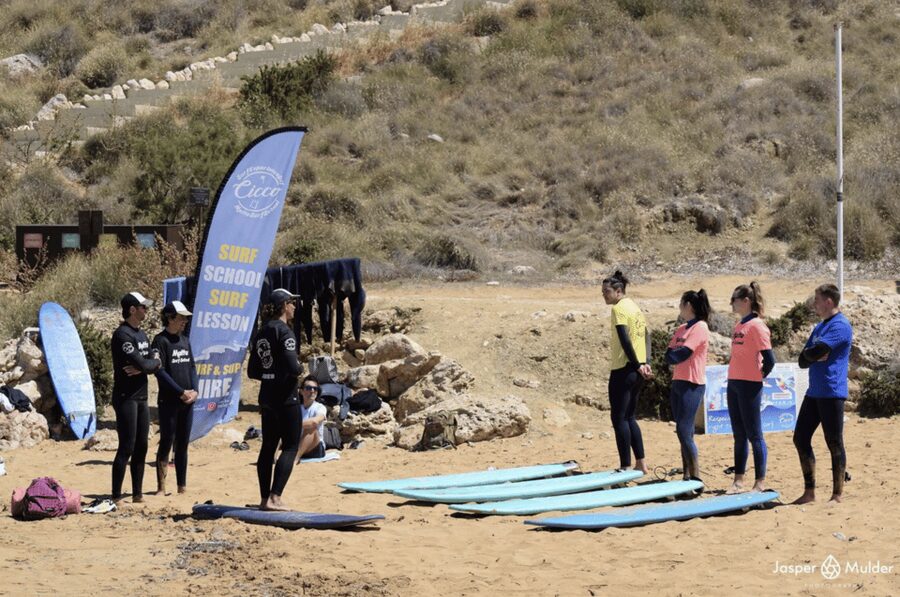
- A true first lesson: You practice the take-off and standing position on sand before entering the water.
- Chest-high water with supervision: Instructors guide you while you paddle and try to catch waves.
- Equipment is included: The €60 price covers the surfboard and wetsuit, with the advertised price shown as about $71.
- Meet by the blue flag near Singita kiosk: Arrive 15 minutes early to change and attend the safety briefing.
- Weather controls the plan: If there are no suitable waves, alternatives may include stand-up paddleboarding, wakeboarding, or a boat tour.
Why this Malta lesson works for first-timers
Surfing can look harder than it is. The board is long, the waves move quickly, and the first attempt at standing often ends with a splash. Malta Surf School keeps the first step manageable by starting on the beach, where you can learn the basic movements without balancing on moving water.
The lesson covers paddling, the pop-up, and wave catching. You are not simply handed a board and pointed toward the sea. You first learn how to place your hands, shift your weight, and bring your feet under you. That preparation matters, especially if you have never tried a board sport.
I like the clear beginner focus. The lesson is not designed as a general beach activity with a few surfing tips added on. The whole hour is aimed at helping you understand the basic sequence: lie on the board, paddle, catch the wave, push up, and stand.
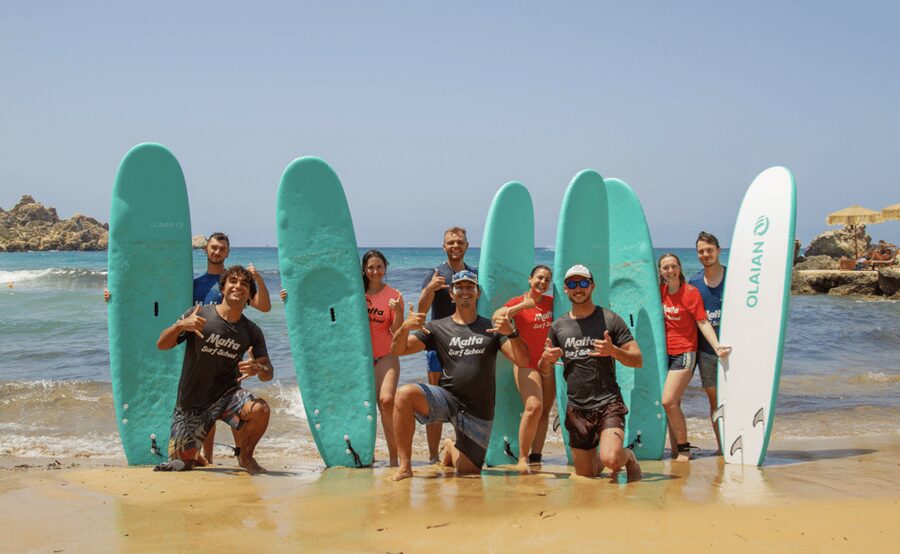
The school also limits the group to six people. That is a useful number for a first lesson. You can learn with others and enjoy the usual laughter when someone makes an unexpected splash, but the instructor still has a reasonable chance to watch each person and offer advice.
The lesson is taught in English, Italian, or Spanish. That gives you a little more choice when booking, and clear instruction is especially important when you are learning safety rules and physical movements at the same time.
More Beginner Surf Lessons in the world:
- Legian Beach, Bali: Beginner or Intermediate Surf Lessons
★ 4.9 · 1,019 reviews - Maui: Two Hour Beginner Group Surf Lesson in Kihei
★ 5.0 · 950 reviews - Uluwatu: Beginner & Intermediate Surf Lesson with Equipment
★ 4.9 · 832 reviews
Meeting at the beach near Singita kiosk
The meeting point is at the end of the steps on the beach, next to the Singita kiosk. Look for the school’s blue flag. That detail is more helpful than a vague beach address, since a beach can have several paths, kiosks, and activity operators.
Plan to arrive 15 minutes before the scheduled start. You need that time for the first briefing and to get changed. Arriving late would cut into an already short session, and you do not want your first lesson to begin with a rushed search for the meeting point.
Public buses can get you close to the beach:
- From Sliema or St. Julian’s, take bus 225.
- From Valletta, take bus 44.
- From Bugibba or St. Paul’s Bay, take bus 223.
Bus fares and journey times are not included in the lesson price. Check the current route and departure information before setting out, since public transport timing can affect your arrival.
Bring sunscreen, water, swimwear, a towel, and a change of clothes. In winter, wear a swimsuit or board shorts under the wetsuit. In summer, the school says you may wear its branded T-shirt instead. A towel is particularly useful after an hour in the water, even on a warm day.
Alcohol and drugs are not allowed. That is standard for a supervised water activity, but it is worth noting because surfing requires balance, attention, and good judgment.
The beach briefing sets the tone
The first part takes place on the sand. You learn about the surfboard, the spot, and basic safety before going into the water. This is where you get the information needed to avoid turning a small mistake into a bigger problem.
The instructors explain how to stand up and how to perform the correct take-off. You practice these movements on the beach, which lets you focus on foot placement and body position without also managing a moving board.
That dry practice is one of the most useful parts of the session. Beginners often try to pull themselves upright too early or place their feet too far apart. Working through the motion on land gives you a pattern to repeat when a wave arrives.
The beach briefing also helps you understand what the instructor will say in the water. When you hear advice about paddling, timing, or pushing up, you have already learned the basic movement. The lesson becomes less about guessing and more about trying.
The school’s staff received strong praise for friendly, clear instruction. One instructor named in the feedback is Valerio, who was described as following each person step by step. That is exactly the kind of approach you want in a first lesson, when one small adjustment can make the difference between staying on the board and sliding off it.
Moving into chest-high water
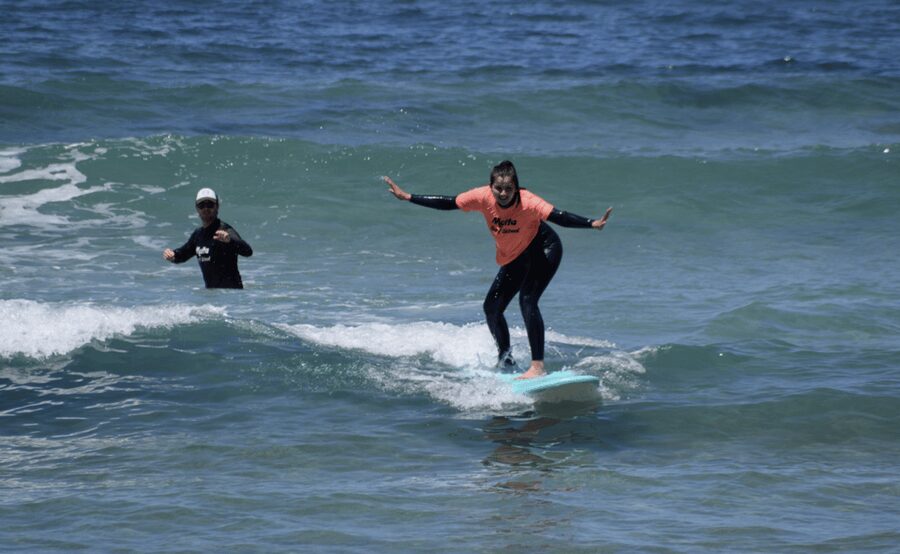
After the sand practice, you enter chest-high water with the instructors. The provided information does not promise a particular wave size or a guaranteed number of rides, so keep your expectations sensible. The aim is to learn the basics and try catching waves in a safe, supported setting.
Chest-high water gives the instructor room to help while keeping the session suitable for beginners who meet the requirements. You will work on paddling, positioning the board, and timing your attempt as a wave approaches.
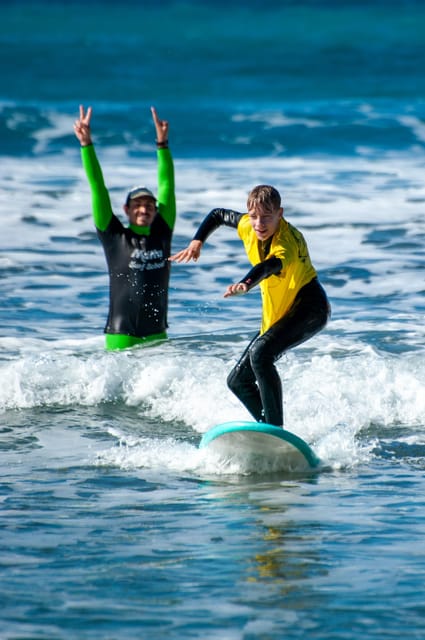
The instructor and helpers remain on hand to offer advice or assistance. This matters because surfing is learned through quick attempts. You need to try, receive a correction, and try again. A friendly team can make those early falls feel like part of the lesson rather than a failure.
One strong point from the feedback is the clarity of the instruction. Another is the willingness of helpers to assist throughout the session. That combination should suit you if you want encouragement but also want practical coaching, not just a quick demonstration from shore.
You should also be ready for a physical hour. Paddling works your arms and shoulders, while repeated attempts to stand require balance and leg strength. The lesson is short, but it is active. Drinking water before and after is a good idea.
More Surf Lessons in the world:
- Tenerife: Surfing Lesson for All Levels, Photos included
★ 4.9 · 1,314 reviews - Group Surfing Lesson at Playa de las Américas, Tenerife
★ 5.0 · 1,072 reviews - Canggu: 2-Hour Surf Course
★ 4.8 · 1,053 reviews - Playa de las Américas: Private or Small-Group Surf Lesson
★ 4.8 · 980 reviews
Weather and waves are part of the deal
The biggest uncertainty is not the instructor or the equipment. It is the sea. All Malta Surf School activities depend on weather and wave conditions.
That can be frustrating if surfing is the main reason you book. One booking was canceled because conditions were not suitable, and the customer received a full refund. The experience also included a communication issue, with no clear update at first about whether the lesson would go ahead. The eventual refund was handled well, but you should still pay attention to weather notices and contact the school if the forecast looks poor.
If there are no suitable waves, the school may offer stand-up paddleboarding, wakeboarding, or a boat tour instead. These alternatives may help save the day, but they are not the same as a beginner surf lesson. If your heart is set on standing on a surfboard, ask about the conditions before leaving your hotel.
This weather policy is not a flaw unique to this school. Surfing requires workable sea conditions, and no instructor can create waves. Still, it is an important part of the value calculation. You are paying for instruction and equipment, but the exact activity depends on nature.
What the €60 price includes
The lesson costs €60 per person, shown as about $71 in the supplied price information. The fee includes the one-hour beginner group lesson, surfboard, and wetsuit.
For a first try, that is a reasonable package because you do not need to buy or rent equipment separately. You also receive instruction from a small group team rather than simply hiring a board and working things out alone.
The value is strongest if you are curious about surfing but do not want to commit to several days of lessons. One hour gives you a clear introduction at a fixed price. You can find out if you like the activity before spending more money on a longer course.
The value is less certain if you expect a full surf school program in one session. You may get several attempts, but the class also includes changing, a safety briefing, beach practice, and movement into the water. The actual time riding a wave will be much shorter than 60 minutes.
The advertised price information uses both euros and dollars, so confirm the final amount shown at booking. The lesson allows free cancellation up to 24 hours in advance for a full refund, and you can reserve now and pay later. Those terms are useful when your Malta plans depend on weather or changing transport arrangements.
The strongest part is the personal coaching
The most praised feature is the staff. The feedback repeatedly points to instructors who are friendly, clear, and willing to help.
One first-time couple managed to ride waves several times during the lesson after receiving step-by-step coaching. That does not mean every beginner will have the same result. Surf ability, sea conditions, confidence, and timing all matter. It does show that the lesson is structured around getting you active in the water rather than leaving you on the sand for most of the hour.
Another participant highlighted how much time the coaches took to help. That is especially valuable in a six-person group. You can ask questions, watch other people attempt the same movement, and receive corrections without being lost in a large crowd.
The atmosphere also sounds light and encouraging. Surfing beginners need room to laugh at the inevitable falls. A supportive instructor can help you try again instead of deciding after one wipeout that surfing is not for you.
Still, a small group is not the same as a private lesson. The instructor must divide attention among as many as six people. If you want constant one-to-one coaching, ask if a private option is available, though no private lesson is described here.
Who should book this experience
This lesson suits an active first-timer who wants a short introduction to surfing in Malta. It is also a good choice if you value instruction, included equipment, and a small class more than a long session.
You should be comfortable in water and able to follow physical instructions. Non-swimmers cannot take part. The activity is also not suitable for people with mobility impairments, pregnant women, or children under 16.
I would recommend it to solo visitors, couples, or friends who want to try something more hands-on than a standard beach day. The group format can make the experience social without becoming too large.
It may not suit you if you want a guaranteed surf session, dislike changing plans, or have limited mobility. It is also a poor fit if you have only one free hour and cannot tolerate a weather-related cancellation.
For families, the age limit matters. Children under 16 are not accepted, so this is an adult-focused activity rather than a family surf class.
Practical tips for getting more from the hour
Arrive early, even if you are already dressed for the beach. The school asks you to arrive 15 minutes before the start, and that time covers the briefing and changing.
Wear swimwear under the wetsuit in winter. In summer, follow the school’s guidance about wearing its T-shirt. Bring a dry towel and a change of clothes, since you will leave the water wet even if the sun is warm.
Apply sunscreen before the lesson and bring water. You may not notice how much effort paddling takes until you are back on shore.
Do not book this as a tightly timed activity before another major appointment. The lesson itself lasts one hour, but bus travel, arrival, changing, and weather checks require extra time around it.
If the sea forecast looks uncertain, contact the school before setting out. One canceled booking shows why a final update matters. The cancellation terms give you protection, but an early check may save you an unnecessary trip to the beach.
Should you book Malta Surf School?
Book it if you want a friendly, beginner-focused introduction with equipment included and a maximum group of six. The strongest reasons are the clear beach practice, chest-high-water coaching, and staff who appear to give patient, practical help. The named instructor Valerio and the support team received especially warm praise for guiding beginners step by step.
The main warning is the weather. A surf lesson cannot guarantee surfable waves, and the backup activities may not match what you originally wanted. If you accept that uncertainty, €60 is a fair price for a compact first lesson in Malta.
I would choose this experience for a flexible morning or afternoon, not for the final hour of a tightly planned day. Arrive early, pack water and a towel, and keep your expectations focused on learning the basics rather than becoming a surfer in 60 minutes.
FAQ
How long does the beginner surf lesson last?
The lesson lasts one hour.
How many people can join the group?
The group is limited to six participants.
Is equipment included?
Yes. The €60 price includes the surfboard and wetsuit.
Where is the meeting point?
Meet at the beach at the end of the steps, next to the Singita kiosk. Look for the school’s blue flag.
What languages are offered?
The instructors offer the lesson in English, Italian, and Spanish.
What happens if there are no waves?
The activity depends on weather and wave conditions. If there are no suitable waves, the school may offer stand-up paddleboarding, wakeboarding, or a boat tour instead.
Who cannot join the lesson?
The lesson is not suitable for non-swimmers, people with mobility impairments, pregnant women, or children under 16.
Just added around the world
- Hire of Kayak and Paddle Surf in La llosa del cavall★ 5.0 · 2 reviews
- Surf Lesson on the Lisbon Coast★ 4.5 · 10 reviews
- Surf Lessons in Cascais★ 5.0 · 3 reviews
- Surf Coaching at the World Surfing Reserve★ 5.0 · 2 reviews
- Private Surf Lesson in Sintra★ 5.0 · 3 reviews
- Surf Experience in Cascais, Lisbon★ 5.0 · 11 reviews
- Surf Lesson with transfer★ 5.0 · 17 reviews
- Casablanca Surfing Experience from Morocco★ 5.0 · 2 reviews
Beginner Surf Lessons, compared.
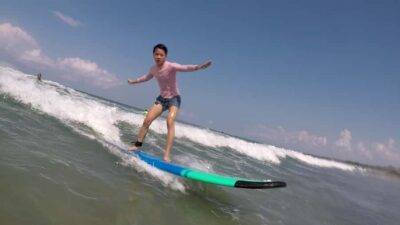
Legian Beach, Bali: Beginner or Intermediate Surf Lessons
Read our review →
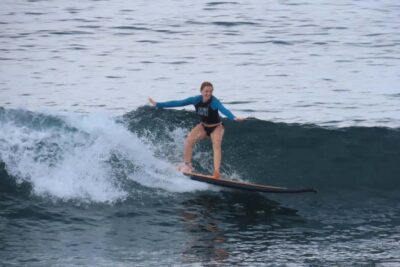
Beginner & Intermediate Surf Lesson with Equipment
Read our review →
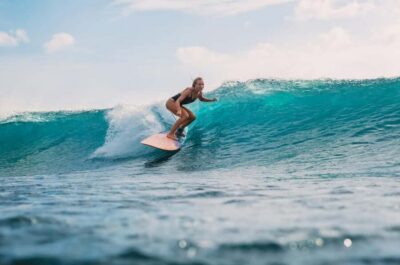
Learn to Surf in Chill Beach Vibes & Good Times
Read our review →
Beginner-Friendly Waikiki Beach Surfing Lesson
Read our review →
Beginner Surf Lesson at the Beautiful Algarvian West Coast
Read our review →
Lezioni di Surf per Beginner e Intermedi (6 persone a istruttore)
Read our review →Browse the lists this lesson appears in