
REVIEW · GRAN CANARIA
Pack 2 People Surf Course in Playa del Inglés and Maspalomas
Catch your first wave in Gran Canaria. This four-hour surf course combines a small group, a beach chosen for the day’s conditions, and patient instruction from coaches such as Dani. I like the maximum of six people, which gives you a better chance of receiving useful advice, and I like the complete setup, with wetsuit, board, transport, insurance, water, and an energy bar included.
The main consideration is that surfing depends on the sea. Your beach may change from San Agustin to Maspalomas or Playa del Inglés, and poor weather can force a new date. The activity also calls for moderate fitness, so it is a better choice for active beginners than for anyone hoping for a purely relaxed beach outing.
Key points to know before you book
- Small groups of six or fewer: You get more room for instruction and less waiting between turns.
- Beach choice follows the conditions: The team normally uses San Agustin, Maspalomas, or Playa del Inglés.
- Dani earns special praise: His calm, funny teaching style helps first-timers break surfing into simple steps.
- About two hours in the water: The lesson includes a short break for water or a snack.
- Nearly everything is supplied: Wetsuit, surfboard, transport, insurance, and beach instruction are included.
- The price is $72.59 per person: That is fair for a four-hour lesson with equipment and transfers, though optional pickup costs extra.
A four-hour introduction to surfing in Gran Canaria
This is aimed at beginners, but it is not just a quick try-and-go activity. You spend roughly four hours with the Pro Surfing Company, including registration, transport, a sand lesson, water practice, and a short closing stretch.
The schedule is practical. You do not spend half the morning listening to a long talk about surfing. Instead, the instructors give you the basic information you need, get you moving, then correct your technique as you practice.
I especially like the way the course separates the first lesson into clear pieces. You learn what to do on the sand before you have to think about a moving board and breaking waves. That helps reduce the usual beginner problem: trying to remember foot position, balance, paddling, and standing up all at once.
The experience is offered in English, with the possibility of a multilingual guide. The group limit is six people, which matters here. Surf lessons can become frustrating when one instructor is watching a large crowd. A smaller group gives you more useful time and makes it easier for the coach to notice small problems in your stance.
More Surf Lessons in Gran Canaria:
- Playa del Inglés Maspalomas: High Quality Surf Classes
★ 4.9 · 363 reviews - Puerto Rico, Gran Canaria: boat trip, drinks, food, paddle surfing, snorkeling
★ 4.6 · 310 reviews - Gran Canaria Maspalomas: Surf lessons all levels
★ 5.0 · 197 reviews
Meeting at the Eurocenter in Playa del Inglés
Your day begins at Surf Gran Canaria, also called Pro Surfing Company or Surf School Gran Canaria. The shop is at Av. de Moya, 6, Centro Comercial Eurocenter, local 80, 35100 Maspalomas, Las Palmas. It is opposite Lidl in Playa del Inglés, which gives you a recognizable place to aim for.
At the shop, you receive your wetsuit and prepare for the beach. The activity then uses an air-conditioned vehicle to reach the shore with the best conditions that day.
The transfer is part of the value. You are not expected to work out which beach has the right wind and waves, then carry a board across town. The team chooses the location, and the drive time can vary with traffic and the time of day.
You should plan around the meeting point rather than assume a hotel pickup. Optional pickup is available in San Agustin, Playa del Inglés, and Meloneras for an extra charge. The supplied pricing information lists a supplement of €10 per person and also shows €15 per booking, so confirm the exact pickup cost before paying.
The activity ends back at the Eurocenter. That makes planning easier if you have another reservation later, though I would still leave some spare time because transfer durations are only estimates.
San Agustin, Maspalomas, or Playa del Inglés
The usual beach is Playa de San Agustin, but the final choice depends on waves and wind. The team may instead take you to Maspalomas or Playa del Inglés.
That flexibility is useful. A fixed beach sounds simple, but it is not always the best place to learn. Conditions change, and beginners need a manageable setting rather than the biggest surf available. Choosing the beach on the day gives the instructor a better chance of finding suitable water.
San Agustin is listed as the main stop, while Maspalomas and Playa del Inglés are alternatives. The beach itself is not a sightseeing stop with a long guided walk. Its importance is practical: this is where the warm-up, teaching, and water session happen.
You should also accept that the exact beach is not guaranteed. If you have your heart set on one particular stretch of sand, this course may feel less predictable. If your priority is getting the best available conditions, the flexible route is an advantage.
Safety first, then surfing
Before you touch the water, the instructor leads a short warm-up. You receive safety rules, learn the hand signals, and get a basic explanation of how to stay aware of the marine environment.
That part may sound routine, but it is important for a first lesson. In the water, spoken instructions can be hard to hear. Hand signals give you a simple way to communicate with the instructor and other people in the group.
The safety briefing also helps you understand that surfing is not just a matter of standing on a board. You need to watch the water, follow directions, and recognize your surroundings. The company provides complete insurance, but insurance does not replace good judgment or careful listening.
The course is not recommended for children under eight. You should have a moderate level of physical fitness. Paddling, getting up repeatedly, and handling a board take effort, even when the lesson is friendly and carefully managed.
Same place, a different way into the water:
- Small-Group Surf Lessons in Gran Canaria
★ 5.0 · 138 reviews - Playa del Inglés surf lessons
★ 4.8 · 121 reviews - Gran Canaria: Maspalomas Surf Lessons
★ 4.6 · 113 reviews - Premium Surf Course in Gran Canaria
★ 5.0 · 89 reviews
The sand lesson makes the water easier
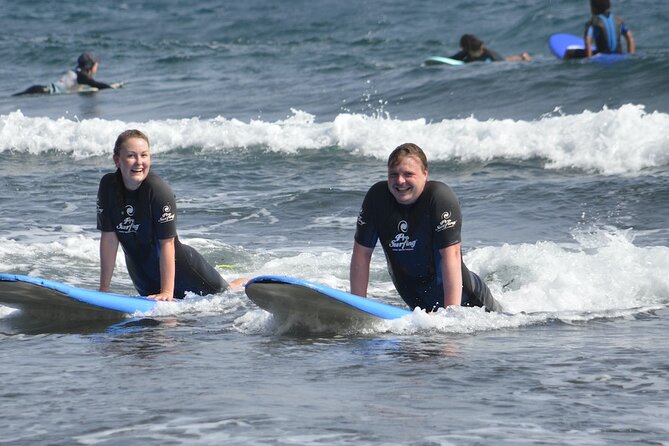
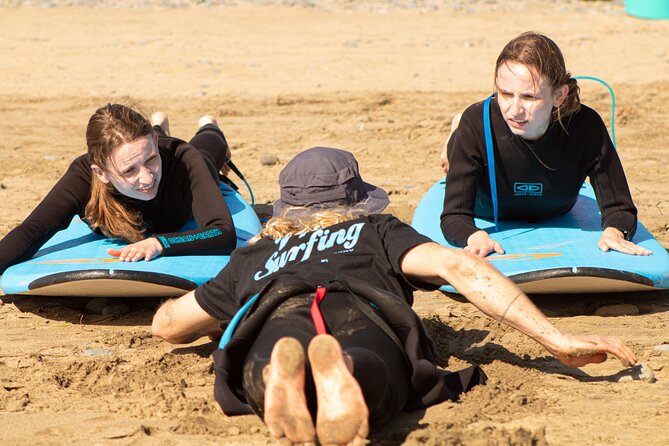
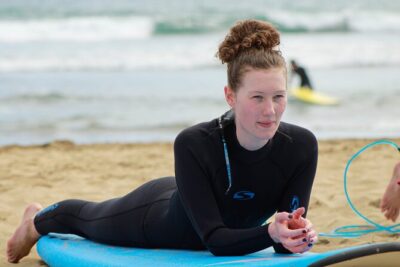
The ground class covers the basic movements before you try them in the sea. You practice rowing, the pop-up or takeoff, posture, and balance on the sand.
This is where the teaching method earns its keep. The instructors break the movement into steps, so you can focus on the order of actions instead of guessing. Groups are divided by level, which should help keep the instruction relevant.
For a complete beginner, the pop-up is usually the key moment. You need to move from lying on the board to standing without placing your feet badly or losing your balance. Practicing first on firm sand gives you a chance to understand the motion before waves add speed and noise.
The sand lesson is described as fast theory plus exercises. Do not expect a long technical lecture. You get the essentials, then spend most of the valuable time trying them out.
I like this approach for a first surf session. You want enough explanation to avoid unsafe habits, but you also need time in the water to understand how a board actually moves.
About two hours of practical water time
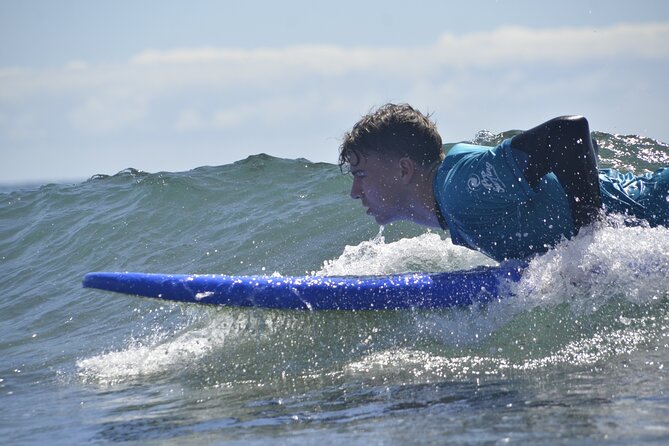
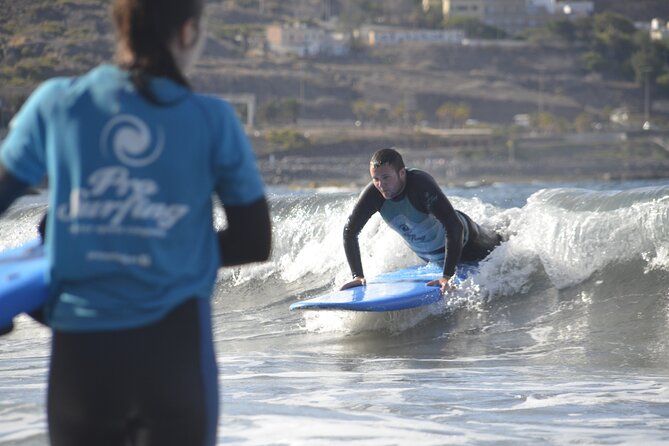
The water session lasts about two hours, with a short break halfway through for hydration or a snack. That is a substantial part of a four-hour experience and gives you repeated chances to practice.
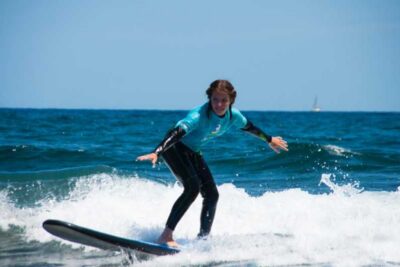
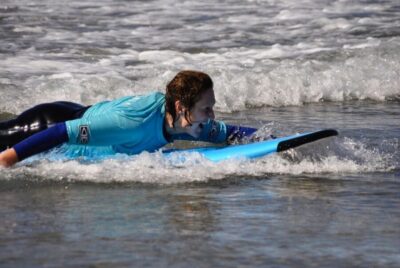
You will likely spend some time paddling, attempting to catch waves, standing up, falling, and trying again. The instructors give tips between sets, allowing you to make small adjustments instead of repeating the same mistake all morning.
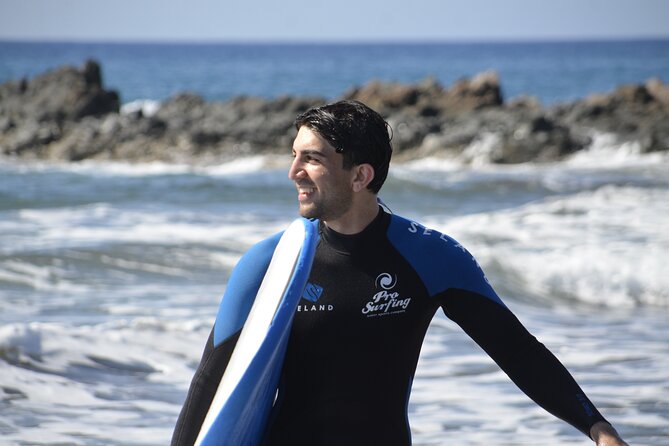
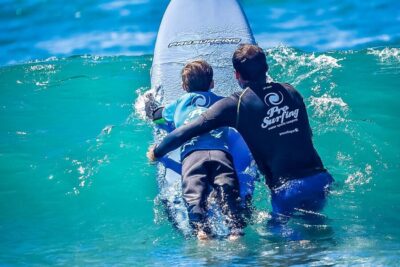
Dani receives especially strong praise for working with beginners. His teaching style is described as relaxed, patient, and funny, while still keeping an eye on each person. He is said to break surfing into manageable steps and help people progress safely.
That combination matters. A nervous beginner does not need a coach who makes the session feel like a test. You want clear directions, encouragement, and corrections that you can apply on the next attempt.
The group setup also helps. With no more than six participants, the coach can watch how you paddle and stand, then give you a specific hint. If you already have some ability, you may be placed with people at a similar level rather than starting from the absolute basics again.
Still, do not measure success only by the number of waves you stand on. Surfing is a physical skill, and the sea controls much of the pace. The value is in learning the correct movement and getting a safe first taste of the sport.
Equipment, snacks, and what the price covers
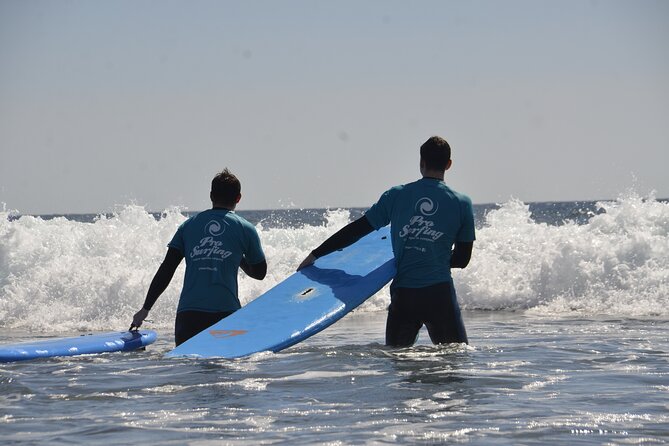
The cost is $72.59 per person. For that amount, you receive a wetsuit, surfboard, and necessary equipment, plus transport in an air-conditioned vehicle.
You also get an energy bar and mineral water. Those are modest extras, but they are useful during a physical morning. You do not need to remember a full set of surf equipment, and the company handles the basic gear at the shop.
Complete insurance is included, along with qualified trainers and beach-based theory and practice. When you add all of that together, the price is reasonable for a four-hour beginner lesson, especially since equipment rental and transport are not separate line items.
The value is strongest if you are new to surfing. If you already own equipment and know how to read waves, you may find a standard lesson less useful. For a first attempt, though, paying for instruction and a suitable beach can save you from renting the wrong board or trying conditions that are too difficult.
Complimentary photos may be provided when possible, but they are not guaranteed. Safety and weather come first, so you should not book this expecting a professional photo package.
The instructors make the biggest difference
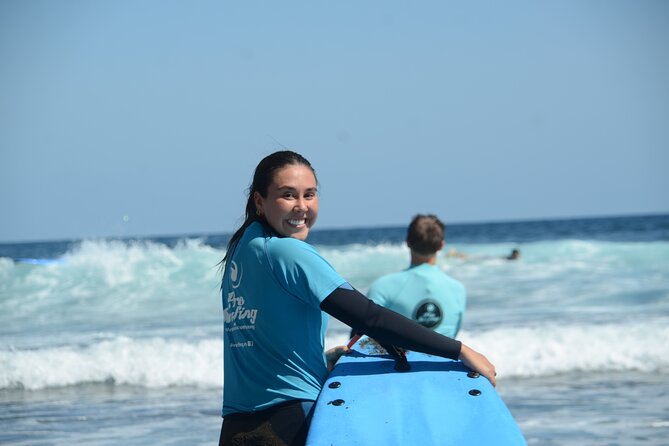
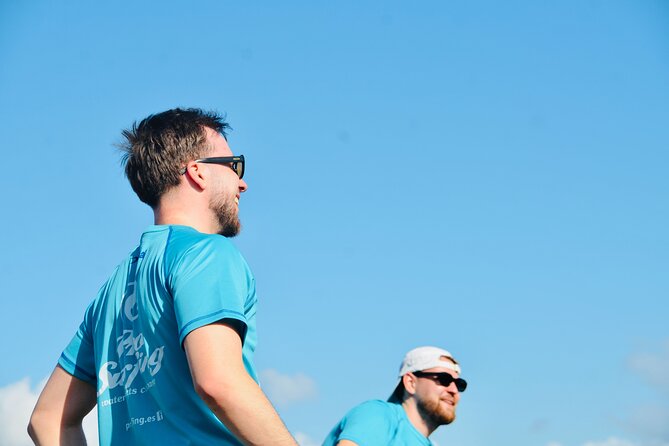
The strongest praise goes to the coaching, especially Dani. The useful detail is not simply that he is friendly. He reportedly watches each person, gives individual hints, and adjusts his help to different abilities.
That is exactly what you want in a beginner lesson. One person may need help with paddling, another with the pop-up, and another with balance after standing. A coach who notices those differences can make the same session work for a mixed group.
The teaching also appears to have a relaxed mood. Laughter matters when you are repeatedly falling off a board. It keeps the experience from becoming embarrassing and makes it easier to try again.
At the same time, the instruction is not presented as a free-for-all. You receive safety guidance, hand signals, and feedback throughout the session. The best part of the setup is that fun and control are treated as partners, not opposites.
The company is also described as organized and punctual. That helps with a four-hour activity, since delays at the start can cut into your time on the beach.
Who will enjoy this surf course most
This is a good fit for:
- First-time surfers who want hands-on instruction
- Couples looking for an active half-day in Gran Canaria
- People who prefer a small, friendly group
- Families with children aged eight or older who meet the fitness requirement
- Visitors who want the beach selected according to the day’s conditions
- Beginners who would rather use supplied equipment than rent it separately
It may be less suitable if you want a quiet beach morning with little physical effort. It is also not ideal if you need a fixed beach, fixed timing, or a guaranteed photo session.
The course is offered in English, with a multilingual guide possible. If language support is important to you, check what is available on your chosen date.
The activity is booked, on average, about 40 days ahead. That does not guarantee every date will sell out, but it is a useful sign that early planning is sensible, especially if your holiday dates are fixed.
Booking, weather, and cancellation advice
You receive confirmation when you book. Public transportation is nearby, so getting to the Eurocenter should be manageable even without an included hotel transfer.
Free cancellation is available up to 24 hours before the start time for a full refund. Cancellations or changes made within 24 hours are not accepted for a refund.
The course requires suitable weather. If the company cancels because conditions are poor, you can choose another date or receive a full refund. That policy is reassuring, but the flexible beach location also shows why sea conditions matter to the experience.
I would avoid placing this activity on the final morning of your trip. If weather causes a cancellation, you need enough time to use a replacement date.
Should you book the Pro Surfing Company lesson?
I would choose this course if you want a well-supported first surf lesson in Gran Canaria. The small group, included equipment, beach transfer, safety briefing, and roughly two hours of practice make the $72.59 price reasonable.
The strongest reason to book is the teaching style associated with Dani: patient, clear, observant, and fun. The most useful practical feature is the choice of beach based on wind and waves.
Skip it if you dislike physical activities, need a guaranteed location, or want a sightseeing tour rather than a sport lesson. For everyone else, this offers a sensible way to try surfing without buying equipment, guessing at sea conditions, or learning alone.
FAQ
Where does the surf course begin?
It begins at Surf Gran Canaria, Pro Surfing Company, or Surf School Gran Canaria at Av. de Moya, 6, Centro Comercial Eurocenter, local 80, in Maspalomas. The shop is opposite Lidl in Playa del Inglés.
Where does the activity finish?
The activity ends back at the Eurocenter meeting point.
How long does the experience last?
The experience lasts approximately four hours. The water session takes about two hours and includes a short break for hydration or a snack.
Which beach will the lesson use?
The team chooses the beach with the best conditions on the day. It normally uses San Agustin Beach, but may use Maspalomas or Playa del Inglés depending on the waves and wind.
Is surf equipment included?
Yes. The wetsuit, surfboard, and necessary equipment are included.
Is transportation included?
Yes. Transport to the selected beach is provided in an air-conditioned vehicle. Optional pickup is available in San Agustin, Playa del Inglés, and Meloneras for an extra charge.
Is the activity suitable for children?
The activity is not recommended for children under eight. Participants should have a moderate level of physical fitness.
What happens if bad weather cancels the course?
You can choose a different date or receive a full refund if the company cancels because of poor weather.
Just added around Gran Canaria
- Paddle Surf SUP at Anfi Beach★ 4.0 · 12 reviews
- Surf lessons in Las Canteras Beach★ 4.8 · 19 reviews
- San Agustín Surf lessons★ 4.5 · 10 reviews
- Las Palmas de Gran Canaria: Group surf lessons on La Laja beach★ 4.9 · 27 reviews
- Las Palmas: Learn to Surf with a Special Price for Two Group★ 4.8 · 30 reviews
- Gran Canaria Playa del Ingles: Surf lessons all levels★ 4.7 · 11 reviews
- Gran Canaria: Meloneras Beach Surf Lesson★ 5.0 · 5 reviews
- Premium Surf Course in Gran Canaria★ 5.0 · 89 reviews
Gran Canaria Surf Lessons, compared.
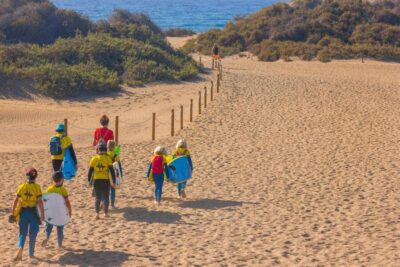
Playa del Inglés Maspalomas: High Quality Surf Classes
Read our review →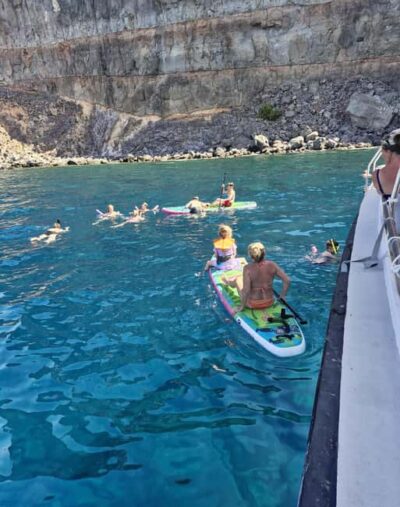
Puerto Rico, Gran Canaria: boat trip, drinks, food, paddle surfing, snorkeling
Read our review →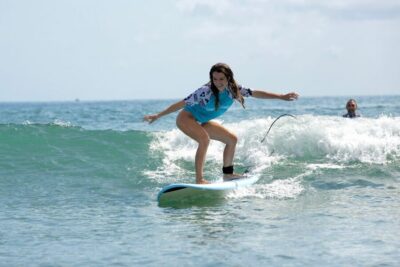
Gran Canaria Maspalomas: Surf lessons all levels
Read our review →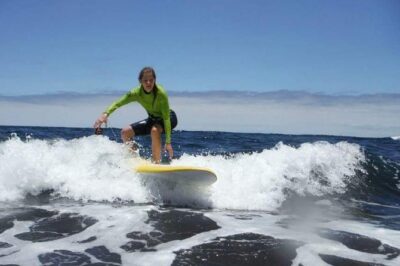
Gran Canaria Surf Lessons: Playa del Inglés & Maspalomas
Read our review →Browse the lists this lesson appears in