
REVIEW · PHUKET
Phuket: Surf Lesson for Beginner in Kata Beach
Catch your first wave in Kata. This 90-minute Phuket lesson makes surfing approachable with shallow water and patient coaching, so you can focus on standing up rather than worrying about strong currents. I especially like the 15-minute beach practice and the included soft-top board and rash guard. The main consideration is seasonal: May through October usually brings the best surf, while other months can be gentler.
The setup is friendly to complete beginners, including people who are not confident swimmers. I also like that a group of four may receive an individual instructor each, as one recent booking did. At $38, the price is fair for the lesson, equipment, towel, and freshwater rinse, though in-water photos cost an extra 400 THB per person.
Key points before you book
- Shallow water for first-timers: You practice in waist-deep areas, and swimming is not required.
- A useful 15-minute beach lesson: You learn how to paddle, pop up, balance, and stay safe before entering the sea.
- Personal coaching: Small groups and private-style instruction help you get corrections when you need them.
- Everything important is provided: A soft-top board, rash guard, towel, and freshwater rinse are included.
- Best surf from May to October: Phuket has surf outside peak season, but the waves may be softer and less reliable.
- Good value at $38: The price covers 90 minutes of instruction and equipment, but photography costs extra.
Why Kata Beach is a smart place to learn
Kata Beach is a popular place to try surfing because the lesson is built around manageable waves rather than a dramatic battle with the sea. For a first lesson, that matters. You need enough movement to catch a wave, but not so much power that every attempt becomes a struggle.
The key feature here is the shallow water. You work from waist-deep areas, which gives you a sense of security while you learn the basic motions. You still need to follow the instructor closely and respect the water, but you are not being asked to paddle far out into deep water.
That makes this a good choice if you have always wanted to surf but have put it off because you cannot swim confidently. It is also useful for families with children aged six and older, provided the child is comfortable following instructions and the parent understands that surfing still requires care.
The setting is not aimed at advanced surfers. You are here to learn the first steps: getting on the board, finding your balance, and catching a small wave with help. If your goal is a polished ride on a powerful wave, you need more time and a different type of session. If your goal is to stand up once and understand why surfing is so addictive, this lesson fits well.
More Beginner Surf Lessons in the world:
- Legian Beach, Bali: Beginner or Intermediate Surf Lessons
★ 4.9 · 1,019 reviews - Maui: Two Hour Beginner Group Surf Lesson in Kihei
★ 5.0 · 950 reviews - Uluwatu: Beginner & Intermediate Surf Lesson with Equipment
★ 4.9 · 832 reviews
The first 15 minutes: learning on the sand
Your lesson begins with about 15 minutes of hands-on training on the beach. This is not filler. It is where the instructor breaks down the movements before the board and waves add pressure.
You learn how to paddle, how to position your body, and how to pop up from lying down to standing. You also work on balance and basic safety. Practicing these movements on the beach lets you repeat them without being pushed around by a wave.
I like this order because many first-time surfers make the same mistake: they rush into the water before their body understands what to do. A short beach session gives you a simple sequence to remember. Paddle, prepare, push up, stand, and keep your balance.
The instructor also helps you understand how to use the soft-top board. These boards are designed for beginners and are more forgiving than hard boards if you lose balance. You should still treat the equipment carefully, but the soft surface makes the first attempts less intimidating.
Pay attention during this section, even if you are eager to get wet. The more seriously you take the beach practice, the less confused you are likely to feel during your first wave.
Into the water with a soft-top board
After beach training, you head into the ocean with your board and rash guard. The lesson stays in shallow, manageable water, where your instructor can guide you through the first attempts.
This is where the activity becomes physical. You will paddle, lift your upper body, place your feet, and try to stay centered as the wave moves the board. It is normal for the first few attempts to feel awkward. Surfing looks simple from the beach because experienced surfers have already automated the hard parts.
The soft-top board helps because it gives you a stable platform. You are not expected to master a narrow performance board in 90 minutes. The aim is to gain control and confidence on equipment suited to beginners.
The shallow water also lets you reset quickly. If you fall, you are not facing a long swim back to shore. You can listen to the next instruction, reposition yourself, and try again. That quick rhythm is one of the strongest parts of the lesson.
You should expect to get wet, so wear swimwear and bring a change of clothes. Sunscreen is also essential. Sunglasses can be useful before and after the lesson, though you should make sure anything you bring is secure around the water.
One-on-one help makes the biggest difference
The experience is described as a small-group lesson with certified coaches, along with private-style instruction and one-on-one guidance. That personal attention is important because beginners rarely fail for the same reason.
You might be standing too far forward on the board. Another person might be slow to pop up. Someone else might paddle unevenly or look down instead of ahead. An instructor who can watch your movement and offer a quick correction saves time.
A booking for four people included an individual instructor for each person. That is a useful detail if you are planning a session with friends or family. You should confirm the exact arrangement when booking, but the coaching format is clearly designed to give beginners more than a large class and a quick group demonstration.
The English-language instruction should work well for basic technique and safety. Surfing lessons rely heavily on showing as well as talking, so the beach demonstration and repeated practice are just as important as the spoken explanation.
I would choose this kind of lesson over a large, crowded class if standing up is your main goal. More personal coaching can make the difference between spending the whole session watching others and getting a real chance to ride.
More Surf Lessons in the world:
- Tenerife: Surfing Lesson for All Levels, Photos included
★ 4.9 · 1,314 reviews - Group Surfing Lesson at Playa de las Américas, Tenerife
★ 5.0 · 1,072 reviews - Canggu: 2-Hour Surf Course
★ 4.8 · 1,053 reviews - Playa de las Américas: Private or Small-Group Surf Lesson
★ 4.8 · 980 reviews
What you can realistically learn in 90 minutes
Ninety minutes is enough to learn the foundations, not enough to become a surfer. That distinction keeps expectations sensible.
By the end, you should understand the basic body position, paddling motion, pop-up technique, balance, and simple water safety. With good conditions and helpful coaching, you may stand on the board during your first try. The experience specifically aims to help you do that, but no instructor can control every wave or guarantee a perfect ride.
The session moves quickly. The opening beach training takes about 15 minutes, leaving roughly 75 minutes for water work. That is enough time for repeated attempts, especially because the shallow water lets you recover quickly.
Your progress will depend on several things: your balance, comfort in the water, physical energy, the day’s waves, and how closely you follow the instructions. You do not need prior surfing experience, and you do not need to be a swimmer, but you do need to be ready for active movement.
I would see this as a first taste, not a complete course. If you enjoy it, you will leave with a much clearer idea of what to practice in a longer lesson.
The best season is May through October
Phuket’s peak surf season runs from May through October. These months generally offer the most suitable waves and conditions for a beginner session.
That does not mean you cannot surf at other times. You can, but the waves may be gentler and conditions milder. For a complete beginner, gentler waves can sometimes be comfortable. On the other hand, waves that are too soft may make it harder to catch and ride them.
If surfing is a major reason for your Phuket visit, May through October gives you the strongest chance of useful conditions. If you are visiting outside those months, keep your expectations flexible. The lesson can still teach you the basic movements, but the sea may not provide the same number or strength of waves.
The weather and ocean always have the final word. A good instructor can adjust the lesson to the conditions, but the session cannot create waves that are not there.
What the $38 price really covers
At $38 per person, this is a reasonable entry price for a structured beginner activity. You receive a 90-minute lesson, a soft-top board, a rash guard, and post-lesson towel and freshwater rinse service.
The equipment matters because you do not need to rent a board separately or arrive with specialized surfing clothing. That keeps the total cost easier to understand. You still need to pay separately for food, drinks, and optional photography.
In-water photography costs an additional 400 THB per person. It can be worth considering if you want proof of your first ride, but it is not necessary for the lesson itself. Bring a waterproof bag if you carry a phone or other small valuables.
The value is strongest if you have never surfed before and want guided instruction rather than simply renting a board. Renting may cost less in some settings, but it does not give you the beach training, safety guidance, and immediate corrections that help a beginner progress.
The price is also easier to justify for a small group where each person receives close attention. A large class with little individual coaching would offer less value, even at the same rate.
Meeting at Tall Tree Kata Phuket
The main meeting point is the office at Tall Tree Kata Phuket. You should arrive 15 to 20 minutes before the start time so the team can take you to the beach.
That early arrival is practical. It gives you time to check in, get organized, and avoid starting the lesson in a rush. Surfing requires attention from the first beach demonstration, so arriving late could cost you useful practice time.
If you stay in the Kata or Karon area, you may be able to meet the team directly at the beach. Confirm the correct meeting arrangement before the day of your lesson, especially if you are relying on the direct beach option.
Bring cash for optional costs and keep your belongings simple. A waterproof bag is useful for anything that should not get wet. After the session, the freshwater rinse and towel service make it easier to continue with your day without carrying salt and sand everywhere.
Who will enjoy this lesson most
This activity suits you if you are:
- Trying surfing for the first time
- Nervous about deep water
- Traveling with friends who want individual coaching
- Looking for a short activity that fits into a Phuket beach day
- Happy to learn basic technique rather than advanced maneuvers
- Visiting during the May to October surf season
It is also a sensible choice for families with children aged six or older, provided the child is ready to listen and take part in an active water lesson.
You should skip it if you are pregnant, under six, or looking for a quiet beach activity. Surfing involves repeated movement, falls, and getting wet. It is fun, but it is not passive.
You should also reconsider if you want guaranteed strong waves. Surf conditions change, and the lesson is designed around safe learning rather than dramatic rides.
Small details that improve your lesson
Arrive early, wear swimwear, and use sunscreen before you reach the beach. A change of clothes will make the rest of your day more comfortable.
Listen carefully during the 15-minute beach session. The pop-up motion is the part you can practice most effectively before entering the water, and remembering it will help you use your water time well.
Keep your expectations simple. Your first successful ride may last only a few seconds, but that is still a real introduction to surfing. The goal is not to look polished. The goal is to learn enough that you can try again with better control.
Do not smoke, drink alcohol, or use drugs before the activity. Do not touch marine life. These rules protect you, the instructors, and the sea around Kata Beach.
Free cancellation is available up to 24 hours before the activity for a full refund, and you can reserve now and pay later. That gives you some flexibility if your Phuket plans are still shifting.
Should you book the Kata Beach surf lesson?
I would book this if you want a friendly, well-supported first attempt at surfing for $38. The shallow water, soft-top board, beach instruction, and close coaching remove several common barriers for beginners.
The strongest reason to choose it is the personal attention. A recent four-person booking had one instructor per person, and that kind of setup can help you make real progress in a short session.
I would be more cautious if you are visiting outside May to October and expect powerful, consistent waves. The lesson can still teach you the basics, but conditions may be gentler.
For a first wave, a short adventure, or a family-friendly water activity for children six and older, this is a sensible Kata Beach choice. Just arrive early, pack dry clothes, and remember that your first standing ride may be brief, wobbly, and absolutely worth celebrating.
FAQ
Where does the surf lesson meet?
The main meeting point is the office at Tall Tree Kata Phuket. You should arrive 15 to 20 minutes before the activity begins. If you stay in the Kata or Karon area, you may also meet the team directly at the beach.
How long does the surf lesson last?
The lesson lasts 90 minutes, or 1.5 hours. The session begins with about 15 minutes of beach training before you enter the water.
Do I need to know how to swim?
No. The lesson takes place in shallow, manageable water, including waist-deep areas, and swimming is not required.
What equipment is included?
A soft-top beginner surfboard and rash guard are included. You also receive a freshwater rinse and towel service after the lesson.
What should I bring?
Bring sunglasses, swimwear, a change of clothes, sunscreen, cash, and a waterproof bag.
Can children join the activity?
Children must be at least six years old to take part. The experience is not suitable for children under six.
Is photography included?
No. In-water photography is an optional extra costing 400 THB per person.
When is the best time of year for surfing in Phuket?
Peak surf season runs from May through October, when waves and conditions are generally best for surfing. Surfing is possible at other times, but waves may be gentler and conditions milder.
Just added around the world
- Surf Lessons Fort Lauderdale★ 5.0 · 41 reviews
- 3 Hours of Surf and Electric Bike Exploration in Lacanau★ 5.0 · 8 reviews
- Surf Lesson with Qualified Instructor in Florianópolis★ 5.0 · 31 reviews
- Epic Surf Lessons Dania Beach★ 5.0 · 3 reviews
- Surf & Sup★ 5.0 · 11 reviews
- E-Foil Surfing for Beginners in Fort Lauderdale Beach★ 5.0 · 2 reviews
- Learn to surf Fort Lauderdale★ 5.0 · 6 reviews
- Surfing lessons in Essaouira★ 4.5 · 2 reviews
Beginner Surf Lessons, compared.
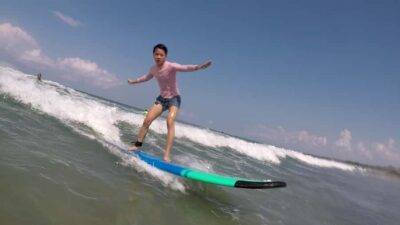
Legian Beach, Bali: Beginner or Intermediate Surf Lessons
Read our review →
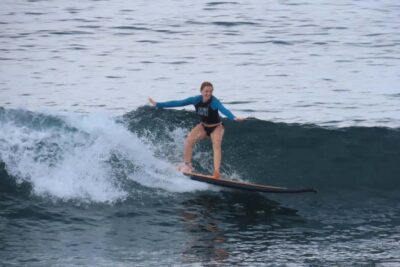
Beginner & Intermediate Surf Lesson with Equipment
Read our review →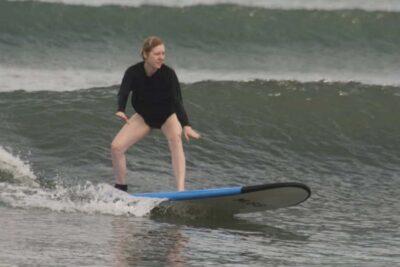

Learn to Surf in Chill Beach Vibes & Good Times
Read our review →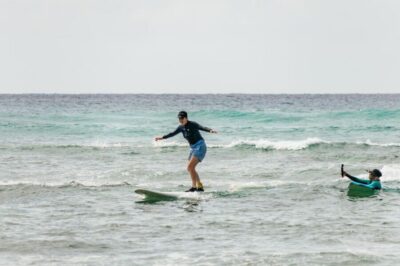
Beginner-Friendly Waikiki Beach Surfing Lesson
Read our review →
Beginner Surf Lesson at the Beautiful Algarvian West Coast
Read our review →
Lezioni di Surf per Beginner e Intermedi (6 persone a istruttore)
Read our review →Browse the lists this lesson appears in