
REVIEW · USA
Private Surf Lessons in Myrtle Beach
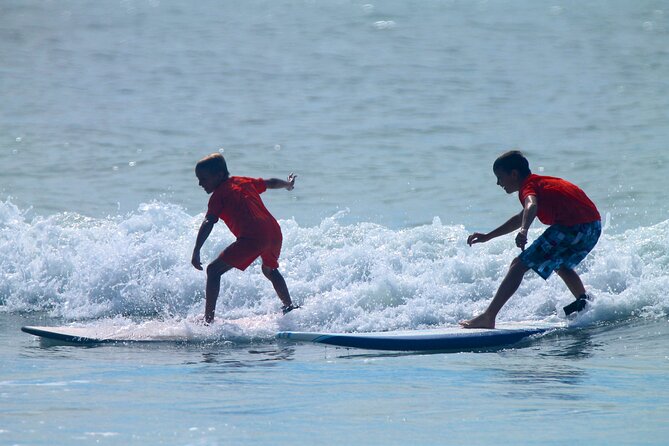
Your first wave may come sooner than expected. This Myrtle Beach lesson combines private instruction with a clear beach-to-water progression, so you learn the basics before facing the waves. I like the safety briefing and stretching at the start, and I like that the instructor works closely with your group in the water instead of leaving you to figure things out alone.
The $80 price is fair for about 90 minutes of dedicated instruction, especially for a first-time surfer or a parent booking for a child. I also appreciate the provider’s effort to match the lesson time to a child’s size and conditions, as happened with one young participant. The main consideration is that surfing depends on weather and water conditions, so your schedule may need to stay flexible.
At a Glance: What You Get for $80
- Private group lesson: Only your group participates, giving you direct help rather than a large class setting.
- About 90 minutes on the beach and in the water: The lesson begins with safety and practice before moving into the surf.
- Beginner-focused teaching: You learn how to paddle and stand up through a beach demonstration and step-by-step coaching.
- A strong focus on first-day success: The stated goal is to get you riding waves during your first lesson.
- Myrtle Beach meeting point: The lesson starts and ends at 67th Avenue North.
- Flexible weather policy: Poor weather can lead to a new date or a full refund, while cancellations made at least 24 hours ahead receive a full refund.
Why This Lesson Works for First-Time Surfers
Surfing looks simple from shore. Lie on the board, paddle, stand, and ride. In practice, the timing and body position can feel awkward, particularly when a wave is already moving beneath you. This lesson breaks the process into smaller jobs, which is exactly what a beginner needs.
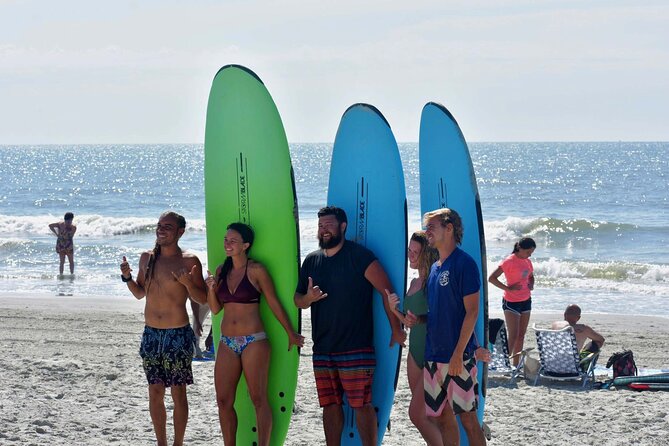
You start with water safety, surfing etiquette, and stretching. That opening matters. Safety instruction gives you a basic sense of how to behave in the water, while etiquette helps you understand that surfing has rules about space and wave use. The stretch is a small but sensible touch before you begin paddling and repeatedly getting to your feet.
The lesson then moves to the beach. The instructor demonstrates how to paddle and stand on the board, and you practice those movements on dry land. I like this order because you can focus on the motion without also worrying about waves, balance, or saltwater in your face.
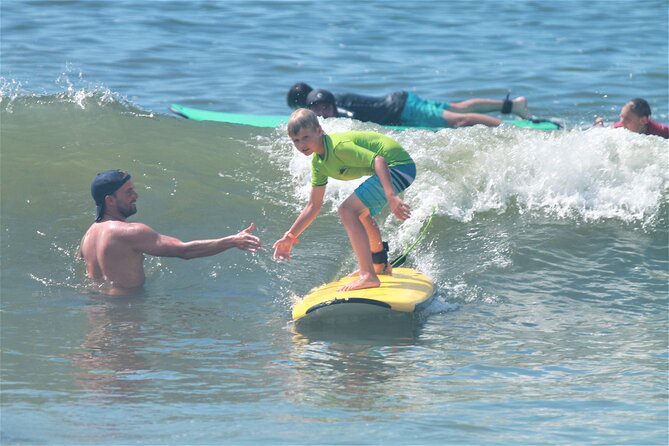
Once you have rehearsed the basic movement, you head into the ocean. The instructor stays involved, offering a helping hand and step-by-step directions. This personal attention is the most valuable part of the experience. A private lesson is not simply a smaller version of a group class. It lets the instructor adjust the pace and concentrate on the specific problem keeping you from standing.
More Private Surf Lessons in the USA
- Private Surf Experience
★ 5.0 · 200 reviews - Private Surf Lesson for Two Near Lahaina
★ 5.0 · 189 reviews - Private Surfing Lessons in Waikiki
★ 5.0 · 176 reviews
The Opening Stretch, Safety Talk, and Surf Etiquette
The first portion of the session sets the tone. You are not rushed straight into the waves. Instead, the instructor explains safety, covers basic surf etiquette, and leads a stretch.
That is useful for several reasons. New surfers often focus so hard on standing that they forget to watch the water or pay attention to other people. A short safety and etiquette talk gives you the rules before the excitement begins. It also helps younger participants understand what to expect.
The stretching portion signals that this is an active lesson, not a passive beach activity. You should arrive ready for moderate physical effort. The tour information specifically recommends a moderate fitness level, so this may not be the best choice if you are looking for a completely relaxed activity that requires little movement.
For parents, this opening can help settle nerves. One 14-year-old student reportedly got up easily after quick instruction, and another young participant succeeded after several tries. Those details suggest that the teaching is designed to build confidence without turning the lesson into a long technical lecture.
Practicing on the Sand Before Meeting the Waves
The beach practice is where the lesson becomes less intimidating. You see the proper technique, then try it yourself before the board is moving under you.
The instructor teaches two core movements: paddling and standing up. These are the building blocks of a first lesson. You need enough paddle power to catch a wave, then enough control to move from lying down to standing without losing the board.
The dry practice also gives the instructor a chance to correct your position early. If you are a parent watching a child, this is a useful moment to see how the instructor communicates. The emphasis is on simple directions and repetition, rather than a flood of surf terminology.
I would pay close attention here. The beach demonstration may feel easy because the board is still, but the same movement will feel faster in the water. Remember the sequence as clearly as you can. When the instructor gives directions in the ocean, you will already have a physical reference for what to do.
Working Toward Your First Wave in the Water
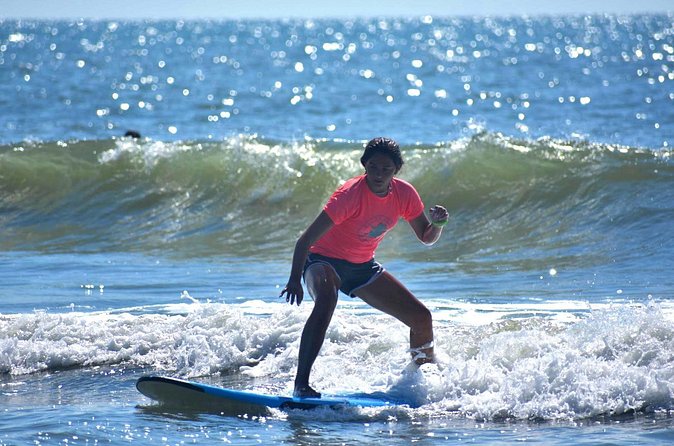
After the land practice, the real lesson begins. The instructor takes you into the ocean and works closely with your group, using hands-on help and step-by-step guidance.
The provider promises that students will ride waves during their first lesson. That is an appealing goal, but it is wise to treat it as the lesson’s target rather than a personal guarantee that can override weather, water, or individual ability. Surfing conditions vary, and even a well-taught beginner needs to catch the right wave at the right moment.
The teaching method sounds particularly helpful for children and nervous beginners. One parent described instructor Graham as patient and confidence-building, to the point that the young surfers wanted to try again on their own the next day. That is a good sign. The best first lesson is not only about standing once. It is about leaving with enough confidence to want another turn.
A separate lesson took place during a high tide and was still enjoyed by a 14-year-old student. That does not mean every tide will feel easy, but it does show that the instructor can work with less-than-perfect conditions. If you are choosing a time, ask the provider for guidance rather than assuming the most convenient hour will be the best one.
Same place, a different way into the water:
- Maui: Two Hour Beginner Group Surf Lesson in Kihei
★ 5.0 · 950 reviews - Open Group Surfing Lesson in Waikiki, Hawaii
★ 4.5 · 582 reviews - Outrageous Surf ScHool Lesson on Lahaina Side
★ 4.5 · 547 reviews - Los Angeles: Surfing Lesson in Venice Beach
★ 4.8 · 442 reviews
Graham and the Value of Patient Coaching
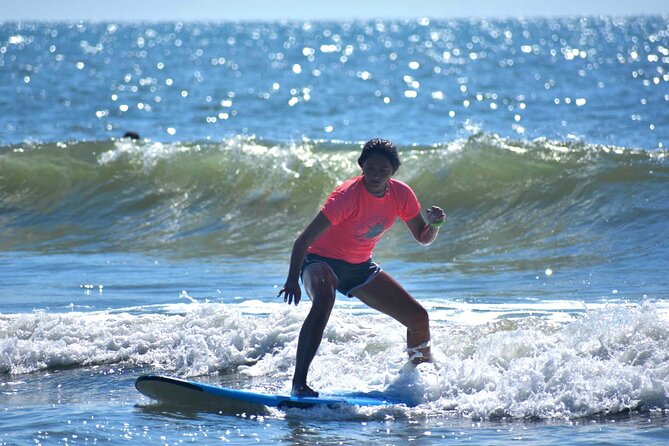
Graham is the instructor named in the available feedback, and patience is the quality most clearly associated with his teaching. He worked with two young surfers, gave them confidence, and helped make the experience memorable.
That matters more than flashy instruction. A beginner may need the same movement explained twice, or may stand up once and then lose balance on the next attempt. A patient instructor keeps the lesson moving without making mistakes feel embarrassing.
Another useful detail is the provider’s communication before the lesson. For one child, the team suggested a different day and time because it better suited the child’s size and conditions. That kind of practical adjustment can make a real difference. Surfing is physical, and the timing of a lesson should fit the person taking it, not just the open space on a calendar.
The experience has received a five-star rating from 25 reviews, with 100 percent recommending it. That is a strong record, especially for an activity where weather, water conditions, and individual balance can affect the outcome. Still, the praise is concentrated around beginner success, patience, and confidence. If you already surf regularly, you may find the basic focus less useful.
What the Private Format Means for Your Group
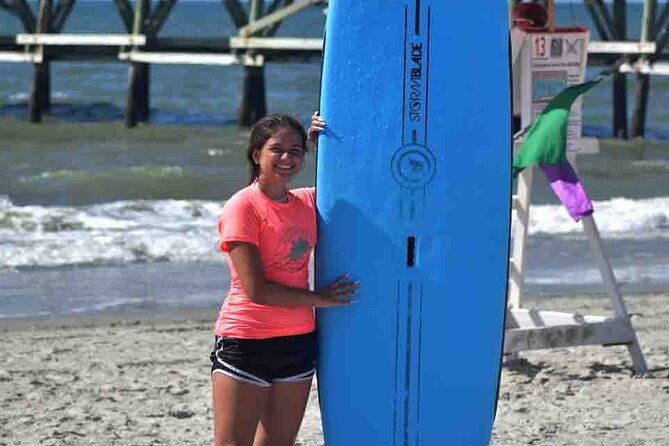
This is a private activity, so only your group participates. That gives you a more personal lesson and lets the instructor focus on your pace.
For a family, this format can be more comfortable than joining a large class with strangers. A parent can watch a child receive direct instruction, and family members can share the same experience without being separated into different groups. It may also be useful for a small group of friends who want to learn together.
The private format does not mean the lesson is effortless. You still need to paddle, balance, and repeatedly try the stand-up movement. It simply means the instructor can give more attention to the people who booked together.
At $80 per person, the value depends on how much you want personal coaching. For someone trying surfing for the first time, the price includes safety instruction, land practice, water coaching, and roughly an hour and a half of structured time. That is stronger value than paying only for board access and trying to teach yourself.
For a group that wants a quick beach activity with little physical work, the price may feel high. For a child, first-time surfer, or adult who wants an instructor present at every stage, the private format makes the cost easier to justify.
Meeting at 67th Avenue North
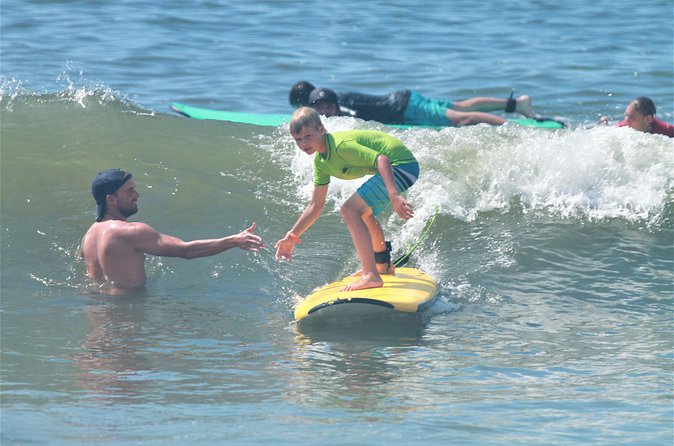
The meeting point is at 67th Avenue North, Myrtle Beach, South Carolina, and the activity ends back at that same location.
That simple out-and-back arrangement is convenient. You do not need to plan a separate pickup point or figure out how to return to a distant starting location after getting wet and tired. The experience is also near public transportation, which can help if you are not driving.
The information provided does not specify parking, changing facilities, board storage, or what equipment is supplied. I would confirm those details before booking, especially if you are traveling with children or plan to arrive by public transportation. The meeting point is clear, but the practical setup around it is not fully explained.
You should also allow enough time to arrive before the start. A surf lesson has several steps before entering the water, including the safety briefing, stretching, demonstration, and practice. Arriving late could reduce the time available for the part you most want, the ocean instruction.
Timing, Weather, and Cancellation Flexibility
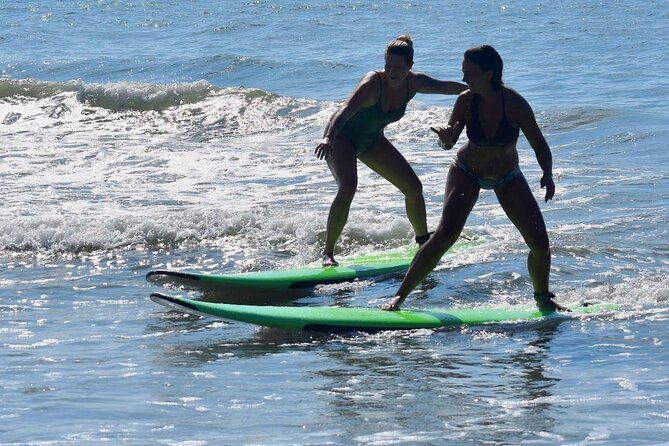
The lesson lasts about 1 hour and 30 minutes. That is long enough to cover the basics and give you repeated attempts, but short enough to fit into a beach day without taking over your entire schedule.
The experience requires good weather. If poor weather causes a cancellation, you can choose a different date or receive a full refund. That protection is important for a water activity, since unsafe or unsuitable conditions should not be treated as a minor inconvenience.
You can also cancel for a full refund if you do so at least 24 hours before the start time. Cancellations or changes made less than 24 hours before the lesson are not accepted for a refund. The cutoff uses local Myrtle Beach time.
I would avoid placing this lesson at the exact center of a tightly packed day. Weather can affect the plan, and a change of date may be offered if conditions are poor. Building in some flexibility will make the booking less stressful.
Who Will Get the Most From This Experience
This lesson is best suited to first-time surfers, families with children, and small groups that want direct instruction. The feedback includes successful lessons for young people, including a 14-year-old and a child who stood up after the third try.
It is also a good choice if you feel nervous about trying surfing alone. The instructor begins with clear safety information, demonstrates the basic movements, and stays nearby in the water. That structure can make the first attempt feel manageable.
You should have a moderate level of physical fitness. Surfing involves paddling, repeated attempts to stand, and getting in and out of the water. If you have physical limitations, contact the provider before booking. Service animals are allowed, but the available information does not give further details about how a service animal can participate near the water.
More experienced surfers may want a lesson aimed at technique, speed, or advanced wave selection. This experience is built around the first steps, not advanced coaching.
Six Smart Ways to Prepare
- Wear what you can comfortably move in and expect to get wet.
- Listen closely during the safety and etiquette briefing.
- Use the beach practice to memorize the stand-up sequence.
- Do not judge the lesson by your first attempt. The teaching includes repeated tries.
- If you are booking for a child, ask about the best day and time for that child’s size and the expected conditions.
- Keep your schedule flexible because poor weather can lead to a new date.
These suggestions stay within the main purpose of the lesson: learn the basics, get comfortable, and work toward a first wave without rushing the process.
Should You Book the Myrtle Beach Private Surf Lesson?
I would book this if you want a focused, beginner-friendly introduction to surfing and value direct coaching. The private format, clear beach demonstration, and close water instruction give you more support than a casual attempt on your own.
The strongest reason to choose it is the confidence-building approach. Graham’s patience with young surfers, the child who stood up after three tries, and the 14-year-old who succeeded despite a high tide all point to an instructor who knows how to keep beginners engaged.
I would pause if your schedule cannot handle a weather change, or if you are seeking advanced surf training. For everyone else, $80 buys a useful first lesson with a clear structure, a sensible safety start, and a real chance to stand on a board before your Myrtle Beach holiday is over.
FAQ
How long is the private surf lesson?
The lesson lasts approximately 1 hour and 30 minutes.
What does the lesson include?
The lesson begins with water safety, surfing etiquette, and stretching. You then learn paddling and standing techniques on the beach before practicing in the ocean with step-by-step help.
Where does the activity meet?
The meeting point is 67th Avenue North, Myrtle Beach, South Carolina 29572. The activity ends back at the same meeting point.
Is this a private activity?
Yes. Only your group participates in the lesson.
What happens if the weather is poor?
The experience requires good weather. If it is canceled because of poor weather, you can choose a different date or receive a full refund.
Can I cancel for a full refund?
Yes. You must cancel at least 24 hours before the experience start time for a full refund. Cancellations or changes made less than 24 hours before the start time are not accepted.
Just added around the USA
- Waikiki: Family, Private, and Group Surfing Lessons★ 5.0 · 4 reviews
- Waikiki: Surf Lessons Easy 60 min classes no crowds!★ 4.9 · 21 reviews
- Electric Bike Rentals in Topsail Island and Surf City★ 5.0 · 2 reviews
- 1-on-1 Private Surf Lesson in Santa Barbara★ 5.0 · 4 reviews
- Astonishing Scavenger Hunt: Surf, Sand and Sculptures!★ 3.0 · 2 reviews
- Two- Hour Group Surfing Lesson in Cocoa Wrightsville Beach, NC★ 5.0 · 13 reviews
- Surf lesson with KTO Yoga Surf★ 4.0 · 5 reviews
- Surf Lesson in Santa Barbara★ 3.0 · 2 reviews
Private Surf Lessons, compared.
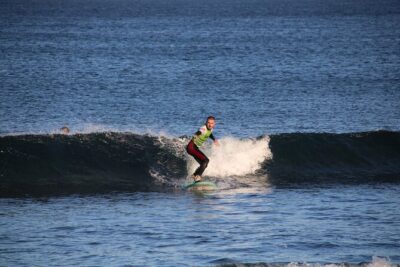
Private Surfing Lesson at Playa de las Américas
Read our review →

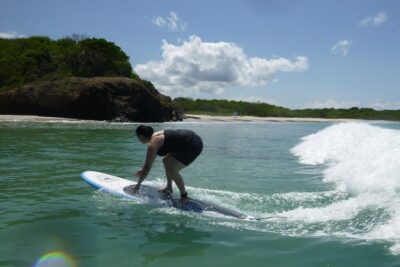
Private Surf Lesson Experience at Puerto Vallarta
Read our review →Browse the lists this lesson appears in