
REVIEW · USA
Semi-Private Surf Lesson
Catch your first wave in San Diego. This 90-minute surf lesson gives you a friendly, structured way to try the sport, with instruction on the pop-up, wave timing, and paddling before you head into the water. I like the small private-group format, which keeps the lesson personal for a family or a few friends. I also like that a quality surfboard and wetsuit are included, so you do not need to rent gear separately.
The main thing to consider is the Pacific Ocean itself. Conditions can feel larger and stronger than a first-time surfer expects, even on a generally clean and calm beach. The lesson is designed for beginners, but you should be ready for physical work, cold water, and a little uncertainty when the first waves arrive.
The key points at a glance
- A 90-minute introduction: You learn the basic movements on land, then practice them in the water.
- Private group instruction: Only your group participates, making this a good fit for families and friends.
- Equipment included: A surfboard and wetsuit are provided, along with instruction.
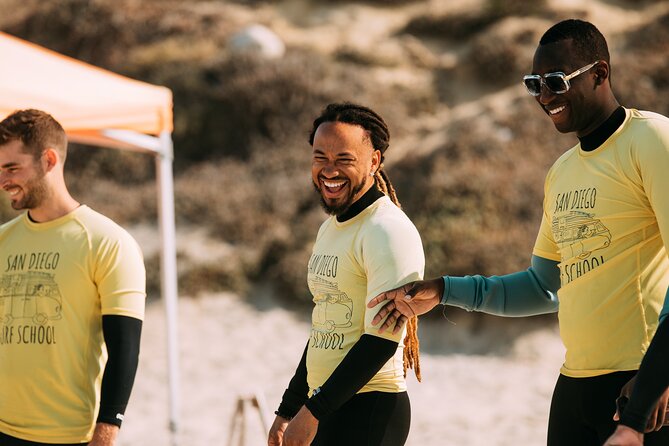
- Friendly, patient coaching: Instructors such as Tanner, Cody, Tom, Ken, and Brooks have been praised for encouragement and clear help.
- Useful meeting point: The activity starts and ends at 4850 Cass St in San Diego, close to public transportation.
- Weather matters: Poor conditions can lead to a rescheduled lesson or a full refund.
Getting started at 4850 Cass Street
Your lesson begins at 4850 Cass St, San Diego, California 92109. This is both the meeting point and the return point, which keeps the outing simple. You do not have to figure out a second pickup location after your time in the water, an underrated benefit when you are carrying wet gear.
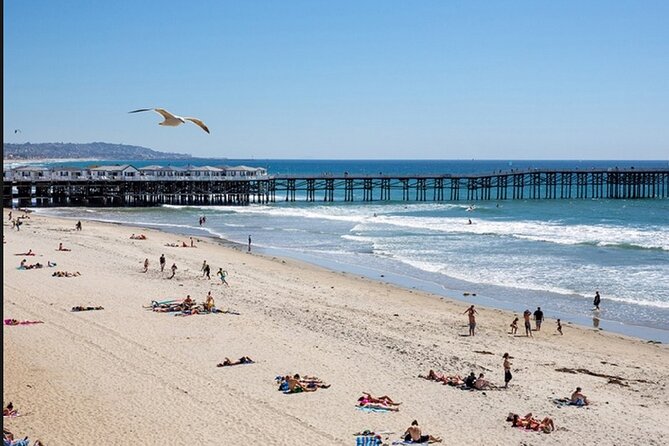
The location is near public transportation, so you may not need a car. The exact beach setup and water conditions can vary, but the lesson is presented as taking place on a clean, calm San Diego beach. One particularly useful note is that the surf school is close to the beach and easy to find.
Plan to arrive ready to change or get fitted for equipment. You need to bring a swimsuit, towel, water, and sunscreen. That short packing list is accurate for a quick lesson, but water and sunscreen matter more than they sound. Paddling is tiring, and even a cool day on the coast can leave you exposed to the sun.
The activity is offered in English. Confirmation arrives when you book, and service animals are allowed. Most people can participate, though surfing still requires enough mobility and stamina to paddle, lie on a board, push up, and stand.
More Private Surf Lessons in the USA
- Private Surf Experience
★ 5.0 · 200 reviews - Private Surf Lesson for Two Near Lahaina
★ 5.0 · 189 reviews - Private Surfing Lessons in Waikiki
★ 5.0 · 176 reviews
What you learn before entering the water
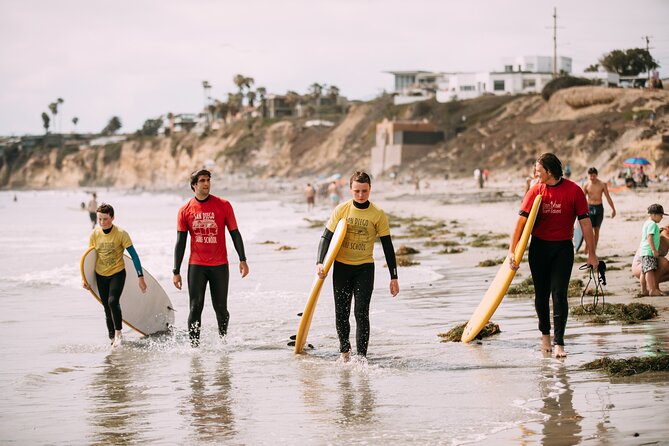
A good first surf lesson does not begin with someone simply pointing toward the waves. You need a few basic movements before the board becomes useful, and this lesson focuses on the right ones.
The first major skill is the pop-up. This is the move from lying on the board to standing on it in one quick, controlled motion. Instructors typically explain the body position and foot placement before you try it in the water. The goal is not just to stand once. It is to make the movement efficient enough that you can repeat it when a wave begins to carry you.
You also work on wave timing. For a beginner, choosing the right moment can be harder than standing up. Paddle too early and you waste energy. Paddle too late and the wave passes underneath you. The lesson helps you understand when to commit, which gives the time in the water more purpose than random attempts.
Efficient paddling is another core skill. Paddling may look easy from shore, but poor technique can tire you quickly. The instructor’s guidance here is valuable because every extra burst of wasted effort leaves you with less energy for standing.
The beach instruction is described as quick, followed by water practice. That balance works well for a 90-minute session. You get enough explanation to understand the basics, but you are not spending most of your paid time sitting on the sand.
The water session and the reality of Pacific waves
Once you enter the water, the lesson becomes physical. You will paddle, position your board, wait for a suitable wave, and try to stand. Expect repetition. A first successful ride may come quickly for one person and take longer for another.
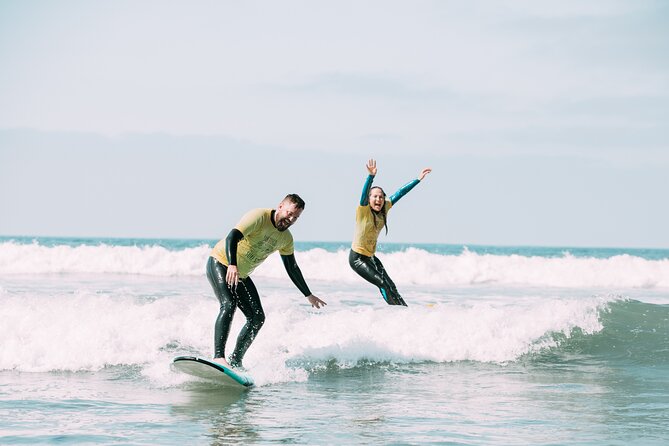
Several people have managed to stand within the first half hour, including two sons who received quick instruction before heading into the water. That is encouraging, but it should not become a promise. Surfing depends on your balance, comfort in the water, timing, and the conditions that day.
The Pacific can also surprise first-time surfers. One account described the waves as larger than expected and felt the lesson was not as easy for a true beginner as anticipated. That is important advice. Even when the beach is described as calm and suitable for learning, waves are moving water, not a swimming pool.
You may find the first few attempts awkward. That is normal. A strong instructor can help you get past the initial fear, adjust your stance, and keep trying without turning the session into a test. Brooks was specifically praised for helping a beginner build confidence, while Ken was described as patient with first-time surfers.
The best result is not necessarily a long ride. If you learn how to lie on the board correctly, paddle with less wasted effort, and make a controlled pop-up, you have gained skills you can use again.
Instructors who make the lesson work
The most important part of a surf lesson is not the board. It is the person giving you advice while you are trying to do three unfamiliar things at once.
Tanner helped two first-time surfers get up on waves and was praised for making the session fun. Cody was described as patient and encouraging with two friends. Tom got two young surfers standing within 30 minutes. Ken received similar praise for patience, while Brooks was credited with keeping students in the water for more than an hour and creating a relaxed session full of smiles and laughter.
Those details point to a consistent strength: the instructors appear to adjust their approach to the student. That matters in a private group because not everyone will learn at the same speed. One person may be ready to paddle toward a wave while another is still getting comfortable lying on the board.
You should also expect the lesson to have a social side. The instruction is serious enough to teach real fundamentals, but the tone is not presented as formal or intimidating. One instructor even gave a student a sand dollar found during the session, a small personal touch that made the outing memorable.
Since the activity is private to your group, you can ask questions without feeling that you are holding up a large class. This is especially useful for families with children or friends who want to learn together.
Same place, a different way into the water:
- Maui: Two Hour Beginner Group Surf Lesson in Kihei
★ 5.0 · 950 reviews - Open Group Surfing Lesson in Waikiki, Hawaii
★ 4.5 · 582 reviews - Outrageous Surf ScHool Lesson on Lahaina Side
★ 4.5 · 547 reviews - Los Angeles: Surfing Lesson in Venice Beach
★ 4.8 · 442 reviews
Why the private-group format matters
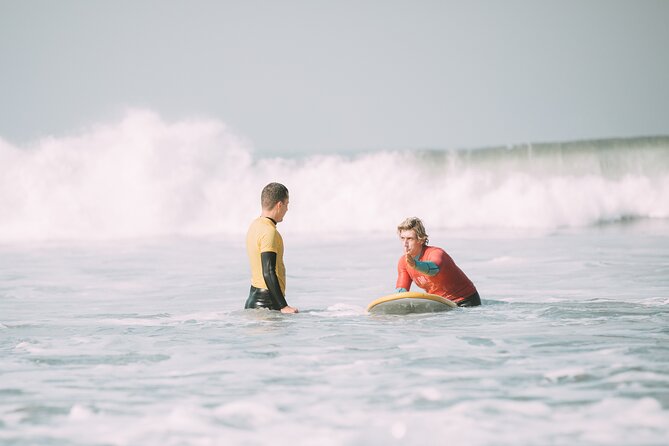
The label semi-private can sound vague, but the important detail is clear: only your group participates. You are not placed in a large mixed class with strangers.
That setup is useful in several ways. A family can learn together, parents can watch their children progress, and friends can share the same first attempts. It also gives the instructor a better chance to notice small problems, such as a foot landing in the wrong spot or a paddle stroke that is using too much effort.
There is a tradeoff. Private instruction costs more than joining a large group class in many settings, and the listed price is $125.28 per person. For that fee, you receive about 90 minutes of instruction, a board, and a wetsuit. If your group values personal attention and the chance to learn together, the price is easier to justify.
The value is strongest when two or more people in your party are genuinely interested in surfing. If only one person wants to participate, a private group lesson may feel expensive. For a family or group of friends, sharing the experience and avoiding a crowded class can make the cost feel fair.
Boards, wetsuits, and what to pack
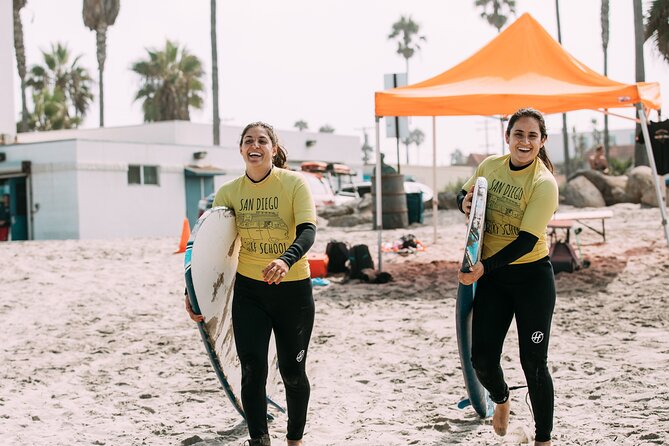
The included equipment removes one of the biggest headaches for a first lesson. You do not need to research board sizes or arrange a separate wetsuit rental. The equipment is described as top quality, and one participant found the gear clean and the organization safe.
Bring:
- A swimsuit
- A towel
- Water
- Sunscreen
A towel is essential for the trip back to the meeting point. Water is worth carrying because paddling can be demanding, even during a short lesson. Sunscreen is equally important, especially when you spend time near reflective water.
The equipment is included in the per-person price, so compare this experience with any alternative by checking what is actually covered. A cheaper lesson may not be cheaper after adding board and wetsuit rental.
How long 90 minutes feels
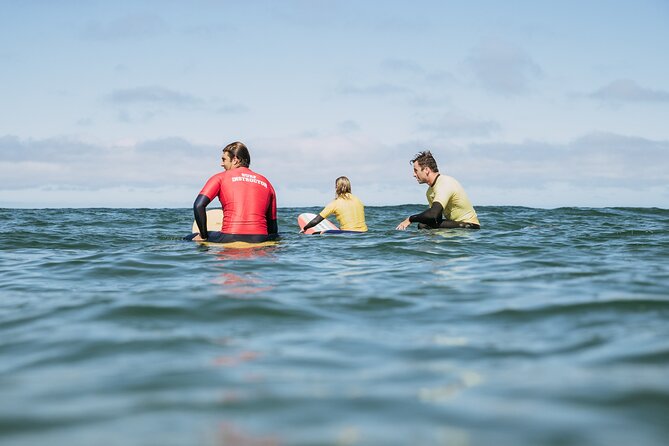
Ninety minutes is a useful length for a first attempt. It gives you time to learn the basics, get into the water, make several tries, and receive corrections. A shorter session might leave you just as you begin to understand the pop-up.
Do not expect 90 minutes of continuous riding. Part of the lesson involves changing, instruction, positioning, paddling, and waiting for suitable waves. That is not wasted time. Learning when to paddle and how to conserve energy is part of surfing.
For children and teenagers, the length seems particularly workable. Two boys were reported to be surfing within 30 minutes, and another young pair had a very positive experience with an encouraging instructor. Still, children should be ready for cold water, physical effort, and repeated attempts.
Who should book this San Diego lesson
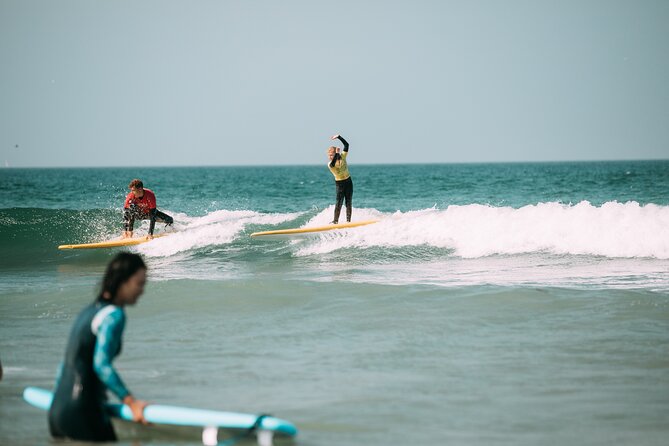
I would choose this experience for a family with older children, a pair of friends, or a small group that wants a first taste of surfing without arranging equipment. It also suits a beginner who feels nervous and would benefit from patient, direct coaching.
The private format is helpful if your group has mixed confidence levels. A skilled instructor can give one person extra help while another practices. It is also a good choice if you want to remember the outing as a shared activity rather than split up into separate classes.
You should think twice if you dislike physical activity or feel uncomfortable in ocean water. The experience is beginner-friendly, but beginner-friendly does not mean effortless. The waves may be stronger than expected, and standing on a board takes balance and persistence.
Experienced surfers may find the fundamentals too basic. The lesson is aimed at learning or improving core skills, not at advanced surf coaching.
Price, timing, and cancellation details
At $125.28 per person, the cost reflects a private group experience with equipment included. I consider it a reasonable value for a family or group that wants personal instruction and a simple all-in-one arrangement. It is less compelling if you are only looking for the cheapest way to borrow a board.
The activity is often booked about 39 days ahead, so planning early is sensible if your San Diego dates are fixed. Confirmation is provided at booking, and the experience is offered in English.
You can cancel for a full refund up to 24 hours before the start time. Changes or cancellations made less than 24 hours ahead are not accepted for a refund. The lesson requires good weather, and if conditions cause a cancellation, you will be offered another date or a full refund.
My take: book it for personal coaching
I would book this lesson if you want a friendly introduction to surfing with your own family or friends. The equipment is included, the meeting point is straightforward, and the instructors receive strong praise for patience, encouragement, and helping beginners stand up.
I would not book it expecting effortless rides or perfectly gentle waves. The Pacific can be demanding, and one account found the wave size surprising. Go in ready to work, listen closely, and laugh at a few wobbly attempts. If that sounds like a good San Diego morning, this is a solid choice.
FAQ
Where does the surf lesson start?
The lesson starts at 4850 Cass St, San Diego, CA 92109, USA.
Where does the activity end?
The activity ends back at the meeting point on Cass Street.
How long is the surf lesson?
The lesson lasts approximately 1 hour and 30 minutes.
How much does the experience cost?
The listed price is $125.28 per person.
Is the surfboard included?
Yes. A surfboard is included with the lesson.
Is a wetsuit included?
Yes. A wetsuit is included with the lesson.
What should I bring?
Bring a swimsuit, towel, water, and sunscreen.
Is this a private activity?
Yes. Only your group participates in the activity.
What happens if the weather is poor?
If poor weather causes the experience to be canceled, you will be offered a different date or a full refund.
Just added around the USA
- Waikiki: Surf Lessons Easy 60 min classes no crowds!★ 4.9 · 21 reviews
- Waikiki: Family, Private, and Group Surfing Lessons★ 5.0 · 4 reviews
- Electric Bike Rentals in Topsail Island and Surf City★ 5.0 · 2 reviews
- 1-on-1 Private Surf Lesson in Santa Barbara★ 5.0 · 4 reviews
- Astonishing Scavenger Hunt: Surf, Sand and Sculptures!★ 3.0 · 2 reviews
- Two- Hour Group Surfing Lesson in Cocoa Wrightsville Beach, NC★ 5.0 · 13 reviews
- Surf lesson with KTO Yoga Surf★ 4.0 · 5 reviews
- Surf Lesson in Santa Barbara★ 3.0 · 2 reviews
Private Surf Lessons, compared.
Private Surfing Lesson at Playa de las Américas
Read our review →
Private Surf Lesson Experience at Puerto Vallarta
Read our review →Browse the lists this lesson appears in