
REVIEW · PHAN THIET, VIETNAM
Surf in Vietnam with a local!
Catch your first wave in Phan Thiet. This private lesson gives you local coaching, a clear introduction to surfing, and the chance to practice both on the beach and in the water. I like the one-to-one format, which lets the instructor correct your stance and paddling instead of giving a speech to a large group. I also like that boards, rash protection, and face zinc are included.
The main point to consider is the short session. The booking duration is about 1 hour 30 minutes, although the lesson description says you may learn for roughly two hours. That is enough for a first taste, but you may want more than one lesson if you hope to build real confidence.
Key points before you book

- Private instruction: Only your group takes part, so the instructor can focus on your balance, pop-up, paddling, and safety.
- Local beach planning: You meet at Mui Ne Local Surf School, then head to Bai Da Ong Dia after checking the day’s wave conditions.
- Practice on land first: You learn how to stand, paddle, and take off before entering the water.
- All surf gear included: Soft-top longboards, a long-sleeve lycra top, and special zinc for your face are supplied.
- Motorbike transfer may be possible: You might be driven to the surf spot or follow the instructors on your own motorbike, but private transportation is not included in the price.
- Strong overall record: The experience has a 4.9 rating from 46 reviews and a 98 percent recommendation rate.
Starting at Mui Ne Local Surf School
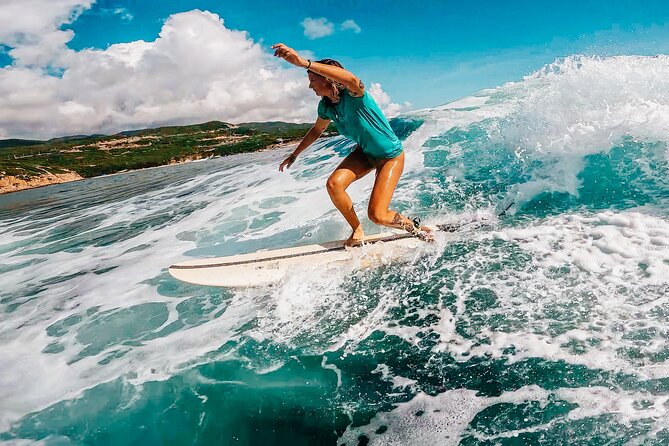
Your lesson begins at Mui Ne Local Surf School, at 223A Nguyễn Đình Chiểu in Hàm Tiến, Phan Thiet. This is the place to meet your instructor, discuss your surfing level, and sort out the plan for the beach.
That short conversation matters. A first-time surfer needs different help from someone who has already taken a few lessons. The instructors have worked with complete beginners as well as people trying to correct habits picked up elsewhere. You should be ready to explain your experience honestly. It helps the coach choose the right pace from the start.
The school describes this as a private activity, so only your group participates. I see that as one of the best reasons to pay for this particular lesson. Surfing has a steep learning curve, and small mistakes can be hard to spot when you are one person among ten on a busy beach. Here, the instructor can watch your feet, hands, and timing more closely.
The meeting point is also near public transportation. The activity ends back at the school, which keeps the day simple. Pickup is offered, but the cost information says private transportation is not included. Ask about the pickup arrangement before you go, especially if you do not have a motorbike.
More Surf Lessons in the world:
- Tenerife: Surfing Lesson for All Levels, Photos included
★ 4.9 · 1,314 reviews - Group Surfing Lesson at Playa de las Américas, Tenerife
★ 5.0 · 1,072 reviews - Canggu: 2-Hour Surf Course
★ 4.8 · 1,053 reviews
Choosing the day’s surf spot
After meeting, you and the instructor check the wave conditions and travel together toward the surf area. The stated stop is Bai Da Ong Dia, a coastal spot in Phan Thiet used for the lesson.
The exact feel of the session depends on the sea that day. That is a good thing in principle. Surfing instruction works best when the coach chooses a suitable area instead of forcing every class onto one fixed patch of water. The school may drive you, or you can follow the instructors on your own motorbike.
Do not read the motorbike option as included transport. It means you can make your own way behind the instructors if that suits you. The activity details specifically exclude private transportation, so confirm the practical arrangement when booking.
Once you reach the beach, the instructor checks the waves again. Then you take the longboards down to the water. This local check is more useful than a rigid schedule because wave size, wind, and conditions can affect how comfortable a beginner feels.
Learning the pop-up on dry sand
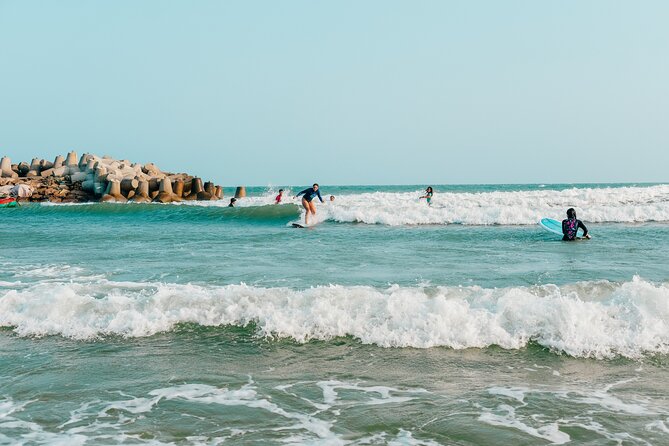
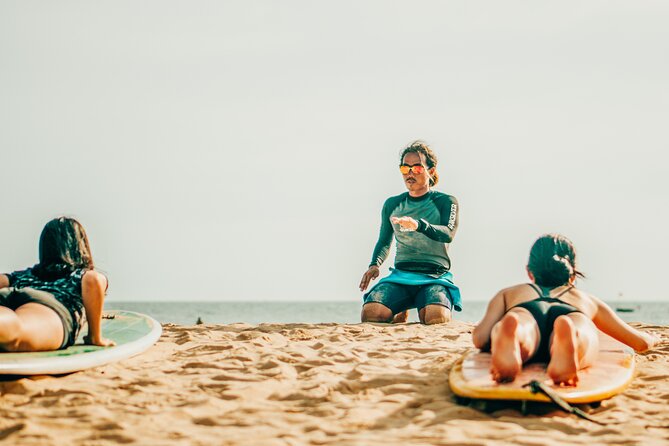
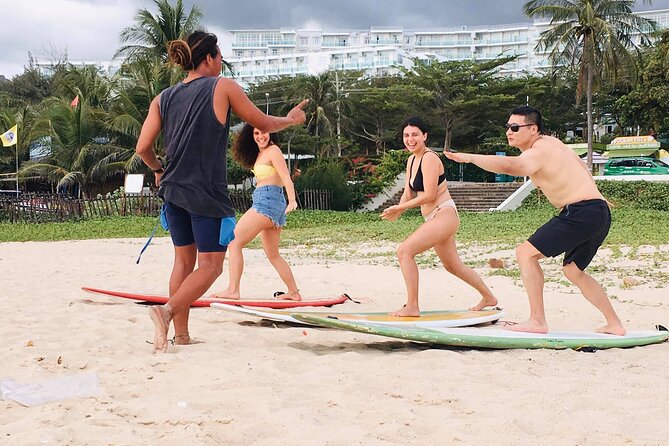
The first real teaching section happens on land. You practice the take-off, the movement that gets you from lying on the board to standing on it. You also go over paddling and basic safety before attempting a wave.
That order is sensible. Surfing can look simple from the beach, but the sequence is not automatic. You need to place your hands correctly, bring your feet underneath you, keep your weight balanced, and stand without fighting the board. Practicing first on sand gives you a chance to repeat the motion before adding waves and water.
The lesson also covers how to stand on the board. The instructors can correct your body position before you form a bad habit. One person who had already taken lessons elsewhere found the coaching useful for fixing earlier mistakes. That is a good sign for beginners who have tried surfing before but still feel awkward during the pop-up.
Safety advice comes before the water session, not after it. That includes understanding how to handle the board and move in the water. The provided details do not give a full list of safety rules, so you should listen closely and ask questions if anything is unclear.
Entering the water at Bai Da Ong Dia
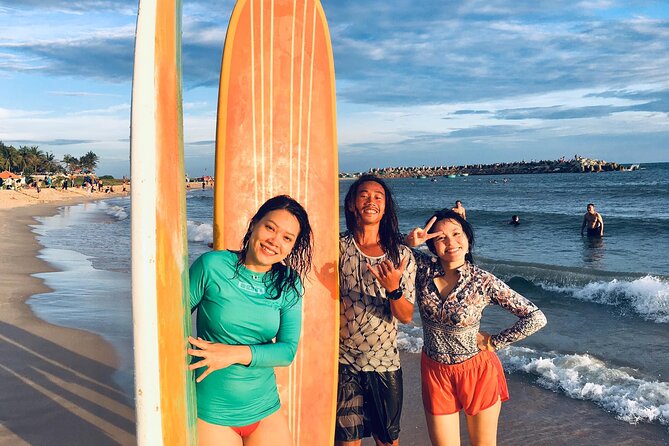
After the beach practice, you head into the water with the instructor. The aim is to paddle into waves and attempt your first rides. A coach helps you judge when to go, points out the right moment, and offers corrections after each attempt.
This is where the private format earns its keep. A beginner often misses the wave because the timing is wrong, not because the person lacks strength. Immediate advice can help you understand if you should paddle earlier, keep your chest lower, or stand sooner. The instructors are described as relaxed and supportive, which should make the first attempts less intimidating.
You should keep your expectations sensible. A short lesson can give you the basic movement and perhaps a few successful rides, but it cannot turn you into an experienced surfer in one morning. Surf conditions also vary. One class may find friendly beginner waves, while another may face a less forgiving sea.
The school uses soft-top boards. These are a practical choice for first lessons because they are designed with beginners in mind and are less intimidating than a hard board. You receive all surfing equipment as part of the experience, so you do not need to arrange a board separately.
Same place, a different way into the water:
- Legian Beach, Bali: Beginner or Intermediate Surf Lessons
★ 4.9 · 1,019 reviews - Playa de las Américas: Private or Small-Group Surf Lesson
★ 4.8 · 980 reviews - Maui: Two Hour Beginner Group Surf Lesson in Kihei
★ 5.0 · 950 reviews - Bondi Beach: 2-Hour Surf Lesson Experience for Any Level
★ 4.9 · 935 reviews
What you wear and what the school supplies
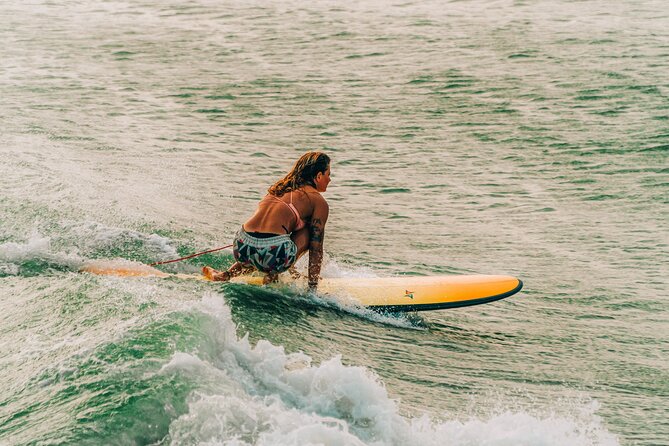
The equipment package covers the surf gear needed for the lesson. That includes the board and other required surf equipment. You also receive a long-sleeve lycra top to help protect your skin from the sun.
The school supplies special zinc for your face as well. This is a small but useful touch, especially during a lesson when you may spend a lot of time exposed to the sun while waiting for waves. You should still arrive prepared for a beach session, since the supplied items do not include food or drinks.
Breakfast, bottled water, lunch, dinner, and snacks are not included. Plan accordingly. The activity is short enough that you can arrange the rest of your day around it, but you should not assume refreshments are waiting at the school or beach.
The details also say you need a moderate level of physical fitness. Surfing uses your shoulders, arms, core, and legs. You need to paddle, push up from the board, stand, and repeat the movement several times. You do not need advanced athletic ability, but this is active instruction rather than a passive beach outing.
The instructors and the teaching style
The school’s strongest praise centers on its staff. Names that appear in the feedback include Bay, Tu, Phi, and Sara. You may not be assigned one of these specific instructors, but their names give you a sense of the local team connected with the school.
Bay and Tu led a multi-day beginner course for one group. That experience suggests the school can support people who want more than a single introduction. Phi was praised for helping beginners catch waves, even outside the main surf season. Sara and the wider team were also described as friendly and professional from the first contact through the beach session.
The most useful pattern is the teaching style. The coaches are described as supportive rather than judgmental, and they focus on correcting habits. That matters if you are nervous or have tried surfing before without much success.
The school also appears willing to help beyond the formal lesson. After taking lessons, some people rented boards and still received advice about where and when to surf. The supplied feedback also mentions photos and videos after lessons in some cases. Do not treat those as a guaranteed part of this specific booking, but you can ask if the school is offering them during your visit.
How much value do you get for $55?
At $55 per person, this is not the cheapest possible way to stand on a board, but the price is reasonable if you value personal coaching. You are paying for a private lesson, an instructor, board use, safety guidance, beach practice, and water coaching. The equipment is included, which removes the need to rent a board separately.
The strongest value comes from the small group setup. A cheap group class may work for someone who only wants to try surfing once, but the instructor may have less time to watch each person. Here, your money goes toward feedback that is specific to your balance and technique.
The short duration limits the value slightly. A 1 hour 30 minute session passes quickly once you include the meeting, transport to the surf spot, equipment setup, land practice, and water time. The description also refers to learning for about two hours, so the actual timing may vary. Ask how much time you should expect in the water.
The school’s pricing also looks useful for a follow-up plan. If you enjoy the first lesson, you may be able to arrange more coaching or board rental locally. The activity is not only a one-off introduction. It can serve as a first step for a few days of surfing in Mui Ne.
Who will enjoy this lesson most?
I would recommend it first to complete beginners who want personal attention. You do not need to arrange equipment, and the land instruction gives you a clear start before you face the waves.
It also suits people who have tried surfing but still struggle with the pop-up or wave timing. The coaches are used to correcting habits, and a private session can reveal exactly where your movement breaks down.
This is less suitable if you want a full-day surf trip, advanced performance coaching, or a long water session. The experience is built around an introduction and basic improvement, not an extended training camp.
Families and groups should note that the activity is private for your group, but the supplied information does not state a minimum or maximum group size. Ask before booking if you want several people to share the lesson.
Timing, weather, and cancellation
The experience depends on good weather. If poor conditions force a cancellation, you are offered another date or a full refund. The activity also requires a minimum number of travelers, and if that requirement is not met, you are offered another option or a refund.
You can cancel for a full refund up to 24 hours before the start time. Inside that window, the payment is not refunded, and changes are not accepted. The cut-off uses local time in Vietnam, so check the clock before making changes.
Confirmation normally arrives at booking. If you book within two hours of the start, confirmation comes as soon as possible and depends on availability. I would avoid leaving this one until the last minute, especially if your stay in Mui Ne is short.
A practical plan for your surf morning
Meet at the school with enough time to discuss your level and sort out transportation. Wear practical beach clothing and be ready for a physical session. The school provides the board, lycra, and face zinc, but not bottled water or food.
Expect the session to follow this pattern:
- Meet the instructor at the school.
- Discuss your surfing background and check the wave conditions.
- Travel to Bai Da Ong Dia or the selected surf area.
- Take the longboards to the beach.
- Practice the pop-up, stance, paddling, and safety on land.
- Enter the water and try to catch waves.
- Return to the meeting point when the lesson ends.
The rest of your day remains free. That makes this a good fit for a morning activity followed by other plans in Phan Thiet, though the exact start time is not supplied here. Confirm the time when booking.
Should you book this Mui Ne surf lesson?
Book it if you want a friendly first lesson with personal coaching and included equipment. The high 4.9 rating, 98 percent recommendation rate, and repeated praise for the instructors all point to a school that takes beginner support seriously.
I would be most likely to book this for one of two reasons: you are trying surfing for the first time, or you have already tried it and need help fixing your pop-up. The private format, soft-top boards, sun protection, and local advice make the $55 price fair.
Think twice if you need guaranteed transport, a full two-hour water session, or advanced coaching. Confirm the pickup details, expected lesson length, and whether photos or videos are available. If those points fit your plan, this is a practical and approachable way to meet the sea in Phan Thiet.
FAQ
Where does the surf lesson begin?
The meeting point is Mui Ne Local Surf School at 223A Nguyễn Đình Chiểu, Phường Hàm Tiến, Thành phố Phan Thiết, Bình Thuận, Vietnam.
Where does the surf lesson end?
The activity ends back at the meeting point at Mui Ne Local Surf School.
Is this a private experience?
Yes. Only your group participates in the activity.
Is surf equipment included?
Yes. All surfing equipment is included, and the lessons use soft-top boards. A long-sleeve lycra top and special zinc for your face are also provided.
Is transportation included?
Private transportation is not included. Pickup is offered, and the school may drive you to the surf spot or you may follow the instructors on your own motorbike. Confirm the arrangement before booking.
How long does the lesson last?
The stated duration is approximately 1 hour 30 minutes. The description also says you may learn for about two hours, so confirm the expected timing when you book.
What happens if bad weather cancels the lesson?
You will be offered a different date or a full refund if poor weather causes the experience to be canceled.
Just added around the world
- Valencia: Excursión en Moto de Agua + Paddle Surf★ 4.9 · 9 reviews
- Waikiki: Family, Private, and Group Surfing Lessons★ 5.0 · 4 reviews
- Waikiki: Surf Lessons Easy 60 min classes no crowds!★ 4.9 · 21 reviews
- Electric Bike Rentals in Topsail Island and Surf City★ 5.0 · 2 reviews
- Tricana Surf Experience★ 5.0 · 3 reviews
- Uluwatu: Surf Lessons Beginner★ 5.0 · 3 reviews
- 1-on-1 Private Surf Lesson in Santa Barbara★ 5.0 · 4 reviews
- Astonishing Scavenger Hunt: Surf, Sand and Sculptures!★ 3.0 · 2 reviews