
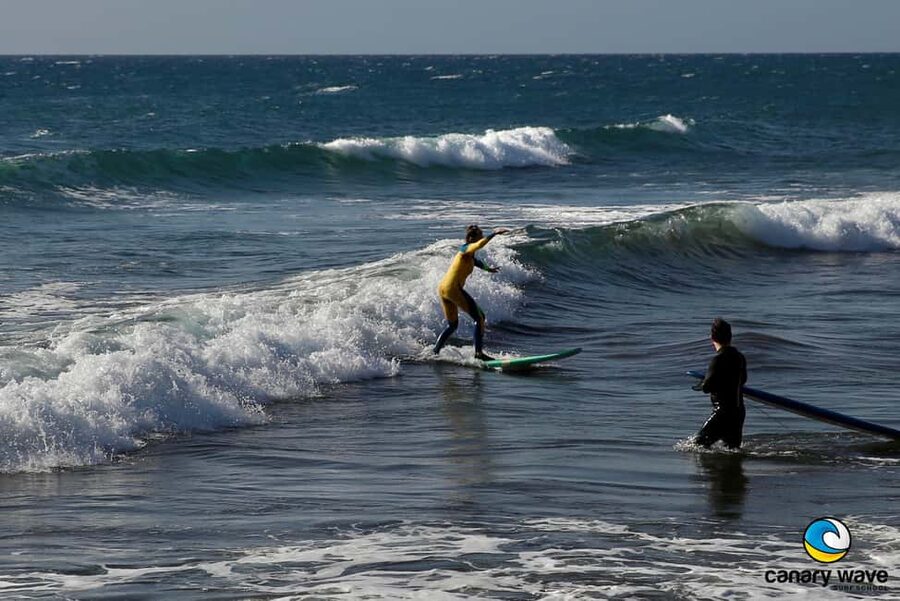
REVIEW · GRAN CANARIA
Gran Canaria: Meloneras Beach Surf Lesson
Catch your first wave in Gran Canaria. This two-hour lesson at Meloneras Beach combines clear instruction, sand practice, and guided time in the water, making it a friendly way to try surfing without arranging equipment or lessons separately. I especially like the beginner-focused teaching and the fact that instructors search for better waves if conditions are poor at the usual beach. I also like that the class is adapted to age and ability instead of forcing every student through the same routine.
The main catch is simple: surfing depends on the sea. If the waves are small, you may spend less time riding and more time learning technique. You will also need to bring your own towel, beachwear, water, sunscreen, and snack. The $58 price is fair if you value professional help and included gear, but it is less attractive if you already own equipment or only want a quick try in the water.
Key points to know before booking
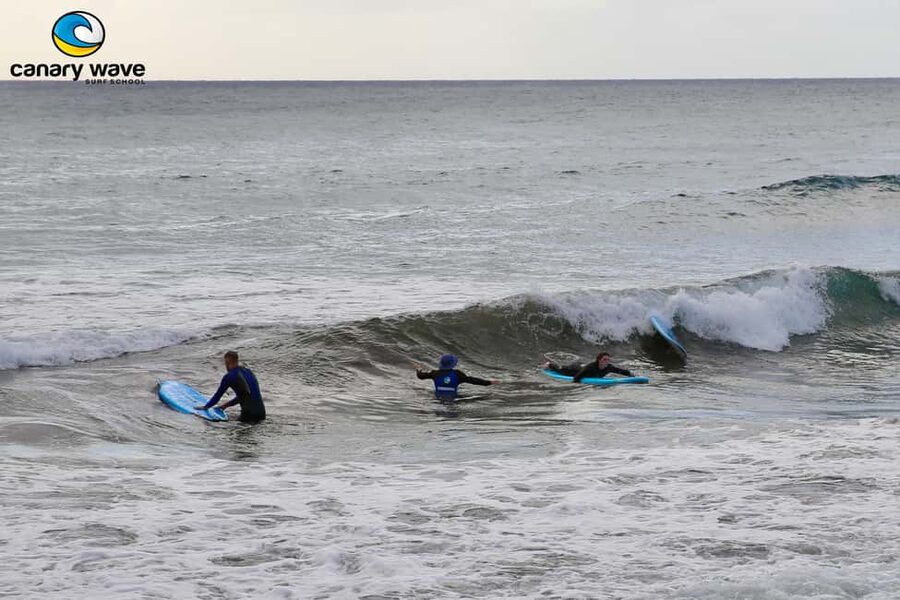
- The meeting point is in front of the Maspalomas lighthouse, giving you a clear landmark near Meloneras Beach.
- Your lesson includes a surfboard, wetsuit, safety briefing, and sand practice, so you do not need to rent equipment separately.
- About an hour is spent in the water, followed by a short rest and another session in the sea.
- The instructor can move the class to another beach if the usual spot does not have suitable waves.
- Teaching is available in Italian, English, Spanish, and German, which helps when safety instructions and technique matter.
- The lesson suits beginners and improving surfers, but children under eight cannot take part.
Why this Meloneras surf class is a useful first step
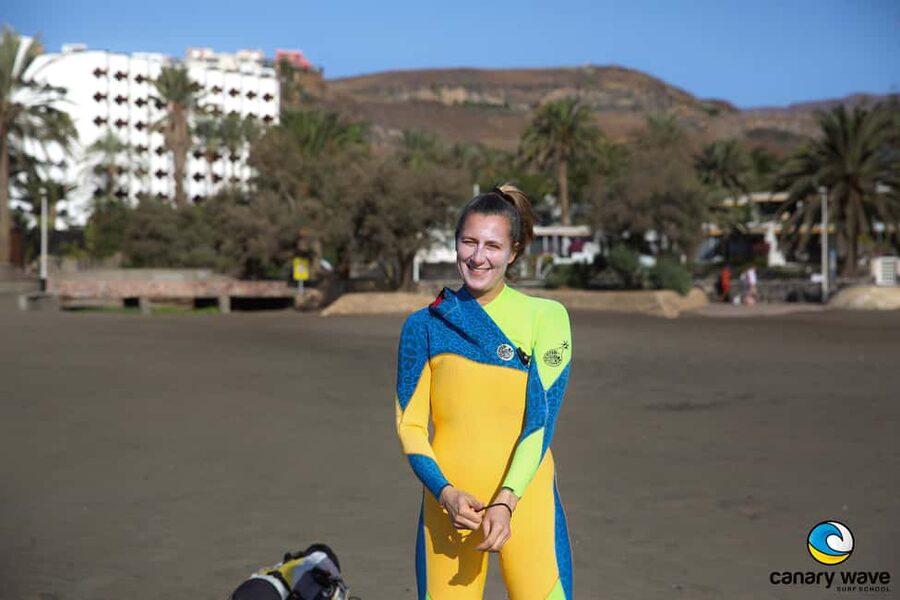
Surfing looks simple from the shore. Lie on the board, paddle, stand up, and ride. In practice, the timing, balance, and wave choice can make those first minutes confusing. A good lesson gives you a safer way to learn the basics and a better chance of standing up before your arms give out.
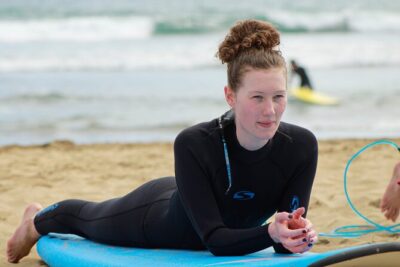
This class begins on land, where you can focus without a wave pushing the board around. You learn the basic movements first, including how to position yourself and rise from the board. That may sound basic, but it is the part that saves you from trying to work out everything at once in the water.
The instruction is built around the group’s ability and age. That matters if you are traveling with a partner or friends who have different levels. Beginners can work on balance and safe positioning, while more experienced surfers can ask for help with technique rather than repeating the very first steps.
The strongest feature is the practical approach. The praise for the instructors centers on clear explanations, a relaxed manner, and individual feedback. That is the right mix for a first lesson. You want an instructor who corrects you quickly, but not one who makes a beginner feel foolish for falling off.
More Surf Lessons in Gran Canaria:
- Playa del Inglés Maspalomas: High Quality Surf Classes
★ 4.9 · 363 reviews - Puerto Rico, Gran Canaria: boat trip, drinks, food, paddle surfing, snorkeling
★ 4.6 · 310 reviews - Gran Canaria Maspalomas: Surf lessons all levels
★ 5.0 · 197 reviews
Meeting at the Maspalomas lighthouse
The stated meeting point is just in front of the Maspalomas lighthouse. This is the landmark to use when planning your arrival, but you should still check your booking details for the exact meeting instructions and arrival time.
You will meet the instructor there, receive your wetsuit, and get your surfboard. The wetsuit is included in the price, which removes one of the usual annoyances of a first lesson. You do not have to guess what thickness to rent or find a board that matches your ability.
Bring beachwear and a towel. Wear something you can change out of easily, since the class begins on the beach and the wetsuit will become the main item of clothing for the water session. Pack drinking water, a hat, and sunscreen as well. These are not included, and the supplied information also excludes snacks.
The meeting point is close to the beach, but the key practical issue is timing. A two-hour activity can feel rushed if you arrive late because you still need to get fitted and hear the safety instructions. I would arrive with enough time to find the lighthouse and settle in before the lesson starts.
Sand practice before the first wave
The land portion is not filler. It is where the instructor explains basic safety and shows you how to get from lying on the board to standing. You can concentrate on foot placement and body position without also dealing with moving water.
The safety briefing is especially important for first-time surfers. You learn how to handle the board and how to approach the water with more awareness. Surfboards are large, and the sea can be unpredictable, so a few clear rules make the whole session more comfortable.
The sand practice also lets the instructor see how the group is doing. If everyone is new, more time can go toward the fundamentals. If some people have surfed before, the teaching can shift toward improving their movement and timing.
Do not expect the land practice to make you an expert before you reach the water. Its real value is that it gives you a plan. When you are on the board and a wave arrives, you will have fewer things to think about.
About an hour riding waves at Meloneras
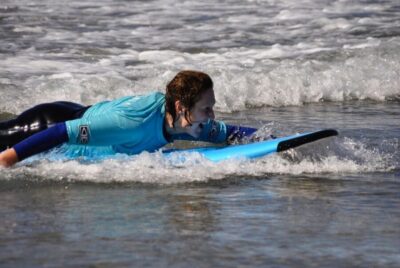
The first water session lasts about an hour. That is a useful amount of time for a beginner because it gives you repeated chances to paddle, find balance, and try standing. You may fall often at first. That is normal, and a lesson gives you someone nearby to explain what went wrong.
The instructor guides you while you practice. The most useful feedback is often small: move your feet, lower your center of balance, look forward, or wait for the right wave. Individual corrections can make the difference between repeatedly falling and catching a short ride.
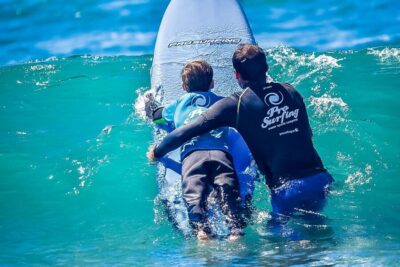
The class is not presented as a free-for-all. You are not simply handed a board and pointed toward the sea. The instructor stays involved, which helps with both safety and progress. Recent praise for the teaching focuses on instructors taking time with each person, rather than rushing the group through a fixed routine.
Conditions will shape the experience. If the waves are gentle and suitable for beginners, you may get several manageable attempts. If the sea is flat or the usual beach is not working, the class can move to another location in search of better waves. That flexibility is valuable, although you should understand that it cannot guarantee perfect surfing conditions.
Same place, a different way into the water:
- Small-Group Surf Lessons in Gran Canaria
★ 5.0 · 138 reviews - Playa del Inglés surf lessons
★ 4.8 · 121 reviews - Gran Canaria: Maspalomas Surf Lessons
★ 4.6 · 113 reviews - Premium Surf Course in Gran Canaria
★ 5.0 · 89 reviews
The short break and second water session
After the first water session, you get a short rest before returning to the sea. This break matters more than it might sound. Surfing uses your arms, legs, and core, and beginners often tire quickly because every movement is new.
Use the pause to drink water and adjust your equipment. Since water is not included, bring your own bottle. A small snack can also help, especially if you are taking the lesson around a meal.
The second water session gives you another chance to apply the corrections from the first round. You may understand the standing motion better by then, or you may simply feel less nervous. Either way, the break divides the activity into manageable sections instead of making you work continuously for two hours.
For stronger students, the second session may be the best time to ask for technique advice. For complete beginners, it is a chance to repeat the basic movement with more confidence. The class aims to meet both needs, though the exact amount of personal attention will depend on the number of people in your group.
How the beach change affects your day
The class does not depend entirely on one patch of sand. If there are no useful waves at the normal beach, the instructor may take the group to another location. The goal is to find the best available waves for the day, especially waves that work for beginners.
That is a good sign for anyone booking a surf lesson as part of a short holiday. You are not locked into a poor session simply because the original meeting beach is calm. The change also shows why a flexible schedule helps. Do not place another tightly timed activity immediately after the lesson.
The supplied experience details do not give a fixed alternate beach or a standard transfer time. For that reason, ask at booking or when you meet the instructor how a move will work. One recent booking account indicates that transport to another beach was covered when conditions required it, but you should confirm the current arrangement rather than assume every transfer detail.
The possible move is both a benefit and a minor uncertainty. You gain a better chance of finding waves, but the final setting may not be exactly the beach you pictured when booking.
Languages, teaching style, and group comfort
Instruction is available in Italian, English, Spanish, and German. That is useful because surfing lessons combine physical demonstration with safety information. You should be able to understand what to do before entering the water.
The teaching style appears relaxed but serious about technique. That balance is worth paying for. You do not need a formal classroom atmosphere, but you do need someone who watches your attempts and gives direct advice.
The best fit is a person who wants hands-on coaching rather than a sightseeing activity with a board attached. You will spend much of the two hours practicing, falling, adjusting, and trying again. If your idea of a beach day is staying dry, this is not the right choice.
The class is also suited to partners with different levels. One person can be learning the basics while another works on improving technique. The instructor adjusts the class to the group instead of promising a completely private lesson for each participant.
Is $58 good value for two hours?
At $58 per person, the price includes the surfboard, wetsuit, lesson, safety briefing, sand instruction, and water practice. That is a reasonable package for a first-time surfer who would otherwise need to rent equipment and find an instructor separately.
The value is strongest if you are new to surfing. You get a structured introduction and help choosing the right place to practice. The ability to move locations if waves are poor adds practical value, since you are paying for a lesson rather than simply access to one beach.
The price is less compelling for an experienced surfer who already owns a board, understands surf safety, and only needs time in the water. In that case, a rental or independent session could make more sense, if available.
Remember to budget for the items not included. You need your own towel, beachwear, water, hat, sunscreen, and snack. Those are small costs, but forgetting them can make a sunny beach lesson less comfortable.
Who should book this experience?
I would recommend it to first-time surfers, casual beginners, and anyone who wants a guided introduction during a Gran Canaria holiday. The land practice reduces the confusion of the first attempt, and the instructors focus on clear, practical corrections.
It also suits couples and small groups with mixed ability. The class is adjusted to the group’s age and level, so you do not need everyone to arrive with the same experience.
The minimum age is eight. Children under eight cannot take part, and the activity may not suit anyone who is uncomfortable in the sea or unwilling to follow safety instructions. You should also be ready for the possibility that conditions change the location or limit the quality of the waves.
Book it if your main goal is to learn and practice with help. Skip it if you want guaranteed long rides, a private instructor, or a completely fixed beach plan.
Booking flexibility and practical details
You can cancel up to 24 hours in advance for a full refund, and the reserve-now-pay-later option lets you hold a place without paying immediately. That is useful when your Gran Canaria schedule may change.
A recent booking situation also showed some flexibility when illness prevented a couple from attending, with a last-minute rescheduling option offered. Treat that as a helpful possibility, not a guarantee. The published cancellation terms remain the safer rule to follow.
Classes have starting times based on availability, so check the date carefully. Since sea conditions affect the lesson, an earlier or later slot may not feel identical, but the operator will look for suitable waves on the day.
FAQ
Where does the surf lesson meet?
The meeting point is just in front of the Maspalomas lighthouse.
How long does the lesson last?
The activity lasts two hours, including instruction, sand practice, a break, and time surfing in the water.
Is surf equipment included?
Yes. The price includes a surfboard rental and wetsuit rental.
How much time is spent in the water?
The planned schedule includes about one hour in the water, followed by a short rest and another water session.
What happens if there are no waves at the usual beach?
The instructor can move the class to another location in search of better waves for the day.
What should I bring?
Bring a towel and beachwear. You should also bring your own water, hat, sunscreen, and snack because those items are not included.
Can children take part?
Children under eight are not permitted to join the lesson.
Should you book the Meloneras surf lesson?
Book this class if you want a practical, beginner-friendly introduction to surfing with equipment and instruction included. The strongest reasons to choose it are the clear sand practice, individual feedback, multilingual instructors, and willingness to search for better waves when conditions change.
The $58 cost makes sense when you want guidance rather than a simple board rental. Just bring your own supplies, allow some flexibility in your schedule, and remember that the sea has the final say. You may not leave as a polished surfer, but you should leave knowing more about board control, safety, and how to catch your next wave.
Just added around Gran Canaria
- Surf lessons in Las Canteras Beach★ 4.8 · 19 reviews
- San Agustín Surf lessons★ 4.5 · 10 reviews
- Las Palmas de Gran Canaria: Group surf lessons on La Laja beach★ 4.9 · 27 reviews
- Las Palmas: Learn to Surf with a Special Price for Two Group★ 4.8 · 30 reviews
- Gran Canaria Playa del Ingles: Surf lessons all levels★ 4.7 · 11 reviews
- Premium Surf Course in Gran Canaria★ 5.0 · 89 reviews
- Gran Canaria Surf Lessons: Playa del Inglés & Maspalomas★ 4.8 · 76 reviews
- Playa del Inglés surf lessons★ 4.8 · 121 reviews
Gran Canaria Surf Lessons, compared.
Playa del Inglés Maspalomas: High Quality Surf Classes
Read our review →
Puerto Rico, Gran Canaria: boat trip, drinks, food, paddle surfing, snorkeling
Read our review →
Gran Canaria Maspalomas: Surf lessons all levels
Read our review →
Gran Canaria Surf Lessons: Playa del Inglés & Maspalomas
Read our review →Browse the lists this lesson appears in