
REVIEW · NEW ZEALAND
Queenstown: White Water Surfing Along the Kawarau River
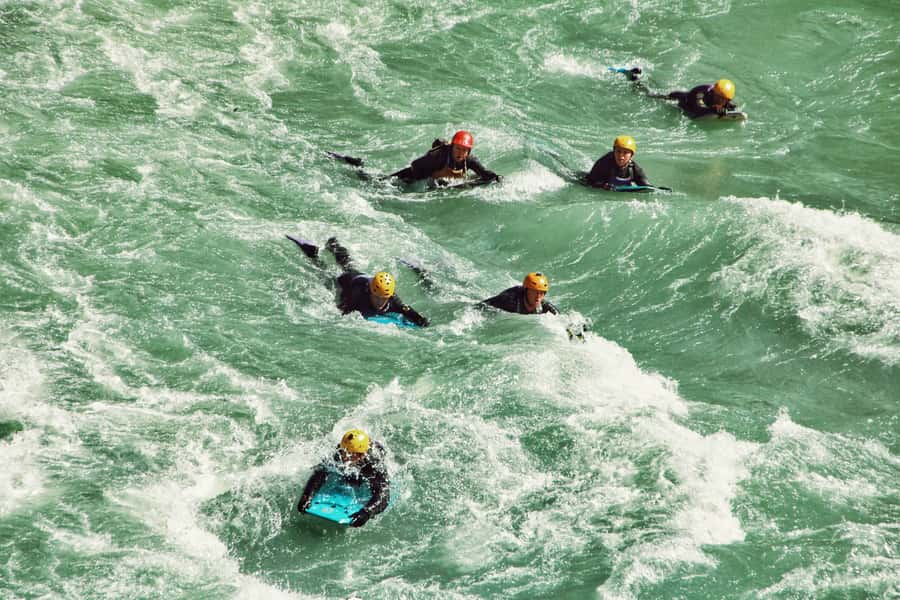
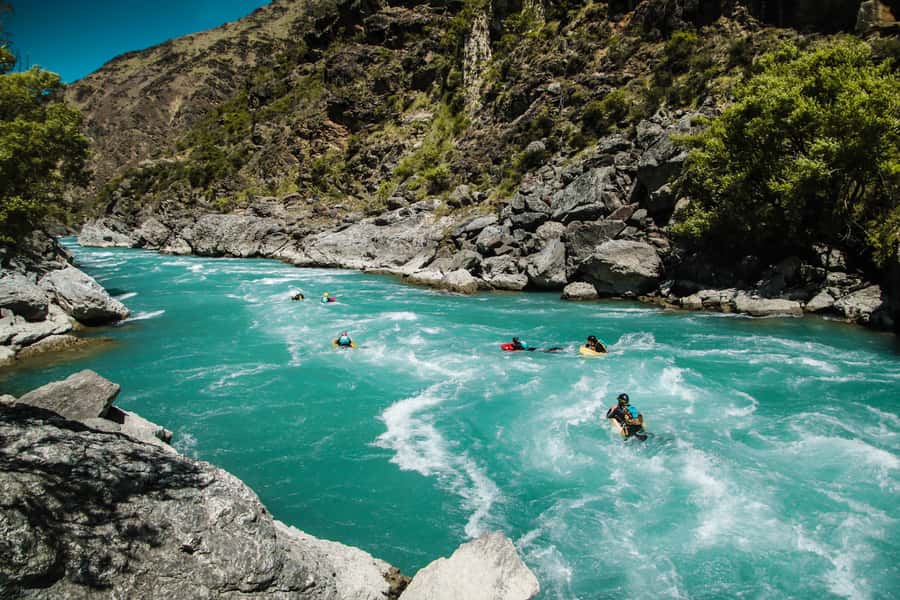
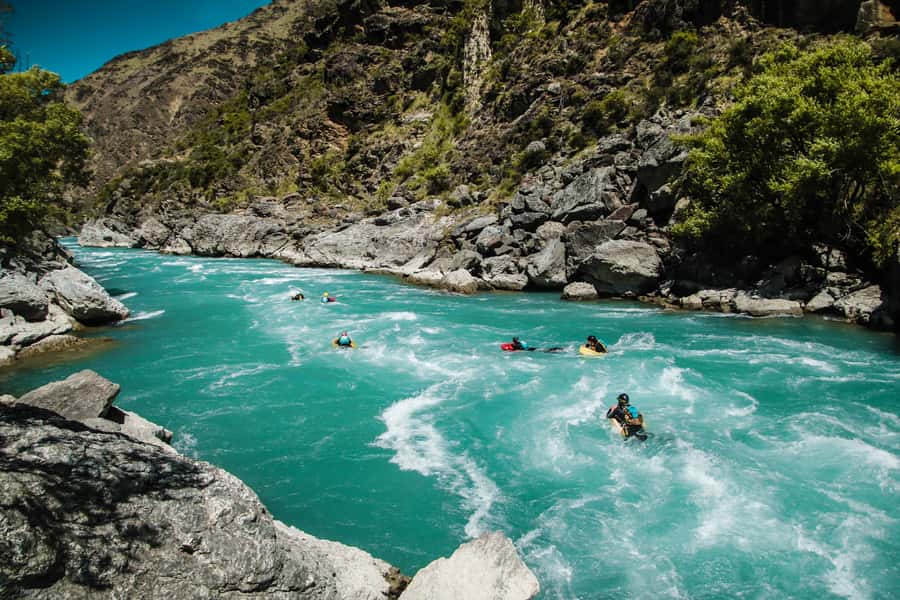
Hold on tight, the river does the rest. Queenstown’s Kawarau River riverboarding trip takes you up to 12 kilometers through grade 2 and 3 rapids, with chances to ride standing waves, spin through whirlpools, and test underwater currents. I like the small groups of up to 10 and the mix of wild water and calmer river scenery. I also like that you choose a bodyboard suited to your appetite for adrenaline.
The main caution is simple: this is not a gentle float with a board. You need to be comfortable in moving water, use your legs hard, and follow a lot of instructions at once. One critical participant found the training area unsettling and expected the activity to suit basic swimming skills, so I would treat the swimming requirement and physical effort seriously before booking.
Key points at a glance
- Up to 12 kilometers on the Kawarau River: You spend about 1 to 1.5 hours in the water, with rapids and quieter stretches.
- Grade 2 to 3 white water: The trip has real force and requires active participation, not just sitting back.
- Bodyboarding, whirlpools, and standing waves: You may surf river waves, ride spinning water, and try underwater currents if you feel ready.
- A 5mm full wetsuit is provided: Add a helmet, life jacket, wet shoes, and board, but bring your own swimwear and towel.
- Queenstown transport is included: Meet at 5 Duke Street, or drive to the Roaring Meg Power Station if you are not staying downtown.
- Good guide-to-group ratio: The group is capped at 10, and the crew receives especially strong praise for making people feel cared for.
What this Kawarau River trip is really like
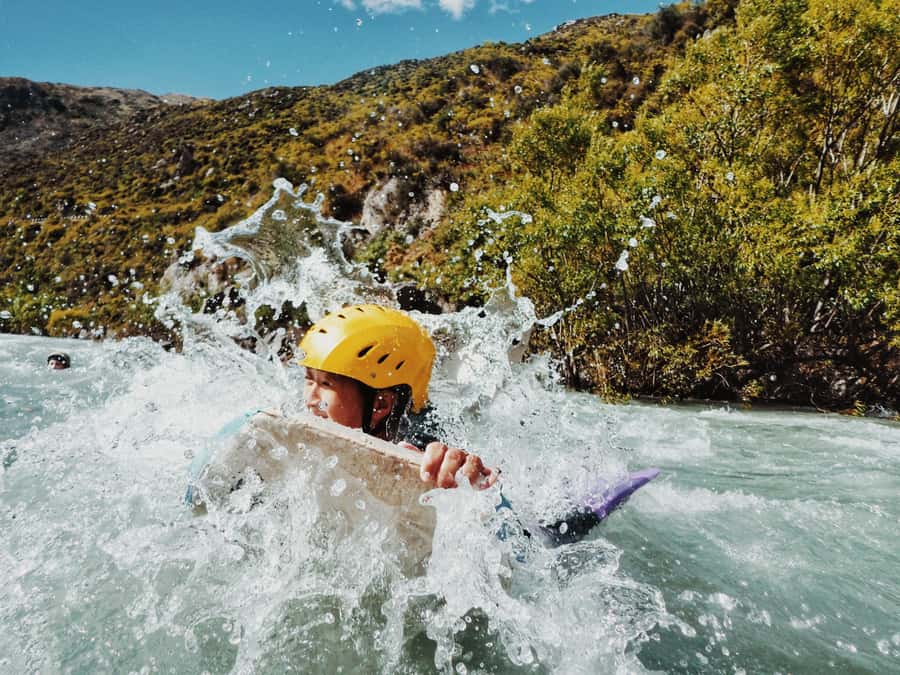
This is riverboarding, not conventional rafting. You lie on a compact bodyboard and use your arms and legs to steer, brace, and move through the current. The board is light and maneuverable, so you are much closer to the water than you would be in a raft.
That closeness is the whole appeal. You feel the river’s speed rather than simply watching it from above. A rapid becomes a short physical challenge. A standing wave becomes something you can try to ride. A whirlpool can turn into a spinning lesson in balance and nerve.
The same feature makes the trip demanding. You are not a passenger. Your body helps control the board, and the supplied fins require leg power. If you are looking for a scenic river outing with a few exciting moments, this may be more effort than you want. If you want an active water sport that pushes you beyond your normal holiday routine, it is a better match.
The advertised rating of grade 2 to 3 gives useful context. These are not the biggest rapids in New Zealand, but they are strong enough to require attention, swimming ability, and comfort around moving water. Conditions can also affect the trip, and the operator can cancel or change the route if the river becomes unsafe.
More Surf Lessons in New Zealand:
- 2 Hour Surf Lesson – Te Arai Beach
★ 5.0 · 119 reviews - Raglan: Group Surf Lesson
★ 5.0 · 79 reviews - Auckland: Group Surfing Lesson with Muriwai Surf School
★ 4.9 · 34 reviews
Meeting in Queenstown and getting to the river
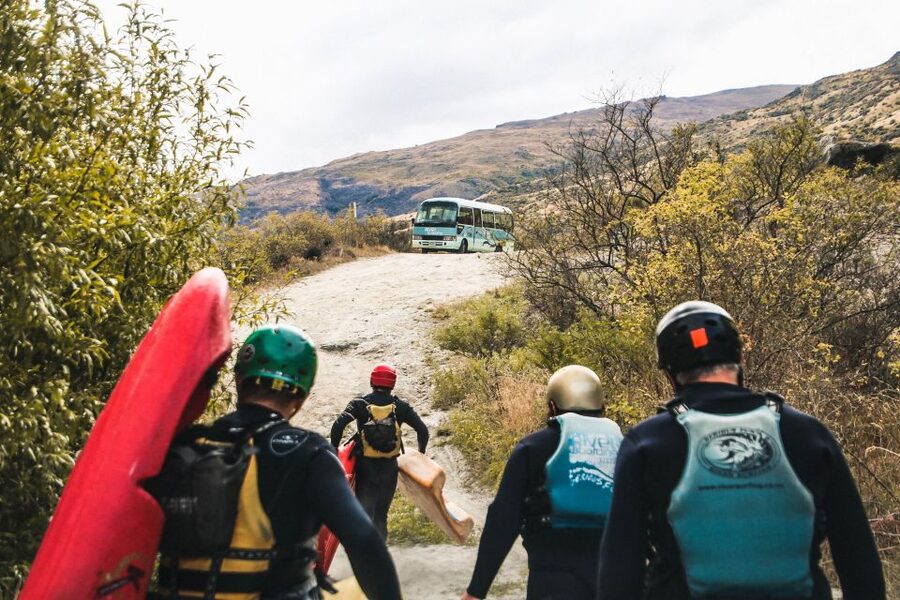
The standard meeting point is the loading zone at 5 Duke Street, behind the bakery and opposite the Sofitel. This is a street departure rather than a hotel pickup, so arrive ready to leave at the stated time. The transport back to Queenstown is included, but hotel pickup and drop-off are not.
If you are staying outside central Queenstown, you can drive yourself to the base at Roaring Meg Power Station on Kawarau Gorge Road. The instructions say to allow 45 minutes after the departure time, since the main group leaves Queenstown at that time. Drive to the power station and wait in the car park.
That timing matters. The Queenstown meeting point is the practical choice if you do not know the gorge roads or want the simplest arrangement. Self-driving can work well if you already have a rental car and prefer to avoid returning to the city before heading elsewhere, but you must get the timing right and wait at the correct base.
The full activity lasts 270 minutes, or four and a half hours. Only part of that time is spent in the river. Plan on roughly 1 to 1.5 hours of actual water time, with the rest used for transport, changing, preparation, instruction, and stops along the river.
Wetsuits, boards, and the pre-water briefing
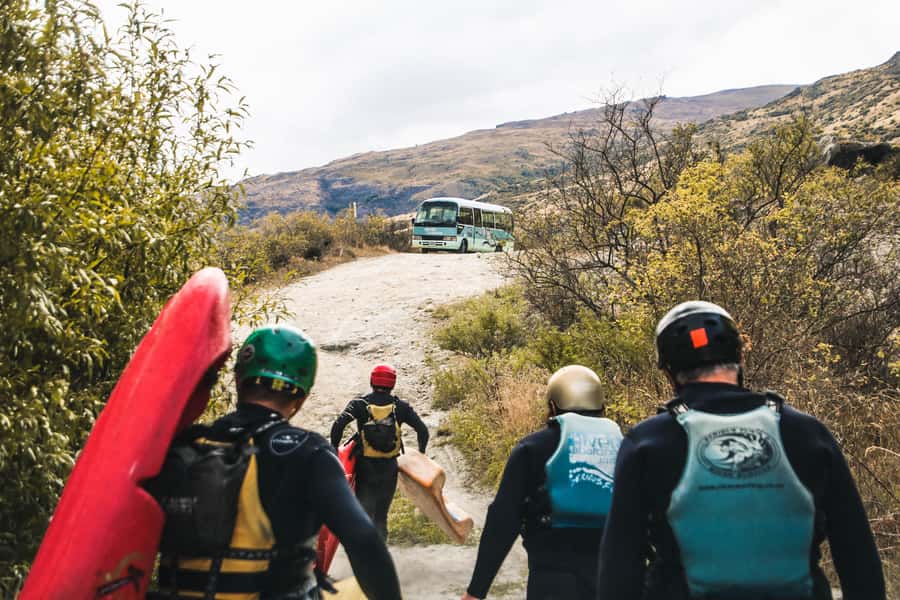
You receive a full 5mm wetsuit, helmet, wet shoes, life jacket, and bodyboard. Bring swimwear to wear underneath and a towel for afterward. The thick wetsuit is important in a New Zealand river, where the water can feel cold even on a bright day.
The board choice gives the trip a useful personal touch. You can select a board based on how much adrenaline you want. The supplied boards are designed for movement, not comfort alone, so you should expect to kick, steer, and position your body actively.
The instruction period deserves your full attention. You will be shown how to handle the board and how to approach the river features before entering the main current. One participant felt that a large amount of information arrived at once and did not feel confident after training, which is a fair warning for anyone who gets anxious in technical activities.
I would ask questions early, especially if you are unsure about swimming technique, fins, recovery from a fall, or what to do in a whirlpool. The strongest part of the experience is likely to be the moment you trust your training. You do not want to discover basic concerns after entering the rapids.
The first river section: learning to work with the current
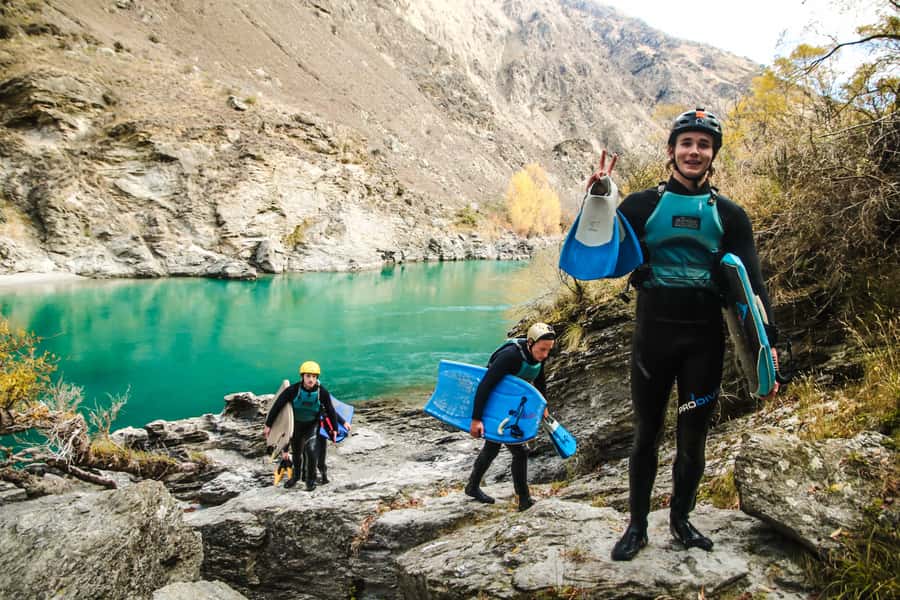
The river portion begins with instruction and easier movement before the more active rapids. This gives you time to understand how the board responds. It also lets you learn how much force the current has.
You may find that the board feels more twitchy than expected. That is useful rather than a flaw. A light board reacts quickly, allowing you to angle into water features and make small corrections. It also means that poor body position can send you off course faster than you expect.
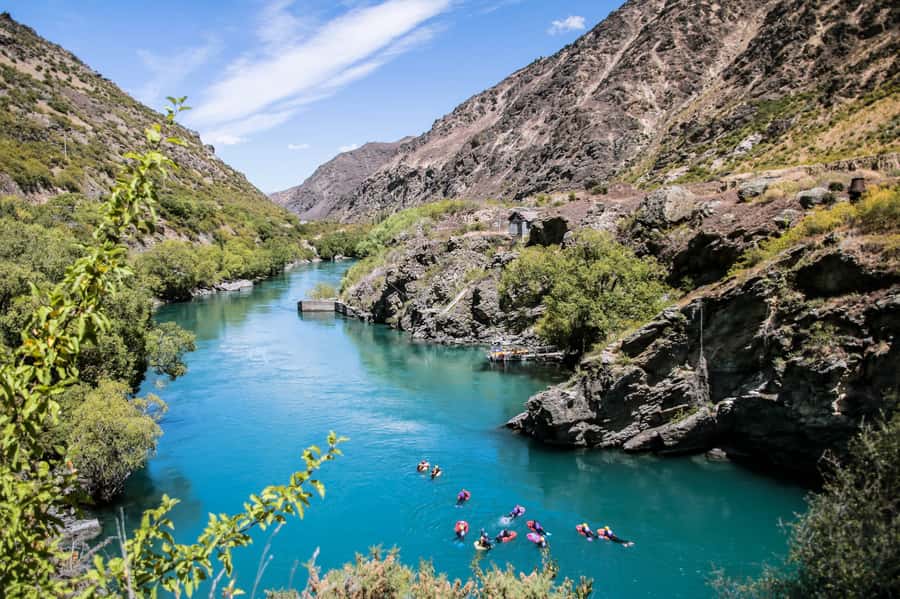
The gentler sections give you a chance to look around. The Kawarau Gorge offers striking South Island scenery, and the quieter water creates a welcome pause between challenges. This is where the experience feels more like a scenic river journey, though the board keeps you involved even when the current relaxes.
Do not spend the calm sections worrying about the next rapid. Use them to settle your breathing, adjust your position, and listen to the guide. The trip works best when you treat it as a sequence of manageable tasks rather than one long test of nerve.
Same place, a different way into the water:
- Mount Maunganui: Group Beginner Surf Lesson
★ 5.0 · 16 reviews - Beginner Surf Lesson at Te Arai Beach
★ 5.0 · 6 reviews - Raglan: 2 Day Surf Lesson Package
★ 4.8 · 6 reviews - Private 2 Hour Surf Lesson
★ 5.0 · 5 reviews
Grade 2 to 3 rapids and the active part of the trip
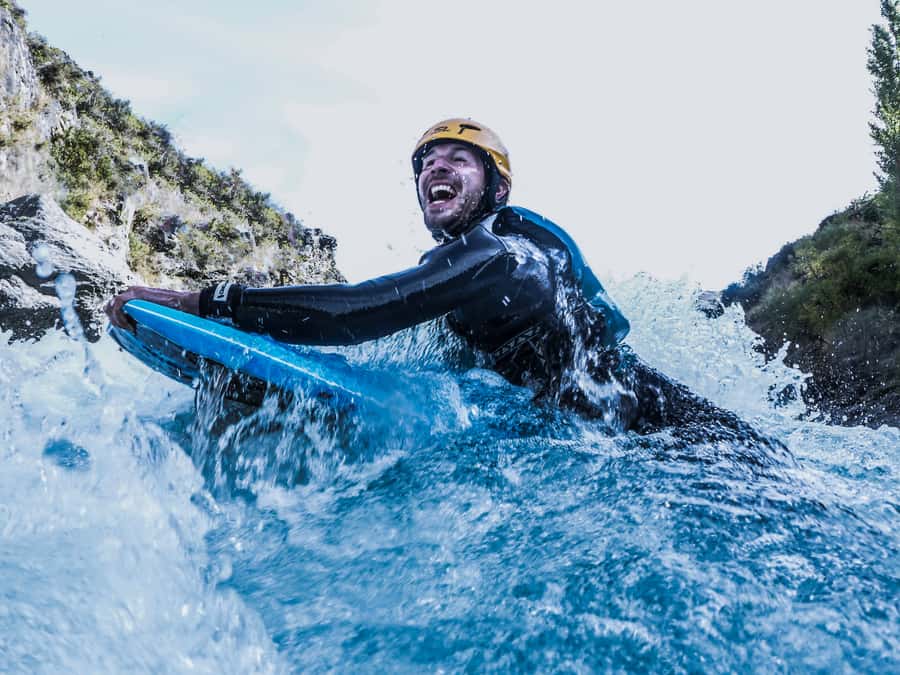
The faster water is where this activity earns its reputation. You may ride through grade 2 and 3 rapids, using your board to stay aligned and your body to absorb the movement. The experience is personal and close-up. You are not looking over a raft’s edge while someone else handles the line.
The rapids are also where physical fitness matters. You will use your legs, especially with fins, and repeated efforts can add up. Someone who swims regularly or enjoys active water sports will likely feel more at home than someone whose only goal is to stay dry.
Your guides are an important part of the safety picture. The group limit of 10 keeps the outing relatively small, and the strongest praise focuses on the crew’s friendly manner and care. Several high scores describe the guides as fun, supportive, and good at helping people feel comfortable. That matters here because confidence can change how you handle the same rapid.
The river can still feel intimidating, even with a good crew. You should be willing to follow directions quickly and accept that the water will not always behave as you hope. The operator can cancel or alter a trip because of dangerous river conditions, too few bookings, or concerns about a participant’s suitability.
Standing waves, whirlpools, and optional challenges
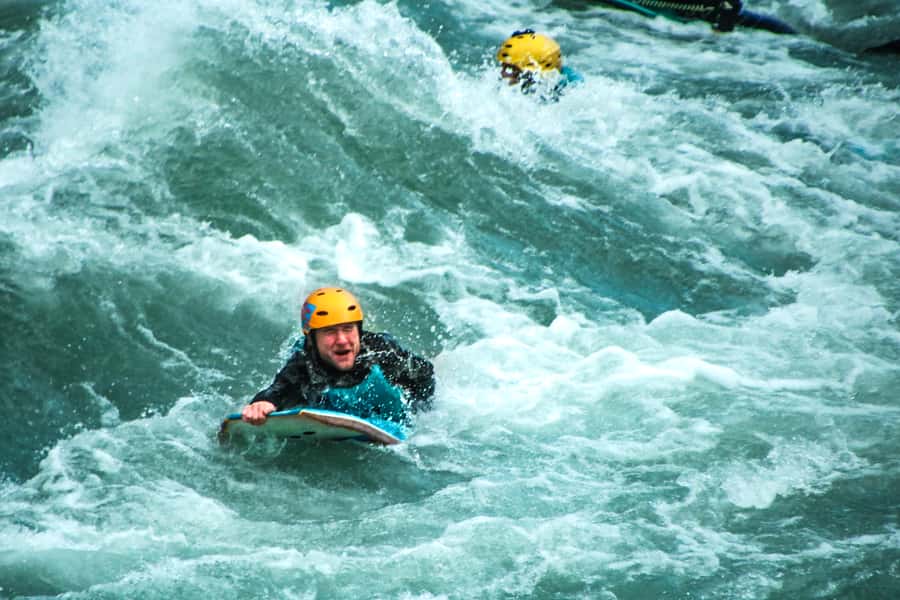
River surfing is the most unusual part of the outing. A standing wave lets you try to hold your board in moving water rather than simply pass through a rapid. Success may last only a short time, but that is part of the fun. The river gives you a narrow window, and you have to react quickly.
You may also ride whirlpools and try to catch underwater currents. These features are for people who want the full white water experience, not for anyone hoping to avoid getting tumbled or disoriented. The wording of the activity makes clear that you can choose how brave you want to be, so there is room to manage your own comfort level.
I like that the experience offers several kinds of challenge. You are not repeating the same rapid for an hour. The trip can shift from straightforward river running to balance, spinning, surfing, and short bursts of hard kicking.
Still, do not treat the optional elements as harmless extras. If you are already struggling with board control or swimming, skip the more advanced water features and stay with the guide’s instructions. A memorable day does not require you to attempt every stunt.
The cliff-jump stop and calmer river scenery
The river is not all white water. On gentler stretches, you can take in the gorge and enjoy a break from constant concentration. There may also be a chance to jump from cliffs along the river.
The cliff jump is optional in spirit, even if the exact format can depend on conditions and the guide’s judgment. If heights are not your thing, you can focus on the river and scenery instead. You do not need to prove anything to enjoy the trip.
This mixture of quiet and action gives the four-and-a-half-hour schedule a better rhythm. An outing made entirely of rapids could become tiring, while a trip made entirely of calm water would not justify the price or the name. Here, the contrast helps each part feel sharper.
Is $164 a fair price?
At $164 per person, this is a costly half-day activity. The value comes from more than the river access. The price includes return transport from Queenstown, a 5mm wetsuit, helmet, wet shoes, life jacket, bodyboard, and light snacks and refreshments.
If you would otherwise need to hire specialist gear, arrange transport to the Kawarau Gorge, and find a guided river activity, the package becomes easier to justify. The small group limit also matters. A maximum of 10 people should give the guides a better chance to keep track of the group than a large commercial outing.
The price is harder to defend if you are only mildly curious about riverboarding. You may spend a fair amount for an activity that feels too physical or intense, particularly if basic swimming skills are your limit. The negative experience in the feedback makes this point clear: some people can arrive expecting a manageable introduction and find that the fins, current, and amount of instruction ask more of them than expected.
I would pay this price if riverboarding is one of your main Queenstown goals. I would think twice if you are choosing between several adventure activities and mainly want a scenic day out. The trip offers a distinctive experience, but it is not designed to please everyone.
Who should book this adventure?
This suits adults and children aged 8 or older who can swim, handle moving water, and take part in an active sport. The operator does not accept unaccompanied minors, and the experience is not suitable for children under 8, non-swimmers, wheelchair users, or people with mobility impairments.
You should also be comfortable wearing a helmet and life jacket, working with fins, and spending a sustained period in cold river water. You do not need to be an expert bodyboarder, but you should be ready to learn quickly and use your whole body.
The trip is a strong choice for:
- People who want a more hands-on alternative to rafting
- Adventurous couples and friends
- Repeat Queenstown visitors seeking something less standard
- Active families with children aged 8 or older, if the children are confident swimmers
- Anyone interested in trying standing-wave surfing and whirlpools
I would avoid it if you dislike cold water, tire quickly from kicking, or want a passive sightseeing trip. Basic swimming ability may not be enough for you to feel relaxed, particularly if you have little experience in current.
Booking, cancellation, and practical timing
The booking information gives two cancellation windows, so check the exact terms shown when you reserve. One section says free cancellation up to 24 hours before departure, while the detailed conditions require cancellation at least 48 hours before departure for a full refund. I would use the stricter 48-hour rule when planning.
You can reserve now and pay later, which helps if your Queenstown schedule depends on weather. The operator may cancel or alter the outing because of river conditions, insufficient numbers, or concerns about whether a participant can safely take part.
The guide language is English. Light snacks and refreshments are supplied, but you should eat sensibly before arrival because the activity uses real energy. Bring only the required swimwear and towel unless the operator gives you further instructions, and arrive at the street meeting point on time.
Should you book the Kawarau River riverboarding trip?
Book it if you want a close-up, active encounter with the Kawarau River and like the idea of controlling a board through grade 2 to 3 rapids. The supportive guides, small group, included equipment, and unusual mix of surfing, whirlpools, and gorge scenery make this more distinctive than a standard raft ride.
Skip it if you are a weak swimmer, uncomfortable in currents, or hoping for a low-effort adventure. If you are unsure, ask yourself one honest question: do I want to work with the river, or simply look at it? If the answer is work with it, this $164 experience could be one of Queenstown’s most memorable half-days.
FAQ
How long does the Queenstown riverboarding experience last?
The full activity lasts 270 minutes, or four and a half hours. About 1 to 1.5 hours is spent in the river.
How far do you travel on the Kawarau River?
You can bodyboard for up to 12 kilometers along the Kawarau River.
What grade are the rapids?
The trip includes grade 2 and grade 3 rapids.
Is transport from Queenstown included?
Yes. Return transportation from Queenstown is included. The meeting point is at the loading zone at 5 Duke Street, behind the bakery and opposite the Sofitel.
Can I drive directly to the river base?
Yes. If you are not staying downtown, you can drive to the base at Roaring Meg Power Station on Kawarau Gorge Road. Wait in the car park, following the timing instructions provided for your departure.
What equipment is provided?
The activity provides a full 5mm wetsuit, helmet, wet shoes, life jacket, and bodyboard. Light snacks and refreshments are also included.
What should I bring?
Bring swimwear and a towel.
Can non-swimmers take part?
No. The experience is not suitable for non-swimmers. It is also not suitable for children under 8, wheelchair users, or people with mobility impairments. Unaccompanied minors are not allowed.
Just added around New Zealand
- Beginner Surf Lesson at Te Arai Beach★ 5.0 · 6 reviews
- Private 2 Hour Surf Lesson★ 5.0 · 5 reviews
- Raglan: Private 1:1 Surf Lesson★ 5.0 · 2 reviews
- Raglan: 3 Day Surf Lesson Package★ 5.0 · 2 reviews
- Mount Maunganui: Group Beginner Surf Lesson★ 5.0 · 16 reviews
- Mount Maunganui: Private Surf Lesson★ 5.0 · 2 reviews
- Greymouth: 2-Hour Beginner Surf Lesson★ 4.5 · 2 reviews
- Auckland: Group Surfing Lesson with Muriwai Surf School★ 4.9 · 34 reviews
New Zealand Surf Lessons, compared.
Auckland: Group Surfing Lesson with Muriwai Surf School
Read our review →
Browse the lists this lesson appears in