
REVIEW · GRAN CANARIA
San Agustín Surf lessons
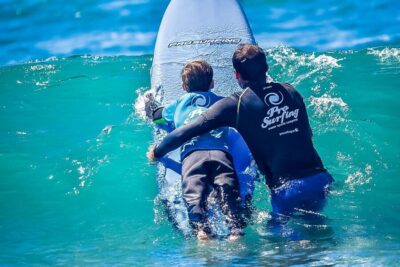
Catch your first wave in Gran Canaria. This three-hour surf lesson combines beginner-friendly coaching, proper equipment, and beach time at Playa del Inglés or Maspalomas, depending on sea conditions. The course is designed for all levels, so you can join even if standing on a board still sounds like a small miracle.
I like the small-group format, which gives you more direct help than a crowded beach class. I also like the instructors’ practical approach. Tony, one of the named instructors, moved the class to a better beach when the waves were too small. The main thing to check is transport: hotel pickup is included for stays in the south of Gran Canaria, but one booking reported that the promised pickup did not happen.
Key Points Before You Book
- Three hours in the water: You get a proper lesson rather than a quick introduction and a few rushed attempts.
- Beach location can change: Classes usually take place at Playa del Inglés or Maspalomas near the lighthouse, but the team follows the sea conditions.
- Instruction for all levels: The course covers board handling, surfing technique, and movement in the water.
- Small groups: The lesson description says groups can be as small as eight, while the booking information lists a maximum of 10 participants.
- South island transfers included: Pickup and return are offered for hotel stays in the south, though you should confirm the exact arrangement.
- Strong teaching feedback: Friendly, clear instruction is the most consistent praise, with Tony singled out for adjusting the lesson to better waves.
Meeting Near the Maspalomas Lighthouse
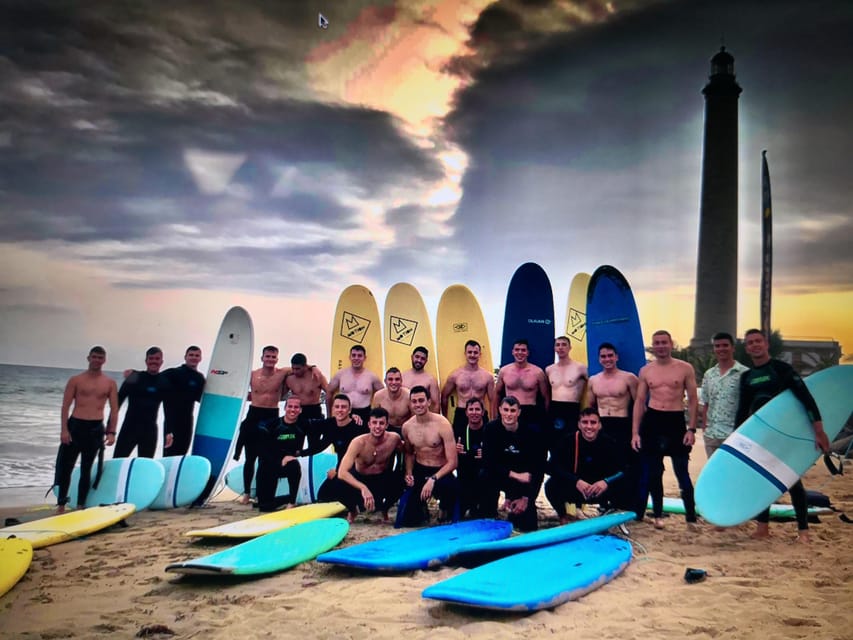
The day begins at the Faro de Maspalomas, the tall lighthouse at the southern end of Gran Canaria. The surf school is based near this well-known meeting point, making it a fairly easy place to find if you are making your own way to the beach.
You have two basic options. If you are staying in the south of the island, you can use the included transfer service. Or you can travel to the meeting point on your own. The transfer is useful if you are staying in the main resort area and do not want to work out local transport before an active morning.
I would confirm the pickup address and time directly with the provider. The transfer is advertised as hotel pickup and return for southern hotels, but one booking reported no pickup at the listed address. That does not prove the service is always unreliable, but it does make confirmation worth the few minutes it takes.
The course usually starts in the morning. The exact time depends on the condition of the sea, and the provider contacts you to confirm it. This flexibility makes sense for surfing, since a fixed timetable is not much use if the waves are poor or the conditions change.
There is one practical tradeoff. A late confirmation may make it harder to plan a tightly packed day around the lesson. I would keep the morning open and avoid booking another fixed activity immediately afterward.
More Surf Lessons in Gran Canaria:
- Playa del Inglés Maspalomas: High Quality Surf Classes
★ 4.9 · 363 reviews - Puerto Rico, Gran Canaria: boat trip, drinks, food, paddle surfing, snorkeling
★ 4.6 · 310 reviews - Gran Canaria Maspalomas: Surf lessons all levels
★ 5.0 · 197 reviews
Choosing Between Maspalomas and Playa del Inglés
The class usually takes place at Playa del Inglés or Maspalomas Beach, close to the lighthouse. The final beach is chosen according to the weather and sea conditions. That is good news for the quality of the lesson, since instructors can look for more suitable waves rather than forcing the class to stay at one spot.
Maspalomas and Playa del Inglés are among the most familiar beach areas in southern Gran Canaria. For a first lesson, the important point is not the name of the beach but the conditions on the day. You need waves that are manageable enough for beginners, with enough movement to help you practise.
One of the most useful details from the class feedback is that Tony moved the group when the waves were too small. That tells you the instructor is not simply following a script. If the first beach is not working, the group may relocate to find better conditions.
You should also expect the beach location to affect the rhythm of the lesson. A change of beach can mean extra travel or a little waiting, but it may give you a far better chance of practising. In surfing, a few decent waves are worth more than a long session staring at flat water.
Getting Your Board and Starting the Lesson
After meeting the group, your instructor provides a surfboard and takes you to the beach where the class will run. The equipment is included in the price, along with insurance and instruction, so you do not need to arrange a separate rental before the lesson.
The course covers how to handle the board and how to move properly on it. That may sound basic, but board control is the part that makes the rest of the lesson less awkward. If you cannot position the board or get your body into the right place, even a friendly wave will not help much.
The instruction is aimed at all ability levels. Beginners can learn the basic movements, while anyone with some experience can receive help with technique and timing. The supplied information does not promise a particular skill level by the end, so you should think of this as a guided introduction or practice session rather than a guarantee that you will surf independently.
The most useful part for a beginner is the immediate correction. You can receive help when you need it rather than spending the whole lesson repeating the same mistake. The high marks for clear explanations and friendly teaching suggest that the instructors keep the mood relaxed while still paying attention to form.
Three Hours of Practice, Not Just a Demonstration
The full lesson lasts three hours. That gives the class enough time to cover basic instruction, get into the water, try the board, and repeat the movements. Surfing requires repetition, so the longer format offers better value than a short taster session.
You should still expect some of those three hours to include preparation and instruction on the beach. That is not wasted time. Learning where to place your hands, how to position your body, and how to handle the board safely makes the time in the water more productive.
The tone appears to be active and light. The course is built around learning while having fun, not around a strict athletic test. That suits first-timers who may feel self-conscious about falling or getting the movement wrong.
The lesson also has enough length for the instructor to see what each person needs. In a very short class, a slow start can eat up the whole experience. Here, you have more room to settle in and try again.
Same place, a different way into the water:
- Small-Group Surf Lessons in Gran Canaria
★ 5.0 · 138 reviews - Playa del Inglés surf lessons
★ 4.8 · 121 reviews - Gran Canaria: Maspalomas Surf Lessons
★ 4.6 · 113 reviews - Premium Surf Course in Gran Canaria
★ 5.0 · 89 reviews
How the Small Group Affects Your Experience
The course is promoted as a small-group activity. One part of the information describes groups of up to eight people, while the general booking details give a maximum of 10 participants. I would plan for a class no larger than 10, with the possibility of a smaller group.
That size is a sensible middle ground. You are not paying for private coaching, but you should have a better chance of receiving personal help than in a large beach class. The instructor can watch several surfers, offer corrections, and step in when someone needs help.
The group setting also makes the lesson less intimidating. You will not be the only person wobbling on a board, and the atmosphere appears to be social and encouraging. The strongest praise focuses on friendly teachers and clear explanations, which matters just as much as the equipment for a first lesson.
The limit is that attention is still shared. If you want constant one-to-one coaching, a private lesson would be a better fit, but no private format is described here. For most people trying surfing for the first time, the small-group setup should offer a good balance between support and price.
What the Instructors Do Well
The instructors teach in Spanish and English. That makes the course accessible to a wide range of visitors staying in the south of Gran Canaria. The important thing is not only the language but also the clarity of the explanation, since surfing depends on short instructions that you can understand quickly.
The teaching feedback is especially positive. Instructors are described as friendly, helpful, and good at explaining the techniques. One course member gave particular credit to Tony, who responded to the small waves by taking the class to another beach.
That flexibility is worth more than a polished speech at the meeting point. Conditions can change, and a good instructor needs to make decisions during the lesson. Moving to a better beach shows attention to the actual experience rather than simply completing the planned schedule.
You should still remember that progress depends on the sea, the group, and your own comfort on the board. The course can give you proper instruction and repeated chances, but nobody can promise perfect waves or a first attempt that ends with a graceful ride to shore.
Equipment, Insurance, and What the Price Covers
The price is $58 per person for three hours. It includes the surfboard and other surf equipment, an instructor, and insurance. For visitors staying in the south, hotel transfer to and from the activity is also included.
That is a fair package if you want to try surfing without buying or renting equipment separately. The price also covers the practical value of a guide who chooses the beach and helps you correct your technique. A self-guided rental may cost less, but it would not give you the same help with safety, board handling, or wave choice.
The value is strongest for beginners. You are paying for a structured first experience rather than simply borrowing a board. If you already surf confidently, the instruction may feel less important, although you could still benefit from a session in a new beach area.
The equipment is described as high quality, but no specific board brands or additional items are listed. I would check what personal clothing or beach items you should bring before setting out, since the supplied information confirms the board and surf equipment but does not spell out every personal item.
Who Will Enjoy This Lesson Most
I would recommend this course to first-time surfers, casual beginners, and people who want an active morning in southern Gran Canaria. The three-hour length gives you time to practise, and the instructors can adapt the course for different levels.
It also suits couples, friends, and families with older children who want to try something together. The small-group setting keeps the lesson social without making it feel like a large commercial class.
This is less suitable if you need a guaranteed beach, a fixed start time, or private instruction. The meeting time depends on sea conditions, and the beach may change. Those decisions are made to improve the lesson, but they require some flexibility from you.
It may also disappoint you if you expect a sightseeing tour with lots of time away from the beach. This is a hands-on sports activity. The focus is the board, the waves, and the instructor’s advice.
Planning Around Weather and Pickup
Keep your schedule loose on the morning of the lesson. The provider confirms the starting time according to sea conditions, and the activity can move between Maspalomas and Playa del Inglés.
If you are using the transfer, give the provider your exact hotel details and confirm the pickup point. A missing pickup can turn an easy morning into a scramble, especially if you are not familiar with southern Gran Canaria.
The free cancellation policy allows cancellation up to 24 hours before the activity for a full refund. You can also reserve now and pay later, which helps if your island plans are still shifting. These terms are useful, but they do not remove the need to check the final start time.
Should You Book San Agustín Surf Lessons?
Book it if you want a reasonably priced, well-supported introduction to surfing in southern Gran Canaria. The best reasons are the full three-hour format, the helpful instructors, and the willingness to move beaches when the waves are not good enough.
I especially like that the teaching sounds practical rather than showy. Clear explanations and direct help matter far more than a fancy meeting point. Tony’s decision to move the group for better waves is exactly the kind of adjustment you want from a surf instructor.
Before paying, confirm your hotel pickup and wait for the provider’s final start time. If you can handle a flexible schedule and do not need private coaching, this looks like a strong choice for your first session. If you want a guaranteed location or a tightly timed day, the changing beach and sea-dependent start may be a nuisance.
FAQ
How long does the San Agustín surf lesson last?
The activity lasts three hours, including instruction and surfing practice.
Where does the surf lesson take place?
The lesson usually takes place at Playa del Inglés or Maspalomas Beach near the Maspalomas Lighthouse. The location can change according to the weather and sea conditions.
Is hotel pickup included?
Hotel pickup and return are included for people staying in the south of Gran Canaria. You can also make your own way to the meeting point near Faro de Maspalomas.
What time does the lesson start?
The course usually starts in the morning, but the provider confirms the exact time based on sea conditions.
Is the course suitable for beginners?
Yes. The course is adapted for all levels and teaches board handling, movement, and surfing technique.
What languages do the instructors speak?
Instruction is available in Spanish and English.
How many people are in the group?
The lesson is described as a small-group activity. The course information says groups can have up to eight people, while the booking details list a maximum of 10 participants.
What is included in the price?
The $58 price includes surf equipment, an instructor, and insurance. For eligible hotel stays in the south of the island, it also includes transfer to and from the hotel.
Just added around Gran Canaria
- Surf lessons in Las Canteras Beach★ 4.8 · 19 reviews
- Las Palmas de Gran Canaria: Group surf lessons on La Laja beach★ 4.9 · 27 reviews
- Las Palmas: Learn to Surf with a Special Price for Two Group★ 4.8 · 30 reviews
- Gran Canaria Playa del Ingles: Surf lessons all levels★ 4.7 · 11 reviews
- Gran Canaria: Meloneras Beach Surf Lesson★ 5.0 · 5 reviews
- Premium Surf Course in Gran Canaria★ 5.0 · 89 reviews
- Gran Canaria Surf Lessons: Playa del Inglés & Maspalomas★ 4.8 · 76 reviews
- Gran Canaria: Maspalomas Surf Lessons★ 4.6 · 113 reviews
Gran Canaria Surf Lessons, compared.
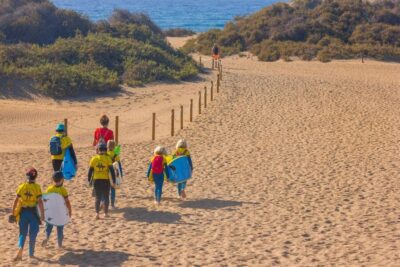
Playa del Inglés Maspalomas: High Quality Surf Classes
Read our review →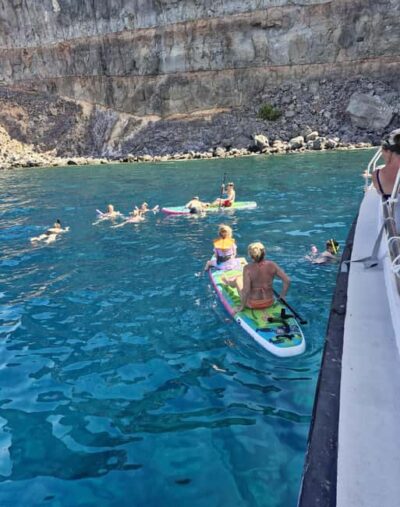
Puerto Rico, Gran Canaria: boat trip, drinks, food, paddle surfing, snorkeling
Read our review →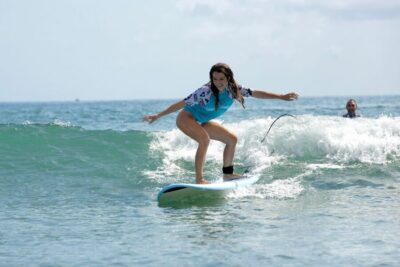
Gran Canaria Maspalomas: Surf lessons all levels
Read our review →
Gran Canaria Surf Lessons: Playa del Inglés & Maspalomas
Read our review →Browse the lists this lesson appears in